.

John L. Slimm

Portrait of John L. Slimm

Jack is a member of the Professional Liability Department where he concentrates his practice in complex litigation, with emphasis on the defense of professionals, including lawyers, accountants, architects and engineers, insurance brokers, real estate professionals, and directors and officers in matters pertaining to malpractice, negligence, fraud, and defamation.  He is also a fellow in the American College of Trial Lawyers, and has tried over 100 cases and argued scores of appeals. 

Jack is admitted to practice in New Jersey, the District of New Jersey, the Court of Appeals for the Third Circuit, and the United States Supreme Court. He has also been admitted to try cases in the Commonwealth of Pennsylvania, the Eastern District of Pennsylvania, the Eastern District of New York, and the Southern District of New York, as well as the Supreme Court of the State of New York.

A graduate of the University of Notre Dame Law School, Jack subsequently served as Law Secretary for the Honorable Thomas F. Dalton, J.S.C., Superior Court of New Jersey.

Jack is a frequent speaker for the New Jersey Institute for Continuing Legal Education and the American College of Trial Lawyers on legal malpractice matters.

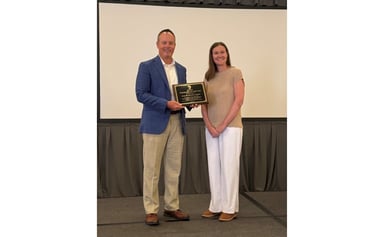
In 2025, Jack was recognized by the New Jersey Judiciary for his exemplary pro bono work and unwavering commitment to serving the public.

    • Notre Dame Law School (J.D., 1970)
    • La Salle University (B.A., 1967)
    • New Jersey, 1970
    • AV® Preeminent™ by Martindale-Hubbell®
      The Martindale-Hubbell rated attorney list is issued by Internet Brands, Inc. A description of the selection methodology can be found here. No aspect of this advertisement has been approved by the Supreme Court of New Jersey.
    • The Best Lawyers in America®, Legal Malpractice Law - Defendants; Professional Malpractice Law – Defendants; Philadelphia "Lawyer of the Year" Legal Malpractice Law - Defendants, 2015 (2010-2026)
      The Best Lawyers list is issued by Woodward & White. A description of the selection methodology can be found here. No aspect of this advertisement has been approved by the Supreme Court of New Jersey.
    • New Jersey Super Lawyer List (2005-2009, 2011-2021)
      The Super Lawyers list is issued by Thomson Reuters. A description of the selection methodology can be found here. No aspect of this advertisement has been approved by the Supreme Court of New Jersey.
    • American Bar Association
    • American College of Trial Lawyers
    • Burlington County Bar Association, Co-Chairman of Civil Practice Committee
    • Camden County Bar Association, Civil Practice Committee
    • New Jersey State Bar Association
    • Legal Malpractice Update, NJICLE Seminar, June 14, 2024
    • The Defense of Appellate Counsel in Legal Malpractice Actions, Client Webinar, June 4, 2024
    • NJ Business Rule and Its Application to Lost Profits, NJICLE Business Litigation Year in Review Seminar, November 1, 2023
    • Strategic Approaches to Handling Lost Profit Claims Under New Jersey's New Business Rule, Client Webinar, September 7, 2023
    • Mediation Process & Techniques in Civil & Chancery Disputes: Producing the Best Results for Your Client, Camden County Bar Association’s Civil Practice Update, June 5, 2023 
    • Criminal Defense Bar and Their Exposure to Legal Malpractice & Cross-Examining an Expert in a Legal Malpractice Case, NJICLE 2023 Legal Malpractice Update, March 25, 2023 
    • Virtual Jury Trials in New Jersey: The Good, The Bad and The Ugly, Client Webinar, March 25, 2022
    • NJICLE Annual Legal Malpractice Conference, March 27, 2021
    • De Bene Esse Depositions, NJICLE Deposition College Seminar, March 26, 2021
    • What Can Go Wrong At Trial?, New Jersey Institute for Continuing Legal Education, April 2014
    • Where Has All the Privity Gone?, New Jersey Institute for Continuing Legal Education, March 2013
    • Legal Malpractice, New Jersey Law Journal Continuing Legal Education Series, December 2012
    • Examining Non-Traditional Claims Against Lawyers, The Hartford, May 2012
    • Non-Traditional, Complex Professional Liability Claims, PLUS, April 2012
    • New Jersey's Litigation Privilege, How It Applies and Can Be Used In Defense of Attorneys in Actions Filed in Both State and Federal Courts in New Jersey, New Jersey Institute of Continuing Legal Education, April 2012
    • Civil Practice, Camden County Bar Association, November 2011
    • Legal Malpractice, Mercer County Bar Association, November 2011
    • False Arrest and Malicious Prosecution, CNA Insurance Company, October 2011
    • 2010 Review of the New Jersey Environmental Law Seminar: Issues of Legal Malpractice and Ethics Arising Out of the Handling of Transactions in Which Environmental Issues are Involved, New Jersey Institute for Continuing Legal Education, March 2010
    • Defense Perspective of Civil Practice Under the Rules of Court, Camden County Bar Association Civil Practice Committee, November 2009
    • Legal Malpractice Seminar, Burlington County Bar Association, November 2009
    • Civil Practice, Camden County Bar Association, February 2009
    • "Strategic Defenses to Appellate Malpractice Claims," PLUS Blog, April 19, 2024
    • "Strategy is Key for Opening Statements and Closing Arguments," New Jersey Lawyer, June 2021
    • "The Liability of Trial Counsel for Strategic and Tactical Judgments Made During Trial,"New Jersey Law Journal Professional Malpractice Supplement (page 6), January 13, 2020
    • "How to Avoid Liability For Your Clients' Representations,"New Jersey Law Journal, Professional Malpractice Supplement, January 9, 2019
    • "The Immunity of Attorneys for the Occasional Bad Result,"New Jersey Law Journal, Professional Malpractice Supplement, January 15, 2018
    • "When Attorney Fees Can Be Awarded in Legal Mal Actions Brought by Non-Clients," New Jersey Law Journal, January 24, 2017
    • "Disgruntled Beneficiaries and Claims Against Estate Planning Attorneys," New Jersey Law Journal, January 18, 2016
    • “New Jersey's Litigation Privilege Does Not Bar a Claim By a Client for Legal Malpractice Against Defense Attorneys,” Defense Digest, Vol. 19, No. 1, March 2013
    • “The Litigation Privilege In Claims Against Attorneys,” New Jersey Law Journal, Vol. 203, No. 11, March 14, 2011
    • "New Jersey Holds Comparative Negligence Defense Unavailable in Broker Malpractice Actions," Defense Digest, Volume 7, No. 6, December, 2001 
    • "Hashing Out the Broker -Dealers Duty of Disclosure," Pennsylvania Law Weekly, September 27, 2001
    • "Discharge of At-Will Employees in New Jersey," Defense Digest, Volume 7, No. 4, August 2001 
    • "The Architect's Conditional Privilege to Interfere with the Construction Contract of its Principal," Defense Digest, Volume 7, No. 4, August 2001 
    • "New Jersey Appellate Division Concludes that the Manifest Trigger Applies for Only First-Party Property Damage Coverage Involved," Defense Digest, Volume 6, No. 5, October 2000 
    • "New Jersey Limits Accountants Liability in Securities Fraud Actions," Defense Digest, Vol. 6, No. 4, June 2000
    • "New Jersey Rejects Claims for Bad Faith Settlement of Asbestos-Related Personal Injury Claims," Defense Digest, Vol. 6, No. 4, June 2000 
    • "Federal Court, Under Judicial Estoppel Theory, Rejects Plaintiff's Claims For Disability Under the ADA and NJLAD," Defense Digest, Vol. 6, No. 2, April 2000 
    • "New Jersey Limits Accountant's Liability in Review Engagements," Defense Digest, Volume 6, No. 1, February 2000 
    • "Proving the Empty Chair Defense In New Jersey Product Liability Actions," Defense Digest, Vol. 5, No. 2, 1999 
    • "New Jersey Accounting Malpractice Update," Defense Digest, Vol. 5, No. 3, 1999 
    • "New Jersey Supreme Court Rejects Learned Intermediary Doctrine," Defense Digest, Oct. Vol. 5, No. 5, 1999
    • Successfully defended an action in the Superior Court of New Jersey, Law Division, Monmouth County, and obtained dismissal of a legal malpractice action involving $12 million in liquidated damages arising out of two underlying Law Division actions, two bankruptcy matters, a Federal District Court action, an Appeal to the Third Circuit, underlying foreclosure and Note actions, and an appeal to the Appellate Division. Jack represented a well-known bankruptcy practitioner in connection with claims made by the plaintiff borrower against the lender bank, its officers, and counsel.
    • Obtained a defense verdict in an action recently tried in the Superior Court of New Jersey, Law Division, Monmouth County, in which Jack represented a boutique New York firm in connection with their representation of a money manager in a construction defect case involving millions of dollars in damages.  Jack, during trial, was successful in getting the malpractice claims dismissed.  Jack then proceeded to argue the insured’s Counterclaim for fees due and owing.  The jury found in our favor, and entered a Judgement against the plaintiff on our Counterclaim in the approximate amount of $250,000.00.  Then, the Court awarded contractual interest (which is discretionary), taking the total award in favor of our client against the plaintiff to almost $500,000.00.
    • Obtained a defense verdict in a matter tried in the Superior Court of New Jersey, Law Division, Burlington County, involving a New York firm who was sued in connection with the failure to properly prosecute a Title 7 retaliation case.  Jack tried the case-within-a-case Title 7 case, and the jury found that there was no causation for the legal malpractice action because the plaintiff’s employer rightfully terminated the plaintiff, and that there was no retaliation by the employer.
    • Obtained a defense verdict in the Superior Court of New Jersey, Law Division, Gloucester County in favor of a land use planning attorney arising out of claims of negligent land use planning and land development, which arose out of the faulty design of a drainage system for a new development.
    • Successfully defended in the Superior Court of New Jersey, Law Division, Hunterdon County, an architect in connection with claims asserted by homeowners for water infiltration, mold growth, personal injuries, and permanency in a multi-defendant action against builders, developers, architects, and engineers relative to the design of a solar panel system.
    • Successful at trial in the Superior Court of New Jersey, Law Division, Middlesex County in the defense of manufacturers of keyboards, and in defense of claims for orthopedic injuries against the manufacturers of keyboards.  This was the first test case tried in New Jersey. Jack tried this case for weeks, resulting in a defense verdict for the computer keyboard industry.
    • Successful at trial in the Superior Court of New Jersey, Law Division, Cape May County, in a complex legal malpractice action where the Court entered a direct verdict after a trial lasting months involving claims by a developer against the lending bank and bank counsel for lender liability and fraud.
    • Successfully obtained a dismissal in a Superior Court of New Jersey, Law Division, Monmouth County, case on behalf of a County Utilities Authority in an action by a developer against Municipalities, the Utilities Authorities, the Freeholders, and the Counties arising out of the developer’s claim, in an affordable housing development, that the Municipalities refused to provide consent to permit water service for the property, and failed to facilitate the development of affordable housing.
    • Successful at trial in the Superior Court of New Jersey, Law Division, Ocean County, in a complex legal malpractice action arising out of a claim that the real estate/business law firm failed to properly document a multi-million dollar transaction, failed to properly ascertain the true owner of the property, and failed to properly investigate the Title to the property and undertake a Title search. Jack successfully argued at trial that the real estate attorney had a limited scope of engagement, and was only required to draft transaction documents based upon information provided by the clients.
    • Cureton Clark, P.C. v. William H. Lewis, Individually and as Administrator of the Estate of Irma B. Lewis, Superior Court of New Jersey, Burlington County, Chancery Division – Probate Part, Docket No:  2008-0644. In this case, Jack defended the Counterclaim filed by the Administrator of an Estate against the attorneys who handled the probate litigation. The attorneys were retained to defend the probate case which involved the challenge of gifts. Following the resolution of that litigation, the attorneys filed an action against the Estate for non-payment of fees.  The Estate filed a Counterclaim and a Third Party Complaint against the attorneys, alleging legal malpractice, fraud, and misrepresentation in connection with the attorney's handling of the underlying probate case and their billings. The Complaint and Counterclaim were tried in the Superior Court of New Jersey, Burlington County, Chancery Division – Probate Part. Jack defended the Counterclaim and Third Party Complaint. After a trial spanning several weeks, the Court issued its opinion on October 18, 2013 dismissing all claims in the Counterclaim and Third Party Complaint, and also awarding fees to our clients. The Court found that the services performed by our clients were not performed in bad faith or for the purpose to gain fees in the underlying case. The Court found that there was no dishonesty, fraud or deceit on the part of the attorneys in their billings. The Court did not find any deceit, fraud, or dishonesty by the attorneys. Also, the Court agreed with our position, pursuant to Camden Iron v. Klehr, 384 N.J. Super. 172 (App. Div. 2006), that there is no independent cause of action in New Jersey based upon the Rules of Professional Conduct. The Court also found that there was no showing by clear and convincing evidence of any material misrepresentations by the attorneys.
    • Johnson v. McClellan, 468 N.J. Super. 562 (App. Div.), cert. denied, 249 N.J. 76 (2021). Jack was retained by a prominent law school to represent on appeal one of its professors who had been charged with the unauthorized practice of law, which resulted in the Trial Court entering a Judgment against the professor for hundreds of thousands of dollars, including treble damages and attorneys’ fees because of his acceptance of a referral fee in a malpractice case.  The plaintiff argued, and the trial Judge found, that the professor violated New Jersey’s Criminal Statute for the unauthorized practice of law.  Jack was retained to brief and argue the appeal.  The Appellate Court reversed the Trial Court, reversed the finding that the professor engaged in the unauthorized practice of law, and reversed the Trial Court’s Judgment which had been entered against the professor for treble damages and fees.  The Supreme Court denied plaintiff’s Petition for Certification.  This decision could spare others from criminal prosecution under New Jersey’s Criminal Statute related to the unauthorized practice of law.
    • Schwartz v. Cooper Levenson, 251 N.J. 556 (2022).  Jack argued before the New Jersey Supreme Court in this precedent-setting case in connection with whether the New Business Rule constitutes a per se bar on all lost profits claimed by new businesses.  This opinion applies in any type of case in which a new business is making a claim for lost profits.  The Supreme Court agreed with Jack’s argument that if the Court intended to amend the rule, then they should follow the New York and Illinois rule, which provides that such claims must be proven by reasonable certainty.  Jack convinced the Supreme Court to apply New York and Illinois law to find that, with regard to a new business, the reasonable certainty standard applies to claims for lost profits.  This decision will apply to all cases in which a new business is making a claim for lost profits.  The Supreme Court ruled, pursuant to Jack’s argument, that Trial Courts must now “carefully scrutinize” a new business’  lost profits claim, and should bar that claim unless it can be proven with reasonable certainty.  
    • Mystic Isle Development Corp. v. Perskie & Nehmad, 142 N.J. 310 (1995). This case is a precedent-setting case in New Jersey juris prudence. Jack successfully argued before the New Jersey Supreme Court that the Entire Controversy Doctrine applied to attorneys and law firms. This case is regularly cited in opinions by the Appellate Division and the New Jersey Supreme Court regarding the application of the Entire Controversy Doctrine.
    • Lynch v. NJ Education Association, 161 N.J. 152 (1999). Jack successfully argued in the New Jersey Supreme Court on behalf of an editor, in a public figure defamation case, that the plaintiff, a State Senator, was a public official and public figure. The plaintiff argued that the campaign literature was defamatory, including an article entitled “Boss of Bosses,” which was published in a local newspaper.  The Senator alleged that the advertisement described him not merely as associated with organized crime, but as its top official.  The Supreme Court held that the statement in the newspaper was not defamatory.  The Supreme Court also held that the facts in the newspaper advertisement that the Senator had been a partner and an officer in three mob-owned companies, and had mobsters as business partners and clients, did not support the assertion that the Senator was the boss of bosses of the mafia.  The Court found that readers of the newspaper articles would understand the statements to be hyperbole and name-calling, emanating from a rough-and-tumble political campaign.  The Court found that the Senator’s proofs did not demonstrate that a jury could find by clear and convincing evidence that the editor published the statements with actual malice.
    • 2820 Mt. Ephraim Ave. v. Brown, A-2694-19/A-2699-19 (App. Div. July 13, 2021).  Jack successfully argued pre-trial Motions for Summary Judgment in the Superior Court of New Jersey, Law Division, Camden County, in a $10,000,000 tortious interference and defamation case filed on behalf of investors against an attorney and bank counsel arising out of a multi-million dollar loan for a commercial land transaction. The allegations against the attorney included claims of slander for allegedly calling the plaintiff a “wannabe gangster” in front of a potential investor, as well as a claim for tortious interference with prospective economic advantage for a contract that plaintiff entered into with the investor.  The Trial Court granted the Motions, and found that calling plaintiff a “wannabe gangster” was name-calling, and not actual defamation.  On appeal, the Appellate Division affirmed the Trial Court’s holding, and held that the statement “wannabe gangster” does not constitute slander per se because it did not impute a criminal offense, and did not necessarily assign the plaintiff a characteristic that was incompatible with his business or trade as an attorney and accountant. The Appellate Division agreed with the Trial Court that the statement fell within the litigation privilege.  The Appellate Division affirmed the Trial Court’s Order which granted the attorneys’ Motion for Summary Judgment because the defamation claim was barred by the litigation privilege.
    • Camden Iron & Metal, Inc. v. Klehr Harrison, 384 N.J. Super. 172 (App. Div., certif. denied), 187 N.J. 83 (2006). This is a seminal case in New Jersey in which Jack successfully appealed the decision of the trial court. The Appellate Division ruled that New Jersey courts do not have the authority to regulate attorney conduct in Pennsylvania simply because the attorneys are admitted in New Jersey and have offices in New Jersey. Also, the court ruled that forum non conveniens Motions for Disqualification must be filed in the jurisdiction where the underlying litigation is pending. The court also ruled that the Rules for Professional Conduct do not provide a basis for a legal malpractice action. The New Jersey Supreme Court denied plaintiff's petition for certification. 
    • Morris Properties, Inc. v. Jonathan Wheeler, et al., A-2653-20 (App. Div. February 28, 2023). Jack successfully argued on appeal, in a legal malpractice action arising out of an underlying complex insurance coverage litigation in the United States District Court, that in legal malpractice actions, proximate cause requires an initial determination of cause in fact, which requires proof that the result complained of probably would not have occurred but for the negligent conduct of the defendant.  Also, Jack made the point that a plaintiff must then present evidence to support a finding that the defendant’s negligent conduct was a substantial factor in bringing about plaintiff’s injury, even though there may be other concurrent causes of the harm.  In addition, Jack successfully argued that a plaintiff must show what injuries were suffered as a proximate consequence of the attorney’s breach of duty, ordinarily measured by the amount that a client would have received but for the attorney’s negligence.  Also, the client must have sustained actual damage that is real, not merely speculative.  It is the plaintiff’s burden to show what injuries were suffered as a proximate consequence of the attorney’s breach of duty.  In Morris Properties, at the trial level, Jack argued that plaintiffs did not present expert testimony to demonstrate that the plaintiff would have prevailed in its coverage case against the carrier, or would have received a greater settlement had the attorneys met the standard of care.  The Appellate Division agreed that plaintiffs failed to establish proximate cause as a matter of law, and that expert testimony was necessary to prove proximate causation and damages. Plaintiffs did submit an expert report.  
    • Borough Construction, Inc. v. Lenape Reg. High School Dist. Bd. of Ed. v. DiGeronimo/Mikula Assoc., 445 Fed. Appx. 498 (3d Cir. 2011). Jack Slimm and Dante Rohr had the privilege of representing the nationally recognized expert in the design of running tracks in an action in the United States District Court for the District of New Jersey.  Our client developed the standards used in the industry for running tracks, including those at the Olympic level where he has designed running tracks.  In the litigation, the school district brought suit against numerous contractors, designers, etc. for defects in the high school.  The co-defendants settled at mediation leaving in the case the general contractor for his retainage, and our client, who designed the running track.  The school district alleged, through their expert, that the running track was not properly certified, was not properly built, and was not certifiable.  Therefore, the school district had a new track installed at considerable expense.  This track was a "double bend" or "broken-back" configuration.  (You might recall seeing that design when you watched the Olympics on television).  In any event, the case involved some courtroom drama because the school district took the risk of re-calling their expert engineer on rebuttal.  When he was re-called, he changed his opinion.  When asked by the Federal judge why he changed his testimony, the plaintiff's expert testified, "I was confused by Mr. Slimm's cross-examination."  That cross-examination came through the geometric calculations which were done at counsel table by New Jersey's resident electrical engineer, Dante Rohr, who gave Jack the numbers on the fly so that Jack could cross-examine plaintiff's expert.  It worked, and the expert was discredited.  The court, after findings of fact and conclusions of law, rejected the opinions of plaintiff's expert, and entered Judgment in favor of our client dismissing all claims.
    • Shapiro v. Rinaldi, A-1753-14T4 (App. Div. March 18, 2016). Jack successfully argued at the Trial Court and on appeal that the law firm had no liability for the actions of the non-lawyer assistant to advise clients with respect to their legal rights, including advising clients of deadlines to file a claim. Jack was successful in arguing that the plaintiff’s expert’s reliance on the Rules of Professional Conduct was not sufficient to make out a cause of action for legal malpractice. Also, this opinion is significant because, in the same, the Appellate Division held that, with solo practitioners, the attorney took responsibility to ensure that his secretary/paralegal complied with his professional obligations. In addition, the Appellate Division rejected the plaintiff’s claim that the attorney should be held vicariously liable for his secretary’s oversight. Significantly, the Court held that the attorney’s secretary was not an attorney, and owed no duty to the plaintiff.
    • Broadway Family Practice v. Willitts (Successful defense of appeal in App. Div. under Docket No: A-3700-04T1) (App. Div. 2005). In this Appellate Decision argued by Jack, the court held that the Entire Controversy Doctrine does apply to bar legal malpractice if the attorney commits malpractice in the course of handling a case and the client becomes aware of the facts supporting the potential claim while the case is still pending. The malpractice action against the attorney must be joined with the underlying lawsuit, or it will be barred by the Entire Controversy Doctrine. The Entire Controversy Doctrine applied in that case because in April of 1997, when the underlying Chancery Division action was pending, the law was such in New Jersey that the attorney could have and should have been joined as a defendant pursuant to Mystic Isle Development Corp. v. Perskie & Nehmad, 142 N.J. 310 (1995), a case which Jack successfully argued in the New Jersey Supreme Court. 
    • Shamrock Lacrosse, Inc. v. Klehr, Harrison, Harvey, Branzburg & Ellers, LLP, 416 N.J. Super. 1 (App. Div. 2010). Jack successfully argued in the Appellate Division in a complex legal malpractice action arising out of the allegedly negligent omissions made by a patent attorney who had worked, in succession, at two law firms.  The Complaint alleged that the attorney failed to assure that certain renewal fees necessary to maintain plaintiff’s patent were paid to the United States Patent & Trademark Office (the “USPTO”).  Consequently, the patent expired, and plaintiff was unable to get it reinstated.  As a result, plaintiff claimed that it suffered economic harm.  In this precedent-setting case, the Appellate Division held that under New Jersey’s Affidavit of Merit Statue, N.J.S.A. 2A:53A-26 to -29, law firms are “licensed persons” for which an Affidavit of Merit is required under the Statute, N.J.S.A. 2A:53A-27.  The Court held that it would be anomalous to allow a plaintiff to evade the Affidavit of Merit requirement by suing only the professional entities (here the law firms), and not the principals, partners, shareholders, and employees of those firms who actually provided the professional services in question.  In addition, the Court rejected the plaintiff’s argument that the Complaint fell, at least in part, outside the scope of N.J.S.A. 2A:53A-27 because it substantively asserted various other causes of action in additional legal malpractice.  The Court found that the other claims were “simply labels for a cause of action, the essence of which is one sounding in legal malpractice.  Accordingly, the Affidavit of Merit obligation applied to the entire Complaint.
    • Soult v. Mattioni, Ltd., A-A-2619-07T2 (App. Div. February 20, 2009), Jack successfully argued at the trial level, and then on appeal, that attorneys handling toxic tort cases do not have an obligation to shop for a new expert when they receive an unfavorable opinion. In this key case, the Appellate Division held that there is nothing to support a plaintiff’s claim and a plaintiff’s expert opinion that it is the standard to continue to shop for a favorable expert once unfavorable reports are rendered. The Court made the point that without liability, damages are pointless. This is the only Appellate Division case on this issue. Attorneys are not required to shop around for a better or different expert in order to prove liability. Once the attorney receives an opinion from a competent expert (whether on the defense side of the plaintiff side), there is no continued duty to shop for a favorable expert in an attempt to get a better or different opinion.
    • Merrick Wilson; Presidential Hill, LLC;  and Pennington Hills, LLC v. Robert A. Gladstone, Esq. and Charles J. Casale, Jr., Esq., A-1774-11T1 (App. Div. May 17, 2013). In this case, Jack successfully argued at trial, and on appeal, in this multi-million dollar land use planning matter, where plaintiffs brought a legal malpractice claim against the defendant zoning counsel, who was retained to challenge Hopewell Township’s Zoning Ordinance. In the case, the plaintiff/developer argued that the attorney failed to Subpoena NJDEP personnel to testify at trial that the Town used improper methodology to support its conclusions as to the availability of water for residential development on the property. The Appellate Division held that it was speculative for plaintiffs to argue that the DEP would have provided a letter opinion or testified at the trial. It was purely speculative as to what the DEP engineer would have testified to at trial, and whether it would have been favorable to the plaintiffs’ position.
    • Twp. of Gloucester v. Maryland Casualty, 702 F. Supp. 1126 (D. N.J. 1987). Jack was lead counsel in this environmental coverage case. This was the first case in New Jersey to establish the doctrine of known risk in Law Division cases. The case involved $100 million in damages to the township property. 
    • Monsanto v. Lacy's Express, 5 F.3d 1490 (3d Cir. 1993). Jack argued as lead counsel and was successful in obtaining a dismissal based upon New Jersey's entire controversy doctrine. 
    • Trivedi v. Martin-Simmonds, A-3166-05T5 (App. Div., May 14, 2007). The Appellate Division affirmed an order for Summary Judgment obtained by Jack in a legal malpractice action against Allstate's defense counsel, where there was an underlying excess verdict. Jack successfully argued that the opinions of plaintiffs' experts were net opinions. The Appellate Division found that expert testimony is necessary in professional malpractice cases in order to establish both the applicable standard of care and whether damages were proximately caused by the alleged negligence of the attorney. This case is significant because in it the Appellate Division affirmed the order for Summary Judgment granted by the trial court in favor of the defense attorneys appointed by All State to defend their insured in the underlying litigation. Unfortunately, there was an excess verdict, which resulted in a legal malpractice action. Nevertheless, Jack was successful and the Appellate Division ruled that plaintiffs' experts referenced no judicial or statutory authority establishing the existence of a standard of care for defense attorneys when the client's monetary exposure over the policy limits places the client in jeopardy of substantial excess verdict. 
    • Torban v. Obermayer Rebmann Maxwell & Hippel, LLP, A-3660-05T3 (App. Div., June 27, 2007). Jack obtained a dismissal at trial, which was affirmed on appeal, on behalf of the law firm in connection with duty of attorneys regarding post-mortem tax planning. The case was decided pursuant to the Estate of Fitzgerald v. Linnus, A-6626-98T3 (App. Div. Jan. 22, 2001). This matter was affirmed on appeal. Jack was successful in arguing that the attorneys had no duty to the testator's son for post-mortem tax planning. The Court found that the estate plan drafted by the attorneys would have been affected had the testators followed the attorney's instructions regarding retitling certain assets. This case holds that attorneys retained to counsel an executor during administration of an estate are under no duty to advise regarding post-mortem estate planning options. 
    • Liberty Travel v. Friedman & Siegelbaum, A-4136-07T1 (App. Div. July 14, 2010).  In Liberty Travel, the legal malpractice action arose from a class action suit filed in Pennsylvania, arising out of claims for retaliatory termination, and violation of the Pennsylvania Minimum Wage Act.  In the malpractice action, Liberty claimed that the attorneys failed to obtain an extension of time to Answer the employee's Complaint, and that a default was entered and not vacated, resulting in a Judgment of $1,406,117.58 against Liberty.  The Court held that under the case-within-a-case Doctrine, Liberty was legally liable in the class action suit.  Although there were deviations from the standard of care, nevertheless there was no causal connection under Froom v. Perel, 377 N.J. Super. 298 (App. Div.), certif. denied, 185 N.J. 267 (2005).
    • Chulsky v. Hudson Law Offices, 2011 U.S. Dist. LEXIS 29781 (D.N.J. March 22, 2011).  In this case of first impression, the Court granted the Motion to Dismiss with respect to the New Jersey Consumer Fraud Act and the Truth In Consumer Contract Warranty & Notice Act claims brought by a debtor against a collection attorney arising out of the attorney's purchase of and attempts to collect a consumer debt.  The Court held that the New Jersey Consumer Fraud Act does not reach the debt collection activities of a debt buyer of defaulted credit card debt.  It found that a debt buyer, while subject to regulation under the FDCPA and, perhaps, New Jersey's Collection Act or Criminal Statutes, is not a "seller" whose subsequent performance falls within the ambit of the NJCFA.
    • Morse v. Kaplan, 2011 U.S. Dist. LEXIS 61201 (D.N.J. June 8, 2011).  In this Fair Debt Collection Practices Act claim against a collection attorney, the Court granted Summary Judgment when suit was brought stemming from two debt collection letters written by the attorney to the debtor.  
    • ACBB-BITS v. Clancey v. Lombardo, A-2734-09T1 (App. Div. November 21, 2011). Jack successfully defended an appeal in a complex economic dispute between a property owner, a commercial landlord, a real estate broker, and the attorney who represented the plaintiff-owner in Lease negotiations for an office building in New Jersey. In the Law Division, Jack was successful in obtaining an Order for Summary Judgment.  After the other defendants obtained dismissals, the matter was appealed. The Appellate Division agreed with Jack's argument that the Third Party Complaint filed by the real estate broker against the attorney did not state a claim because the broker and the attorney could never be deemed joint tortfeasors under New Jersey's Joint Tortfeasors Contribution Law.  Their alleged torts were separate in nature and time. The broker could not claim that he relied upon any representations of the attorney for the owner, nor that his firm represented them. New Jersey law does not provide a cause of action under these circumstances which the broker could pursue. Therefore, although the case was remanded in connection with the owner's claims against the broker for tort, breach of contract, and consumer fraud, the Appellate Division affirmed the Judgment.
    • 2025 New Jersey Judiciary Pro Bono Award Recipient

Results

Thought Leadership

New Jersey Appellate Division Clarifies Limits of Transactional Attorneys’ Duties and Proof of Damages in Legal Malpractice Claims

April 21, 2026

On April 15, 2026, the New Jersey Appellate Division issued an important decision in Gonzalez v. DiBello, et al., A‑2334‑24 (App. Div. Apr. 15, 2026), affirming summary judgment in favor of a transactional attorney accused of legal malpractice and breach of fiduciary duty. Marshall Dennehey’s Jack Slimm and Jeremy Zacharias successfully represented the attorney‑defendant. The decision provides significant guidance to both the malpractice defense bar and transactional practitioners, particularly regarding the scope of an attorney’s duty of care, the role of expert testimony, and the proof required to establish causation and damages. The malpractice action stemmed from an underlying federal lawsuit arising out of a failed transaction to purchase a Kia dealership. An investor alleged that the purchasers and their counsel engaged in a fraudulent scheme, asserting claims including fraud, breach of contract, breach of fiduciary duty, aiding and abetting, and conspiracy. Although the federal complaint named the transactional attorney, the claims against her were dismissed, and she was never found liable. The attorney neither represented the investor nor provided him with legal advice and was unaware that he was the ultimate source of investment funds. Her role was limited to preparing transaction documents required by the manufacturer to reflect a transfer of ownership interests. Following dismissal of the federal action, purchaser Christopher Gonzalez filed a legal malpractice and breach of fiduciary duty action against the attorney. Gonzalez relied on expert reports asserting that the attorney had a duty to investigate the source of funds, determine whether her client was financially capable of consummating the transaction, and uncover any disqualifying relationships among investors. The trial court rejected those opinions, holding that New Jersey law does not impose upon transactional attorneys a duty to investigate the origins of funds passing through a trust account or to assess a client’s financial capacity absent specific circumstances. The Appellate Division affirmed, reiterating that an attorney’s duty in a transaction is “to exercise that degree of reasonable knowledge and skill that lawyers of ordinary ability and skill possess and exercise,” and that alleged violations of the Rules of Professional Conduct do not, standing alone, create a cause of action. The Appellate Division also affirmed dismissal based on the plaintiff’s failure to establish damages and causation through competent expert testimony. Gonzalez sought, among other things, to recover all legal fees incurred defending the federal action and alleged loss of investment. However, his expert offered what the courts deemed a classic “net opinion,” failing to analyze the reasonableness of the fees, allocate which fees were allegedly caused by the claimed malpractice, or quantify any lost benefit of the bargain. The court emphasized that when damages are an essential element of a legal malpractice claim, expert testimony must do more than assert conclusions—it must explain how and why specific damages were proximately caused by the attorney’s conduct. Absent such an analysis, allowing a jury to award all defense fees would impermissibly convert compensatory damages into speculative or liquidated damages. Finally, the Appellate Division rejected Gonzalez’s attempt to salvage his claims through a “suit‑within‑a‑suit” theory or a parallel breach of fiduciary duty claim. Citing Morris Properties, Inc. v. Wheeler, the court reaffirmed that plaintiffs cannot avoid their prima facie proof requirements by invoking trial methodologies, and that expert testimony remains necessary in esoteric malpractice cases. The court further held that Gonzalez could not show he would have recovered in the underlying federal action, particularly where he and the attorney were dismissed from that case. The fiduciary duty claim was properly dismissed as duplicative of the malpractice claim and failed for the same lack of proof on causation and damages. This decision is a significant reaffirmation of rigorous proof standards in transactional malpractice cases and provides meaningful protection against expansive and speculative damages theories.

Legal Updates for Lawyers' Professional Liability

Winning Streak Continues: Major Appellate Decision in DEP-Linked Malpractice Suit

October 31, 2025

Jack and Jeremy received their third successful Appellate Division decision within 30 days in a complex legal malpractice action. Frank Castella v. Gerald Lepis was a major case against an attorney arising out of an environmental claim by the N.J. Department of Environmental Protection, which was litigating against Castella in connection with his purchase of property in Jersey City, New Jersey. The DEP’s claim for the cleanup was in the hundreds of thousands.  Dr. Castella alleged that our client failed to give him proper advice and to obtain a Phase 1 Study before he purchased the property. After he purchased the property, the N.J. DEP did a vapor study and found PCE exceeding residential levels. Therefore, they classified it under New Jersey’s Site Remediation Reform Act and its Spill Compensation Control Act (strict liability).  The plaintiffs then submitted a claim to the New Jersey Spill Fund, seeking compensation for alleged property value diminution. The DEP issued a denial, referencing the plaintiff’s failure to conduct due diligence before purchasing and stating that the plaintiff was “strictly liable without regard to fault for all clean up and removal costs.”  Consequently, the plaintiff filed a complaint for legal malpractice against our client, Mr. Lepis. Castella argued that had he been adequately counselled about the former use of the property by a dry cleaner, he would have taken titles through a corporate entity, obtained an environmental assessment prior to purchase, or declined to proceed with the transaction.  Jack and Jeremy submitted discovery requests and obtained orders to which the plaintiff did not respond. He finally responded with an expert report, however the report was deficient.  The plaintiff then moved for reinstatement of his complaint, which Jack and Jeremy opposed. The judge gave the plaintiff more time to fix the problem. However, the plaintiff’s expert report was lacking, and the plaintiff’s discovery was also lacking. Accordingly, the court dismissed the case, and the plaintiff moved for reconsideration. That motion was denied.  The Appellate Division found that we were prejudiced because we could not mount a defense and could not take depositions without the plaintiff submitting a proper expert report on damages. The plaintiff’s expert report only opined as to the standard of care and deviation. It never went into a monetary figure.  In reaching its decision, the Appellate Division followed the case we had argued, which is reported in Morris Properties v. Wheeler, 476 N.J. Super 448 (App. Div. 2023). There, the Appellate Division held that a plaintiff’s failure to present expert evidence on proximate causation and damages in a legal malpractice case entitles defendants through judgment; therefore, the court dismissed the Castella case as a matter of law. In addition, the plaintiff’s expert’s report barely mentioned causation, and it failed to elaborate on causation under Froom v. Perel, 377 N.J. Super 298 (App. Div. 2005).  Accordingly, this is a key opinion in legal malpractice actions; it explains the why and how cases can be dismissed even prior to depositions based upon expert reports that do not comply with the strict standards in New Jersey.  Legal Update for Lawyers’ Professional Liability – October 31, 2025, is prepared by Marshall Dennehey to provide information on recent legal developments of interest to our readers. This publication is not intended to provide legal advice for a specific situation or to create an attorney-client relationship. We would be pleased to provide such legal assistance as you require on these and other subjects when called upon. ATTORNEY ADVERTISING pursuant to New York RPC 7.1 Copyright © 2025 Marshall Dennehey, all rights reserved. No part of this publication may be reprinted without the express written permission of our firm. For reprints or inquiries, or if you wish to be removed from this mailing list, contact tamontemuro@mdwcg.com.

Firm Highlights

Thought Leadership

Perlmutter Provides Predictability for Punitive Damages Claims in Florida

In a much anticipated decision, the Florida Supreme Court provided clarity for the standards of proof for punitive damages claims in Perlmutter v. Federal Insurance Company, SC2024-0058 (Fla. June 11, 2026). Litigants and trial judges must be mindful of the standards laid out by the Court. And, defense practitioners must be prepared to alter their strategies to defend against such claims. Perlmutter came to the Court from the Fourth District, based on conflict jurisdiction with decisions from the Second and Fifth District and on certification of a question of great public importance as to the standard of proof for punitive damages claims at the pleading stage. Fed. Ins. Co. v. Perlmutter, 376 So. 3d 24, 29 (Fla. 4th DCA 2023). In the underlying case, the Fourth District made two conclusions. First, it held that a “trial court must consider the evidentiary showing by all parties at the hearing on the motion to amend, that is, evidence ‘in the record’ and evidence ‘proffered by the claimant.’”  376 So. 3d at 33. Second, the Fourth held that it “interpreted section 768.72(1) and (2) to require the trial court to make a preliminary determination of whether a reasonable jury, viewing the totality of proffered evidence in the light most favorable to the movant, could find by clear and convincing evidence that punitive damages are warranted.  Id. at 34 (underscoring in the original). In making these conclusions, the court cautioned trial courts that the “preliminary determination” analysis did not entitle the trial court to decide whether the evidence is clear and convincing and noted that the trial court should not weigh evidence and should not determine witness credibility. Id. The Florida Supreme Court accepted jurisdiction and answered the certified question in the negative. It quashed the decision below and remanded the case for application of the following standards: The trial court should consider only the evidence identified or proffered by the claimant; it should not entertain an evidentiary counter-submission from the opponent. The trial court should consider whether a reasonable person could conclude based on the claimant’s evidence, that the defendant committed “intentional misconduct” or “gross negligence” as defined in section 768.72(2) or section 768.72(3). The trial court must review the request for punitive damages in the context of the underlying claims. The trial court should not apply the clear and convincing standard of proof in reviewing the sufficiency of the evidence at the pleading stage. The trial court does not act as a fact-finder; the trial court must not weigh the claimant’s evidence—it cannot decide the truth of the matter. The trial court must consider the record evidence and the proffered evidence in the light most favorable to the plaintiff, but the allegations in the proposed amended complaint are not themselves evidence. Perlmutter, SC2024-0058 at 13-15 (emphasis added). In explaining these standards, the Court interpreted the text of the statute and compared it to a related statute which governs punitive damages in the nursing home context. The nursing home statute expressly calls for evidentiary submissions by “the parties” and expressly tells the trial court to determine whether there is a reasonable basis to believe the claimant could satisfy the “clear and convincing evidence” standard at trial. Id. at 17-18 (comparing the text of section 768.72(1), Florida Statutes, with section 400.0237, Florida Statutes). Without that express language in section 768.72, the statute could not be applied in the same manner. With these standards specially delineated for the trial courts, the Court is “confident that its interpretation of section 768.72(1) will not frustrate the effectiveness of the statute in accomplishing the Legislature’s textually evident purposes.” Id.  at 22 (cleaned up). This remains to be seen. While Perlmutter provides predictability and clarity for trial courts when reviewing the evidentiary submissions in support of a punitive damages claim, the decision will not likely impact the numbers of punitive damages motions filed. Rather, these new parameters will change the way claims are defended, reminiscent of a time when rulings on punitive damages were only subject to certiorari review and appellate courts were limited in reviewing procedural errors. This decision will likely deflate the level-playing field that Florida Rule of Appellate Procedure 9.130(a)(3)(G) addressed by allowing appeals of orders granting and denying punitive damages amendments. Further, Perlmutter may have impliedly created a call to action for the Legislature to amend section 768.72(1) in the same manner it amended section 400.0237 to allow the courts to analyze “admissible evidence submitted by the parties” and determine at a hearing whether there is a reasonable basis to believe the claimant at trial would be able to demonstrate by “clear and convincing evidence” that the recovery of punitive damages is warranted. Until then, defendants must adjust their strategies. To adapt to these new standards, defense practitioners will need to tailor their strategy for defending punitive damages claims since they can no longer submit a counter-proffer or urge a court to apply the clear and convincing standard at the pleading phase. Instead, defendants will need to attack the deficiencies in the claimant’s pleadings and proffer. If the trial court fails to serve as a gatekeeper, and does not apply the above standards, then defendants can pursue an interlocutory appeal under Rule 9.130(a)(3)(G). If a nonfinal appeal is taken, then defendants should move to stay any intrusive financial discovery while the appellate court analyzes the issues on appeal. Finally, defendants should utilize Florida Rule of Civil Procedure 1.510 to serve as a screening device to allow the trial court to analyze all evidence and prevent nonmeritorious punitive damages claims from proceeding to a jury.

Thought Leadership

Appeals Court Reverses Trial Court Order Striking Complaint as Sanction for Violating Discovery Order

All Dry USA v. Savell, 2026 WL 816093 (Fla. 1st DCA 2026) The First District Court of Appeal reversed the trial court’s order denying All Dry USA’s complaint as a sanction for violating a discovery order. The appellate court found that All Dry USA’s failure to comply with the trial court’s case management order did not give the trial court the authority to strike All Dry USA’s pleadings. All Dry USA provided water mitigation, mold remediation, and a restorative tarp at the property owned by the Savells. The property had been damaged by Hurricane Sally. All Dry USA provided invoices for the three services it performed in the amount of $90,130.61. The Savells refused to pay the invoices, stating that while they had retained All Dry USA, there was no agreement reached regarding the cost of the services. All Dry USA proceeded to file a lawsuit against the Savells, alleging breach of contract and unjust enrichment. The Savells answered the lawsuit and served discovery upon All Dry USA. All Dry USA failed to respond to the discovery requests and the Savells moved for an order compelling discovery. The trial court issued an order compelling All Dry USA to respond to Savells discovery requests and comply with all outstanding discovery deadlines per the case management order. On the day its responses were due, All Dry USA filed a motion to extend the deadline to comply with the court’s order. Before the motion was ruled upon, the Savells filed a motion to have All Dry USA’s complaint stricken for violating the trial court’s order compelling All Dry USA’s responses. The trial court granted the motion to strike, and then granted the Savell’s request for entry of default final judgment, based upon there no longer being an operative complaint. The First District Court of Appeal reversed, ruling that an order striking pleadings is justified if it is found that a party has violated numerous discovery orders, or has shown a “deliberate and contumacious disregard of the court's authority.” Mercer v. Raine, 443 So. 2d 944, 946 (Fla. 1983). The appellate court stated that a trial court’s authority to strike pleadings is not unbridled and that the situation before the court did not justify the striking of All Dry USA’s pleadings. In reaching its decision, the First District focused on the fact that the trial court only addressed the potential prejudice to Savell by All Dry USA failing to respond to discovery and seeking an extension of the deadline. The appellate court stated that prejudice is not the only factor to be considered and that the trial court needed to address if All Dry USA’s behavior in failing to comply with the discovery order was willful and deliberate.  The First District also stated that nothing in rule 1.200 or 1.380 grants a trial court the authority to strike a pleading because certain case management deadlines are not met. The appellate court held that the Florida Rules of Civil Procedure allow trial courts to bring the parties in, order them to comply with the case management discovery deadlines, and then strike pleadings if the subsequent discovery orders are disobeyed. This ruling shows the importance of understanding the authority that is binding on the trial court a party is appearing in front of. The First District’s view on a trial court’s ability to strike pleadings is in contrast with other appellate court’s throughout Florida.

News

Marshall Dennehey’s John J. Hare Brings Home Attorney of the Year Honors; Firm Named Litigation Department of the Year in Two Categories

Marshall Dennehey took home top honors in three categories at the The Legal Intelligencer’s 2026 Pennsylvania Legal Awards, held June 11 in Philadelphia. The first place awards include: Attorney of the Year: John J. Hare, Chair of the firm’s Appellate Advocacy & Post-Trial Practice Group and Executive Committee member, together with Charles “Chip” Becker of Kline & Specter Litigation Department of the Year, Appellate – Third Win in a Row! Litigation Department of the Year, Product Liability/Mass Torts “There is no one more deserving of Attorney of the Year honors than John. This award is a testament to his exceptional skill, dedication, and leadership—qualities that truly exemplify the very best of our firm,” said G. Mark Thompson, Marshall Dennehey’s President & CEO. “These honors also reflect the strength and depth of our product liability, mass torts, and appellate practices across Pennsylvania and beyond, underscoring our ongoing commitment to delivering outstanding results for our clients.” Attorney of the Year – John J. Hare, Marshall Dennehey, together with Charles “Chip” Becker, Kline & Specter Over the past year, John and Charles were opposing counsel in many of the highest-profile civil appeals in Pennsylvania. John is renowned as a preeminent appellate lawyer on the defense side, and Chip on the plaintiff's side. They have opposed each other repeatedly, exhibiting peerless professionalism and exceptional civility, while zealously litigating under the unremitting pressure of high-profile litigation and record-setting verdicts totaling more than $3.5 billion. They have also collaborated, outside of litigation, on many commissions, committees, and projects of importance to the Pennsylvania judiciary and legal community. Litigation Department of the Year – Appellate Law, Winner (previous winner, 2025 and 2024) 2025 was another standout year for the firm’s Appellate Advocacy & Post‑Trial Practice Group, led by John J. Hare, which was retained to challenge many of Pennsylvania’s “nuclear” verdicts—awards exceeding $10 million. Notably, the department persuaded the Pennsylvania Superior Court to reverse a Philadelphia judgment of $1.09 billion, the largest judgment ever overturned by a Pennsylvania appellate court. The group’s 11 full‑time Pennsylvania‑based appellate lawyers are at the center of Pennsylvania’s most high-profile matters, bringing more than 150 years of combined appellate experience. They routinely handle post‑trial and appellate matters and are frequently engaged to participate in and monitor trials in high‑exposure cases to ensure that critical legal issues are properly raised and preserved for appeal. Litigation Department of the Year – Product Liability/Mass Torts, Winner This marks the first win for the firm’s Pennsylvania Product Liability and Mass Torts practices, which operate within our Casualty Department, managed by Matthew Schorr and Jeff Rapattoni. For almost five decades, Fortune 500 product manufacturers/distributors and their insurers have turned to these groups to defend their litigation. Led by Bradley D. Remick and Vlada Tasich, our Product Liability group’s success can be attributed to its commitment to keeping abreast of ever-changing legal theories, judicial viewpoints, and evolving technology impacting the product liability landscape. Our attorneys have successfully handled thousands of product liability matters in all jurisdictions across the state. Likewise, our mass tort litigation practice – divided into Asbestos & Mass Tort, and Environmental & Toxic Tort Litigation –  has defended manufacturers, distributors, contractors, and premises owners in thousands of personal injury and other claims. Led by Kevin E. Hexstall and Patrick T. Reilly, most attorneys in these groups have more than 20 years of experience, and our seasoned trial team has tried hundreds of cases to verdict, consistently achieving strong results through both trials and settlements. In addition to these awards, Marshall Dennehey was a Litigation Department of the Year finalist for Professional Liability.

Result

No-Cause Jury Verdict Secured in Wrongful Death Trial

We successfully obtained a no-cause jury verdict in a 13-day wrongful death trial. The decedent, a 59-year-old man, was admitted to the emergency room on February 15, 2019, with complaints of abdominal pain, decreased appetite, and constipation, despite the use of laxatives. The patient did not complain of any nausea, vomiting, or diarrhea. He had a significant medical history including diabetes, hypertension, prior coronary artery stenting, morbid obesity (with past gastric bypass surgery), longstanding ventral hernia, and back pain. A CT scan revealed multiple hernias and a potential closed-loop bowel obstruction, leading to a surgery consultation. Our client, an emergency general surgeon, interpreted that the patient did not have a closed loop or any significant obstruction and recommended non-surgical management. The patient was approved to have clear liquids, and had a vomiting incident shortly after, but our client was not notified. The patient was returned to NPO status, and after improving overnight, he was returned to “clears” and additional medical and renal consults were ordered. Our client did not receive any communications from the residents/nurses of any changes in the patient’s condition. On February 18, 2019, two rapid responses were called due to increased heart rate and vomiting. It is believed that the vomiting resulted in aspiration, causing sepsis, ultimately leading to the patient’s death. During the trial, the plaintiff’s sole medical expert highlighted imaging on the wrong hernia, which called into question all of his opinions in the case. We made key objections related to the expert testimony, limiting what the allegations were, and preventing new allegations from being made. After approximately two and a half hours of deliberating, the jury returned a no-cause verdict. 

Thought Leadership

Court Reaffirms That Actual Cash Value Includes Labor and Overhead, Not Just Materials

Greenaker v. Universal Prop. & Cas. Ins. Co., Case No. 2D2024-1964, (Fla. 2nd DCA May 8, 2026). The plaintiffs filed a breach of contract suit against Universal for refusal to pay for all of plaintiffs’ damages from a storm in November 2020. Universal filed a motion in limine to prevent the plaintiffs from introducing evidence concerning both actual cash value and replacement cost value of the loss. They argued that the plaintiffs did not complete repairs or incur any expenses in repairing the damaged property, thus being limited to actual cash value as their measure of damage and the plaintiffs’ submitted estimate of damages contained labor costs necessary for repair and, therefore, not an actual cash value estimate. Universal further asked for a directed verdict at the hearing because the plaintiffs would have no evidence to support the claim for damages. The trial court agreed and granted Universal’s motion, entering a final judgment in Universal’s favor.  The plaintiffs filed a motion for rehearing and reconsideration due to the court improperly converting Universal’s motion in limine to a motion for final summary judgment. The court denied plaintiffs’ motion and the plaintiffs appealed. The Second District Court of Appeal agreed with the plaintiffs and determined that the trial court improperly entered a final judgment based on a pretrial ruling in limine, advising there was recognized procedures, including summary judgment, judgment on the pleadings, and default judgment that could have been exercised. Further, the court continued that the improper procedure was not the only reason for the judgment to be reversed. They noted the insurance policy did not provide a definition of actual cash value nor how to calculate it, and the parties disputed the definition and calculation of such.  Universal argued that actual cash value is defined as the value of the property that suffered the direct physical loss less depreciation and deductible, i.e. costs of physical materials that were damaged.  The plaintiffs argued that actual cash value includes the amount of repair costs in addition to the value of the property that suffered direct physical loss because it is calculated as the replacement cost minus depreciation.  The court agreed with the plaintiffs, noting that Universal’s definition was not supported by the insurance contract, the statute governing replacement value insurance contracts, nor decisional authority.  The court noted that Universal “cherry-picked” the phrase “direct physical loss” from the perils insured against provision and applied it to the loss settlement provision, which doesn’t state “direct physical loss,” but instead states “insured loss.”  Further, the court conveyed that application of “direct physical loss” would be used on both actual cash value and replacement cost value, as they are both present in the loss settlement provision, which would mean insureds never got payments beyond costs of physically damaged material, which is contradictory to the replacement cost value definition.  The court advised that the Florida Supreme Court had approved the court’s interpretation of actual cash value as including costs other than damaged physical property, including overhead and profit, noting that these costs can be included in actual cash value to which a portion, like all other costs, could be depreciated. The court noted the difference between actual cash value and replacement cost value is not between types of costs, i.e. materials vs. labor, but between the valuation of the costs with the distinction of being a depreciated vs. undepreciated value. The court refused to exclude intangible costs such as labor, profit and overhead from actual cash value, finding these costs inclusions were consistent with statutory and contractual language as well as Florida Supreme Court precedent. The court reversed the judgment and remanded the case back to the trial court.