.

Walter F. Kawalec III

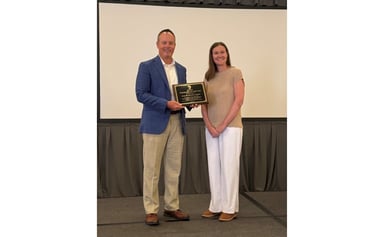
Portrait of Walter F. Kawalec III

Walt focuses the majority of his practice on post-trial appellate advocacy with particular emphasis in the areas of public entity liability and civil rights, insurance coverage/bad faith litigation and professional liability. He has handled several hundred appeals to date, many of which have been in representation of physicians and attorneys, in appeals connected with malpractice litigation.

In his capacity as an appellate attorney, Walt has developed extensive experience briefing and arguing cases before the Third Circuit Court of Appeals, the Supreme Courts of Pennsylvania and New Jersey, Pennsylvania's intermediate appellate courts, the Superior Court and Commonwealth Court, and New Jersey's intermediate court, the Appellate Division. As well, Walt has experience, thus far, up to the petition stage before the United States Supreme Court.

In addition to Walt's involvement in the appellate courts, he has also briefed and argued cases and motions before the Pennsylvania Board of Finance and Revenue, the Pennsylvania Courts of Common Pleas, and the New Jersey Superior Court Law Division.

Walt is a graduate of Glassboro State College and the University of Pittsburgh School of Law, where he earned his juris doctor, cum laude, in 1998. He was the recipient of the Dean's Scholarship for three years, first year moot court competition award for "Best Brief," and served as an officer in Phi Alpha Delta legal fraternity.

In 1999 Walt joined Marshall Dennehey as a member of the Appellate Group. Since that time, he has developed an proficiency in all aspects of appellate law, from legal research, brief writing and other written advocacy to oral argument, and appellate-level motion practice.

Walt's published opinions in New Jersey, Pennsylvania and the Third Circuit Court of Appeals have established and clarified important legal principles on subjects ranging from insurance coverage and remittitur, to informed consent claims in medical malpractice actions, and contributory negligence in accountant malpractice cases.

From 2002 to 2011, Walt also worked as the editor of Defense Digest—Marshall Dennehey's quarterly newsletter that updates our clients on important legal cases and issues of the day.

    • University of Pittsburgh School of Law (J.D., cum laude, 1998)
    • Rowan University (B.A., 1991)
    • Pennsylvania, 1998
    • U.S. Court of Appeals 3rd Circuit, 1999
    • New Jersey, 2002
    • U.S. Supreme Court, 2002
    • U.S. District Court Eastern District of Pennsylvania, 2002
    • U.S. District Court District of New Jersey, 2002
    • U.S. Court of Appeals 4th Circuit, 2017
    • “Reconsidering Reconsideration,” Defense Digest, Vol. 27, No. 5, December 2021
    • Walters v. YMCA, Putting Some Limitations on Stelluti v. Casapenn,” Defense Digest, Vol. 20, No. 4, December 2014
    • "De Facto Appeals Eliminate Federal Jurisdiction," Defense Digest, Vol. 10, No. 4, 2004
    • "Pennsylvania Superior Court Rejects Request To Void Stacked Coverage," Defense Digest, Vol. 10, No. 3, 2004
    • "'Advertising Injury' in the Third Circuit: A Frog Switch and a Green Machine," Defense Digest, Vol. 9, No. 1, 2003
    • "An Injury Is Not An 'Injury' If The Pain Is Non-Compensable," Defense Digest, Vol. 8, No. 2, 2002
    • "Superior Court, S.I.R.'s and the Direct Action Statute: Contracts Rule, Penna. Bar Ass'n, Civil Litigation Newsletter," orig. published in the Defense Digest, 2002
    • "Pennsylvania Appellate News," Defense Digest, Vol. 7, No. 1, 2001
    • "Appellate Courts Refine Pennsylvania Settlement Law," Defense Digest, Vol. 6, No.1, 2000
    • "Pennsylvania Appellate News," Defense Digest, Vol. 5, No. 4, 1999
    • Obtained summary judgment on behalf of an obstetrician in a medical malpractice action. The plaintiff alleged that our client did not obtain the requisite informed consent from our client to undergo a trial of labor after having two prior cesarean section deliveries (“TOLAC x2”). The court found that the plaintiff’s lack of informed consent claim was without foundation as she had an awareness of the risks of TOLAC x2. Rather, the court found that her claim was premised on the assertion that the physician performing the TOLAC x2 failed to convert the TOLAC to a C-section quickly enough when complications arose. The court held that as matter of law our client had no obligation to discuss the risk that the doctor in the delivery room may wait too long to pivot to a C-section, which was the actual cause of the plaintiff’s alleged harm.
    • Successfully defended a grant of summary judgment in the New Jersey Appellate Division that resulted in a published opinion. Our clients were the owner and manager of an apartment complex for seniors. The plaintiff resident had returned from walking her dog and alleged she received injuries entering the elevator. She had allowed the dog to enter first, when the doors began to close. She alleged injuries occurring when the right door struck her arm, and when she used her left arm and left side of her body to slow the doors from closing while she leapt into the elevator.  
    • She sued our clients and the company hired to maintain the elevator, but was unable to establish any proof of negligence. The trial judge dismissed the case, declining to apply the doctrine of res ipsa loquitur, in part, because the plaintiff could not establish the third element of the doctrine: that the injury did not result from the plaintiff’s own voluntary act or neglect. On appeal, the plaintiff argued that the Appellate Division should eliminate this third element. The Appellate Division, in a published opinion, concluded that the third element is a well-established law in New Jersey and only the New Jersey Supreme Court could eliminate it, and that court has shown no inclination to do so. Because the plaintiff could not demonstrate the third prong, res ipsa was not applicable and the failure of the plaintiff to establish negligence resulted in summary judgment in the defendants’ favor.
    • Successfully argued to the New Jersey Supreme Court that the grant of a new trial by the Appellate Division in medical malpractice action was erroneous, as the plaintiff failed to object to the matter at trial and could not establish plain error.
    • Successfully argued to the US District Court and Third Circuit Court of Appeals that a municipalities decision close a property to the public during the removal of a significant amount of buried military ordinance did not constitute a constitutional violation or takings.
    • Successfully argued that the represented municipality enacted a valid regulatory ordinance and not an improper licensing ordinance notwithstanding the use of the term “license” in the ordinance.
    • Successfully briefed arbitration argument and achieved a defense result in multi-million dollar binding arbitration in construction defect case.
    • Successfully persuaded the Appellate Division to reinstate multi-million dollar complaint dismissed in the Law Division.
    • Successfully argued for the reversal of a dismissal of the insurance carrier's fraud complaint, which clarified the operation of the entire controversy doctrine in New Jersey.
    • Successfully argued that a minor deviation on the form for rejecting the stacked limits for UIM coverage was not enough to vitiate the policy-holder's rejection of stacked coverage.
    • Successfully argued that a trial court committed reversible error when, after the Appellate Division found the verdict to be excessive and remanded the case for remittitur, remitted the verdict by one cent.
    • Successfully argued that parties who were found guilty of criminal tax evasion were estopped from denying their contributory negligence in a civil suit against their accountant, stemming from the preparation of those income tax returns.
    • Successfully argued that the term "advertising injury" in policy was limited to claims arising out of the misappropriation of advertising ideas or style of doing business.
    • Successfully argued that a plaintiff who was successful against a carrier's policyholder has no claim against the carrier for the amount of the self-insured retention of the policyholder.
    • T.L. v. Goldberg, N.J., A-11-18 (N.J. 2019)
    • Cona v. Tp. of Wash., 456 N.J. Super. 197, 201 (N.J. App. Div. 2018)
    • Estate of  Brust v. ACF Industries, LLC, 443 N.J. Super. 103 (N.J. App. Div. 2015)
    • Bermudez v. Kessler Institute for Rehabilitation , 439 N.J. Super. 45 (N.J. App. Div. 2015) 
    • Nat'l Amusements, Inc. v. Borough of Palmyra, 716 F.3d 57 (3d Cir. 2013)
    • Manahawkin Convalescent v. O'Neill, 217 N.J. 99 (N.J. 2014)
    • EEOC v. Geo Group, Inc., 616 F.3d 265 (3rd Cir. 2010)
    • Biber Partnership, P.C. v. Diamond Hill Joint Venture, LLC, 404 N.J. Super. 96 (App. Div. 2008)  
    • Allstate New Jersey Ins. Co. v. Cherry Hill Pain & Rehab. Institute, 389 N.J. Super. 130 (App.Div 2006)
    • Marran v. Marran, 376 F.3d 143 (3d Cir. 2004)
    • Vosk v. Encompass Ins. Co., 851 A.2d 162 (Pa. Super. 2004)
    • Columbia Med. Group, Inc. v. Herring & Roll, P.C., 829 A.2d 1184 (Pa. Super. 2003)
    • Tomaino v. Burman, 364 N.J. Super. 224 (App. Div. 2003)
    • Green Machine v. Zurich-American Ins. Co., 313 F.3d 837 (3d Cir. 2002)
    • Hohns v. Gain, 806 A.2d 16 (Pa. Super. 2002)
    • Kleban v. National Union Fire Insurance Co., 771 A.2d 39 (Pa. Super. 2001)
    • Miller v. Sacred Heart Hospital, 753 A.2d 829 (Pa. Super. 2000)

Results

Successfully Overturned $1.8 Million Judgment on Appeal in New Jersey

We successfully overturned a $1.8 million judgment on appeal in a case that involved the Laidlow exclusion in a workers’ compensation/employers liability policy. The decedent succumbed to heat exhaustion while at work, and the plaintiff alleged the death was due to working conditions the employer knew were substantially certain to lead to injury. Our client, the insurer, offered to defend the employer, but only to the extent of obtaining dismissal of the workers’ compensation claim, which was filed in the wrong forum. The insured rejected the offer, and suit for the injury and coverage claims commenced. At summary judgment, the trial court refused to apply the policy’s clear and prominent Laidlow exclusion barring all coverage for claims in the Superior Court whether alleged as negligent or intentional. The trial court entered judgment in the amount of the arbitration award and awarded defense costs for the Laidlow suit, costs of the declaratory judgment action and interest. The matter went up on appeal. After briefing, but before argument, the New Jersey Supreme Court released the Rodriguez decision, which validated our client’s position on application of the Laidlow exclusion and went even further to hold that the employer’s liability carrier has no obligation to provide a defense for the common law negligence claims filed in the Superior Court. The trial court refused to apply the principles enunciated by the appellate division in the Rodriguez decision and refused to apply the reasoning of a second unpublished appellate court decision directly on point. The trial court simply ignored the cases, reasoning they were unpublished. Prior to oral argument in our matter, the Rodriguez decision was published, and the plaintiffs abandoned the case, settling for nuisance value.

Favorable Decision Obtained from the Court of Appeals for the Third Circuit

We received a favorable decision from the Court of Appeals for the Third Circuit in a First Amendment case. The circuit court affirmed the District of New Jersey’s denial of a preliminary injunction in which the plaintiff claimed that federal and local officials violated her First Amendment rights through censorship and retaliation after she posted comments on Facebook. In a published decision, the Third Circuit agreed with our arguments that the plaintiff lacked standing since she could not demonstrate a substantial risk of future harm specific to our client, the former chief of police of North Hanover, NJ, as well as the other co-defendants.   

Thought Leadership

Defense Digest

Reconsidering Reconsideration

December 1, 2021

Key Points: The standards applicable to reconsideration vary depending on whether it is a motion from an interlocutory order or a final order. Reconsideration of final orders is a much harder standard, whereas reconsideration of interlocutory orders only requires consideration of the court’s “sound discretion” and the “interest of justice.” Parties who want to seek interlocutory appeal after requesting reconsideration should take special care to file a timely motion for reconsideration so as not to miss the time limit for petition for interlocutory appeal. Let us take a moment to reconsider reconsideration. In a recent case before the New Jersey Appellate Division, Lawson v. Dewar, 256 A.3d 388 (N.J. Super. App. Div. 2021), the court took the opportunity to clarify the different standards that apply to reconsideration. In Lawson, the plaintiff filed suit against a municipality and a number of police officers, alleging the officers used excessive force when arresting him. After a case management conference, the plaintiff moved for an additional extension of discovery, the right to take certain depositions, reconsideration of an order barring a witness from testifying after the witness failed to appear for a subpoenaed deposition, leave to file an amended complaint, and for the defendant to turn over all use-of-force reports. On May 14, 2020, the court denied most of the relief sought, and the plaintiff filed a motion for reconsideration. While the reconsideration motion was pending, the venue of the case was changed from Somerset to Middlesex County. The parties argued the reconsideration motion, and the Middlesex County judge denied it. The plaintiff filed a petition for leave to appeal, which the Appellate Division granted.  On appeal, the Appellate Division first set out the legal principles that the Middlesex County judge invoked, including the coordinate-jurisdiction rule, which cautions against reversing the decisions of coequal members of the judiciary, and the law-of-the-case doctrine, that cautions against reconsidering decisions that have already been determined in the case. It also noted that the Middlesex County judge found that the reconsideration motion presented no new facts; that the plaintiff failed to show that the Somerset County judge acted in an arbitrary, capricious or unreasonable manner; that the initial decision was not based on a palpably incorrect or irrational basis; and that the previous judge did not fail to appreciate the significance of probative, competent evidence. The Appellate Division then took the opportunity to clarify the rules that apply to the two general species of reconsideration: reconsideration of an interlocutory order and reconsideration of a final order or judgment. The New Jersey Rules of Court and case law treat each differently, but they are often confused. The court noted that the principles the Middlesex County judge discussed apply to a motion for reconsideration from a final order. In that situation, Rule 4:49-2 applies, and a party must file within 20 days. Further, the standard that the Middlesex Court described—usually credited to the case of Cummings v. Bahr, 685 A.2d 60 (N.J. Super. App. Div. 1996)—applies. In motions for reconsideration after a final order, a party must demonstrate that the judge who issued the order sought to be reconsidered decided it in an arbitrary, capricious or unreasonable manner; that the decision was based on a palpably incorrect or irrational basis; or that the judge failed to appreciate the significance of probative, competent evidence. However, on motions for reconsideration of interlocutory orders, by contrast, the same standard does not apply. Rule 4:42-2 governs reconsideration of interlocutory orders and provides a far more liberal approach. Until a final order is issued, the “interest of justice” and the judge’s “sound discretion” guide reconsideration of an interlocutory order. Moreover, there is no time limit to reconsider interlocutory orders. Additionally, the Appellate Division restated that neither the coordinate-jurisdiction rule nor law-of-the-case doctrine apply to interlocutory reconsideration motions and should correct errors made by other judges when justice requires. The Lawson court, however, did not address an important consideration regarding reconsideration. While there is no time limit to petition for reconsideration of an interlocutory order, if a party wants to seek an immediate appeal of an interlocutory order, a 20-day time limit applies. A motion for reconsideration tolls that time limit, but only if the reconsideration motion is filed within 20 days. Therefore, while there is no time limit for filing a reconsideration motion on an interlocutory order, a party wishing to file a motion for interlocutory appeal after filing for reconsideration must file the reconsideration motion within 20 days or they may be out of time to seek interlocutory appeal. *Walt is a shareholder in our Mount Laurel, New Jersey, office and is a member of our Appellate Advocacy and Post-Trial Practice Group. He can be reached at 856.414.6024 or wfkawalec@mdwcg.com.   Defense Digest, Vol. 27, No. 5, December 2021 is prepared by Marshall Dennehey Warner Coleman & Goggin to provide information on recent legal developments of interest to our readers. This publication is not intended to provide legal advice for a specific situation or to create an attorney-client relationship. ATTORNEY ADVERTISING pursuant to New York RPC 7.1. © 2021 Marshall Dennehey Warner Coleman & Goggin. All Rights Reserved. This article may not be reprinted without the express written permission of our firm. For reprints, contact tamontemuro@mdwcg.com.

Firm Highlights

Thought Leadership

PA Middle District Dismisses Claims Against School District and its Superintendent, Principal, Special Education Director, and Classroom Teacher

A five-year-old special education student was enrolled in the Wyoming Valley West School District and attended the State Street Elementary School during the 2024-2025 school year. The student refused to clean up classroom toys at dismissal. When his teacher allegedly grabbed him by the wrist to walk him back to his seat, the student dropped to the floor and began crying. The teacher then allegedly grabbed the student by the ankle and dragged him across the floor. Following an investigation, criminal charges were not advanced by the county DA, and the school permitted the teacher to return to the classroom. The student’s parents sued, lodging thirteen legal counts under both state and federal law, which sought monetary damages from the teacher, the school district, the superintendent, the principal, and the director of special education. The plaintiff’s 42 USC 1983 claims were dismissed as to the school district for failure to allege a policy or custom violation, and the failure to alleged deliberate indifference in the failure-to-train context. As to the superintendent, building principal, and special education director, the Section 1983 claims were also dismissed for failure to allege personal involvement on the part of the individuals. Regarding an equal protection claim asserted against all defendants, the motion to dismiss was also granted for a failure to advance a plausible equal protection claim, holding that “plaintiffs' single-act allegations do not include a factual basis to even infer that the act was motivated by discriminatory animus rather than some other non-discriminatory impulse.” The court further dismissed the plaintiff’s negligence-based claims including negligence against the teacher and district administrators, NIED, and vicarious liability under the Political Subdivision Tort Claims Act (PSTCA). The federal claims under the IDEA, Section 504, and the ADA were also dismissed in various respects. The IDEA claim was dismissed against all defendants with prejudice for failure to exhaust administrative remedies. The Section 504 claims against the individual defendants were also dismissed with prejudice, as districts, not individuals, are the recipients of federal funds under Section 504. However, the Section 504 and ADA claims were dismissed without prejudice as to defendant Wyoming Valley West, and the plaintiff was permitted leave to amend.

Result

No-Cause Jury Verdict Secured in Wrongful Death Trial

We successfully obtained a no-cause jury verdict in a 13-day wrongful death trial. The decedent, a 59-year-old man, was admitted to the emergency room on February 15, 2019, with complaints of abdominal pain, decreased appetite, and constipation, despite the use of laxatives. The patient did not complain of any nausea, vomiting, or diarrhea. He had a significant medical history including diabetes, hypertension, prior coronary artery stenting, morbid obesity (with past gastric bypass surgery), longstanding ventral hernia, and back pain. A CT scan revealed multiple hernias and a potential closed-loop bowel obstruction, leading to a surgery consultation. Our client, an emergency general surgeon, interpreted that the patient did not have a closed loop or any significant obstruction and recommended non-surgical management. The patient was approved to have clear liquids, and had a vomiting incident shortly after, but our client was not notified. The patient was returned to NPO status, and after improving overnight, he was returned to “clears” and additional medical and renal consults were ordered. Our client did not receive any communications from the residents/nurses of any changes in the patient’s condition. On February 18, 2019, two rapid responses were called due to increased heart rate and vomiting. It is believed that the vomiting resulted in aspiration, causing sepsis, ultimately leading to the patient’s death. During the trial, the plaintiff’s sole medical expert highlighted imaging on the wrong hernia, which called into question all of his opinions in the case. We made key objections related to the expert testimony, limiting what the allegations were, and preventing new allegations from being made. After approximately two and a half hours of deliberating, the jury returned a no-cause verdict. 

Thought Leadership

U.S. Supreme Court Decides Key Issue Regarding Interstate Freight Broker Liability

Freight brokers are intermediaries.  They connect shippers of goods with trucking companies that transport those goods.  Freight brokers match a load of freight with a trucking company and oversee the logistics of the transportation. For a number of years there has been a division among the Federal Circuits regarding the potential liability of freight brokers when the trucking companies that they retain for interstate loads are involved in accidents.  At the center of this division was the Federal Aviation Administration Authorization Act of 1994 (FAAAA).  Some Federal Circuit Courts have held that state law negligent hiring claims against freight brokers were preempted by the FAAAA .  Other Federal Circuits Courts have held that even if preemption applied, the “safety exception” in the FAAAA saved state law negligent hiring claims from federal preemption.  On May 14, 2026, the U.S. Supreme Court addressed the conflict in Montgomery v. Caribe Transport II, LLC, et al, No24-1238. In that case freight broker C.H. Robinson selected Caribe Transport to haul an interstate load. The commercial truck driver employed by Caribe Transport allegedly caused an accident and the plaintiff, Montgomery, was seriously injured. Montgomery brought an action against the driver, Caribe Transport and C.H. Robinson. The allegation against C.H. Robinson was that it negligently retained Caribe Transport when it knew, or should have known, that it was an unsafe company. The Seventh Circuit Court of Appeals held that Montgomery’s claims against C.H. Robinson were preempted by the FAAAA. The plaintiff appealed to the U.S. Supreme Court.  The U.S. Supreme Court’s decision focused primarily on the safety exception in the FAAAA.  That provision provides that the FAAAA preemption “…shall not restrict the safety regulatory authority of a State with respect to motor vehicles.” C.H. Robinson argued, as freight brokers historically have, that their function was not “with respect to motor vehicles” because they do not own trucks or employ drivers. They are merely intermediaries, connecting entities who need freight moved with entities who can do that job. Therefore, C.H. Robinson argued that preemption applied, not the safety exception. The U.S. Supreme Court did not accept that argument. The Court focused on the meaning of the phrase “with respect to” in the safety exception. The Court held that it means “referring to”, “concerning” or “regarding”. Therefore, writing for a unanimous Court, Justice Barrett concluded that “[r]equiring C.H. Robinson to exercise ordinary care in selecting a carrier therefore “concerns” motor vehicles—most obviously, the trucks that will transport the goods. So, Montgomery’s negligent-hiring claim falls within the FAAAA’s safety exception, which saves it from preemption.” Justice Kavanaugh, in his concurring opinion, noted the effect this ruling may have on freight brokers and their insurers throughout the country: Importantly, the Court's decision today should not be read to mean that brokers will routinely be subject to state tort liability in the wake of truck accidents. As even plaintiff's counsel stressed, brokers should be able to successfully defend against state tort suits if the brokers have acted reasonably and arranged transportation with reputable trucking companies. Tr. of Oral Arg. 27-29. In plaintiff's counsel's words, the brokers "just have to hire carriers that actually have a reasonable policy," and "the broker is not going to have a problem if it's asking the hard questions of the carrier." Id., at 42, 45. In addition, the proximate-cause requirement in typical state tort law should help protect brokers from excessive liability. Id., at 25. That said, the brokers rightly caution against naivete. In the real world, as the brokers forcefully respond, state tort law can be unpredictable, and the costs to brokers of litigation and insurance may be significant even when brokers prevail in lawsuits. Moreover, the costs of litigation and insurance, as well as the costs of brokers' conducting more substantial inquiries into trucking companies, will cascade through the economy and be paid in part by American consumers in the form of higher prices. The concerns expressed by the brokers are legitimate and weighty. The key point here is that freight brokers can no longer claim they are protected from negligent retention claims by the FAAAA (in cases involving interstate transportation). The challenge will be to determine what is considered ”reasonable efforts” used by brokers when retaining transportation companies.