.

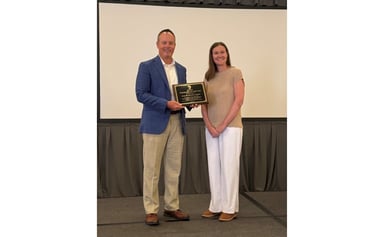
Ray C. Freudiger

Portrait of Ray C. Freudiger

Ray Freudiger is a highly experienced litigator, having represented and defended clients in over 100 bench and jury trials in the state and Federal courts of Ohio. He has spent his career defending businesses and public entity clients in a wide variety of professional and general liability claims and suits brought against them. 

As a member of the firm’s Professional Liability Department, Ray has experience defending school districts in a wide array of matters including allegations of wrongful termination and discrimination and has knowledge of Special Education laws needed to appear in due process hearings before independent hearing officers. He also defends employers against allegations of discrimination based on race, gender, ethnicity and/or national origin. He represents these clients before the Ohio Civil Rights Commission, the EEOC, and in the federal and state courts. Ray additionally defends insurance agents and brokers, amusement park operators, real estate brokers & agents, architects, engineers, surveyors and homeowners associations in errors & omissions claims. Since joining the firm, he has had 11 jury trials, 10 of which resulted in a defense verdict and the other verdict substantially less than the pretrial offer. 

Ray has defended clients before administrative agencies such as in the Ohio Division of Real Estate, Ohio Civil Rights Commission, and Department of Urban Development (HUD). He also regularly conducts seminars for real estate brokers and their agents on real estate law issues, as part of their continuing education requirements and to help them to avoid litigation. Prior to attending law school, Ray obtained his property and casualty insurance license, which has served him well in representing clients in insurance coverage and bad faith matters.
 

    • University of Cincinnati College of Law (J.D., 1991)
    • University of Cincinnati (B.B.A., 1982)
    • Ohio, 1991
    • U.S. District Court Southern District of Ohio, 1993
    • U.S. Court of Appeals 6th Circuit, 2017
    • U.S. District Court Northern District of Ohio, 2018
    • Supreme Court of the United States, 2019
    • Cincinnati Bar Association
    • Ohio State Bar Association, Education Law Committee
    • Dayton Bar Association, Civil Trial Practice Committee
    • Ohio Association of Civil Trial Attorneys, Alternative Dispute Resolution Committee
    • DRI (Defense Research Institute)
    • Education Law Association
    • An Overview of Commercial Auto Insurance in Pennsylvania & Ohio, Marshall Dennehey Client Presentation, January 26, 2021
    • Risk Management Best Practices for Engineers, Client Presentation, January 25, 2018
    • Secured a decision from the United States Sixth Circuit Court of Appeals, which affirmed a jury verdict in favor of our client, a housing authority in Ohio.  After written Briefing and oral argument, The Sixth Circuit affirmed the jury verdict in which the Appellant developer failed to prove that the Housing Authority discriminated against it (in violation of ADA and FHA) by refusing to apply to HUD for VASH vouchers on behalf of the developer. The developer failed to prove it asked the housing authority for VASH on behalf of disabled persons, the request was not reasonable, and the request was not necessary to enable disabled persons to enjoy their residents as non-disabled persons could.
    • Secured dismissal on behalf of our client, an insurance agency in Hamilton County, Ohio. The plaintiff entity alleged that it suffered monetary damages by having to pay for claims made against its California employees. It alleged the agency failed to obtain Employment Practices Liability insurance for the company’s California employees. In our Motion to Dismiss, Ray successfully argued that the “economic loss doctrine” barred all claims against the agency. 
    • Successfully argued in Motion for Summary Judgment that Plaintiffs' claims were precluded by law because the general grant of immunity pursuant to R.C. §2744.01 applied to them as a political subdivision and no exception to immunity existed. Plaintiffs, a minor student and parent, filed suit against the school district, school board, supervising teacher, and principal alleging they were negligent when an afterschool science project (through the STEM program) caught fire causing burn injuries to the student. This included the exception that allows for negligence claims when there is a physical defect within or on the grounds of the entity.  Further, the individual employees were also granted immunity because they were acting in their official capacities and thus the same analysis afforded to the school applied to the individuals. The Judge ultimately granted our Motion and dismissed Plaintiffs' claims.  
    • Obtained dismissal of an Ohio insurance agent who was sued by a condominium association.  The allegation was that the insurance agent inappropriately and unlawfully inserted himself into the insurance company’s investigation and tortuously interfered with the contract that resulted in the insurance company paying far less than the $1.3 million in damages alleged by the condominium association.  After taking depositions of the individuals from the condominium association, the insurance company, and defending his client’s deposition, Ray convinced Plaintiff’s attorney to dismiss all claims against the insurance agent.
    • Obtained a summary judgement in a slip and fall matter involving a liquor store, where the plaintiff slipped and fractured her wrist upon stepping into the store on May 18, 2018. Heavy rain that evening allegedly caused water to be blown inside, which Field claimed as the cause of her fall. A wet floor sign was present, but she did not see it. We argued that the rainwater was an open and obvious condition, which under Ohio law, they had no duty to warn against. The court, citing similar cases, agreed, noting that a property owner is generally not liable for injuries from open and obvious conditions like rainwater. As Field failed to establish that the defendants breached their duty of care, the court granted summary judgment in favor of the defendants.
    • Obtained a summary judgement for a general contractor insured by our client. Plaintiff was working for his employer at a fracking site when he was struck in the head by a hose that came off an above-ground storage tank. He sustained serious and permanent injuries. Plaintiff claimed the general contractor was liable for his injuries because it actively participated on the work site and controlled the unsafe condition which caused his injuries. We moved for summary judgment arguing that the general contractor relinquished complete control over the site to a sub-contractor and, thus, it had no control over any unsafe condition which caused the Plaintiff’s injuries. The trial court agreed and granted summary judgment in favor of our client.
    • Secured significant victory in wrongful death commercial liability action at both trial and appellate court levels in suit involving death of 18-year old woman who was struck and killed by a commercial truck that was backing up an access ramp to deliver product at a grain receiving facility at the same time the woman traversed onto the ramp.
    • Obtained a defense verdict in a jury trial where the case involved a rear end car accident. The plaintiff alleged serious and permanent injury, and while our client admitted fault, their contention was that the impact was of a minimal nature. The plaintiff incurred over $69,000 in medical expenses after the accident, and made a settlement demand of $200,000. The plaintiff rejected our nominal offer to settle the case before trial. Through the use of medical expert testimony, the defense contended that plaintiff's treatment was fueled by her subjective complaints, but there was no objective evidence of injury. The jury ruled in favor of the defendant.
    • Obtained a summary judgment on behalf of an insurance agent and the insurance agency. The agent and agency helped a business procure property and liability insurance on its business. A fire loss occurred and the insured discovered that it did not have business interruption coverage. It sued the agent and the agency for negligence, breach of contract and estoppel in failing to procure business interruption coverage for the insured. We convinced the Court that an insurance agent only has a duty to seek coverage which has been requested by the insured. Although the agent reassured the insured the day after the fire that the insured had business interruption coverage, the fact that this statement was incorrect, there is no evidence of any reliance by the insured, any reliance would have been unreasonable and unforeseen and the insured would have know that the agent's statements were incorrect if it had looked at the policy in its possession.
    • Successfully defended EEOC Charge of Discrimination brought against charter school client for alleged disability discrimination and failure to provide reasonable accommodation in violation of the Americans With Disabilities Act, as well of claims of FMLA interference and retaliation, resulting in finding of No Probable Cause in favor of employer.
    • Obtained summary judgment on behalf of insurance agency and insurance agent clients in insurance agent/broker professional liability action involving alleged failure to procure business interruption coverage for insured's start-up restaurant, which subsequently sustained uncovered fire loss.
    • Obtained summary judgment on behalf of one of nation’s largest grocery store chains in significant federal rights action that received considerable media attention venued in federal court in Cincinnati involving unruly patron and patron's right to open carry weapon on private premises.
    • Secured dispositive dismissal on behalf of national insurance carrier in breach of contract and bad faith action involving residential fire that occurred at insureds' residence. In addition, as a result of in-depth investigation and discovery in civil suit, insureds were charged with and pled guilty to crimes of arson and insurance fraud.

Results

Summary Judgment Secured, Preserving $750,000 in Coverage for Insured in Major Trucking Liability Dispute

Ray Freudiger and Michael A. Roberts (both of Cincinnati) successfully obtained summary judgment on behalf of their client in a coverage dispute arising from a May 19, 2022, motor vehicle accident. A permissive driver operated a box truck for an interstate trucking company and caused severe injuries to two tort victims. Prior to the accident, the insured had procured a commercial auto policy for the trucking company with stated limits of $1,000,000. Following the accident, the insurer initiated a declaratory judgment action asserting that only reduced bodily injury limits of $25,000/$50,000 applied and later counterclaimed, alleging it would not have insured the driver had he been properly submitted for approval under the policy. After extensive discovery, briefing, and oral argument, the court rejected the insurer’s attempt to shift responsibility for the $750,000 in coverage it was legally required to provide for permissive drivers under Ohio law, granting summary judgment in favor of the insured and preserving $750,000 in liability exposure.

Summary Judgment Secured in a Design Defect Case

We won summary judgment on behalf of a company that provided software for the overall design of roof trusses in a design defect case. The plaintiff owned the apartment complex being built and hired Turnbull Wahlert to construct the building. 84 Lumber was subcontracted by Turnbull to build and install the roof trusses. 84 Lumber contracted with our client to use its software for the design of the roof trusses and to provide truss connect plate hangers. The building experienced severe water damage allegedly because the roof trusses were not sloped properly and the HVAC units were misplaced on the roof. Damages were estimated at over $1.2 million. 84 Lumber demanded that our client defend and indemnify it against Turnbull’s allegations. The court granted our motion for summary judgment.

Thought Leadership

Legal Updates for Real Estate E&O Liability

New Ohio Law Targets Real Estate Wholesaling Practices

May 7, 2026

Effective March 2, 2026, the Ohio Department of Commerce Division of Real Estate and Professional Licensing (REPL) now requires real estate wholesalers to clearly disclose their intention and business model when contracting with a property owner and seller.  This was part of Ohio Senate Bill 155, which passed unanimously in the Ohio Senate in June 2025, and was signed into law by Governor Mike DeWine on December 1, 2025.  Real estate wholesalers serve as intermediaries in property transactions. They enter into a purchase agreement with a seller with no intent to buy the property themselves. Instead, they assign the contract to another buyer or investor at a higher price or charge a fee, typically 5% to 10% of the sale price, to earn a profit. The REPL, in partnership with the Ohio Department of Aging (ODA), and Ohio District 5 Area Agency on Aging in Richland issued a Consumer Alert in March 2025, on wholesalers, citing a rise in unsolicited real estate offers targeting older Ohio homeowners, often offering complex financial arrangements that include hidden risks, leaving older homeowners financially vulnerable. Under this new legislation, real estate wholesalers in Ohio are required to disclose their status to sellers or property owners and clarify that they do not represent the seller in the transaction. The law mandates that this disclosure be made through a clear and conspicuous written statement informing the seller that the individual is acting as a wholesaler. This disclosure must also be separate from the purchase contract or agreement between the parties and must be printed in bold type with a font size of at least 12 points. In the event a wholesaler fails to provide proper notice to the seller, the seller may cancel the purchase contract at any time before the close of escrow without penalty, giving the wholesaler 30 days to return any earnest money or deposits to the seller. Wholesalers who do not clearly disclose their role or properly inform the seller may also face disciplinary action from the Ohio Superintendent of Real Estate. This can include penalties such as suspension or revocation of their real estate license, as well as potential civil liability, monetary damages, and responsibility for attorneys’ fees.

Legal Updates for Special Education Law

Ohio Law Does Not Conflict with the Individuals with Disabilities in Education Act

April 1, 2025

The Ohio Department of Education and Workforce (DEW) oversees Ohio’s implementation of the Individuals with Disabilities in Education Act (IDEA), a federal law that entitles children with disabilities to a free appropriate public education (FAPE). In a recent lawsuit, DEW argued that a state court lacked subject matter jurisdiction over an IDEA claim because the state’s administrate code conflicted with the IDEA and, therefore, was preempted by federal law. State ex rel. Governing Bd. of Warren Cnty. Educational Serv. Ctr. v. Ohio Dept. of Education & Workforce, 2024-Ohio-6061 (12th Dist.). The specific conflict advanced by DEW was that the IDEA complaint procedure applied to any “public agency, while Adm.Code 3301-51-05(K)(5) and (6) is more circumscribed by applying only to a disabled child's ‘school district of residence.’ ” At the trial level, the court disagreed with DEW’s argument, holding that IDEA complaint procedures set forth in 34 C.F.R. 300.152 and 34 C.F.R. 300.153 and those set forth by Adm.Code 3301-51-05(K)(5) and (6) are “virtually identical,” with the exception that the C.F.R. uses the term “public agency” while the Adm.Code uses the term “school district of residence.”  The Twelfth District Court of Appeals agreed that Ohio’s complaint procedures were not in conflict with federal law. The appeal court explained that the IDEA and 34 C.F.R. 300.152 and 300.153 were crafted with general language to accommodate the variations of 50 states’ educational systems. As such, it makes sense that C.F.R. used the broad term “public agency” in the IDEA regulations. Adm.Code 3301-51-05(K)(5) and (6) do not truncate the IDEA or limit its protections; thus, they are not in conflict. In summary, the IDEA does not preempt Ohio’s administrate code regarding the procedure for filing an IDEA claim.    Legal Update for Special Education Law – April 2025 is prepared by Marshall Dennehey to provide information on recent legal developments of interest to our readers. This publication is not intended to provide legal advice for a specific situation or to create an attorney-client relationship. We would be pleased to provide such legal assistance as you require on these and other subjects when called upon. ATTORNEY ADVERTISING pursuant to New York RPC 7.1 Copyright © 2025 Marshall Dennehey, all rights reserved. No part of this publication may be reprinted without the express written permission of our firm. For reprints or inquiries, or if you wish to be removed from this mailing list, contact tamontemuro@mdwcg.com.


Firm Highlights

Result

No-Cause Jury Verdict Secured in Wrongful Death Trial

We successfully obtained a no-cause jury verdict in a 13-day wrongful death trial. The decedent, a 59-year-old man, was admitted to the emergency room on February 15, 2019, with complaints of abdominal pain, decreased appetite, and constipation, despite the use of laxatives. The patient did not complain of any nausea, vomiting, or diarrhea. He had a significant medical history including diabetes, hypertension, prior coronary artery stenting, morbid obesity (with past gastric bypass surgery), longstanding ventral hernia, and back pain. A CT scan revealed multiple hernias and a potential closed-loop bowel obstruction, leading to a surgery consultation. Our client, an emergency general surgeon, interpreted that the patient did not have a closed loop or any significant obstruction and recommended non-surgical management. The patient was approved to have clear liquids, and had a vomiting incident shortly after, but our client was not notified. The patient was returned to NPO status, and after improving overnight, he was returned to “clears” and additional medical and renal consults were ordered. Our client did not receive any communications from the residents/nurses of any changes in the patient’s condition. On February 18, 2019, two rapid responses were called due to increased heart rate and vomiting. It is believed that the vomiting resulted in aspiration, causing sepsis, ultimately leading to the patient’s death. During the trial, the plaintiff’s sole medical expert highlighted imaging on the wrong hernia, which called into question all of his opinions in the case. We made key objections related to the expert testimony, limiting what the allegations were, and preventing new allegations from being made. After approximately two and a half hours of deliberating, the jury returned a no-cause verdict. 

News

Marshall Dennehey’s John J. Hare Brings Home Attorney of the Year Honors; Firm Named Litigation Department of the Year in Two Categories

Marshall Dennehey took home top honors in three categories at the The Legal Intelligencer’s 2026 Pennsylvania Legal Awards, held June 11 in Philadelphia. The first place awards include: Attorney of the Year: John J. Hare, Chair of the firm’s Appellate Advocacy & Post-Trial Practice Group and Executive Committee member, together with Charles “Chip” Becker of Kline & Specter Litigation Department of the Year, Appellate – Third Win in a Row! Litigation Department of the Year, Product Liability/Mass Torts “There is no one more deserving of Attorney of the Year honors than John. This award is a testament to his exceptional skill, dedication, and leadership—qualities that truly exemplify the very best of our firm,” said G. Mark Thompson, Marshall Dennehey’s President & CEO. “These honors also reflect the strength and depth of our product liability, mass torts, and appellate practices across Pennsylvania and beyond, underscoring our ongoing commitment to delivering outstanding results for our clients.” Attorney of the Year – John J. Hare, Marshall Dennehey, together with Charles “Chip” Becker, Kline & Specter Over the past year, John and Charles were opposing counsel in many of the highest-profile civil appeals in Pennsylvania. John is renowned as a preeminent appellate lawyer on the defense side, and Chip on the plaintiff's side. They have opposed each other repeatedly, exhibiting peerless professionalism and exceptional civility, while zealously litigating under the unremitting pressure of high-profile litigation and record-setting verdicts totaling more than $3.5 billion. They have also collaborated, outside of litigation, on many commissions, committees, and projects of importance to the Pennsylvania judiciary and legal community. Litigation Department of the Year – Appellate Law, Winner (previous winner, 2025 and 2024) 2025 was another standout year for the firm’s Appellate Advocacy & Post‑Trial Practice Group, led by John J. Hare, which was retained to challenge many of Pennsylvania’s “nuclear” verdicts—awards exceeding $10 million. Notably, the department persuaded the Pennsylvania Superior Court to reverse a Philadelphia judgment of $1.09 billion, the largest judgment ever overturned by a Pennsylvania appellate court. The group’s 11 full‑time Pennsylvania‑based appellate lawyers are at the center of Pennsylvania’s most high-profile matters, bringing more than 150 years of combined appellate experience. They routinely handle post‑trial and appellate matters and are frequently engaged to participate in and monitor trials in high‑exposure cases to ensure that critical legal issues are properly raised and preserved for appeal. Litigation Department of the Year – Product Liability/Mass Torts, Winner This marks the first win for the firm’s Pennsylvania Product Liability and Mass Torts practices, which operate within our Casualty Department, managed by Matthew Schorr and Jeff Rapattoni. For almost five decades, Fortune 500 product manufacturers/distributors and their insurers have turned to these groups to defend their litigation. Led by Bradley D. Remick and Vlada Tasich, our Product Liability group’s success can be attributed to its commitment to keeping abreast of ever-changing legal theories, judicial viewpoints, and evolving technology impacting the product liability landscape. Our attorneys have successfully handled thousands of product liability matters in all jurisdictions across the state. Likewise, our mass tort litigation practice – divided into Asbestos & Mass Tort, and Environmental & Toxic Tort Litigation –  has defended manufacturers, distributors, contractors, and premises owners in thousands of personal injury and other claims. Led by Kevin E. Hexstall and Patrick T. Reilly, most attorneys in these groups have more than 20 years of experience, and our seasoned trial team has tried hundreds of cases to verdict, consistently achieving strong results through both trials and settlements. In addition to these awards, Marshall Dennehey was a Litigation Department of the Year finalist for Professional Liability.

Thought Leadership

Perlmutter Provides Predictability for Punitive Damages Claims in Florida

In a much anticipated decision, the Florida Supreme Court provided clarity for the standards of proof for punitive damages claims in Perlmutter v. Federal Insurance Company, SC2024-0058 (Fla. June 11, 2026). Litigants and trial judges must be mindful of the standards laid out by the Court. And, defense practitioners must be prepared to alter their strategies to defend against such claims. Perlmutter came to the Court from the Fourth District, based on conflict jurisdiction with decisions from the Second and Fifth District and on certification of a question of great public importance as to the standard of proof for punitive damages claims at the pleading stage. Fed. Ins. Co. v. Perlmutter, 376 So. 3d 24, 29 (Fla. 4th DCA 2023). In the underlying case, the Fourth District made two conclusions. First, it held that a “trial court must consider the evidentiary showing by all parties at the hearing on the motion to amend, that is, evidence ‘in the record’ and evidence ‘proffered by the claimant.’”  376 So. 3d at 33. Second, the Fourth held that it “interpreted section 768.72(1) and (2) to require the trial court to make a preliminary determination of whether a reasonable jury, viewing the totality of proffered evidence in the light most favorable to the movant, could find by clear and convincing evidence that punitive damages are warranted.  Id. at 34 (underscoring in the original). In making these conclusions, the court cautioned trial courts that the “preliminary determination” analysis did not entitle the trial court to decide whether the evidence is clear and convincing and noted that the trial court should not weigh evidence and should not determine witness credibility. Id. The Florida Supreme Court accepted jurisdiction and answered the certified question in the negative. It quashed the decision below and remanded the case for application of the following standards: The trial court should consider only the evidence identified or proffered by the claimant; it should not entertain an evidentiary counter-submission from the opponent. The trial court should consider whether a reasonable person could conclude based on the claimant’s evidence, that the defendant committed “intentional misconduct” or “gross negligence” as defined in section 768.72(2) or section 768.72(3). The trial court must review the request for punitive damages in the context of the underlying claims. The trial court should not apply the clear and convincing standard of proof in reviewing the sufficiency of the evidence at the pleading stage. The trial court does not act as a fact-finder; the trial court must not weigh the claimant’s evidence—it cannot decide the truth of the matter. The trial court must consider the record evidence and the proffered evidence in the light most favorable to the plaintiff, but the allegations in the proposed amended complaint are not themselves evidence. Perlmutter, SC2024-0058 at 13-15 (emphasis added). In explaining these standards, the Court interpreted the text of the statute and compared it to a related statute which governs punitive damages in the nursing home context. The nursing home statute expressly calls for evidentiary submissions by “the parties” and expressly tells the trial court to determine whether there is a reasonable basis to believe the claimant could satisfy the “clear and convincing evidence” standard at trial. Id. at 17-18 (comparing the text of section 768.72(1), Florida Statutes, with section 400.0237, Florida Statutes). Without that express language in section 768.72, the statute could not be applied in the same manner. With these standards specially delineated for the trial courts, the Court is “confident that its interpretation of section 768.72(1) will not frustrate the effectiveness of the statute in accomplishing the Legislature’s textually evident purposes.” Id.  at 22 (cleaned up). This remains to be seen. While Perlmutter provides predictability and clarity for trial courts when reviewing the evidentiary submissions in support of a punitive damages claim, the decision will not likely impact the numbers of punitive damages motions filed. Rather, these new parameters will change the way claims are defended, reminiscent of a time when rulings on punitive damages were only subject to certiorari review and appellate courts were limited in reviewing procedural errors. This decision will likely deflate the level-playing field that Florida Rule of Appellate Procedure 9.130(a)(3)(G) addressed by allowing appeals of orders granting and denying punitive damages amendments. Further, Perlmutter may have impliedly created a call to action for the Legislature to amend section 768.72(1) in the same manner it amended section 400.0237 to allow the courts to analyze “admissible evidence submitted by the parties” and determine at a hearing whether there is a reasonable basis to believe the claimant at trial would be able to demonstrate by “clear and convincing evidence” that the recovery of punitive damages is warranted. Until then, defendants must adjust their strategies. To adapt to these new standards, defense practitioners will need to tailor their strategy for defending punitive damages claims since they can no longer submit a counter-proffer or urge a court to apply the clear and convincing standard at the pleading phase. Instead, defendants will need to attack the deficiencies in the claimant’s pleadings and proffer. If the trial court fails to serve as a gatekeeper, and does not apply the above standards, then defendants can pursue an interlocutory appeal under Rule 9.130(a)(3)(G). If a nonfinal appeal is taken, then defendants should move to stay any intrusive financial discovery while the appellate court analyzes the issues on appeal. Finally, defendants should utilize Florida Rule of Civil Procedure 1.510 to serve as a screening device to allow the trial court to analyze all evidence and prevent nonmeritorious punitive damages claims from proceeding to a jury.

Thought Leadership

Pennsylvania Supreme Court Holds Self-Referral Prohibition Does Not Cover Prescriptions Written by Physicians with Ownership Interests in Dispensing Pharmacies

700 Pharmacy v. Bureau of Workers’ Compensation Fee Review Hearing Office (State Workers’ Insurance Fund); Nos. 97, 98, 99, 100, 101 MAP 2024; decided June 16, 2026; by Justice Mundy.   In this case, Drs. Miteswar Purewal and Shailen Jalali, treating physicians for workers’ compensation claimants, wrote prescriptions for various medications that were filled by 700 Pharmacy. The worker’s compensation insurer refused to pay for the prescriptions on the basis that they were illegal self-referrals under the Act. 700 Pharmacy subsequently filed fee review applications with The Bureau of Workers’ Compensation Medical Fee Review Office. At a fee review hearing, both physicians stipulated they had a financial interest in the pharmacy.  The physicians argued that the Anti-Referral Provision of the Act does not bar self-referrals on prescription drugs and pharmaceutical services, since the provision does not specifically identify prescription drugs. The Fee Review Hearing Officer rejected this argument and found that prescriptions for medications are prohibited under the “goods or services” language included in the provision. 700 Pharmacy appealed to the Commonwealth Court, and the court affirmed, agreeing with the Hearing Officer’s interpretation of “goods and services” as encompassing prescriptions. 700 Pharmacy appealed to the Supreme Court.  The Supreme Court reversed the decisions of the Hearing Officer and the Commonwealth Court, holding that the term “goods and services” in the Anti-Referral Provision of the Act did not include prescriptions. According to the Court, “goods and services” was not a catch-all, but simply explanatory as to the eight enumerated categories in the provision. The provision (Section 306(f.1)(3)(iii)) reads, in pertinent part: Notwithstanding any other provision of law, it is unlawful for a provider to refer a person for laboratory, physical therapy, rehabilitation, chiropractic, radiation oncology, psychometric, home infusion therapy  or diagnostic imaging, goods or services pursuant to this section if the provider has a financial interest with the person or in the entity that receives the referral. The Court said that if the General Assembly wanted to specifically include prescription drugs and pharmaceutical services in the Anti-Referral Provision, they would have done so. They pointed out that prescription drugs and pharmaceutical services were included by the legislature in Section 306 (f.1)(3)(vi) of the Act as to reimbursement, and claimed that their omission from the Anti-Referral Provision supports the conclusion that those services are not included in the Anti-Referral Provision’s self-referral prohibition.

Thought Leadership

Unanimous New Jersey Supreme Court Holds That Personal Emails of Public Employees and Officials are Subject to OPRA

In Rosetti v. Ramapo-Indian Hills Regional High School Board of Education, the New Jersey Supreme Court unanimously held that government-related emails, which are contained within personal email accounts, are government records under the Open Public Records Act (OPRA), and a log of those emails must be produced when requested. In reaching this decision, the court conducted an analysis of the OPRA and cited previous cases that held that emails do in fact fall within OPRA’s definition of a record and must be produced when requested pursuant to the Act. The court in Rosetti then had to answer the question as to whether public officials’ personal email accounts that are used for government purposes are subject to OPRA, and found that they are. Rosetti made an OPRA request to the Board of Education seeking email logs from Board members’ personal email accounts. The Board refused to produce the logs and indicated that it was not under any obligation to produce personal email account logs, only from government-related email accounts. The issue was whether a log had to be produced for Board members’ personal email accounts, which they used to conduct Board business. The Board argued that while it was possible to create a log for government-related email accounts through its IT Department, it was not possible to do so for personal email accounts. The court rejected this argument and ruled that Board members are required to search their personal email accounts and create a log of government-related emails housed in those accounts. Once completed, each Board member then must submit a certification detailing the searches that were conducted. The court went one step further with a suggestion to government employees and officials, stating, “[g]overnment agencies should strongly advise their employees, elected officials, and others engaged in government-related business to refrain from using their personal email accounts when conducting government-related business.”  Please do not hesitate to contact me with any questions regarding this case and others pertaining to the OPRA.