.

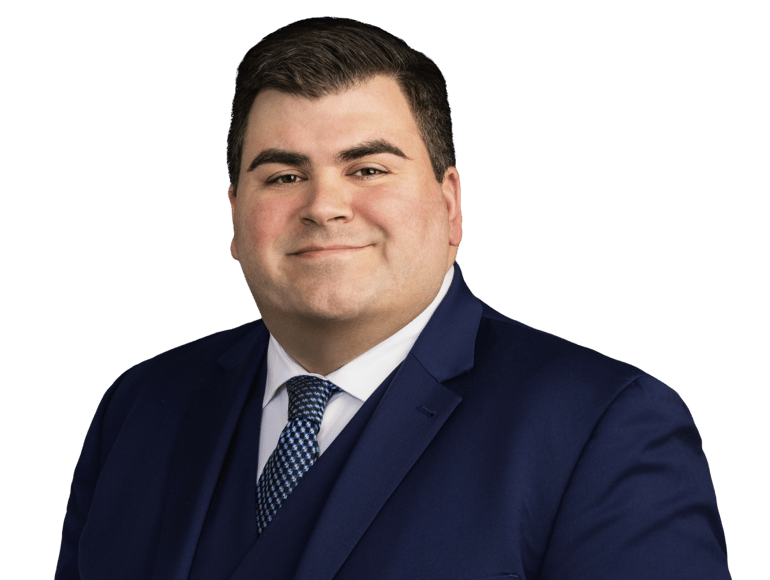
Matthew Gray is a member of the Casualty Department, with multiple years of experience focusing his practice on defending numerous insurance carriers in disputes involving New York Personal Injury Protection claims. Matthew is also a member of the Fraud/Special Investigation Practice Group, where he defends against intentional/staged losses, as well as medical provider fraud. He has experience conducting Examinations Under Oaths/Depositions. Matthew also has expansive experience with motion practice, declaratory judgments and trial preparation/management. Matthew has played a key role in establishing the SIU Dec Action team, guiding and collaborating with his colleagues in the drafting of several Declaratory Judgement (DJ) actions.

Matthew has experience with the litigation, mediation and arbitration of matters in multiple practice areas. Specifically, Matthew focuses on fraud investigation, primarily dealing with evaluating both medical provider fraud and intentional/staged losses. Matthew has had great success for his clients and has been often recognized for his successful in both the Court room, as well as in arbitration matters.

In addition to personal injury protection claims, Matthew handles insurance defense litigation for bodily injury cases. He defends premises liability and automobile liability suits, as well as first-party property damage matters.

Prior to joining Marshall Dennehey, Matthew began his practice in No-Fault at a boutique law firm, where he managed hundreds of PIP matters. Additionally, he developed experience litigating and arbitrating all aspects of insurance defense claims matters.

Matthew earned his juris doctor from the Touro College Jacob D. Fuchsberg Law Center in 2015. While at law school, he served as an ambassador and then, Secretary of the Student Bar Association, as well as President of the Columbian Lawyers' Association. He also was a competing member of Touro Law Center's Mock Trial Team. Matthew was named a Touro Public Interest Law Fellow in 2013 and 2014, respectively. Matthew earned a B.A. in English and a M.A. in English Literature, with a specialization in Dramatic Literature from St. John's University.

He is admitted in the state of New York.

    • Touro University Jacob D. Fuchsberg Law Center (J.D., 2015)
    • St. John's University
      • M.A., 2012; B.A., magna cum laude, 2011
    • New York, 2015
    • The Best Lawyers: Ones to Watch©, Insurance Law (2026)
    • The Best Lawyers: Ones to Watch®, Personal Injury Litigation - Defendants (2021-2026)
    • New York Metro Super Lawyers Rising Star (2023-2026)
    • Successfully defended, submitted post-hearing arguments and secured dismissal of a New York no-fault arbitration matter. The applicant, a major medical provider, filed an arbitration matter in the total amount of $361,601.62, claiming our client owed it for the claimant's unpaid medical bills following a major motor vehicle accident. The claimant had been involved in the motor vehicle accident and sought payment for medical treatment for a series of treatments rendered while hospitalized, post-accident. Counsel for the medical provider argued that the medical billing was never properly nor timely denied, therefore payment of the claims was overdue. However, We successfully argued at the arbitration hearing, that herein, Applicant’s client failed to provide the requisite statutorily required medical assignment of benefits form, assigned the hospital the right to sue on behalf of the injured party. After arguments were heard by the Arbitrator, the Arbitrator ordered post-hearing submissions to be submitted by both sides, to be submitted within the week. We researched, drafted and submitted said post-hearing submission, resulting in the Arbitrator ruling in our client’s favor, and thereby dismissing the matter based on the Applicant’s total failure to submit the requisite form, saving the client hundreds of thousands of dollars.  
    • Successfully secured full dismissal of a New York no-fault litigation matter. The plaintiff, a major medical provider, filed suit in Suffolk County's 3rd District Court in the total amount of $14,999.99, claiming our insurance company client owed it for the claimant's unpaid medical billing.  The claimant was involved in a motor vehicle accident and sought payment for medical treatment. Counsel for the medical provider argued that, since the billing was never paid by the insurer, it was due in full—despite the same matter having been successfully argued and won in arbitration in June of 2021. However, after successful arguments and motion practice, and without significant opposition by plaintiff's counsel, the matter was dismissed, in full, by the court, which found that both res judicata and collateral estoppel applied. Therefore, the court found in full favor of our client and dismissed the suit and its accompanying complaint.
    • Successfully appealed, argued and obtained a full dismissal of joint arbitration matters filed against our client, when remanded to the lower arbitration forum. The applicant filed two, separate, yet related, arbitration matters claiming our client, an insurance carrier, owed them for unpaid medical bills of the claimant. The claimant was supposedly involved in a motor vehicle accident on July 25, 2018, and sought payment for medical treatment provided from December 20, 2018, through April 5, 2019. Applicant's position was that payment was owed as the independent medical examination that found a lack of medical necessity was improper and weak, and because the policy of insurance was not yet exhausted. At the lower forum, the applicant was successful due to the arbitrator's misapplication and misinterpretation of the NYS No-Fault Regulations. However, on Master Appeal the Master Arbitrator found in our clients favor after the submission of briefs and remanded the hearing to the lower forum for an evidentiary hearing before a different arbitrator. That arbitrator found in full favor of our client and denied the applicant's claims on both matters.
    • Successfully defended an arbitration matter filed against our client, an insurance carrier. The applicant filed an arbitration matter claiming our client owed him for the unpaid medical bills of the claimant, in the total amount of $20,772.99. The claimant was purportedly involved in a motor vehicle accident on August 12, 2016, and sought payment for medical treatments/surgery provided to the claimant on January 11, 2018. It was argued that our client owed the applicant's client for the medical services, despite New York state being the improper venue for hearing such a claim. The policy of insurance was written in Pennsylvania, the accident occurred in Pennsylvania, and the claimant lived in Pennsylvania. The provider of the medical services, the applicant, as well as the medical facility where the services were rendered were located in New Jersey. There was no apparent connection to the State of New York, other than the fact that the surgeon performing the surgery maintains an office there. The arbitrator agreed that this single contact with the was insufficient to confer jurisdiction on the New York State No-Fault system to adjudicate these no-fault claims in the State of New York. As such, the arbitrator found in full favor of our client and denied the applicant's claims, in its entirety.
    • Successfully argued and obtained a full dismissal in an Arbitration matter filed against our client, an insurance carrier. A surgical center in New Jersey filed an arbitration matter in the amount of $217,370.39.15, claiming our client owed it for unpaid medical bills of the claimant. The claimant was involved in a motor vehicle accident on July 15, 2017 and sought payment for medical treatment. The surgical center's position was that the entire amount was owed as it was not properly paid upon the initial submission of the billing to our client. However, after arguments were presented at the time of the arbitration hearing, our client’s policy of insurance was found to be completely and properly exhausted. Therefore, the Arbitrator found in full favor of our client, and denied the Applicant's entire $217,370.39.15 claim.

Results

Successfully Fully Discontinued a New York No-Fault Action

We were successful in having a New York No-Fault (PIP) action fully discontinued, with prejudice. The plaintiff, a major medical provider, filed suit in Kings County Civil Court in the total amount of $25,805.85, claiming our client owed it for the claimant’s unpaid medical billing. The claimant had been involved in a motor vehicle accident and sought payment for medical treatment. Counsel for the medical provider argued that, since the billing was never paid by the insurer, it was due in full—despite the fact that the same matter had previously been fully exhausted and was processed/handled in full compliance with the applicable medical fee schedule(s). While there were evidentiary issues in our client’s case, our arguments and position were strong. After negotiations and arguments, plaintiff’s counsel acquiesced to a full discontinuance of the matter, with prejudice.

Dismissal Obtained in a Medical Billings Claim Matter

We obtained full dismissal in a medical billings claim against our insurance carrier client in a New York No-Fault/PIP Action. The plaintiff, a major medical provider, filed suit in Kings County Civil Court in the total amount of $22,610.79, claiming our client owed it for the claimant’s unpaid medical billing. The claimant had been involved in a motor vehicle accident and sought payment for medical treatment. Counsel for the medical provider argued that, since the billing was never paid by the insurer, it was due in full—despite the fact that the same matter had previously been fully exhausted and denied on similar grounds. While there were evidentiary issues in our client’s case, our arguments and position were strong. After negotiations, plaintiff’s counsel acquiesced to a full dismissal of the matter. Thereby, our client was absolved from any fiscal liability in this action.

Thought Leadership

SIU Spotlight

The Wild West on the East Coast: How the Fix Known as “No-Fault” Turned New York Into the O.K. Corral

July 1, 2024

Howdy! Did y’all come to hear about the virtues and triumphs of New York State No-Fault? Well sit on down and warm yourself by the fire, while I tell you the story of how a new little law gave way to greed, corruption and the white knights, known as Defense Counsel! Introduced in 1974, New York State’s No-Fault insurance system, controlled under Regulation 68 or 11 NYCRR Part 65, otherwise known as “the Regs,” quickly became the foundation of how auto accidents were dealt with and how compensation was disturbed. The Regs were meant to provide quick and efficient coverage for medical expenses, lost wage, and other such claims for reimbursement post-auto accident: all without the need for drawn-out legal battles. However, over the decades since its inception, and with the many amendments to the Regs, multiple dusty trails for deceptive practices have been uncovered. Originally what was intended as a streamlined method to process claims and have parties taken care of has become a standoff of the highest order. No-Fault law was created with certain tenets in mind which aim for the swift processing of claims. Two such tenets are that (1) claims be processed with haste and (2) the parties involved work together, amicably. While the basic and establishing principle of No-Fault law was always to ensure that auto accident victims received timely compensation for medical bills, etc., those who have taken on the practice seem to break into one of two groups: the lawmen who try to protect the public (Defense Counsel) and the outlaws trying to disturb the peace (Plaintiff’s Counsel). While it may be true that those seeking medical treatment are oft seen and treated without haste or worry, the trouble starts when the bad eggs from the medical field roll into town, enlisting Plaintiff’s Counsel firms to perpetrate their nefarious plans. For every provider properly billing and treating patients, you will find a bad actor hiding in the herd, causing chaos and frustration throughout. One may ask themselves, “But, how can just a few bad actors affect an industry?” In the simplest of terms, any Defense Counsel worth their boot leather would say, “The premiums.” You see, it is our job to protect our clients’ interests. When our job is done well, we are able, as Defense Counsel, as lawmen, to keep the bad providers out of our town. By analyzing the cases we are assigned, and by recognizing the tell-tale signs of fraud and overbilling, we protect our clients from paying out claims they would not otherwise have to; thus, saving them in exposure. This is repaid to the good citizens of our settlement, to those who enlist the protection of the insurance carriers, by allowing them to have affordable premiums and, in turn, allows them to feel protected by the coverages they pay for. While No-Fault may have been started with good intentions, it has taken a handful of bad eggs, acting with greed in mind, to try and exploit the entire system. For as good as Defense Counsel may be, those who seek to defraud our clients are just as skillful. Our adversaries know how, and when, to file suit against the insurance carriers. They know in what venue and in what order to file their suits. They have adapted to the amendments in the Regs, learned each carrier’s style of doing business, and they know how, and when, to best overload each carrier. They know that they can file a case on the last day before the statute of limitations (six years from when the claim accrues) and still have many years before any court will take up the case. These methods cost the carriers hundreds of millions of dollars annually, resulting in higher premiums and a lower quality of medical care.  On one side, the bad-acting providers, seeking to force cases to trial, overburdening the carriers and courts with superfluous motion practice or, even as insidious, failing to respond to Defense Counsel’s requests to resolve the matter in a timely fashion. The other side, the Defense Counsel, tired, ever-fighting, working to make the town safe for those just seeking a better quality of auto insurance coverage. Effectively, we are locked in a daily standoff. However, it does feel like a victory whenever we can resolve a case. We close a case and get a little closer to what No-Fault is really about. Matthew is a member of the Fraud/Special Investigation Practice Group, where he defends against intentional/staged losses, as well as medical provider fraud. He has vast experience conducting Examinations Under Oath/Depositions.   SIU Spotlight, Issue 1, Vol. 1, July 2024 is prepared by Marshall Dennehey to provide information on recent legal developments of interest to our readers. This publication is not intended to provide legal advice for a specific situation or to create an attorney-client relationship. We would be pleased to provide such legal assistance as you require on these and other subjects when called upon. ATTORNEY ADVERTISING pursuant to New York RPC 7.1 Copyright © 2024 Marshall Dennehey, all rights reserved. No part of this publication may be reprinted without the express written permission of our firm. For reprints or inquiries, or if you wish to be removed from this mailing list, contact tamontemuro@mdwcg.com.

Firm Highlights

Thought Leadership

PA Middle District Dismisses Claims Against School District and its Superintendent, Principal, Special Education Director, and Classroom Teacher

A five-year-old special education student was enrolled in the Wyoming Valley West School District and attended the State Street Elementary School during the 2024-2025 school year. The student refused to clean up classroom toys at dismissal. When his teacher allegedly grabbed him by the wrist to walk him back to his seat, the student dropped to the floor and began crying. The teacher then allegedly grabbed the student by the ankle and dragged him across the floor. Following an investigation, criminal charges were not advanced by the county DA, and the school permitted the teacher to return to the classroom. The student’s parents sued, lodging thirteen legal counts under both state and federal law, which sought monetary damages from the teacher, the school district, the superintendent, the principal, and the director of special education. The plaintiff’s 42 USC 1983 claims were dismissed as to the school district for failure to allege a policy or custom violation, and the failure to alleged deliberate indifference in the failure-to-train context. As to the superintendent, building principal, and special education director, the Section 1983 claims were also dismissed for failure to allege personal involvement on the part of the individuals. Regarding an equal protection claim asserted against all defendants, the motion to dismiss was also granted for a failure to advance a plausible equal protection claim, holding that “plaintiffs' single-act allegations do not include a factual basis to even infer that the act was motivated by discriminatory animus rather than some other non-discriminatory impulse.” The court further dismissed the plaintiff’s negligence-based claims including negligence against the teacher and district administrators, NIED, and vicarious liability under the Political Subdivision Tort Claims Act (PSTCA). The federal claims under the IDEA, Section 504, and the ADA were also dismissed in various respects. The IDEA claim was dismissed against all defendants with prejudice for failure to exhaust administrative remedies. The Section 504 claims against the individual defendants were also dismissed with prejudice, as districts, not individuals, are the recipients of federal funds under Section 504. However, the Section 504 and ADA claims were dismissed without prejudice as to defendant Wyoming Valley West, and the plaintiff was permitted leave to amend.

Thought Leadership

U.S. Supreme Court Decides Key Issue Regarding Interstate Freight Broker Liability

Freight brokers are intermediaries.  They connect shippers of goods with trucking companies that transport those goods.  Freight brokers match a load of freight with a trucking company and oversee the logistics of the transportation. For a number of years there has been a division among the Federal Circuits regarding the potential liability of freight brokers when the trucking companies that they retain for interstate loads are involved in accidents.  At the center of this division was the Federal Aviation Administration Authorization Act of 1994 (FAAAA).  Some Federal Circuit Courts have held that state law negligent hiring claims against freight brokers were preempted by the FAAAA .  Other Federal Circuits Courts have held that even if preemption applied, the “safety exception” in the FAAAA saved state law negligent hiring claims from federal preemption.  On May 14, 2026, the U.S. Supreme Court addressed the conflict in Montgomery v. Caribe Transport II, LLC, et al, No24-1238. In that case freight broker C.H. Robinson selected Caribe Transport to haul an interstate load. The commercial truck driver employed by Caribe Transport allegedly caused an accident and the plaintiff, Montgomery, was seriously injured. Montgomery brought an action against the driver, Caribe Transport and C.H. Robinson. The allegation against C.H. Robinson was that it negligently retained Caribe Transport when it knew, or should have known, that it was an unsafe company. The Seventh Circuit Court of Appeals held that Montgomery’s claims against C.H. Robinson were preempted by the FAAAA. The plaintiff appealed to the U.S. Supreme Court.  The U.S. Supreme Court’s decision focused primarily on the safety exception in the FAAAA.  That provision provides that the FAAAA preemption “…shall not restrict the safety regulatory authority of a State with respect to motor vehicles.” C.H. Robinson argued, as freight brokers historically have, that their function was not “with respect to motor vehicles” because they do not own trucks or employ drivers. They are merely intermediaries, connecting entities who need freight moved with entities who can do that job. Therefore, C.H. Robinson argued that preemption applied, not the safety exception. The U.S. Supreme Court did not accept that argument. The Court focused on the meaning of the phrase “with respect to” in the safety exception. The Court held that it means “referring to”, “concerning” or “regarding”. Therefore, writing for a unanimous Court, Justice Barrett concluded that “[r]equiring C.H. Robinson to exercise ordinary care in selecting a carrier therefore “concerns” motor vehicles—most obviously, the trucks that will transport the goods. So, Montgomery’s negligent-hiring claim falls within the FAAAA’s safety exception, which saves it from preemption.” Justice Kavanaugh, in his concurring opinion, noted the effect this ruling may have on freight brokers and their insurers throughout the country: Importantly, the Court's decision today should not be read to mean that brokers will routinely be subject to state tort liability in the wake of truck accidents. As even plaintiff's counsel stressed, brokers should be able to successfully defend against state tort suits if the brokers have acted reasonably and arranged transportation with reputable trucking companies. Tr. of Oral Arg. 27-29. In plaintiff's counsel's words, the brokers "just have to hire carriers that actually have a reasonable policy," and "the broker is not going to have a problem if it's asking the hard questions of the carrier." Id., at 42, 45. In addition, the proximate-cause requirement in typical state tort law should help protect brokers from excessive liability. Id., at 25. That said, the brokers rightly caution against naivete. In the real world, as the brokers forcefully respond, state tort law can be unpredictable, and the costs to brokers of litigation and insurance may be significant even when brokers prevail in lawsuits. Moreover, the costs of litigation and insurance, as well as the costs of brokers' conducting more substantial inquiries into trucking companies, will cascade through the economy and be paid in part by American consumers in the form of higher prices. The concerns expressed by the brokers are legitimate and weighty. The key point here is that freight brokers can no longer claim they are protected from negligent retention claims by the FAAAA (in cases involving interstate transportation). The challenge will be to determine what is considered ”reasonable efforts” used by brokers when retaining transportation companies. 

Result

No-Cause Jury Verdict Secured in Wrongful Death Trial

We successfully obtained a no-cause jury verdict in a 13-day wrongful death trial. The decedent, a 59-year-old man, was admitted to the emergency room on February 15, 2019, with complaints of abdominal pain, decreased appetite, and constipation, despite the use of laxatives. The patient did not complain of any nausea, vomiting, or diarrhea. He had a significant medical history including diabetes, hypertension, prior coronary artery stenting, morbid obesity (with past gastric bypass surgery), longstanding ventral hernia, and back pain. A CT scan revealed multiple hernias and a potential closed-loop bowel obstruction, leading to a surgery consultation. Our client, an emergency general surgeon, interpreted that the patient did not have a closed loop or any significant obstruction and recommended non-surgical management. The patient was approved to have clear liquids, and had a vomiting incident shortly after, but our client was not notified. The patient was returned to NPO status, and after improving overnight, he was returned to “clears” and additional medical and renal consults were ordered. Our client did not receive any communications from the residents/nurses of any changes in the patient’s condition. On February 18, 2019, two rapid responses were called due to increased heart rate and vomiting. It is believed that the vomiting resulted in aspiration, causing sepsis, ultimately leading to the patient’s death. During the trial, the plaintiff’s sole medical expert highlighted imaging on the wrong hernia, which called into question all of his opinions in the case. We made key objections related to the expert testimony, limiting what the allegations were, and preventing new allegations from being made. After approximately two and a half hours of deliberating, the jury returned a no-cause verdict.

