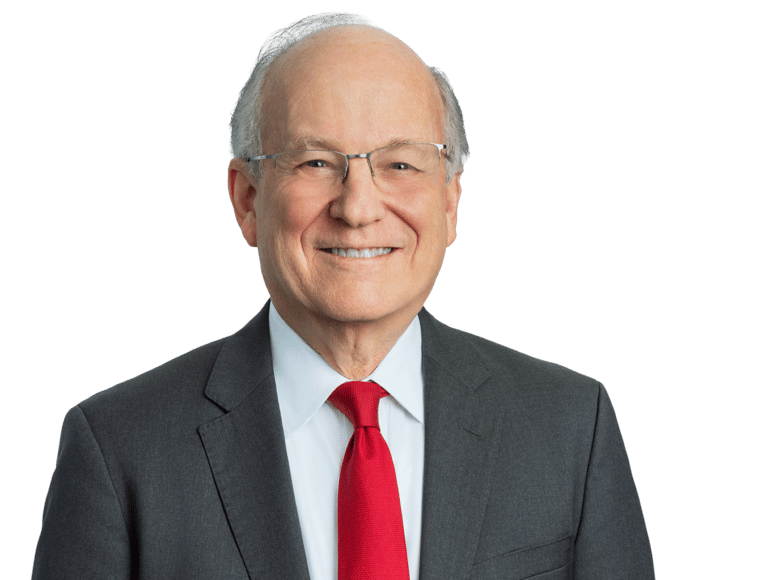
Over more than 30 years, Howard has built a successful legal practice which focuses on professional liability defense, employment litigation and public entity liability defense. He has represented lawyers, accountants, real estate professionals, directors and officers. A respected trial lawyer, Howard has handled hundreds of professional malpractice claims and has tried over 100 of them to verdict, a majority of which sided with the defense. In a precedent-setting decision before the Third Circuit, Howard successfully argued that a municipality can exclude houses of worship in order to facilitate economic redevelopment. He also has extensive experience defending cases brought under the Fair Debt Collection Practices Act and the Fair Credit Reporting Act.
In 1978 Howard received his undergraduate degree from American University, with honors. He then received his law degree from Rutgers University in 1981.
Results
Successful defense of religious denomination in ecclesiastical dispute.
We were granted summary judgment in a case involving a dispute between a religious denomination (our client), and one of its local churches. The client invoked its judicial process, allowing it to assume control of a local church due to declining membership. The pastor of the local church refused to vacate the parsonage. The local church asserted the denomination lacked the authority to assume control over it and argued that it was never actually part of the larger denomination. The issues involved First Amendment case law, which address whether and to what extent the courts can decide ecclesiastical disputes, and whether the religious denomination was a hierarchical church or a congregational church. The court accepted our argument that the local church was part of the denomination, that the denomination was hierarchical and that the First Amendment allowed the court to decide the dispute. The court granted our request to allow the denomination to assume control of the local church.
Successful Representation of Attorney at Center of Ethics Investigation
Our client represented a plaintiff in a personal injury action. The personal injury plaintiff had signed a lien letter, agreeing to repay her physical therapist from the proceeds of the personal injury claim. After the case settled, our client reimbursed the physical therapist for less than the amount billed by the therapist, who filed the ethics complaint. We successfully argued that our client was representing the best interests of his client, who claimed the bills were excessive. By doing so, the attorney increased the recovery for his client.