Roseland
The Roseland, New Jersey, office of Marshall Dennehey opened in February of 1993. Since that time, it has realized substantial growth in response to client demand for our professional services. Roseland is in Essex County, home to Newark, New Jersey's largest city, and is within 30 minutes of New York City. The office services the densely populated counties of the northern part of the state. The attorneys practicing in our Roseland office have easy access to all of the federal and state courts of Northern New Jersey, which counties include Bergen, Essex, Hudson, Hunterdon, Middlesex, Monmouth, Morris, Passaic, Somerset, Sussex, Union and Warren.
Our Roseland office, like all of the firm's offices, provides the advantages of the personal attention of a small firm with the advantages that come from the intellectual property and broad-based experience of a large firm. The office is staffed by native and long-time residents of New Jersey who handle professional liability, product liability, employment, property and casualty, and workers' compensation defense litigation.
Thought Leadership
Legal Update for Premises & Retail Liability
New Jersey Supreme Court Strengthens the Ongoing Storm Rule in Gallardo v. Walmart
August 24, 2026
The New Jersey Supreme Court recently expanded the protection afforded by the ongoing storm rule, under which commercial property owners generally have no duty to remove snow or ice while precipitation is actively falling absent unusual circumstances or a preexisting hazardous condition. In Gallardo v. Walmart, No. A-65-24 (N.J. July 30, 2026), the court significantly narrowed a common avenue plaintiffs have used to avoid summary judgment, holding that “ordinary efforts” to address winter conditions during an ongoing storm do not become actionable merely because an expert later claims those efforts made the conditions more dangerous. The case arose from a typical winter slip and fall. Mixed precipitation began around 11:30 a.m. Walmart's snow-removal contractor arrived about an hour later and salted the parking lot and walkways. Because accumulation was minimal, ranging from trace to 1/10th of an inch, the contractor did not plow. The plaintiff fell approximately 15 minutes after the salting was completed. The plaintiff did not contend that Walmart failed to respond to the storm. Instead, she argued that Walmart responded improperly. Her expert opined that salting without pretreating the lot caused melting and refreezing that resulted in black ice. That theory survived two summary judgment motions and ultimately persuaded a jury, which returned a verdict of approximately $1.33 million. The Appellate Division vacated the verdict because the jury had not been properly instructed on the ongoing storm rule, but remanded the matter for a new trial. The New Jersey Supreme Court reversed in a 4-3 decision and directed entry of summary judgment for Walmart. Applying Pareja v. Princeton International Properties, 246 N.J. 546 (2021), the Court concluded that Walmart's conduct fell within the protections of the ongoing storm rule. Salting a trace accumulation during an active storm was ordinary remediation, not the type of unusual circumstance that could give rise to a duty. The court further held that expert criticism of those efforts was insufficient to change that result. Following Pareja, plaintiffs frequently argued that a property owner forfeited the protection of the ongoing storm rule whenever an expert could identify some alleged flaw in the owner's response to the storm. Gallardo rejects that premise. The decision recognizes that imposing liability based solely on expert criticism of ordinary snow removal efforts would discourage property owners from taking any action during a storm and would undermine the very purpose of the doctrine. The ruling warrants a fresh look at pending winter premises liability cases involving active precipitation, minimal accumulations, mid-storm salting, alleged failures to pretreat, or expert opinions premised on melting-and-refreezing theories. Cases previously viewed as presenting substantial trial exposure may now be stronger candidates for summary judgment. At the same time, Gallardo does not eliminate all potential liability during an ongoing storm. A preexisting hazardous condition or genuinely unusual affirmative conduct may still support the imposition of a duty. Plaintiffs will also likely attempt to distinguish Gallardo based on the nature of the remediation efforts at issue and the specific facts of a case. The bottom line is that Gallardo strengthens the ongoing storm rule by restoring it as a meaningful summary judgment defense. Now, “ordinary” efforts to address winter conditions during an active storm do not become "unusual circumstances" simply because a plaintiff retains an expert to say they could have been done differently
Case Law Alerts
New Jersey Judiciary Implements Trial de Novo Deadline Reminders After Arbitration Awards
July 21, 2026
As there are times where cases against real estate brokers and producers are subject to non-binding arbitration in New Jersey, one thing that maintains of high importance is the strict deadline for the filing of demand for a trial de novo in the instance that a party seeks that the arbitration award be vacated and the matter return to the trial calendar. In 2026, in the unreported decision of Arora Petroleum 2, LLC v. Avin Petroleum LLC, No. A-1706-24, 2026 WL 291226 (N.J. Super. Ct. App. Div. Feb. 4, 2026), the Appellate Division commented as to the new steps the judiciary now takes to ensure that a reminder is sent to parties before the deadline for the demand for a trial de novo expires. This Omnibus Rule Amendment Order & Supreme Court Action on Non-Rule Recommendations sets forth that, similar to discovery end date reminders, the judiciary now issues electronic reminders, through eCourts, to all parties seven days before the expiration of the thirty-day deadline imposed by Rule 4:21A-6(b)(1). This newly implemented reminder came after an amendment to Rule 4:21A-6 (which has since been rescinded), that allotted an additional ten days to a party who missed the thirty-day period to file the demand for trial de novo to file a motion to reject an arbitration award and demand a trial de novo as within time upon establishing good cause. This Omnibus Rule brings to light the importance of filing a timely demand for trial de novo in matters that are subject to arbitration in the Superior Court. The court is now taking an additional step to issue a reminder to parties about the deadline through eCourts, which should not be ignored or taken lightly.
Results

Victory Obtained in Catastrophic Injury Workers’ Compensation Matter
No-Cause Jury Verdict Secured in Wrongful Death Trial
We successfully obtained a no-cause jury verdict in a 13-day wrongful death trial. The decedent, a 59-year-old man, was admitted to the emergency room on February 15, 2019, with complaints of abdominal pain, decreased appetite, and constipation, despite the use of laxatives. The patient did not complain of any nausea, vomiting, or diarrhea. He had a significant medical history including diabetes, hypertension, prior coronary artery stenting, morbid obesity (with past gastric bypass surgery), longstanding ventral hernia, and back pain. A CT scan revealed multiple hernias and a potential closed-loop bowel obstruction, leading to a surgery consultation. Our client, an emergency general surgeon, interpreted that the patient did not have a closed loop or any significant obstruction and recommended non-surgical management. The patient was approved to have clear liquids, and had a vomiting incident shortly after, but our client was not notified. The patient was returned to NPO status, and after improving overnight, he was returned to “clears” and additional medical and renal consults were ordered. Our client did not receive any communications from the residents/nurses of any changes in the patient’s condition. On February 18, 2019, two rapid responses were called due to increased heart rate and vomiting. It is believed that the vomiting resulted in aspiration, causing sepsis, ultimately leading to the patient’s death. During the trial, the plaintiff’s sole medical expert highlighted imaging on the wrong hernia, which called into question all of his opinions in the case. We made key objections related to the expert testimony, limiting what the allegations were, and preventing new allegations from being made. After approximately two and a half hours of deliberating, the jury returned a no-cause verdict.
News
106 Marshall Dennehey Attorneys Recognized in the 2027 Editions of The Best Lawyers in America® and the Best Lawyers: Ones to Watch® in America
August 20, 2026
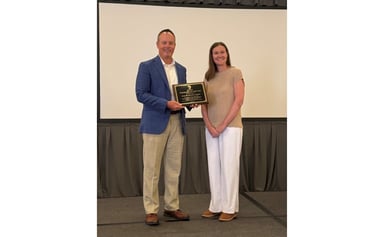
Steven A. Johnston Receives “Pride of Essex County” Award
June 9, 2026

Marshall Dennehey Again Earns Recognition in Distinguished Chambers USA
June 4, 2026