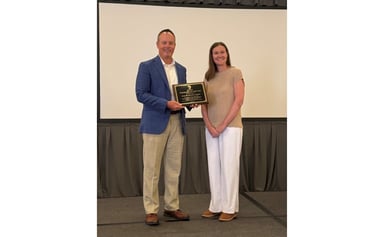
Ryan is a longstanding member of the firm's Casualty Department and has considerable experience with a wide variety of casualty matters. A substantial portion of Ryan’s practice is devoted to the handling of matters with complex theories of liability, often involving catastrophic loss and/or wrongful death. They include claims emanating from product liability, construction and equipment accidents, automotive liability, interstate trucking and transportation, negligent security, premises and retail liability, among many others. As an example of this complexity, Ryan has litigated several matters where causation for death was at issue such as alleged complications from surgeries and alleged food borne illnesses (e. coli, vibrio), and has handled numerous multi-party claims involving demands in excess of $50 million.
As a litigator with experience in a multitude of casualty disciplines from the general to the specialized, including asbestos and toxic tort, maritime and fraud/special investigation, Ryan serves as thought leader and mentor to associates in his office. He has also argued appeals before the Second, Third, and Fourth District Courts of Appeal.
Ryan's legal career started as a prosecutor with Miami-Dade State Attorney's Office, which provided him with considerable litigation experience and familiarity with the criminal justice system. This was a continuation of his focus on litigation during his legal education at Indiana University School of Law - Bloomington where he was in Moot Court (finalist and competition team) and the school's trial competition team. In combination with his civil career at Marshall Dennehey, Ryan has tried approximately 20 jury trials to verdict, including several complex multi-party and Wrongful Death matters spanning weeks in court.
Ryan is a Florida native, born and raised in Cocoa Beach in Brevard County and attending the University of Florida as an undergraduate where he studied theoretical physics and mathematics before leaving Florida for law school with his wife. He now is based out of Fort Lauderdale where he and his wife are raising two daughters, and in his spare time trains for obstacle course racing and triathlons.
Results
Summary Judgment Secured in a Foodborne Illness Wrongful Death Matter
We won summary judgment in a foodborne illness wrongful death case. The plaintiff filed a wrongful death action against multiple parties, including the seafood supplier, distributors, transporters and the restaurant that served the decedent. The plaintiff alleged the decedent died as a result of eating raw oysters that contained vibrio vulnificus. We represented the supplier and argued there was no evidence the oysters were defective when they left the supplier’s hands. An expert was retained to support our motion for summary judgment. The expert prepared an affidavit citing the applicable duties pertaining to the harvesting, processing, and transportation of the oysters and stated the supplier did not breach any of the applicable duties. Utilizing calculated pressure tactics in a long-term strategy execution, plaintiff’s counsel eventually conceded that the record evidence did not support a finding that the supplier breached its duties, resulting in the court granting summary judgment. The case remains ongoing with multimillion dollar demands against the remaining defendants.
Appellate Success in Wrongful Death Product Liability Action
Our attorneys succeeded in obtaining an affirmance in the Fifth District Court of Appeal of a final dismissal order of a wrongful death product liability action. The decedent’s estate filed the lawsuit two years after the statute of limitations expired. The estate argued the statute was tolled for a variety of reasons. The trial court dismissed the case, with prejudice, after giving the Estate five attempts to amend. The Fifth District affirmed the dismissal and dispensed with oral argument that same day.
Thought Leadership
Legal Updates for Insurance Services
Policies Alone Fall Short: Establishing a Standard of Care and Duty Requires More Than Internal Procedures
December 13, 2023
A recent decision by the Florida Fifth Circuit Court of Appeal confirmed the application of rarely considered case law that analyzes the application of a company’s internal policies and procedures to the standard of care in its industry. In Discount Tire Co. v. Tammy Bradford, 2023 WL 7228186 (Fla. 5th DCA 2023), the appellee alleged negligence by the employees of the appellant for allowing tires greater than 10 years old to be placed back on a vehicle. Ultimately, the tires failed and caused the death of Bradford’s husband and minor child. At the trial court, both sides presented experts, but neither opined to a violated industry standard, authoritative regulation or statute that would have applied to the tire repair industry. Instead, Bradford argued that Discount violated its own policies and procedures, as the subject tires, provided by Bradford, were older than the internal policies and procedures permitted. After Bradford rested at trial, Discount successfully moved for directed verdict based upon Bradford’s failure to establish a duty. After appropriate motions, the trial court reversed itself and granted a new trial based on “this Court's reading of Moyer v. Reynolds, 780 So. 2d 205, 208 (Fla. 5th DCA 2001) and its acceptance of [Bradford’s] argument that Moyer stands for the proposition that evidence a defendant failed to comply with its own internal rule or procedure is evidence of the standard of care and evidence of a breach of the standard of care.” The critical factor as determined by the appellate court was the trial court’s improper reliance on Moyer v. Reynolds, 780 So.2d 205 (Fla. 5th DCA 2001). Bradford argued at trial that Moyer held an organization’s internal policies establish a legal duty owed to a plaintiff. Moreover, a breach of internal policy establishes a case that must be determined by the jury. However the Fifth District Court of Appeal disagreed and held that established case law supported the position that an organization's policy could not alone establish a standard of care for the applicable industry. Moyer, a wrongful death action based on medical malpractice, concerned the trial court's exclusion of portions of a doctor's testimony regarding internal policy procedures of a hospital. 780 So. 2d at 206. Critically, Moyer stated that although this testimony was admissible as some evidence of the standard of care, “this type of evidence does not conclusively establish the standard of care.” Id. In support of this holding, the Fifth District Court of Appeal cited multiple industry diverse cases: •Wal Mart Stores, Inc. v. Wittke, 202 So. 3d 929, 930 (Fla. 2d DCA 2016) “[A] party’s internal rule does not itself fix the legal standard of care in a negligence action”; •Dominguez v. Publix Super Markets, Inc., 187 So. 3d 892 (Fla. 3d DCA 2016) “[I]nternal safety polices do no themselves establish the standard of care owed to the plaintiff.”; •Gunlock v. Gill Hotels Co., 622 So. 2d 163 (Fla. 4th DCA 1993), where the court held that the existence of an internal policy does not create a substantive duty; •De La Torre v. Flanigan's Enterprises, Inc., 187 So. 3d 330, 334 (Fla. 4th DCA 2016) holding “there is ample case law stating that internal policies do not create a duty to third parties.”; and •Warren ex rel. Brassell v. K-Mart Corp., 765 So. 2d 235, 236–37 (Fla. 1st DCA 2000) where the court held that despite the violation of K-Mart’s internal policy, “[t]he standard of care is set by the community, rather than by a corporation’s internal policy.” Discount Tire violated its own policies and procedures. However, that violation does not establish a standard of care for the industry. Therefore the order of a new trial was improper and the trial court’s prior order for directed verdict and final judgment in Discount Tire’s favor was properly reinstated.
Defense Digest
Policies Alone Fall Short: Establishing a Standard of Care and Duty Requires More Than Internal Procedures
December 1, 2023
Key Points: A defendant’s violation of its own policies and procedures does not establish a standard of care for the industry. The order of a new trial was improper and the trial court’s prior order for directed verdict and final judgment in the defendant’s favor was properly reinstated. A recent decision by the Florida Fifth Circuit Court of Appeal confirmed the application of rarely considered case law that analyzes the application of a company’s internal policies and procedures to the standard of care in its industry. In Discount Tire Co. v. Tammy Bradford, 2023 WL 7228186 (Fla. 5th DCA 2023), the appellee alleged negligence by the employees of the appellant for allowing tires greater than 10 years old to be placed back on a vehicle. Ultimately, the tires failed and caused the death of Bradford’s husband and minor child. At the trial court, both sides presented experts, but neither opined to a violated industry standard, authoritative regulation, or statute that would have applied to the tire repair industry. Instead, Bradford argued that Discount Tire violated its own policies and procedures as the subject tires, provided by Bradford, were older than the internal policies and procedures permitted. After Bradford rested at trial, Discount Tire successfully moved for directed verdict based upon Bradford’s failure to establish a duty. After appropriate motions, the trial court reversed itself and granted a new trial based on “this Court's reading of Moyer v. Reynolds, 780 So.2d 205, 208 (Fla. 5th DCA 2001) and its acceptance of [Bradford’s] argument that Moyer stands for the proposition that evidence a defendant failed to comply with its own internal rule or procedure is evidence of the standard of care and evidence of a breach of the standard of care.” The critical factor as determined by the appellate court was the trial court’s improper reliance on Moyer v. Reynolds, 780 So.2d 205 (Fla. 5th DCA 2001). Bradford argued at trial that Moyer held an organization’s internal policies establish a legal duty owed to a plaintiff. Moreover, a breach of internal policy establishes a case that must be determined by the jury. However, the Fifth District Court of Appeal disagreed and held that established case law supports the position that an organization's policy could not alone establish a standard of care for the applicable industry. Moyer, a wrongful death action based on medical malpractice, concerned the trial court's exclusion of portions of a doctor's testimony regarding internal policy procedures of a hospital. 780 So.2d at 206. Critically, Moyer stated that, although this testimony was admissible as some evidence of the standard of care, “this type of evidence does not conclusively establish the standard of care.” Id. In support of this holding, the Fifth District Court of Appeal cited multiple industry diverse cases: Wal Mart Stores, Inc. v. Wittke, 202 So. 3d 929, 930 (Fla. 2d DCA 2016) “[A] party’s internal rule does not itself fix the legal standard of care in a negligence action”; Dominguez v. Publix Super Markets, Inc., 187 So. 3d 892 (Fla. 3d DCA 2016) “[I]nternal safety polices do no themselves establish the standard of care owed to the plaintiff.”; Gunlock v. Gill Hotels Co., 622 So. 2d 163 (Fla. 4th DCA 1993), where the court held that the existence of an internal policy does not create a substantive duty; De La Torre v. Flanigan's Enterprises, Inc., 187 So. 3d 330, 334 (Fla. 4th DCA 2016) holding “there is ample case law stating that internal policies do not create a duty to third parties.”; and Warren ex rel. Brassell v. K-Mart Corp., 765 So. 2d 235, 236–37 (Fla. 1st DCA 2000) where the court held that despite the violation of K-Mart’s internal policy, “[t]he standard of care is set by the community, rather than by a corporation’s internal policy.” Discount Tire violated its own policies and procedures. However, that violation does not establish a standard of care for the industry. Therefore, the order of a new trial was improper and the trial court’s prior order for directed verdict and final judgment in Discount Tire’s favor was properly reinstated. *Ryan is a shareholder in our Fort Lauderdale, Florida, office, where he defends claims made and suits brought against insureds and businesses across a number of industries. Defense Digest, Vol. 29, No. 4, December 2023, is prepared by Marshall Dennehey to provide information on recent legal developments of interest to our readers. This publication is not intended to provide legal advice for a specific situation or to create an attorney-client relationship. ATTORNEY ADVERTISING pursuant to New York RPC 7.1. © 2023 Marshall Dennehey. All Rights Reserved. This article may not be reprinted without the express written permission of our firm. For reprints, contact tamontemuro@mdwcg.com.