.

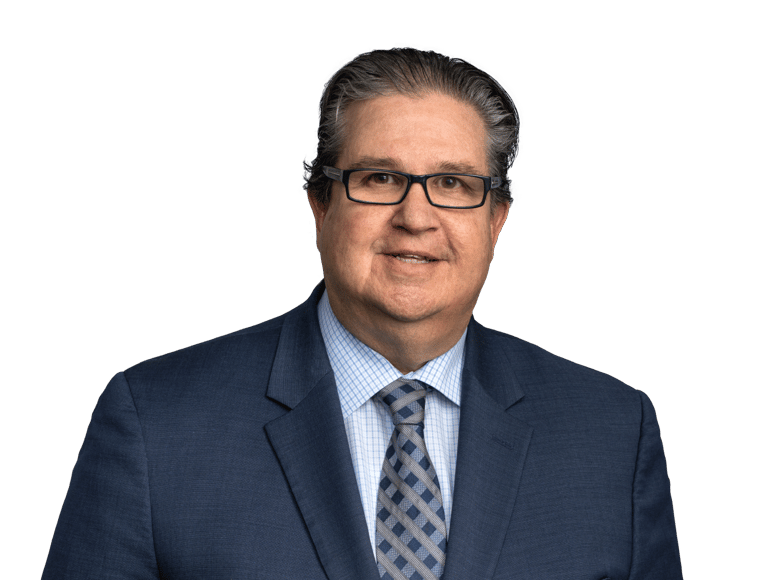
Jeffrey J. Chomko

Portrait of Jeffrey J. Chomko

As a shareholder in the firm's Professional Liability Department, Jeffrey concentrates a significant portion of his practice in defending errors and omissions claims directed to insurance agents and brokers, investment professionals, real estate professionals, appraisers and home inspectors in the State and Federal Courts of Pennsylvania. He also represents these professionals before state securities and insurance commissions, real estate commissions, and other regulatory forums, including the Financial Industry Regulatory Authority (FINRA), and Commonwealth Regulatory Agencies.  These matters involve licensure issues, administrative and regulatory litigation, and responding and defending against complaints and inquiries.

Jeffrey also defends funeral industry professionals, including funeral directors and cemeteries. Jeffrey has litigated bench and jury trials involving complex insurance, securities, commercial, real estate and burial disputes. He has represented insurance agents, securities brokers, real estate agents, title agents, home inspectors, banks, condominium boards, property management companies, and other commercial entities.  He also has a strong background defending both general liability and casualty matters from the most basic to the most complex. 

Jeffrey practices in both the state and federal courts of Pennsylvania, regularly representing clients in Pennsylvania State Courts, and the Federal District Court for the Eastern and Middle Districts of Pennsylvania. Jeffrey has entered PRO HAC VICE in multiple lawsuits in other jurisdictions, including Connecticut, Florida, Ohio, New Jersey, Delaware, and Virginia. He has a strong command of state and federal procedural rules and is well versed in the intricacies of local, state, and federal practice. In addition to litigating matters, he often utilizes the mediation and arbitration process to resolve complex disputes, including AAA Arbitration and through private mediators.

Throughout his career, Jeffrey has successfully litigated/handled hundreds of civil matters resulting in many defense verdicts, dismissals, or favorable settlements in both judicial and non-judicial forums. As a former registered representative, his understanding of the workings of the financial services industry and markets, as well as his familiarity with all types of insurance and investment products, has enabled him to efficiently and effectively handle complex insurance and securities disputes. His knowledge of residential and commercial real estate and the burial industry also allows him to successfully litigate these matters.
 
A graduate of Villanova University and Boston College Law School, he frequently presents to clients and industry groups on insurance and real estate related issues. His most recent presentation was "Best Practices for Insurance Agents and Brokers."


    • Boston College Law School (J.D., 1988)
    • Villanova University (B.A., 1984)
    • Pennsylvania, 1988
    • U.S. District Court Eastern District of Pennsylvania, 2001
    • U.S. District Court Middle District of Pennsylvania, 2001
    • Philadelphia Bar Association
    • Successfully defended insurance agent in a Maryland Insurance Department investigation involving a customer complaint concerning the sale of life insurance policies. The complaint alleged the agent oversold life insurance to a couple who claimed the amount of insurance was excessive, unsuitable and unnecessary. Jeffrey was able to demonstrate to the regulators that the agent did a thorough job in explaining the need and purpose for the coverage, and that the couple could afford the coverage, and actually drove the decision to purchase the policies. They only changed their mind later, after the client was criticized by a subsequent insurance agent. Jeffrey also shut down a Certified Financial Planner Board investigation involving the same matter. 
    • Successfully gained dismissal of an action against an insurance agent in Wyoming County Pennsylvania on a matter involving the sale by an agent of a number of mutual funds (IRA retirement funds). In this case, the plaintiff contended the mutual funds were excessive and unsuitable. Jeffrey convinced the trial court judge that plaintiff’s counsel’s lack of activity for several years on the case, and his failure to respond to long-outstanding discovery, warranted a full dismissal of the lawsuit.
    • Defense verdict obtained on behalf of a registered investment advisor and broker-dealer following a four day jury trial in Schuylkill County.  The registered investment advisor and broker dealer were sued by their former client for investment losses.  The Plaintiff was a paraplegic whose wealth was obtained through a jury verdict and settlements related to his injuries.  The case was defended on the basis that the registered investment advisor met the standard of care and did not breach any duties owed to the Plaintiff, as well as the fact that the Plaintiff was net profitable in his investments.  The Plaintiff sought to "cherry pick" losing investments from an overall profitable portfolio.  
    • Represented and obtained dismissal of an insurance agent in the Philadelphia Court of Common Pleas in a matter involving an insurance policy the agent had sold to a professional hockey player. When the player's widow brought a claim for a breach of the standard of care,  Jeffrey successfully argued that no duty was owed or breached.
    • Obtained summary judgment in a binding arbitration on behalf of an insurance agent against a well-known Philadelphia restauranteur in a dispute involving the assessment of a co-insurance penalty. Succesfully argued that the insured's own conduct barred him from obtaining recovery.
    • Obtained summary judgement on behalf of an insurance agent and agency against a lawyer/plaintiff in a case involving the placement of coverage for a residential commercial property in Philadelphia. Successfully argued that no breach of contract claim was manifested.
    • Successfully resolved a condominium dispute involving a resident who sued a condominium board and its individual officers in tort and contract, by establishing that the board acted properly in its management and oversight of the property.
    • Successfully defended claims for declaratory, injunctive and monetary relief on behalf of a non-profit retirement organization by arguing that the entity acted properly in assisting its members in purchasing and residing in a Center City condominium, despite claims by existing residents that the organization's members should not be permitted to live there, due to advanced age. Successfully utilized a Human Relations Commission decision on behalf of the elderly residents to effectively bring an end to the civil litigation.
    • Successfully argued that a policy of life insurance is not bound until the policy of insurance is actually delivered and is paid for by the policyholder.
    • Successfully able to reduce and resolve multi-million dollar settlement demands down to less than a fraction of the damages claimed. In one instance, the demand was for $1.6 million and was resolved for $245,000. In another instance, the demand was for $2.1 million and the case was resolved for $160,000.
    • Through the use of inspection, engineering, or construction experts, was able to resolve for pennies on the dollar cases with high exposure, including extra-contractual damage exposure.
    • Successfully employed the use of appraisers, conduct experts, and cause and origin experts to resolve multiple matters involving potential exposure in excess of $1  million for fractions of that amount.

Results

Defense Award Following Six-Week FINRA Hearing

We obtained a defense award on a six-week FINRA hearing where our client, a General Agent, faced an alleged defamation/conversion/wrongful termination claim. The claimants contended that our client not only wrongfully discharged them after discovering their involvement in a bank-owned life insurance transaction, but also converted their trails and commissions, and defamed them on their U-5 form published through FINRA BrokerCheck. Damages totaling $15 million and punitive damages were sought by the three claimants. While the panel awarded $8 million in damages against the firm they were affiliated with, we obtained a defense award on all counts and dismissal of all claims for punitive damages on behalf of our General Agent client.

Investigation Against Home Appraiser Shut Down by Defense

We successfully defended a home appraiser in a regulatory investigation undertaken by the Pennsylvania Commonwealth Bureau of Enforcement relating to the appraisal of a five-acre parcel of property. The complainant contended the valuation arrived at by the appraiser (as part of a divorce proceeding) was artificially low given the fact the parcel was sub-dividable. We convinced the investigator that the appraisal number arrived at was in line with comparable properties in the area, particularly given some of the ingress issues involved in accessing the property. After an in-person interview of the appraiser and submissions, the investigator elected to shut the investigation down and take no further action against the appraiser. 

Thought Leadership

Defense Digest

On the Pulse…Our Real Estate E&O Liability Practice Group

December 1, 2022

Our Real Estate E&O Liability Practice Group has a long history of representing real estate professionals. We have defended real estate brokers and agents, title agents and abstractors, appraisers, surveyors, home inspectors, mortgage companies, property management companies and condominium associations, on all types of claims brought in state and federal court and regulatory forums throughout all jurisdictions in Pennsylvania, New Jersey, New York, Florida, Delaware, Ohio and Connecticut. These claims manifest themselves in a variety of ways, with most arising from commercial and residential real estate transactions. They involve disputes surrounding disclosures, financing, valuation, liens, zoning, property management, conditions, construction, and a variety of other items that arise from the property acquisition and transfer process. The claims range from contract to tort, to those raising statutory violations. Many present equitable issues involving easements, deed restrictions and title. Apart from these standard E&O claims, the Group also represents and defends condominium associations and boards in disputes arising with and between unit owners and third parties. These claims may involve property damage, construction, water, fire and mold disputes. They can also include a variety of other issues, including those specific to particular jurisdictions, like mold, sinkholes and storm-related claims. We also handle disputes surrounding the legal interpretation and application of association governance documents, such as declarations and by-laws in declaratory judgment actions. In the regulatory forum, our lawyers regularly defend real estate professionals against customer complaints resulting from the delivery of services. They often implicate violations of state and administrative law concerning the delivery of professional services. We defend real estate agents, appraisers, title agents and a variety of other professionals from these complaints, starting with the customer complaint or initial inquiry received through the administrative hearing process. Our practice group is composed of seasoned, creative and highly regarded lawyers who have litigated many complex disputes. They include shareholders: Jay Rothman, Jeffrey Chomko and Dana Gittleman in Philadelphia; Christopher Conrad in our Harrisburg office; Jonathan Kanov in Fort Lauderdale, Florida; Christopher Block in our Roseland, New Jersey, office; and Aaron Moore in our Wilmington, Delaware, office. We also have a team of associates and paralegals who work with them in preparing and defending all aspects of these cases. We pride ourselves on our strong reputation, earned over the last 60 years through the successful defense of the most complex and difficult matters. Our philosophy is simple: to quickly evaluate and strive to efficiently resolve these matters at an early stage, if possible, in order to avoid costly, unpredictable litigation. Nevertheless, if necessary, we are prepared to take to trial those cases that cannot be resolved. We also present seminars and training sessions to clients and insureds that address legal issues that arise in the particular jurisdictions we service. We discuss best practices for real estate agents, home inspectors and other professionals. We welcome you to look at the bios of our attorneys in the group and reach out to us with any questions.   Defense Digest, Vol. 28, No. 12, December 2022, is prepared by Marshall Dennehey to provide information on recent legal developments of interest to our readers. This publication is not intended to provide legal advice for a specific situation or to create an attorney-client relationship. ATTORNEY ADVERTISING pursuant to New York RPC 7.1. © 2022 Marshall Dennehey. All Rights Reserved. This article may not be reprinted without the express written permission of our firm. For reprints, contact tamontemuro@mdwcg.com.

Firm Highlights

Thought Leadership

Featured Conversations... Key Takeaways from A.M. Best’s Webinar on the Misuse Defense in Product Liability Claims, Featuring Michael Salvati

Michael Salvati, shareholder in our Philadelphia office, was a panelist for the April A.M. Best webinar, “The Misuse Defense: Strategic Approaches to Defending Product Liability Claims for Insurers.” During the program, Michael and his fellow panelists offered practical, jurisdiction‑specific guidance on how misuse and failure‑to‑warn theories intersect in modern product liability litigation. Michael emphasized the unique challenges these claims present—particularly in states like Pennsylvania, where evidentiary rules diverge sharply from those applied in many other jurisdictions. Failure to Warn as the “Flip Side” of Misuse Salvati explained that failure‑to‑warn allegations often arise as a direct counter to a misuse defense. As he noted, “If our misuse defense is that the plaintiff didn't use a product properly or safely, then the failure to warn claim is that we didn't tell them how to use it properly.” He emphasized that these claims can stem from either the absence of warnings or criticisms of existing warnings, such as insufficient specificity or lack of clarity about risks. Pennsylvania’s Unique Evidentiary Landscape One of Salvati’s most notable points was the stark difference in how Pennsylvania treats evidence of compliance with industry standards. He highlighted that Pennsylvania is “one of the only states…where that evidence is not admissible” in strict liability cases. Manufacturers cannot rely on compliance with ANSI, UL, ISO, or even federal safety standards to defend the product against a strict liability claim—because the focus is solely on the product itself, not the manufacturer’s conduct. Salvati acknowledged the challenge this creates for defense counsel and clients who expect such compliance to carry weight. Understanding the Three Defect Theories Salvati also walked through the three primary defect theories recognized in many jurisdictions: - Design defect – a flaw in the product’s intended design - Manufacturing defect – a deviation affecting a specific unit - Failure to warn – inadequate instructions or warnings He noted that warnings claims are increasingly significant and sometimes stand alone when design or manufacturing theories are weak. As he put it, plaintiffs often default to warnings claims because “the default position seems to be, ‘If I got hurt, there must be something wrong.’” Warranties and State‑by‑State Variations Salvati addressed how breach‑of‑warranty claims fit into the broader framework, explaining that implied warranties—such as merchantability—often overlap with strict liability in Pennsylvania. He emphasized the importance of understanding local nuances, as warranty law and admissibility rules vary widely across states. Looking Ahead: The Growing Importance of Warnings In his closing remarks, Salvati stressed that warnings should never be treated as an afterthought in product liability defense. He observed that warnings‑only claims are becoming more common and urged manufacturers and insurers to continually evaluate the clarity and completeness of their instructions and warnings. His takeaway: “We should always be talking about what are the instructions that come with our products…to bolster a misuse defense.” Listen to the complete webinar here: https://www3.ambest.com/conferences/events/eventregister.aspx?event_id=WEB1074.

Thought Leadership

Legal Update for Special Education Law: Recent Positive Outcomes From the Group

Hearing Officer Confirms District Acted Appropriately Under IDEA and Section 504 William J. McPartland (Scranton) obtained a finding in favor of our client, a school district, on all issues following a due process hearing. The parent had filed a due process complaint alleging that the school district had breached its child find duty under the IDEA and Section 504, that the school district had discriminated against the student on the basis of disability in violation of Section 504, and that the school district had denied a free and appropriate public education to the student both by developing inadequate IEPs and via an actionable procedural violation.  Specifically, the student had received a Section 504 evaluation in October 2023, after a number of behavioral infractions culminating in a fight in September 2023, was identified as having anxiety and a sleep disorder, and received appropriate Section 504 accommodations. The student had never previously demonstrated signs of a learning disability, and the parent denied the school district permission to evaluate the student for special education needs in November 2023, and January 2024. The parent granted the district permission to evaluate the student in October 2024, after a private psychologist diagnosed the student with Attention Deficit Hyperactivity Disorder, possible Oppositional Defiance Disorder, a learning disorder, and anxiety. The school district issued a special education evaluation report in December 2024, finding that the student had an emotional disturbance and other health impairment, and an IEP providing an itinerant level of emotional support, as well as instruction in academics and social skills, was issued in January 2025, and amended in February, March, and April 2025. The student withdrew from the school district in April 2025, to attend a cyber charter school. The hearing officer determined that the school district had not violated its child find duty to the student in violation of either the IDEA or Section 504 where the district developed a Section 504 plan for the student within a month and a half of the parent’s first request for a Section 504 evaluation and where the parent repeatedly denied consent to conduct an IDEA evaluation of the student. The hearing officer noted that the student’s sporadic record of behavioral infractions prior to September 2023, did not suggest that the student had a disability prior to the parent’s initial request for an evaluation. The hearing officer further determined that no evidence had been produced to suggest that the student was discriminated against on the basis of disability in violation of Section 504. Additionally, the hearing officer determined that the IEP offered to the student was substantively adequate and that, to the extent the social and emotional programming offered by the school district was not received by the student, this resulted from the parent’s refusal to accept the same. The hearing officer finally determined that the school district did not commit an actionable procedural violation by delaying development of an IEP for the student where the parent repeatedly denied consent to evaluate the student. Court Dismisses Three of Four Claims Against School District Christopher J. Conrad and Daniel P. McGannon (Harrisburg) achieved a significant early victory on behalf of a school district client in. The team successfully obtained dismissal of three of the four claims asserted in the plaintiff’s amended complaint. The former district superintendent brought multiple claims arising out of his alleged “forced resignation,” including age discrimination under the ADEA, a Section 1983 Equal Protection claim, a Pennsylvania Whistleblower claim, and breach of contract. On behalf of the district, the defense team moved to dismiss the complaint in part, arguing: The plaintiff failed to plead sufficient facts to support a prima facie case of age discrimination. The equal protection claim was barred because the ADEA provides the exclusive federal remedy for age-based employment claims. The breach of contract claim could not stand because the underlying employment agreement had expired prior to the alleged breach. The court agreed, dismissing the ADEA, equal protection, and breach of contract claims in their entirety. As a result, only a single claim under the Pennsylvania Whistleblower Law remains pending. This outcome substantially narrows the scope of the litigation and positions the client for a more efficient defense moving forward.

Result

No-Cause Jury Verdict Secured in Wrongful Death Trial

We successfully obtained a no-cause jury verdict in a 13-day wrongful death trial. The decedent, a 59-year-old man, was admitted to the emergency room on February 15, 2019, with complaints of abdominal pain, decreased appetite, and constipation, despite the use of laxatives. The patient did not complain of any nausea, vomiting, or diarrhea. He had a significant medical history including diabetes, hypertension, prior coronary artery stenting, morbid obesity (with past gastric bypass surgery), longstanding ventral hernia, and back pain. A CT scan revealed multiple hernias and a potential closed-loop bowel obstruction, leading to a surgery consultation. Our client, an emergency general surgeon, interpreted that the patient did not have a closed loop or any significant obstruction and recommended non-surgical management. The patient was approved to have clear liquids, and had a vomiting incident shortly after, but our client was not notified. The patient was returned to NPO status, and after improving overnight, he was returned to “clears” and additional medical and renal consults were ordered. Our client did not receive any communications from the residents/nurses of any changes in the patient’s condition. On February 18, 2019, two rapid responses were called due to increased heart rate and vomiting. It is believed that the vomiting resulted in aspiration, causing sepsis, ultimately leading to the patient’s death. During the trial, the plaintiff’s sole medical expert highlighted imaging on the wrong hernia, which called into question all of his opinions in the case. We made key objections related to the expert testimony, limiting what the allegations were, and preventing new allegations from being made. After approximately two and a half hours of deliberating, the jury returned a no-cause verdict.