.

John T. McGrath Jr.

Office Managing Attorney

Co-Chair, Automobile Liability Practice

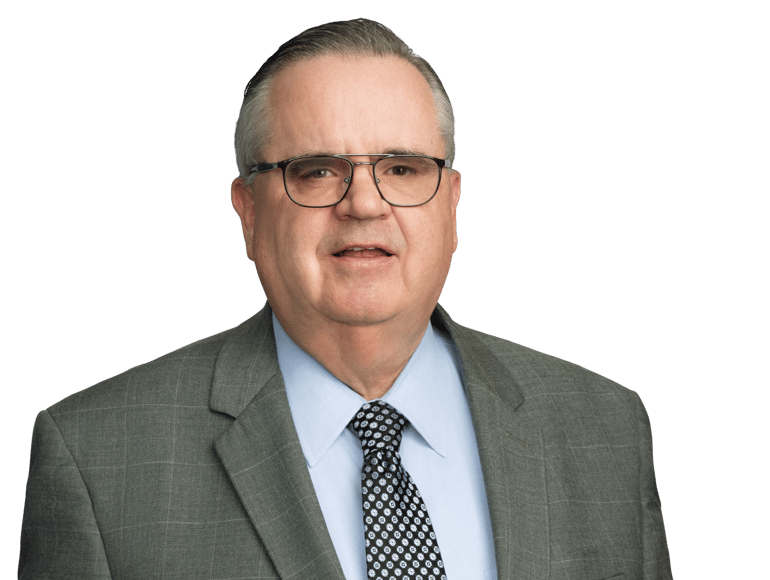
Portrait of John T. McGrath Jr.

John (Jack) is a member of the Casualty Department and co-chair of the firm's auto liability practice. He focuses his practice on the defense of auto liability, representing over a thousand automobile cases to conclusion. The majority of cases ended in defense verdicts or verdicts lower than the settlement offers. Jack is also the managing shareholder and casualty supervising attorney of the firm's Scranton office with responsibility for the daily operations and oversight of the office's attorneys and support staff.

Jack is a graduate of Penn State University and a former member of law enforcement, having worked for the Lackawanna Sheriff's Department. While attending the Widener University School of Law, Jack worked as the commercial sales manager for ADT Security Systems in Philadelphia and southern New Jersey from 1988 through 1996.

Jack joined Marshall Dennehey in January of 1997 and became a shareholder in 2004. He is currently the lead attorney for the Dunmore High School Mock Trial Team and a basketball coach in his community.

    • Widener University Delaware Law School (J.D., 1995)
    • The Pennsylvania State University (B.S., 1985)
    • Pennsylvania, 1996
    • U.S. District Court Middle District of Pennsylvania, 1996
    • AV® Preeminent™ by Martindale-Hubbell®
    • The Best Lawyers in America©, Insurance Law; Medical Malpractice Law - Defendants; Product Liability Litigation - Defendants (2024-2026)
    • American Board of Trial Advocates
    • Lackawanna County Bar Association
    • Luzerne County Bar Association
    • Pennsylvania Bar Association
    • "The Relationship Between the Handling Attorney and the Claims Professional in Auto Liability," Defense Digest, Vol. 22, No. 1, March 2016
    • Defense of several auto cases in which the plaintiffs were killed. In each of these cases the demand was far in excess of the policy limits.
    • Defense of numerous auto cases involving pedestrians. Many of these cases have been tried to defense verdicts where the plaintiffs' injuries far exceeded the available coverage.
    • Defense of a hospital where the plaintiff was one of their own staff physicians who had a seizure while at work and was unable to return to his position as a physician. The allegations were that more should have been done initially when he had the seizure and the hospital should have been better equipped to deal with such situations. The lost wages alleged in this matter were over $7 million.
    • Defended an auto case in which the plaintiff was killed and plaintiff's counsel evoked the Dead Man's Rule. We were able to show that his expert, a state police officer, had interviewed our insured, thereby negating the Dead Man's Rule. The Superior Court agreed with our argument, and the defense verdict that we obtained in this litigation was upheld.
    • Defended an oncologist in a case where the plaintiff, an ophthalmologist who claimed he could no longer work, had multiple experts, including vocational, economic, psychiatric, orthopedic, and neurological practitioners. The initial demand was for our policy limits of $500,000. Through the use of our experts in a non-binding mediation, we were able to show the plaintiffs' experts would not hold up in front of a jury, and the case resolved for an amount far below the policy limits.
    • Obtained defense verdicts in several auto cases in northeast Pennsylvania where the underinsured motorist claims had gone to arbitration and six-figure awards have been granted. Most involved a minor impact with just soft tissue injuries.

Results

Thought Leadership

Defense Digest

On the Pulse…Our Scranton, Pennsylvania, Office

June 1, 2023

The Scranton office of Marshall Dennehey is now in its 30th year. The firm began in Scranton with two attorneys practicing workers’ compensation law. Over the years, it has grown, and today, when it is at full capacity, there are 23 lawyers in the office. Attorneys presently working in the Scranton office, including myself, Ben Nicolosi, Leo Bohanski, Ross Carrozza, Pat Boland, and Robert Smith, have been with the firm over two decades. Many of those just mentioned have been here for over 25 years, and Ross has been here since the office opened. Over the last few years, several of our longest-tenured and esteemed attorneys have retired. Jim Pocius, John Aponick, Jim Wilson, Joe Vender, and Jennifer Callahan all retired, each having had between 20 and 30 years experience with the firm. Replacing that talent is almost impossible, but we have been very fortunate to bring on some young attorneys and lateral hires who have allowed our office to continue to flourish and grow. The experience and talent in our practice department is unmatched in Northeastern Pennsylvania. Those groups include workers’ compensation, casualty, professional liability, and health care. The workers’ compensation group is led by Mike Sebastian. Mike has worked in the workers’ compensation realm for over 30 years and has a long and distinguished list of clients who rely on him for all their workers’ compensation matters. As he has for many years, Ross Carrozza also ably litigates workers’ compensation cases. In addition, Ross is a leading expert in Medicare Set-Asides. The 60 years of combined experience possessed by Mike and Ross in workers’ compensation is an asset to the Scranton office and allows us to handle the most involved and difficult workers’ compensation cases.  The Casualty Department in the Scranton office presently has six attorneys: Ben Nicolosi, John Nealon, Leo Bohanski, Sarah Argo, Mike Connolly, and myself. Our experience in the casualty arena is envied by all of our competitors. Collectively, the department has tried over 200 cases to verdict in the counties in which we serve. Presently, I act as the firm’s Auto Liability Practice Group Chair. Ben Nicolosi handles high-profile trucking accident and product liability matters. Although many of the cases the department handles contain requests for punitive damages, no one in our department has ever been hit with a punitive damage award. Considering the volume of cases we handle and their serious nature, that is truly an accomplishment. There is not a casualty case or issue the Scranton office has not handled, and handled effectively. The Casualty Department litigates auto accidents, dram shop cases, product liability matters, construction defect cases, slip and falls, and any other type of casualty case that finds its way to our office.  Our Professionally Liability Department, when fully staffed, is the largest department in our office. Presently, William McPartland, who is the Co-Chair of our Special Education Law Practice Group, works with several school districts throughout Northeastern Pennsylvania. Many of the school districts in Luzerne, Lackawanna, and the outlying counties rely on Will for all of their education law practice needs. He also handles employment law and civil rights cases. Mark Kozlowski and Patrick Boland have very similar practices, which include civil rights, municipal, and professional liability practice litigation. They represent attorneys, engineers, and architects, and do a significant amount of work with homeowners associations and any disputes arising therein. Their practice continues to grow. Presently, Jordan Mazzoni, an associate, works with both of them, assisting with their growing practice.  Rob Smith is also in the Professional Lability Department, handling (almost exclusively) bad faith cases. Rob has a very large practice in this extremely specialized area, and several carriers look to him to handle their bad faith litigation. Underinsured motorist and uninsured motorist cases continue to be one of the biggest practice areas in the state for bad faith. Rob would certainly be considered an expert in that area.  Finally, Tom Specht is a member of our Appellate Advocacy and Post-Trial Practice Group. He litigates appeals in state and federal courts, having done so for the past 25 years. He also handles serious and complex pre-trial matters/motions (of a dispositive nature) and assists trial counsel in their preparation for trial, as well as appellate trial monitoring and motion/strategic assistance at trial. Tom’s practice is extremely varied, in that he litigates cases from every practice area within the firm and has the ability and experience to assist at any stage of the litigation process. He is a helpful, valuable resource for all of the attorneys in the office.  Our Professional Liability Department in the Scranton office is larger than those of all of our competitors in the area combined. This means that, if you were to put all of the professional liability attorneys in Northeastern Pennsylvania, other than those working for Marshall Dennehey, in one room, and the Marshall Dennehey attorneys in another, our department would outnumber the attorneys in the other room. Their expertise is unmatched. The variety of cases they handle is truly something to marvel at.  Last, but not least, is our Health Care Department. It is composed of five attorneys presently and will be expanding shortly. Victoria Scanlon is the supervising attorney in the Health Care Liability Practice Group of the Scranton office. She is an experienced litigator with nearly 20 years of experience representing physicians, midwives, nurse practitioners, nurses, physical therapists, hospitals, ambulatory service centers, and more. She also works with long-term personal care facilities and providers. Vicky has tried many cases to verdict and is an outstanding trial attorney.  Missy Dziak, a shareholder, as well, and has, for more than a decade, defended nurses, nurse practitioners, registered nurses, and really anyone in the health care field. She is licensed in both Pennsylvania and New York. Aside from medical malpractice, she also represents and advises one of the largest national independent food service distributors, providing strategic legal guidance in high-exposure litigation. Missy serves on Marshall Dennehey’s Diversity, Equality, and Inclusion Committee, which works to improve the recruitment, retention, and advancement of diverse attorneys and professionals. Missy is a member of the Pennsylvania Bar Association’s Commission on Women and Profession and the Promotion of Women. She also has tried several cases to verdict in both Pennsylvania and New York.  Matt Keris is a shareholder in the Health Care Department who defends doctors as well as long-term care facilities. He is the Chair of the Electronic Medical Record and Audit Trail Practice Group. Matt tried the first case in Pennsylvania to verdict during the COVID-19 pandemic in July of 2020. Matt is the president of the DRI Foundation, which focuses on wellness and charitable interests affiliated with the Defense Research Institute. He is a former DRI board member and is currently on the steering committee for the Annual Insurance Roundtable. Matt was formerly president of the Pennsylvania Defense Institute and continues to serve as co-chair of the Medical Malpractice Liability Committee. Finally, he has twice-served as president of the Pennsylvania Association for Healthcare Risk Management and is an active member of the Claims and Litigation Alliance for American Legal Connections. Matt has tried many cases to verdict with over 20 years of experience in the field.  Rob Aldrich has worked his entire career defending health care professionals and institutions against malpractice liability claims in Pennsylvania and New York. Rob specializes in defending dental malpractice and long-term care liability cases. Rob also has extensive experience defending trucking and transportation companies in auto liability cases. Finally, he serves as an at-large board member for the Pennsylvania Defense Institute.  Patty Lafferty also has been a great addition to the healthcare department. Patty has 20 years of litigation experience, with approximately ten years focusing solely on the defense of health care providers. She represents physicians, nurses, advance practice providers, physician group hospitals, and skilled nursing facilities in medical malpractice cases throughout Northeastern Pennsylvania. Prior to joining us, Patty tried cases as a prosecutor in the Lackawanna County District Attorney’s Office. She tried multiple felony and misdemeanor cases. She was also an Assistant City Solicitor for the City of Scranton, working with the mayor, prior to joining Marshall Dennehey. Patty is an active member in the legal community, serving on the Board of Directors for the Lackawanna County Bar Association.  As outlined above, the Health Care Department has tried dozens and dozens of cases to verdict. Their experience and knowledge makes them the leading medical malpractice department in Northeastern Pennsylvania.  Scranton continues to be fortunate in that we have an experienced support staff that can be depended on to go well above and beyond their job classifications. We have several paralegals and administrative support staff who have been with us for 10-25 years. Their dedication to their jobs and the attorneys they work with is appreciated. Each and every one of them can be counted on to assist in any project or trial that may be on the horizon. They are willing and able to help when others are either out of the office or overworked. The teamwork and comradery amongst and between them is an asset to our firm.  The team of professionals assembled in the Scranton office provides outstanding legal services to all of the clients. Presently, our footprint in Pennsylvania consists of Tioga, Bradford, Susquehanna, Wayne, Lycoming, Sullivan, Wyoming, Montour, Columbia, Lackawanna, Luzerne, Pike, Monroe, and Carbon counties, as well as the Middle and Eastern Districts of Pennsylvania, and the Third Circuit Court of Appeals.  All of the attorneys mentioned above live and, for the most part, grew up in the Northeast Pennsylvania area. Our knowledge of the courts, judges, and the procedures followed in each of the counties and federal courts around us allows this office to represent our clients in a professional and efficient manner, which the courts truly appreciate. Our attorneys are on a first-name basis with many of the judges we litigate before and their support staff. This allows us to represent our clients in a way that is unrivaled in the area. Also interesting is the differences in the counties in which we work. Most of the counties would be considered extremely conservative, but three of them are considered by our clients to be leaning liberal or extremely liberal. Having the knowledge to navigate these counties and courts goes a long way in providing the best advice and representation to our clients.  Our office’s experience and ability to handle a wide variety of cases at any stage of the litigation process—investigation, pretrial, discovery, trial, arbitration, mediation, settlement, or appeal—allows our clients to rest easy, knowing that they are getting excellent representation no matter the type of case or its procedural posture. The amount of work we receive in Northeastern Pennsylvania from our clients is greatly appreciated, and I believe is attributable to the fine work done by each of our attorneys, paralegals, and administrative staff. We are simply the best law firm (not just defense) in Northeast Pennsylvania.     Defense Digest, Vol. 29, No. 2, June 2023, is prepared by Marshall Dennehey to provide information on recent legal developments of interest to our readers. This publication is not intended to provide legal advice for a specific situation or to create an attorney-client relationship. ATTORNEY ADVERTISING pursuant to New York RPC 7.1. © 2023 Marshall Dennehey. All Rights Reserved. This article may not be reprinted without the express written permission of our firm. For reprints, contact tamontemuro@mdwcg.com.

Firm Highlights

Thought Leadership

Featured Conversations... Key Takeaways from A.M. Best’s Webinar on the Misuse Defense in Product Liability Claims, Featuring Michael Salvati

Michael Salvati, shareholder in our Philadelphia office, was a panelist for the April A.M. Best webinar, “The Misuse Defense: Strategic Approaches to Defending Product Liability Claims for Insurers.” During the program, Michael and his fellow panelists offered practical, jurisdiction‑specific guidance on how misuse and failure‑to‑warn theories intersect in modern product liability litigation. Michael emphasized the unique challenges these claims present—particularly in states like Pennsylvania, where evidentiary rules diverge sharply from those applied in many other jurisdictions. Failure to Warn as the “Flip Side” of Misuse Salvati explained that failure‑to‑warn allegations often arise as a direct counter to a misuse defense. As he noted, “If our misuse defense is that the plaintiff didn't use a product properly or safely, then the failure to warn claim is that we didn't tell them how to use it properly.” He emphasized that these claims can stem from either the absence of warnings or criticisms of existing warnings, such as insufficient specificity or lack of clarity about risks. Pennsylvania’s Unique Evidentiary Landscape One of Salvati’s most notable points was the stark difference in how Pennsylvania treats evidence of compliance with industry standards. He highlighted that Pennsylvania is “one of the only states…where that evidence is not admissible” in strict liability cases. Manufacturers cannot rely on compliance with ANSI, UL, ISO, or even federal safety standards to defend the product against a strict liability claim—because the focus is solely on the product itself, not the manufacturer’s conduct. Salvati acknowledged the challenge this creates for defense counsel and clients who expect such compliance to carry weight. Understanding the Three Defect Theories Salvati also walked through the three primary defect theories recognized in many jurisdictions: - Design defect – a flaw in the product’s intended design - Manufacturing defect – a deviation affecting a specific unit - Failure to warn – inadequate instructions or warnings He noted that warnings claims are increasingly significant and sometimes stand alone when design or manufacturing theories are weak. As he put it, plaintiffs often default to warnings claims because “the default position seems to be, ‘If I got hurt, there must be something wrong.’” Warranties and State‑by‑State Variations Salvati addressed how breach‑of‑warranty claims fit into the broader framework, explaining that implied warranties—such as merchantability—often overlap with strict liability in Pennsylvania. He emphasized the importance of understanding local nuances, as warranty law and admissibility rules vary widely across states. Looking Ahead: The Growing Importance of Warnings In his closing remarks, Salvati stressed that warnings should never be treated as an afterthought in product liability defense. He observed that warnings‑only claims are becoming more common and urged manufacturers and insurers to continually evaluate the clarity and completeness of their instructions and warnings. His takeaway: “We should always be talking about what are the instructions that come with our products…to bolster a misuse defense.” Listen to the complete webinar here: https://www3.ambest.com/conferences/events/eventregister.aspx?event_id=WEB1074.

Result

No-Cause Jury Verdict Secured in Wrongful Death Trial

We successfully obtained a no-cause jury verdict in a 13-day wrongful death trial. The decedent, a 59-year-old man, was admitted to the emergency room on February 15, 2019, with complaints of abdominal pain, decreased appetite, and constipation, despite the use of laxatives. The patient did not complain of any nausea, vomiting, or diarrhea. He had a significant medical history including diabetes, hypertension, prior coronary artery stenting, morbid obesity (with past gastric bypass surgery), longstanding ventral hernia, and back pain. A CT scan revealed multiple hernias and a potential closed-loop bowel obstruction, leading to a surgery consultation. Our client, an emergency general surgeon, interpreted that the patient did not have a closed loop or any significant obstruction and recommended non-surgical management. The patient was approved to have clear liquids, and had a vomiting incident shortly after, but our client was not notified. The patient was returned to NPO status, and after improving overnight, he was returned to “clears” and additional medical and renal consults were ordered. Our client did not receive any communications from the residents/nurses of any changes in the patient’s condition. On February 18, 2019, two rapid responses were called due to increased heart rate and vomiting. It is believed that the vomiting resulted in aspiration, causing sepsis, ultimately leading to the patient’s death. During the trial, the plaintiff’s sole medical expert highlighted imaging on the wrong hernia, which called into question all of his opinions in the case. We made key objections related to the expert testimony, limiting what the allegations were, and preventing new allegations from being made. After approximately two and a half hours of deliberating, the jury returned a no-cause verdict. 

Thought Leadership

The Enforceability of Online Arbitration Agreements Remains Unresolved in Pennsylvania, But the Pennsylvania Superior Court has Provided Substantive Guidance on the Issue

Key Points: The Pennsylvania Supreme Court confirms that an order compelling arbitration is not immediately appealable as collateral orders. The outcome of Chilutti II has generally left the substantive enforceability issues with browsewrap agreements unresolved in Pennsylvania. Until this issue is resolved by the Pennsylvania courts, companies operating in the Commonwealth should strive to ensure that their registration websites and/or application screens conspicuously present arbitration agreements in manners which ensure their users and consumers assent to the terms of the agreements by following the standards set forth in Chilutti I. Browsewrap agreements have been defined as agreements “‘in which a website offers terms that are disclosed only through a hyperlink and the user supposedly manifests assent to those terms simply by continuing to use the website,’ and typically do not require an electronic signature.” See, Cobb v. Tesla, Inc., 2026 WL 458470, at *1 n. 2 (Pa. Super. Feb. 18, 2026) (citation omitted). They are largely regarded as the “if you keep using this, you agree to everything buried in this link” terms embedded into almost every online agreement consumers and users sign before proceeding with purchases of goods and/or services. While consumers are generally aware of them, many almost never click on the link, nor read them in their entirety. This leaves many consumers and users ignorant of the terms and impact of such agreements. However, one’s ignorance of the otherwise neatly-tucked-away terms rarely renders them unenforceable. The issue of the enforceability of browsewrap agreements has been up for debate for some time in many jurisdictions, including Pennsylvania. Indeed, Pennsylvania had a brief grip on this issue for a period in time. Specifically, in 2023, an en banc Superior Court set forth heightened standards for companies to meet in order to secure assent and enforce browsewrap arbitration agreements. See Chilutti v. Uber Techs., Inc., 300 A.3d 430 (Pa.Super. 2023) (en banc) (“Chilutti I”) Chilutti I involved a husband and wife who sued Uber and its subsidiaries after the wife, a wheelchair bound passenger using Uber’s rideshare service, fell, struck her head, and lost consciousness due to her uber driver failing to provide a seatbelt and making an aggressive turn during the trip. The Chilutti’s filed a negligence lawsuit against Uber and its subsidiaries. In response, the defendants moved to compel arbitration, arguing that “the couple’s conduct on the company’s website and application — when they registered for the ridesharing service — signified that they agreed to be bound by the mandatory arbitration provision found in the hyperlinked terms and conditions.” The trial court granted the defendants’ petition and stayed the proceedings pending the results of arbitration, and the Chilutti’s appealed. On appeal, the Superior Court addressed two issues. First, it addressed the issue of whether it had jurisdiction to hear the appeal. A divided Superior Court determined that it did, with its basis for the holding being that the order from which the Chilutti’s appealed was a collateral order. Next, the Superior Court set out to address the merits of the Chilutti’s substantive claim. The Superior Court concluded that the parties lacked a valid agreement to arbitrate. Its rationale was that Uber’s website and application did not provide reasonably conspicuous notice of the terms to the Chiluttis. In reaching this decision, the en banc Superior Court held that browsewrap arbitration agreements are enforceable in Pennsylvania only if the registration website and application screens explicitly inform consumers that they are waiving the right to a jury trial, the registration process cannot be completed until the consumer is fully informed of this waiver, and, when the agreement is available via hyperlink, the waiver appears at the top of the first page of the terms in bold, capitalized text. Since the ruling, Pennsylvania courts have applied Chilutti I to determine if browsewrap agreements are enforceable.  For instance, the Allegheny County Court of Common Pleas invoked Chilutti I to reject an agreement that lacked an express jury-trial waiver on the assent screen.  See Miller v. Festival Fun Parks, LLC, 92 WDA 2025 (C.P. Alleg. Cnty. Mar. 24, 2025). Similarly, the Superior Court has held that notice which failed to explicitly state the consumer was waiving a jury-trial right did not “me[e]t the strict burden set forth by our en banc Court in Chilutti I.” Pierce v. FloatMe Corp., 348 A.3d 1077, 1088 (Pa. Super. 2025). While the issue of enforceability of browsewrap agreements appeared to have been resolved by Chilutti I, Pennsylvania courts’ grip on this issue has been slackened by the Pennsylvania Supreme Court’s January 21, 2026, opinion in Chilutti II. See Chilutti v. Uber Techs., Inc., 349 A.3d 826 (Pa. 2026) (“Chilutti II”). Therein, the Supreme Court did not address the merits of the Chiluttis’ substantive claim, but rather the issue of whether the Superior Court had appellate jurisdiction to immediately review the orders staying litigation pending arbitration. The Court ultimately vacated the en banc opinion on jurisdictional grounds, holding that the Superior Court did not have appellate jurisdiction because the trial court’s order from which the Chiluttis appealed did not qualify as a collateral order and, thus, the Superior Court erred in holding to the contrary and lacked jurisdiction to entertain the merits” of the Chiluttis’ substantive claim. As such, Chilutti II has rendered Chilutti I nonbinding, and the issue of enforceability of online arbitration agreements remains unresolved. However, in light of the fact the Supreme Court did not address or comment on the merits of the Chiluttis’ appeal, Chilutti I is still meaningful. Specifically, it provides guidance as to the standards a company should strive to meet to ensure they have obtained users’ assent so that they are able to enforce online arbitration agreements. Additionally, it may serve as persuasive authority in judges’ evaluations of petitions and/or motions to compel browsewrap arbitration agreements until this particular issue is properly put before our appellate courts. Keanna works in our Pittsburgh, PA office. She can be reached at (412) 803-1174 or KASeabrooks@MDWCG.com.

Thought Leadership

PA Superior Court Upholds Household Vehicle Exclusion in Favor of Erie When Stacking Was Not Implicated

Key Points: A household vehicle exclusion was upheld under an Erie Policy when the estate of deceased insureds sought UIM coverage when the insureds were occupying a motorcycle owned by the insureds, but the motorcycle was not covered by Erie’s Policy. The PA Superior Court distinguished Gallagher v. GEICO, in which Gallagher, unlike the Erie insured, had recovered UM/UIM, thus rendering the "household exclusion" an impermissible waiver of stacking. Here, with no UIM recovery from any source, the issue of stacking, much less impermissible waiver of stacking, never arose. In sum, the household vehicle exclusion is a valid exclusion when stacking is not implicated. In the Pennsylvania Superior Court case of Erie Ins. Exchange v. Estate of Kennedy, 350 A.3d 219 (Pa. Super. 2025), the court upheld Erie’s denial of coverage under the household vehicle exclusion in the Erie Policy when the insureds were occupying a motorcycle not covered under the policy. Dennis and Elissa Kennedy, Erie insureds, died in a single-vehicle motorcycle accident, with Dennis driving. Dennis insured the motorcycle with Progressive, which paid its liability limits to Elissa, after which Elissa sought household stacked Erie UIM coverage. Erie denied coverage under its "household exclusion" applicable to vehicles owned by insureds, but not covered by Erie's policy. The trial court granted judgment in favor of Erie on the ground that such benefits were barred by an exclusion applicable when an insured has suffered damages while occupying a vehicle owned by a relative and not covered under the policy, i.e. the household vehicle exclusion. Finding that the exclusion was valid, the PA Superior Court affirmed. The court found the facts of the case and policy exclusion analogous to the case of Erie Ins. Exchange v. Mione, 289 A.3d 524 (Pa. 2023). In Mione, a motorcyclist was injured in an accident with another vehicle whose driver was both at fault and underinsured. The motorcyclist's insurance policy did not include UM/UIM coverage. However, the motorcyclist had two household policies covering other vehicles, including stacked UM/UIM coverage, as well a household vehicle exclusion. UM/UIM benefits were therefore denied, and the motorcyclist argued that the exclusion was invalid because it did not comport with the statutory waiver requirements of Section 1738. The PA Supreme Court rejected the argument, explaining that UM/UIM coverage could not be procured in the "first instance" under the motorcyclist's household policies as “[F]or a household vehicle exclusion to be acting as an impermissible de facto waiver of stacking, the insured must have received UM/UIM coverage under some other policy first, or else is not implicated at all.” The motorcyclist had not received any UM/UIM benefits under his own motorcycle policy, so there was nothing for the UM/UIM benefits of the household policies to "stack on" to, and as such, Section 1738 was not implicated. The court also distinguished the case from Gallagher v. Geico, 201 A.3d 131 (Pa. 2009), in which a motorcyclist was injured in an accident caused by another driver who was underinsured. The motorcyclist had purchased two policies, each of which provided stacked UM/UIM benefits. The first policy covered only the motorcycle; the second covered two automobiles, while also containing a "household exclusion," which precluded UM/UIM benefits. The PA Supreme Court held that the exclusion was invalid because the resulting waiver of UM/UIM coverage did not comport with the statutory requirements of Section 1738. The court distinguished the Kennedy’s case from Gallagher as the Kennedy’s were attempting to stack UM/UIM coverages from (a) the Progressive Motorcycle Policy under which Dennis Kennedy was the only insured, and (b) the Erie Policy under which Dennis Kennedy and Elissa J. Kennedy were the insureds. Crucially, the court found that the party from whom the right to stack UM/UIM benefits under the Erie policy was derived (Elissa J. Kennedy) was not an insured under the motorcycle policy. In other words, no one paid for Elissa J. Kennedy to receive UM/UIM benefits under the motorcycle policy, so that policy afforded her no contractual right to such coverage in the first instance. The court further reasoned that the "miscellaneous vehicle" exclusion in the Erie Policy was valid because the insured, Elissa J. Kennedy, had not first received UM/UIM coverage under Dennis Kennedy's Motorcycle Policy. In conclusion, the Court found Gallagher inapposite, and Mione compelled the affirmance of the trial court's ruling upholding Erie’s denial of coverage pursuant to the household vehicle exclusion. Christin is a Shareholder in our King of Prussia, Pennsylvania, office. She can be reached at 610-354-8279 or clkochel@mdwcg.com.


