.

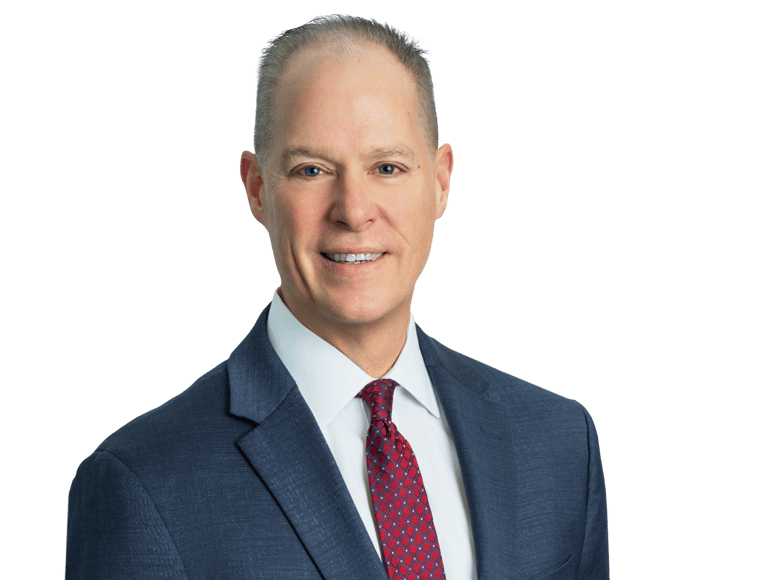
Justin F. Johnson

Office Managing Attorney

Portrait of Justin F. Johnson

Justin is a seasoned litigator whose practice focuses on medical malpractice, nursing home liability, and state board disciplinary actions. In addition to his legal background, Justin also received his pharmacy degree. Licensed as a pharmacist in both Iowa and Illinois, he leverages his deep knowledge in pharmacology, pharmacokinetics, toxicology, physiology, and anatomy to provide strategic, scientifically grounded defense in complex medical malpractice cases.

Justin has handled several hundred medical malpractice matters and has taken nearly 120 cases to trial. Ninety percent of all verdicts were defense verdicts, and roughly 30 of his cases ended in a verdict or mid-trial settlement significantly below the settlement demands. He has represented a considerable number of physicians and pharmacists at state board disciplinary proceedings. He successfully obtained favorable trial verdicts in multiple cases involving potentially high jury awards, including matters involving limb loss, kidney/liver injury, wrongful birth and wrongful death by demonstrating that the physicians were not negligent in the care and treatment that they rendered to their patients. He also handled a case for a physician involved in the Ortho Evra patch mass litigation.

Justin received a Bachelor of Science degree in Pharmacy from Drake University in 1986. While at Drake, he received various honors, including The Norcliff-Thayer Publishing Grant, election into the Order of Omega (honor society), and inclusion on the Dean's List. Justin received his juris doctor from Pace University School of Law in June 1989 where he was involved in the Health Law Program.

After serving a judicial internship with the Honorable John Marbach in the New York Supreme Court, Justin became associated with Jeffrey A. Krompier, Esquire, of Florham Park, New Jersey, from 1989 through 1992. In 1992, Justin became associated with Michael J. Lunga, Esquire of Fairfield, New Jersey, and became a partner at their newly named firm Lunga, Evers & Johnson in 1995. He remained at that firm until he joined Marshall Dennehey in 2007.

Justin is admitted to the bar in New Jersey and the U.S. District Court for the District of New Jersey, and he is a member of the New Jersey State Bar Association, and the American Society for Pharmacy Law. He was appointed to the Medical Malpractice Committee of the New Jersey State Bar Association, as well as the Joint Committee of Essex County Medical and Bar Associations.

Justin is an active member of the community, serving as a member of the Harrington Park Lions Club and, when his daughters were younger, serving as a board member and coach of serveral recreational and travel softball and basketball programs. He is also a consistory member and first vice-president of the Community Church of Harrington Park, New Jersey.

    • The Elisabeth Haub School of Law at Pace University (J.D., 1989)
    • Drake University (B.S., 1986)
    • New Jersey, 1989
    • U.S. District Court District of New Jersey, 1989
    • The Best Lawyers in America®, “Lawyer of the Year,” Roseland, Medical Malpractice Law - Defendants (2027)
    • The Best Lawyers in America®, Medical Malpractice Law - Defendants (2025-2027)
    • The Best Lawyers in America®, Health Care Law (2024)
    • New Jersey Super Lawyers (2026)
      The Super Lawyers list is issued by Thomson Reuters. A description of the selection methodology can be found here. No aspect of this advertisement has been approved by the Supreme Court of New Jersey.
    • American Bar Association
    • American Society for Pharmacy Law
    • Central Illinois Pharmaceutical Association
    • Joint Committee of Essex County Medical and Bar Associations
    • New Jersey State Bar Association, Member, Medical Malpractice Committee
    • Risk Management Rounds in Anesthesia, MDAdvantage, March 17, 2015

Results

No-Cause Jury Verdict Secured in Wrongful Death Trial

We successfully obtained a no-cause jury verdict in a 13-day wrongful death trial. The decedent, a 59-year-old man, was admitted to the emergency room on February 15, 2019, with complaints of abdominal pain, decreased appetite, and constipation, despite the use of laxatives. The patient did not complain of any nausea, vomiting, or diarrhea. He had a significant medical history including diabetes, hypertension, prior coronary artery stenting, morbid obesity (with past gastric bypass surgery), longstanding ventral hernia, and back pain. A CT scan revealed multiple hernias and a potential closed-loop bowel obstruction, leading to a surgery consultation. Our client, an emergency general surgeon, interpreted that the patient did not have a closed loop or any significant obstruction and recommended non-surgical management. The patient was approved to have clear liquids, and had a vomiting incident shortly after, but our client was not notified. The patient was returned to NPO status, and after improving overnight, he was returned to “clears” and additional medical and renal consults were ordered. Our client did not receive any communications from the residents/nurses of any changes in the patient’s condition. On February 18, 2019, two rapid responses were called due to increased heart rate and vomiting. It is believed that the vomiting resulted in aspiration, causing sepsis, ultimately leading to the patient’s death. During the trial, the plaintiff’s sole medical expert highlighted imaging on the wrong hernia, which called into question all of his opinions in the case. We made key objections related to the expert testimony, limiting what the allegations were, and preventing new allegations from being made. After approximately two and a half hours of deliberating, the jury returned a no-cause verdict. 

Unanimous Verdict Obtained in a Medical Malpractice Matter in Bergen County, New Jersey
Unanimous Verdict Obtained in a Medical Malpractice Matter in Bergen County, New Jersey
Thought Leadership

Defense Digest

On the Pulse…Our Roseland, New Jersey, Office

September 1, 2023

In February 1993, Roseland became the home of Marshall Dennehey’s North Jersey office. Its lone member, Howard Mankoff, was the original local managing attorney, and he is still with us today. Our initial home was in nearby Livingston, before relocating to our present office for the past 20 years. The Roseland office is located in the heart of North Jersey, in close proximity to two of the state’s largest cities, Newark and Paterson, and is a mere “hop, skip and a jump” to New York City (at least when traffic is light). In 2022, the office underwent a major construction project that included the creation of a beautiful new conference center, installation of state-of-the-art technology and communications systems, as well as new office furniture and decor.  Over the past three decades, our office has experienced exponential growth and currently boasts 36 attorneys (24 shareholder/senior counsel, 4 special counsel, and 8 associate attorneys). An additional 3 attorneys joined us after the Labor Day holiday, when they concluded their judicial clerkships. Roseland is one of Marshall Dennehey’s largest offices. Our attorneys specialize in all four of the firm’s essential practice department: Casualty (16 attorneys), Health Care (8 attorneys), Professional Liability (6 attorneys), and Workers’ Compensation (6 attorneys). Many of our attorneys have decades of legal experience and are recognized leaders in their areas of specialization. Our office also benefits from the support of 10 accomplished and dedicated paralegals.  Roseland’s Casualty Department is headed by Christopher Block, and includes Matt Schorr (who also serves as Assistant Director of the Casualty Department firmwide), Len Leicht (who received the honor of being named among the 2024 Best Lawyers in America for personal injury litigation), Mike Speer, Tim Jaeger, Alicia Calaf (member of the firm’s Diversity, Equity & Inclusion Committee as well as the Executive Committee Advisory Counsel), Art Bromberg, Julie Dorfman, Josie Scanlan, Sara Mazzolla, Jonathan Williams, Gary Lesser, Paul Lanza (who was recognized as a 2023 New Jersey Super Lawyer Rising Star), Brian Byrne, Hellen Tuckett, and Sean Govlick. Paul and Josie have also been identified as 2024 Best Lawyers: Ones to Watch. The Casualty Department handles a wide variety of cases. Its attorneys aggressively tackle their cases and routinely achieve successful results for their clients, both outside and in the courtroom.  The Roseland Health Care Department is supervised by Bob Evers (named as a 2023 New Jersey Super Lawyer, included among the 2024 Best Lawyers in America, named 2024 Lawyer of the Year for medical malpractice law in our region). Other members of the Health Care Department include Justin Johnson and Julia Klubenspies (both of whom also were named as 2024 Best Lawyers in America for medical malpractice law in the Newark, New Jersey, region), Ryan Gannon and Heather LaBombardi (both of whom were named as 2023 New Jersey Super Lawyers Rising Stars), Maura Brady, Dave Tomeo, and Eric Grogan. In the recent past, the Roseland Heath Care Department (in conjunction with our colleagues in the Mount Laurel office) was recognized as runner-up for the Best Litigation Group in New Jersey.  The Professional Liability Department in Roseland is led by Will Waldron (who is the supervisor for the Northeast Professional Liability Group) and Sunny Sparano (who serves as Chair of the Architectural, Engineering and Construction Defect Litigation Practice Group for the firm), Howard Mankoff, Wendy Smith, Patricia McDonagh, and Pauline Tutelo. This group has an extremely diverse portfolio of case types and is comprised of some of the most talented and experienced attorneys in their industry.  And last, but far from least, Roseland’s powerful and robust Workers’ Compensation Department is headed by Greg Bartley. Other group members include, Rachel Ramsay-Lowe (who currently serves a member of the Executive Committee of the New Jersey State Bar Association’s Workers’ Compensation section), Ida Fuda, William Murphy, Lela Eke, and David Levine. This group has grown in size during Greg’s tenure and successfully litigates a tremendous volume of cases.  In Roseland, we draw upon a wealth of experience and a depth to service our clients that goes above and beyond their expectations. Many of our attorneys have successfully litigated cases through trials, arbitrations, mediations, and keen motion practice. In combination with our Marshall Dennehey colleagues in the Mount Laurel office, we have been named a finalist in The American Lawyer Regional Litigation Department of the Year award. Although we are very diverse in our backgrounds, educations, and experiences, we are a tight-knit group (attorneys, para-professionals, and staff) who trust and care for each other, and genuinely enjoy each other’s company. If you are ever in our area, we would love to have you stop by and see for yourselves.  *Justin, a shareholder, is the managing attorney of our Roseland, New Jersey, office. He can be reached at 973.618.4185 or jfjohnson@mdwcg.com.   Defense Digest, Vol. 29, No. 3, September 2023, is prepared by Marshall Dennehey to provide information on recent legal developments of interest to our readers. This publication is not intended to provide legal advice for a specific situation or to create an attorney-client relationship. ATTORNEY ADVERTISING pursuant to New York RPC 7.1. © 2023 Marshall Dennehey. All Rights Reserved. This article may not be reprinted without the express written permission of our firm. For reprints, contact tamontemuro@mdwcg.com.

Firm Highlights

News

106 Marshall Dennehey Attorneys Recognized in the 2027 Editions of The Best Lawyers in America® and the Best Lawyers: Ones to Watch® in America

Marshall Dennehey is proud to highlight the firm’s 106 attorneys who have been recognized in the 2027 editions of The Best Lawyers in America® and the Best Lawyers: Ones to Watch® in America. Less than 6% of all practicing lawyers in the U.S. were selected by their peers for this recognition. Additionally, four of the firm’s attorneys received the Best Lawyers® 2027 “Lawyer of the Year” awards in their respective practice areas and demographic regions. Since it was first published in 1983, Best Lawyers® has become universally regarded as the definitive guide to legal excellence. Best Lawyers lists are compiled based on an exhaustive peer-review evaluation. For more information, please visit https://www.bestlawyers.com/. OUR 2027 LAWYERS OF THE YEAR Harrisburg, PA Christopher Reeser, Personal Injury Litigation - Defendants Kacey Wiedt, Workers Compensation Law - Employers Roseland, NJ Justin F. Johnson, Medical Malpractice Law - Defendants Leonard Leicht, Personal Injury Litigation - Defendants   OUR 2026 BEST LAWYERS IN AMERICA Philadelphia, PA Nicholas D. Bowers, Personal Injury Litigation - Defendants Josh J. T. Byrne, Professional Malpractice Law - Defendants Jefferey J. Chomko, Insurance Law James H. Cole, Insurance Law John J. Delany III, Personal Injury Litigation - Defendants Laurianne Falcone, Personal Injury Litigation - Defendants John P. Gonzales, Employment Law - Management John Hare, Appellate Practice Daniel D. Krebbs, Personal Injury Litigation - Defendants Michele Punturi, Workers' Compensation Law - Employers Bradley D. Remick, Product Liability Litigation - Defendants Andrea Cicero Rock, Workers' Compensation Law - Employers Robin M. Romano, Workers' Compensation Law - Employers Daniel J. Ryan, Jr., Personal Injury Litigation - Defendants Gary M. Samms, Professional Malpractice Law - Defendants Christopher N. Santoro, Personal Injury Litigation – Defendants; Product Liability Litigation -Defendants Josh D. Scheets, Personal Injury Litigation - Defendants Robert P. Schenk, Workers' Compensation Law - Employers Robert E. Smith, Insurance Law Robin Snyder, Litigation - Health Care Michael L. Turner, Commercial Litigation; Criminal Defense: White-Collar; Mass Tort Litigation / Class Actions - Defendants Claire Breaux Ventola, Product Liability Litigation - Defendants Pittsburgh, PA Melissa Devich Cochran, Commercial Litigation; Mass Tort Litigation / Class Actions – Defendants; Product Liability Litigation - Defendants  John F. Deasy, Personal Injury Litigation – Defendants; Product Liability Litigation - Defendants Daniel W. Deitrick, Workers' Compensation Law - Employers Douglas C. LaSota, Litigation - Construction; Mass Tort Litigation / Class Actions - Defendants Joseph V. Lesinski, Product Liability Litigation – Defendants   Christian D. Marquis, Personal Injury Litigation - Defendants Patricia A. Monahan, Insurance Law; Litigation - Insurance Patrick T. Reilly, Commercial Litigation; Mass Tort Litigation / Class Actions – Defendants; Product Liability Litigation - Defendants Brett C. Shear, Medical Malpractice Law - Defendants Teresa O. Sirianni, Education Law; Employment Law – Management; Litigation - Labor and Employment Stuart Sostmann, Product Liability Litigation – Defendants Danielle M. Vugrinovich, Mass Tort Litigation / Class Actions - Defendants Scranton, PA Sarah E. Argo, Litigation - Insurance Michael J. Connolly, Personal Injury Litigation – Defendants; Professional Malpractice Law - Defendants Matthew Keris, Litigation - Health Care; Medical Malpractice Law - Defendants John T. McGrath, Jr., Insurance Law; Medical Malpractice Law – Defendants; Product Liability Litigation - Defendants William J. McPartland, Insurance Law John R. Nealon, Product Liability Litigation - Defendants Victoria Scanlon, Health Care Law; Litigation - Health Care; Medical Malpractice Law - Defendants Michael A. Sebastian, Workers' Compensation Law - Employers Thomas A. Specht, Insurance Law; Litigation - Insurance Suzanne Tighe, Litigation Insurance Harrisburg , PA Casey Alan Coyle, Administrative/Regulatory Law; Appellate Practice; Commercial Litigation Brittany E. Bakshi, Personal Injury Litigation - Defendants Shannon P. Fellin, Workers' Compensation Law - Employers Allison Krupp, Insurance Law John R. Ninosky, Litigation – Insurance; Personal Injury Litigation - Defendants Christopher Reeser, Personal Injury Litigation - Defendants Kacey Wiedt, Workers' Compensation Law – Employers King of Prussia, PA  Michael L. Detweiler, Construction Law Joseph L. Hoynoski III, Medical Malpractice Law - Defendants Gregory J. Kelley, Construction Law, Litigation - Construction Anthony Natale III, Workers' Compensation Law - Employers Francis X. Wickersham, Workers' Compensation Law - Employers A. Judd Woytek, Workers' Compensation Law – Employers Erie, PA Patrick M. Carey, Personal Injury Litigation - Defendants Joel M. Snavely, Health Care Law; Insurance Law New Haven, CT Michael Wrona, Commercial Litigation, Litigation - Bankruptcy  Mount Laurel, NJ David D. Blake, Litigation - Insurance Barbara Davis, Personal Injury Litigation - Defendants Lynne Nahmani, Litigation - Health Care John H. Osorio, Personal Injury Litigation - Defendants John L. Slimm, Legal Malpractice Law – Defendants; Professional Malpractice Law – Defendants Roseland, NJ Robert T. Evers, Medical Malpractice Law - Defendants Justin F. Johnson, Medical Malpractice Law - Defendants Julia Klubenspies, Medical Malpractice Law - Defendants Leonard C. Leicht, Personal Injury Litigation - Defendants Patricia M. McDonagh, Appellate Practice Sunny Sparano, Litigation - Construction Randall S. Watts, Health Care Law New York, NY Tonya M. Lindsey, Medical Malpractice Law - Defendants Tampa, FL Michael Archibald, Personal Injury Litigation - Defendants Lindsay G. McCormick, Litigation – Construction Orlando, FL Thomas F. Brown, Personal Injury Litigation - Defendants Dante C. Rohr, Commercial Litigation Fort Lauderdale, FL Kimberly Kanoff Berman, Appellate Practice Patrick M. Delong, Personal Injury Litigation – Defendants Jacksonville, FL  Heather Byrer Carbone, Workers' Compensation Law - Employers Linda Wagner Farrell, Workers' Compensation Law - Employers Elizabeth B. Ferguson, Litigation - Construction James P. Hanratty, Personal Injury Litigation – Defendants Wilmington, DE Sarah B. Cole, Litigation - Insurance Benjamin K. Durstein, Workers' Compensation Law - Employers Maria R. Granaudo, Medical Malpractice Law - Defendants  Keri L. Morris-Johnston, Workers' Compensation Law - Employers Cincinnati, OH Timothy B. Schenkel, Personal Injury Litigation - Defendants David E. Williamson, Personal Injury Litigation - Defendants Cleveland, OH Vincent E. Cononico, Litigation – Insurance, Personal Injury Litigation - Defendants Jillian L. Dinehart, Personal Injury Litigation - Defendants David J. Fagnilli, Insurance Law Jason P. Ferrante, Health Care Law, Litigation - Health Care Andrew H. Isakoff, Transportation Law Leslie M. Jenny, Litigation - Health Care; Medical Malpractice Law – Defendant OUR 2026 BEST LAWYERS: ONES TO WATCH Jacksonville, FL Sean J. Reeves, Personal Injury Litigation – Defendants; Product Liability Litigation - Defendants Orlando, FL Carolin A. Pacheco, Insurance Law Mount Laurel Stacey Gorin, Insurance Law Melville, NY Kimberly Gitlin, Personal Injury Litigation – Defendants Matthew A. Gray, Insurance Law; Personal Injury Litigation - Defendants Philadelphia, PA Holli K. Archer, Health Care Law; Medical Malpractice Law – Defendants; Professional Malpractice Law Emily Pritchyk, Commercial Litigation; Product Liability Litigation – Defendants Pittsburgh, PA Taylor E. Kosko, Mass Tort Litigation / Class Actions – Defendants; Personal Injury Litigation - Defendants Alana Staniszewski, Workers' Compensation Law - Employers Michael D. Winsko, Product Liability Litigation – Defendants; Transportation Law King of Prussia, PA Richard Lechette, Commercial Litigation; Insurance Law, Personal Injury Litigation – Defendants

Thought Leadership

Commonwealth Court Deemed Worker an Employee Despite Independent Contractor Agreement; Insurer Estopped from Denying Coverage

In this case, the claimant filed a Claim Petition for injuries sustained on October 28, 2019, naming J&S as his Employer, and alleging that the injuries occurred when he fell from a ladder while installing a satellite dish for Dish Network. Dish Network contracted with J&S to install satellite dishes. Subsequently J&S filed a Petition to Join Brickstreet Insurance Company and the claimant filed a Claim Petition against the Uninsured Employer Guaranty Fund. The Fund then joined Dish Network as another employer.  Before the Workers’ Compensation Judge (WCJ), the claimant testified that he was hired in 2015 by J&S and at the time signed an Independent Contractor Agreement (IC Agreement). J&S defended the case on the basis that the claimant was not an employee, but was an independent contractor, even after the IC Agreement expired. Additional evidence showed that, at the time of the October 28, 2019, work injury, J&S’ workers’ compensation insurance with Brickstreet had lapsed, even though a Brickstreet agent had been working to renew J&S’ policy and had a Certificate for coverage from September 25, 2019 to September 25, 2020 issued, with Dish Network listed as the Certificate Holder. A renewal policy was not in effect at the time the Certificate was issued and the agent learned on October 25, 2019 that Brickstreet was not going to renew their policy with J&S, due to an unpaid premium.    Ultimately, the WCJ found that the claimant was an employee of J&S at the time of the work injury and that J&S did not have a workers’ compensation policy in place at the time, due to their failure to pay the renewal premium to Brickstreet. The WCJ also found Dish Network was a Statutory Employer under Section 302(a) of the Act. The Claim Petition and the Guaranty Fund Claim Petition were both granted, as was the Guaranty Fund’s Petition to Join Dish Network. The WCJ also denied J&S’ Petition to Join Brickstreet, finding that neither J&S or Dish Network showed that Brickstreet was estopped from denying coverage. J&S and Dish Network appealed to the Workers’ Compensation Appeal Board (Board) and the Board affirmed. J&S and Dish Network appealed to the Commonwealth Court. The Commonwealth Court rejected J&S' argument that the claimant was an independent contractor. In doing so, the court noted that the claimant credibly testified that he worked for J&S full time, could not work for another company, and that J&S, scheduled his jobs, tracked him, and scheduled additional installations, if he finished early. Additionally, the court noted the claimant lacked discretion in the manner he performed his job, because all questions had to be referred to J&S.  As for Dish Network’s appeal, the court held that the WCJ erred in holding that Brickstreet was not estopped from denying coverage as to Dish Network. According to the court, the insurance agent was an authorized representative of Brickstreet and, at the direction of J&S, issued the Certificate of Insurance that he knew was not accurate at the time, and was aware would be presented as proof of coverage for J&S. Dish Network relied upon that information and continued to use J&S, ultimately leading to Dish Network being named as the Statutory Employer liable for payment of benefits because of J&S’ uninsured status. The court held that the Board erred in affirming the WCJ ’s conclusion that Dish Network did not establish that Brickstreet was equitably estopped from denying coverage, reversed the decision below, and remanded the case to the WCJ. 

Thought Leadership

Florida Supreme Court Adopts Traditionally More Expansive Concept of Occupational Causation

The Florida Supreme Court issued a significant decision rebuking the First District Court of Appeal (1st DCA) in the high-profile case of Bouayad v. Normandy Insurance Co., a case addressing the compensability of workplace injuries resulting from assaults by third-party tortfeasors. The Judge of Compensation Claims (JCC) found the claimant was entitled to workers' compensation benefits, relying in part on the Florida Supreme Court's earlier decision in Strother v. Morrison Cafeteria from 1980. In Strother, the Court upheld an award of benefits to a cashier who was assaulted and robbed by individuals who followed her home from work under the mistaken belief that she was carrying restaurant cash deposits. In Bouayad, the 1st DCA concluded that the claimant's injuries were not compensable because they did not arise out of his employment. The Florida Supreme Court disagreed, holding that the 1st DCA applied too narrow an interpretation of the "arising out of employment" requirement. In doing so, the Court reaffirmed a broader and more traditional view of occupational causation than that recently adopted by the 1st DCA. The claimant in Bouayad was the general manager of a car rental business operating from a hotel near an airport. Around midnight, while walking along a covered outdoor walkway from the hotel's atrium, where the rental kiosk was located, to an office near the pool, he was shot multiple times by an unidentified assailant. As part of his regular duties, the claimant carried rental agreements and cash receipts from the kiosk to the office at the end of each shift. After the shooting, the claimant managed to return to the hotel atrium, where he stated that he believed "Robert" had shot him, referring to an individual who had threatened the claimant's son the previous day. The assailant, however, was never identified. Consequently, the Supreme Court analyzed the case as involving an unknown third party while the claimant was acting within the course and scope of his employment. The central issue therefore was whether the injury "arose out of" the claimant’s employment. At the final hearing, the claimant presented evidence regarding the risks and hazards associated with his employment, including the nature of his duties, his late-night work schedule, and the location of the business in a high-turnover hotel near a major airport. His expert opined that these factors exposed him to an increased risk of becoming the victim of a crime while at work. In contrast, the employer/carrier's expert characterized the shooting as a targeted attack rather than a robbery and asserted that the risk of violent crime was actually higher near the claimant's residence than at the hotel. Based on that analysis, the expert concluded that the claimant was not exposed to an increased workplace risk. The 1st DCA focused narrowly on the specific activity the claimant was performing at the moment of injury. According to the court, the claimant's “work performed” at the time of the shooting was simply "walking" between two employer-operated locations, and that act of walking did not itself cause the injury. The Florida Supreme Court found this analysis far too myopic and inconsistent with decades of workers' compensation precedent. Reaffirming longstanding principles of workplace causation, the Court explained that the proper inquiry is not whether the precise physical task being performed at the moment of injury directly caused the harm. Rather, the relevant question is whether the employment, viewed as a whole, exposed the worker to risks and hazards that contributed to the injury. The decision is significant because it reinforces a broader conception of work-relatedness in the “arising out of” compensability analysis. Instead of limiting the causation analysis to the employee's discrete physical activity at the time of injury, courts must consider the totality of the employment circumstances, including the employee's duties, work environment, hours, and occupational risks. Under that framework, an injury may arise out of employment when the employment places the employee in a position of increased hazard, even if the specific task being performed at the moment of injury is not itself the direct cause of the harm.

Thought Leadership

Appellate Division Affirmed Trial Judge’s Orders Granting Summary Judgement for Defendants on COVID-19 Case

In Dunne v. Advanced Subacute Rehab Servs. at Sewell, LLC, et al., the plaintiffs appealed from two Law Division orders. By way of background, Louis Doto, Sr. (Doto) worked for BP & SC Services, Inc. (BP). BP leased Doto to Advanced Subacute Rehabilitation Center at Sewell, LLC (Advanced Subacute) and it had control of his work, paid wages, and had the power to hire or fire him. A BP employee was assigned to the facility to train and supervise him and BP was responsible for securing workers’ compensation coverage. Doto worked as an aide in the laundry department. Linen from COVID-19 residents were delivered in clearly marked bags and he had no direct contact with residents. A co-worker, Sheila Smith, was also an aide and she never contracted COVID-19 at the facility. Advanced Subacute did not require Doto to wear an N-95 mask, but instead a surgical mask, though N-95 masks were available to all employees. He was also required to attend period mandatory meetings with other high-risk employees, the last of which he attended was in November 2020. All employees were required to test for COVID-19 and there were no reported cases from June to October 2020. On December 23, 2020, Doto tested positive for COVID-19 and passed away on January 18, 2021. The last member of housekeeping that Doto may have encountered tested positive 22 days earlier. After his death, OSHA found two “serious” violations concerning the N-95 masks worn by housekeepers. In response, Advanced Subacute fit tested all non-clinical staff. Doto’s estate filed a workers’ compensation claim and named both BP and Advanced Subacute as his employer. The estate received an award. In July 2022, the plaintiffs filed a complaint in the Law Division, alleging wrongful death and survivor causes of action. In October 2024, the defendants moved for summary judgment, arguing: 1) immunity pursuant to the Emergency Health Powers Act: 2) the exclusive remedy provision of the Workers’ Compensation Act; 3) Doto’s inability to establish infection at the facility; 4) net expert opinions by the plaintiffs’ expert; and 5) inadmissibility of the OSHA report. The plaintiffs opposed and filed a cross-motion for summary judgment, arguing: 1) no immunity as Advanced Subacute engaged in gross negligent or willful misconduct; 2) no preclusion by the Workers’ Compensation Act as Doto was not Advanced Subacute’s employee; and 3) no net expert opinions. In February 2025, the judge issued a written decision granting the defendants’ motion. Specifically, he found Advanced Subacute’s COVID-19 immunity precluded the plaintiffs’ claim as no reasonable jury could find any gross negligence or utter disregard for Doto’s safety. He also addressed the other defenses for completeness. The plaintiffs moved for reconsideration and the judge issued another written decision denying the plaintiffs’ motion in April 2025. The plaintiffs then appealed both decision. The Appellate Division affirmed the orders for reasons stated by the judge in his written decisions. The Appellate Division only added: 1) Advanced Subacute acted consistently with the legislative grant of immunity; 2) there was no doubt Doto was an employee of both BP and Advanced Subacute and the latter may have inadvertently failed to follow some precautions; and 3) confirmed the plaintiffs’ experts did not identify a basis for their opinions. Ultimately, the Appellate Division found no reason to disturb the judge’s well-reasoned decisions and affirmed the judge’s orders.