.

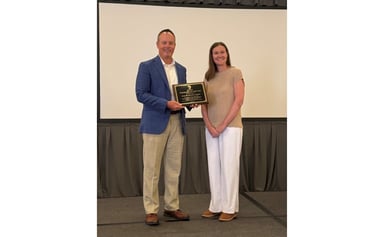
Renee D. Severino

Portrait of Renee D. Severino

Renee is an associate in the Casualty Department at Marshall Dennehey, concentrating her practice in asbestos, mass, and toxic tort matters arising out of exposure to asbestos, silica, and benzene. She participates in all phases of litigation throughout Western Pennsylvania from investigation to trial preparation. Prior to joining Marshall Dennehey, Renee worked for a regional defense firm in Canonsburg where she similarly practiced the defense of mass toxic tort matters.

In 2018, Renee earned her juris doctor from The University of Akron School of Law. She interned for the Pennsylvania Innocence Project through Duquesne University’s School of Law after her second year. During her final year of law school, Renee clerked at a boutique law firm where she handled plaintiff medical malpractice work under the supervision of practicing attorneys.

Renee graduated from Kent State University in 2015 with a Bachelor of Arts in Paralegal Studies with a minor in Pre-Law. During her time in college, she was a member of the Honors College and a member of the Kent State Division I Varsity Women’s Soccer team.

Renee is admitted to practice law in the state of Pennsylvania.

    • University of Akron School of Law (J.D., 2018)
    • Kent State University (B.A., magna cum laude, 2015)
    • Pennsylvania, 2018
    • U.S. District Court Western District of Pennsylvania, 2019
    • West Virginia, 2024
    • Allegheny County Bar Association

Thought Leadership

Defense Digest

Asbestosis Takes the Stand: Raising Awareness of an Abnormally High Verdict for a Typically Low Value Case

June 1, 2024

Key Points: Asbestosis claims are usually considered to be on the lower end of settlements for asbestos law cases.  A verdict of $25 million was returned by a jury in Philadelphia, where the last asbestosis case verdict was $957,000.  Plaintiff’s oxygen dependence likely factored into verdict amount—a factor that should be weighed in future asbestosis claims.  It’s not a secret that many cases don’t go to trial. We have reached an era of practicing law where it’s easier to settle, to negotiate, to compromise, rather than go to trial. Pre-trial settlements and dismissals make life easier on both plaintiff and defense counsel, especially in the world of asbestos, where there can be dozens of defendants.  There are some asbestos cases that go to trial, but those are few and far between, especially in Pennsylvania. While trial dates and conciliations are scheduled, the majority of asbestos cases simply resolve, with all defendants either being dismissed or paying a settlement. (For frame of reference, there have been two asbestos trials in Allegheny County and three asbestos trials in Philadelphia County within the last five years).  Determining the value of a case depends on the disease process itself. For those not involved in asbestos law, there are three main diseases that usually crop up—mesothelioma, lung cancer, and asbestosis. The mesothelioma claims are valued the highest, then lung cancer, and then asbestosis cases. Whether someone was a heavy smoker or not can influence the value of a lung cancer claim. Obviously, there are nuances with every case. Some of these nuances for asbestos cases include the type of job the plaintiff performed, other comorbidities he or she may have had, age, and how long he or she worked at a facility. However, the important context to take away from this scale is that asbestosis claims are near the lower end of the settlement hierarchy.  With that in mind, we turn to the case of Richard Daciw. Mr. Daciw filed suit in the Philadelphia County Court of Common Pleas on May 2, 2019. Fifty-five entities were sued in the initial complaint, with an additional defendant added in an amended complaint. Mr. Daciw was 76 years old. He alleged asbestos exposure from serving in the Navy as a fireman and shipfitter from 1965 to 1969; as a maintenance mechanic at Jeffries Processors in Philadelphia from 1969 to 1972; as a pipefitter and welder for Domino Sugar in Philadelphia from 1972 to 1983; as a welder at Allied Chemical for several months in 1983; and, in various maintenance roles at Smith Kline from 1983 to 2004.  Mr. Daciw was diagnosed with asbestosis by a treating pulmonologist in January of 2019. He had shortness of breath and difficulty breathing with activity. He also had chronic obstructive pulmonary disease and diabetes. An important medical note for Mr. Daciw was that he had become oxygen dependent due to his breathing troubles.  Mr. Daciw was deposed for several days and provided lengthy testimony about the products he worked with over his career. He identified various brands of gaskets, packing, pumps, valves, turbines, boilers, and cement as the products and equipment that allegedly exposed him to asbestos. Based upon Mr. Daciw’s deposition testimony and his identification of these products, the case proceeded in the usual fashion—dismissals and settlements. However, not all defendants reached one of those resolutions.  John Crane, Inc., was the lone defendant in this instance who took this case to trial. As an asbestosis case, it was a likely thought that the risk should have been minimal. However, the results of trial would prove that the risk was anything but minimal.  Trial began on December 12, 2022, before Judge Ann Butchart. It would end on December 22, 2022, when the jury handed down a $25 million verdict. Richard Daciw, et al. v. John Crane Inc., et al., 2022 WL 18232642 (C.P. Phila. Dec. 19, 2022). Richard Daciw was awarded $15 million in damages, and his wife, Winifred Daciw, was awarded $10 million in a loss of consortium claim. While John Crane, Inc., was the sole defendant trying the case, there were an additional 19 defendants on the verdict sheet. Twelve of these non-party entities were found to have no liability for Mr. Daciw’s disease. John Crane, Inc., was found to be liable for asbestos exposure to Mr. Daciw and his subsequent asbestosis. Seven non-party entities were also found to be liable. The verdict sheet did not include how the $25 million would be apportioned.  The last asbestosis case that went to trial in Philadelphia County had a verdict of $957,000. In fact, the last mesothelioma case that went to trial there had a verdict of about $3.8 million. That is a difference of $21 million for a disease process that is considered by most asbestos attorneys to create higher-value settlements for plaintiffs. While it’s impossible to know the full thought process, it is extremely likely that Mr. Daciw’s physical state—oxygen dependence—induced sympathy from the jury.  With this most recent verdict, the usual approach to asbestosis cases needs to be taken with a grain of salt in Pennsylvania. While yes, the majority of asbestosis cases will probably continue to settle within usual ranges, attorneys and carriers alike need to be aware of the possibility that a push to trial could create a huge payday for a plaintiff, especially one with a health situation similar to Richard Daciw. A complete approach overhaul isn’t necessary, but a little awareness will go a long way when it comes to asbestosis cases.  *Renee works in our Pittsburgh, Pennsylvania, office.    Defense Digest, Vol. 30, No. 2, June 2024, is prepared by Marshall Dennehey to provide information on recent legal developments of interest to our readers. This publication is not intended to provide legal advice for a specific situation or to create an attorney-client relationship. ATTORNEY ADVERTISING pursuant to New York RPC 7.1. © 2024 Marshall Dennehey. All Rights Reserved. This article may not be reprinted without the express written permission of our firm. For reprints, contact tamontemuro@mdwcg.com.

Firm Highlights

Result

No-Cause Jury Verdict Secured in Wrongful Death Trial

We successfully obtained a no-cause jury verdict in a 13-day wrongful death trial. The decedent, a 59-year-old man, was admitted to the emergency room on February 15, 2019, with complaints of abdominal pain, decreased appetite, and constipation, despite the use of laxatives. The patient did not complain of any nausea, vomiting, or diarrhea. He had a significant medical history including diabetes, hypertension, prior coronary artery stenting, morbid obesity (with past gastric bypass surgery), longstanding ventral hernia, and back pain. A CT scan revealed multiple hernias and a potential closed-loop bowel obstruction, leading to a surgery consultation. Our client, an emergency general surgeon, interpreted that the patient did not have a closed loop or any significant obstruction and recommended non-surgical management. The patient was approved to have clear liquids, and had a vomiting incident shortly after, but our client was not notified. The patient was returned to NPO status, and after improving overnight, he was returned to “clears” and additional medical and renal consults were ordered. Our client did not receive any communications from the residents/nurses of any changes in the patient’s condition. On February 18, 2019, two rapid responses were called due to increased heart rate and vomiting. It is believed that the vomiting resulted in aspiration, causing sepsis, ultimately leading to the patient’s death. During the trial, the plaintiff’s sole medical expert highlighted imaging on the wrong hernia, which called into question all of his opinions in the case. We made key objections related to the expert testimony, limiting what the allegations were, and preventing new allegations from being made. After approximately two and a half hours of deliberating, the jury returned a no-cause verdict. 

Thought Leadership

Mitigating Long-Tail Liability: Delaware Court Reaffirms Five-Year Workers’ Compensation Deadline

Williamson v. Donald F. Deaven, Inc., No. N25A-07-004 FWW, 2026 LX 252526 (Del. Super. Ct. June 2, 2026) Claimant was involved in a compensable industrial work accident on May 12, 1995, for a low back injury.  Following this, he received compensation for temporary total disability benefits from July 1996 to September 1996 and for sustaining a permanent impairment in 1997 and 1998. For the next 23 years, the claimant continued treatment and paid his own medical bills without submitting them to the employer’s insurer. In November 2021, the claimant filed a petition seeking payment for medical expenses, including prospective surgery and a resulting period of total disability. The employer moved to dismiss the petition, arguing it was barred by Delaware’s five-year statute of limitations (19 Del. C. § 2361(b)). Pursuant to 18 Del. C. § 3914, insurers must provide prompt written notice of the applicable statute of limitations to invoke the five-year deadline. Due to the age of the case, neither party had a comprehensive file of the claim and the Board had archived its file of the matter. The carrier’s computer system retained only bare information indicating that payments occurred and agreements and receipts were filed with the Board in 1997. While the claimant argued that the employer could not prove it provided the mandatory statutory notice, the Hearing Officer recovered the archived file, which contained two “Receipts for Compensation Paid” signed by the claimant. The receipts explicitly contained the required five-year limitation language, which the claimant testified to signing at the hearing. The claimant also attempted to introduce evidence of payments he claimed the employer made, which would have extended the statute of limitations. As a preliminary matter, the hearing officer excluded the testimony about the payments because the claimant did not produce them to the employer. The Board found in favor of the employer and dismissed the claimant’s petition as time-barred. The claimant appealed the Board’s decision, arguing that he never received adequate notice of the statute of limitations and that the hearing officer’s evidentiary ruling was an abuse of discretion. The Court held that the archived, signed receipts constituted substantial evidence that the insurer fulfilled its statutory notice requirements. Therefore, the claimant’s petition was time-barred under the statute of limitations provisions of 19 Del. C. § 2361(b). Furthermore, the Court reinforced strict procedural compliance: it rejected the claimant’s attempts to introduce evidence of payment on appeal, ruling the argument was waived for failure to preserve it while the matter was still before the Board. This recent ruling by the Court underscores the importance and necessity of robust data preservation and precise compliance with notice requirements. For risk managers, employers, and insurers, the decision highlights how tight administrative execution protects against catastrophic long-tail liability.

Thought Leadership

New Jersey Expands Family Leave Protections Effective July 17, 2026

On January 17, 2026, Governor Murphy signed into law legislation expanding the New Jersey Family Leave Act (NJFLA). Beginning July 17, 2026, significant amendments to the NJFLA will expand job-protected family leave to smaller businesses and more employees across the state. The new law broadens coverage by lowering the threshold for private employers from 30 employees to 15 employees, meaning many smaller businesses will now be subject to the NJFLA. Employees of state and local government agencies will continue to be covered regardless of the size of the employer. The amendments also make it easier for employees to qualify for leave. Under the revised law, an employee will be eligible after three months of employment and at least 250 hours worked during the preceding 12 months, replacing the previous requirement of 12 months of employment and 1,000 hours worked. Currently, New Jersey's Temporary Disability Insurance (TDI) and Family Leave Insurance (FLI) programs provide eligible employees with wage replacement while they are on leave but do not independently guarantee job protection. The recent amendments to the New Jersey Family Leave Act (NJFLA) expand these protections by extending job-protected leave to additional employees. Under the amended law, employees receiving TDI or FLI benefits may be entitled to return to the same position they held before taking leave, or to an equivalent position with the same seniority, status, pay, and benefits. Although the legislation also states that it does not expand or modify an employee's reinstatement rights under the NJFLA, the amendments appear to provide job protection to eligible employees receiving TDI or FLI benefits without requiring them to separately satisfy the eligibility requirements of the NJFLA or the federal Family and Medical Leave Act (FMLA). As a result, some employees may be entitled to longer periods of job-protected leave than were previously available under existing law. With these amendments, New Jersey continues to strengthen workplace protections by expanding access to job-protected family leave for eligible employees. These changes significantly expand access to job-protected family leave and may require employers to update their leave policies, employee handbooks, and HR practices. Notably, employers who were previously not required to administer NJFLA may need to amend their policies and/or create new protocols to come into compliance with the NJFLA. Failure to do so would prove costly, as the penalties for non-compliance are significant.

Thought Leadership

Congress Passes Financial Exploitation Prevention Act

On June 25, 2026, the House passed the Financial Exploitation Prevention Act of 2025 (“the Act”) by a vote of 414 to 2. The Act allows financial advisors and firms to delay suspicious transactions regarding the accounts of clients who are 65 or older, if they believe financial exploitation has occurred or is about to take place. With the advancement of technology and AI, the House’s overwhelming bipartisan passage of the Financial Exploitation Prevention Act represents an important step in strengthening the financial industry’s ability to combat the growing threat of elder financial exploitation. The Act recognizes what advisors have long known that financial professionals are often the first to detect suspicious behavior but have historically lacked clear legal authority to intervene before irreversible financial harm occurs. From the industry’s perspective, the bill accomplishes several important objectives, including the following: (1) Provides a practical “pause button” by allowing financial professionals to temporarily delay certain transaction requests when there is a reasonable belief that a senior or vulnerable adult is being financially exploited; (2) Empowers financial professionals to act by providing greater certainty that firms can act in good faith to protect clients without unnecessary legal risk; and (3) Strengthens investor protection without sacrificing client rights by allowing temporary delays based on a reasonable suspicion of exploitation, which is intended only to allow additional review and not to deny clients access to their money indefinitely. In sum, the Financial Exploitation Prevention Act will equip financial professionals with practical, carefully tailored tools to stop suspected financial exploitation before client assets are lost. By allowing firms to temporarily delay suspicious transactions under defined circumstances, Congress is recognizing the critical role advisors play as the first line of defense against increasingly sophisticated fraud schemes. The Act strikes an appropriate balance between protecting vulnerable investors and preserving individual financial autonomy, while reinforcing collaboration among advisors, families, and law enforcement to combat financial exploitation. The bill now awaits Senate action.