.

Michael L. Turner

Co-Chair, Asbestos Litigation Practice

Portrait of Michael L. Turner

A senior attorney with 40 years of litigation experience, Mike has tried in excess of 200 jury trials to verdict in the state and federal courts of Pennsylvania, as well as other jurisdictions throughout the United States.

Mike is a former member of the firm's Board of Directors, and as a highly experienced litigator and trial attorney, he represents and defends clients in mass torts cases and complex general liability matters.

Mike began his law career in the Philadelphia District Attorney's office where he served as an assistant district attorney for five years. He then joined the civil litigation firm of Krusen, Evans and Byrne in Philadelphia, Pennsylvania. After trying numerous asbestos-related cases, he co­founded the firm of Kelley, Jasons, McGuire & Spinelli in Philadelphia where he focused on the preparation and trial of complex personal injury, products liability, and criminal cases.

    • University of Virginia School of Law (J.D., 1981)
    • Virginia State University (B.A., magna cum laude, 1978)
    • Pennsylvania, 1982
    • U.S. District Court Eastern District of Pennsylvania, 1982
    • U.S. Court of Appeals 4th Circuit, 1993
    • American College of Trial Lawyers, Fellow, 2019
    • AV® Preeminent™ by Martindale-Hubbell®
    • The Best Lawyers in America®, Mass Tort Litigation/Class Actions – Defendants (2023-2026)
    • The Best Lawyers in America®, Criminal Defense: White-Collar (2024-2026)
    • The Best Lawyers in America©, Commercial Litigation (2026)
    • International Academy of Trial Lawyers, 2023
    • Pennsylvania Super Lawyers (2019-2026)
    • American Bar Association
    • American College of Trial Lawyers
    • National Bar Association
    • Pennsylvania Bar Association
    • Pennsylvania Defense Institute
    • Philadelphia Association of Defense Counsel
    • Moderator, In-House Perspective 2021: Managing Relationships & New Technology From the Inside, Perrin Conference, February, 2021
    • Panelist, Insights on Diversity in the Legal Community, Perrin Conference, November 2016
    • Panelist, Legal Issues Arising in Trial Practice, Lawyers Club Philadelphia, May, 2016
    • How to Retain and Prepare Expert Witnesses, Philadelaphia Bar Institute CLE, March 2015
    • Moderator, Alternatives to Mock Trial: What You Can Learn With Less Cost, Breakout Session, DRI Asbestos Medicine Seminar, November, 2013
    • Panelist, Today's Jury Pool - The Impact of Generation "Y" and the Social Media  Revolution, American Bar Association Litigation Section's Corporate Counsel CLE Seminar, February, 2013
    • How To Conduct Effective Opening And Closing Statements, American Bar Association Section of Litigation, National Conference for the Minority Lawyer, 1999 
    • Seminar, Direct and Cross Examination, Pennsylvania Bar Institute, 1989 
    • Director, Univest Bank 
    • Past President, Germantown Branch Board of Settlement Music School 
    • Past President, Center City Crime Victim Services Board 
    • Defended a local corporation in a case where plaintiff, a carpenter, was electrocuted while setting up scaffolding around defendant's electrical generators. Plaintiff, who was 33 at the time of his injury, suffered closed head injuries and was unable to return to work. Plaintiff's medical bills totaled $750,000. His past and future lost wages were in the millions, and his settlement demand was in excess of $3.5 million. After a six-week jury trial in the Philadelphia Court of Common Pleas, the jury awarded plaintiff $750,000 in damages. 
    • Defended a local insurance agency in a case where plaintiff, an automobile repair shop owner, alleged our client negligently failed to provide him with the proper mix of insurance coverages, including underinsurance coverage. Plaintiff was seriously injured in an automobile accident caused by an individual who had minimal insurance coverage. Plaintiff's medical bills exceeded six figures and his alleged economic losses exceeded seven figures. After a six day trial in the Court of Common Pleas in Philadelphia, the jury found that the Plaintiff was contributorily negligent.
    • Defendant's Motion for Directed Verdict was granted after a three-week jury trial in federal court in Philadelphia. Represented a corporation that at one time manufactured and sold bathtub inserts to hotels throughout the United States. Plaintiff alleged he pulled the grab bar on a bathroom insert which broke, causing him to fall out of the tub, injuring his back, hips, shoulders, and legs and permanently disabling him. Plaintiff's defective design and manufacture claim was dismissed as to the defendant as a result of successor liability arguments. 
    • Defended a national fast food retailer in the Court of Common Pleas of Philadelphia. Plaintiff alleged negligent hiring, negligent retention, and failure to properly supervise. The co-defendant employee falsified his employment application and failed to disclose that he had been convicted of armed robbery. He thereafter allegedly told one of his supervisors at the fast food establishment that he had a criminal record. Months later, co­defendant employee brought a gun to work and showed it to several of his co-workers during their shift. At the end of his shift, co-defendant employee shot and wounded two of his co-workers and killed two other co-workers in a field about 300 yards from defendant's retail establishment. This case settled for a confidential amount on the day of jury selection. 
    • Tried to verdict a one-week reverse bifurcated jury trial in Delaware County, Pennsylvania, where seven mesothelioma cases were consolidated for trial. Two of the plaintiffs were living and five were deceased. Defendants did not contest the diagnoses of mesothelioma or that exposure to asbestos caused the mesotheliomas. Defendants also did not present any medical evidence in the damage phase of the trial. In five of these cases, the jury returned verdicts in the low five figures. In the other two cases, the jury returned verdicts in the low six figures. Defendant was able to settle all of these cases based on the low Phase I verdicts and avoid a Phase II liability trial. 
    • Tried a group of 26 asbestos cases to verdict before a jury in an eight-week trial in state court, Baltimore, Maryland. The plaintiffs' diseases included lung cancer, asbestosis, mesothelioma, colon cancer, and kidney cancer. In all of these cases, plaintiffs presented medical evidence that their injuries were caused by occupational exposure to asbestos. Defendant presented evidence that the plaintiffs' diseases were not caused by asbestos but other causes, including smoking. Defendants received outright defense verdicts in 14 of these cases and minimal verdicts in nearly all of the remaining cases. 
    • Represented a contractor that allegedly installed asbestos-containing pipe covering. Plaintiff alleged his mesothelioma was caused by exposure to the asbestos-containing products of various defendants. This was an all issues trial where plaintiff presented state-of-the-art and failure to warn evidence, as well as evidence on causation. On the eve of trial, all co-defendants settled, leaving contractor alone in the courtroom to defend this matter. Although the jury rendered a verdict for Plaintiff, after setoffs and credits, our client paid zero dollars. 
    • Tried a consolidated group of three asbestos lung cancers cases to verdict before a jury in state court in Philadelphia, Pennsylvania. These cases were reverse bifurcated with damages being tried first. Plaintiffs alleged their lung cancers were caused solely by occupational exposure to asbestos. Defendants alleged Plaintiffs' lung cancers were caused solely by their smoking histories. Our client received outright defense verdicts in two of the three cases and a verdict of $190,000 in the third case. During the liability phase of this third case, Plaintiff alleged his injuries were caused solely by exposure to our client's asbestos product. The jury disagreed and found that our client was liable for only $20,000 of this verdict and that other Defendants were liable for varying amounts. 

Firm Highlights

Result

No-Cause Jury Verdict Secured in Wrongful Death Trial

We successfully obtained a no-cause jury verdict in a 13-day wrongful death trial. The decedent, a 59-year-old man, was admitted to the emergency room on February 15, 2019, with complaints of abdominal pain, decreased appetite, and constipation, despite the use of laxatives. The patient did not complain of any nausea, vomiting, or diarrhea. He had a significant medical history including diabetes, hypertension, prior coronary artery stenting, morbid obesity (with past gastric bypass surgery), longstanding ventral hernia, and back pain. A CT scan revealed multiple hernias and a potential closed-loop bowel obstruction, leading to a surgery consultation. Our client, an emergency general surgeon, interpreted that the patient did not have a closed loop or any significant obstruction and recommended non-surgical management. The patient was approved to have clear liquids, and had a vomiting incident shortly after, but our client was not notified. The patient was returned to NPO status, and after improving overnight, he was returned to “clears” and additional medical and renal consults were ordered. Our client did not receive any communications from the residents/nurses of any changes in the patient’s condition. On February 18, 2019, two rapid responses were called due to increased heart rate and vomiting. It is believed that the vomiting resulted in aspiration, causing sepsis, ultimately leading to the patient’s death. During the trial, the plaintiff’s sole medical expert highlighted imaging on the wrong hernia, which called into question all of his opinions in the case. We made key objections related to the expert testimony, limiting what the allegations were, and preventing new allegations from being made. After approximately two and a half hours of deliberating, the jury returned a no-cause verdict. 

Thought Leadership

Pennsylvania Supreme Court Holds Self-Referral Prohibition Does Not Cover Prescriptions Written by Physicians with Ownership Interests in Dispensing Pharmacies

700 Pharmacy v. Bureau of Workers’ Compensation Fee Review Hearing Office (State Workers’ Insurance Fund); Nos. 97, 98, 99, 100, 101 MAP 2024; decided June 16, 2026; by Justice Mundy.   In this case, Drs. Miteswar Purewal and Shailen Jalali, treating physicians for workers’ compensation claimants, wrote prescriptions for various medications that were filled by 700 Pharmacy. The worker’s compensation insurer refused to pay for the prescriptions on the basis that they were illegal self-referrals under the Act. 700 Pharmacy subsequently filed fee review applications with The Bureau of Workers’ Compensation Medical Fee Review Office. At a fee review hearing, both physicians stipulated they had a financial interest in the pharmacy.  The physicians argued that the Anti-Referral Provision of the Act does not bar self-referrals on prescription drugs and pharmaceutical services, since the provision does not specifically identify prescription drugs. The Fee Review Hearing Officer rejected this argument and found that prescriptions for medications are prohibited under the “goods or services” language included in the provision. 700 Pharmacy appealed to the Commonwealth Court, and the court affirmed, agreeing with the Hearing Officer’s interpretation of “goods and services” as encompassing prescriptions. 700 Pharmacy appealed to the Supreme Court.  The Supreme Court reversed the decisions of the Hearing Officer and the Commonwealth Court, holding that the term “goods and services” in the Anti-Referral Provision of the Act did not include prescriptions. According to the Court, “goods and services” was not a catch-all, but simply explanatory as to the eight enumerated categories in the provision. The provision (Section 306(f.1)(3)(iii)) reads, in pertinent part: Notwithstanding any other provision of law, it is unlawful for a provider to refer a person for laboratory, physical therapy, rehabilitation, chiropractic, radiation oncology, psychometric, home infusion therapy  or diagnostic imaging, goods or services pursuant to this section if the provider has a financial interest with the person or in the entity that receives the referral. The Court said that if the General Assembly wanted to specifically include prescription drugs and pharmaceutical services in the Anti-Referral Provision, they would have done so. They pointed out that prescription drugs and pharmaceutical services were included by the legislature in Section 306 (f.1)(3)(vi) of the Act as to reimbursement, and claimed that their omission from the Anti-Referral Provision supports the conclusion that those services are not included in the Anti-Referral Provision’s self-referral prohibition.

News

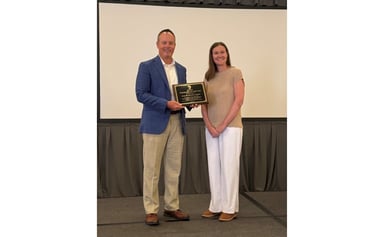
Marshall Dennehey’s John J. Hare Brings Home Attorney of the Year Honors; Firm Named Litigation Department of the Year in Two Categories

Marshall Dennehey took home top honors in three categories at the The Legal Intelligencer’s 2026 Pennsylvania Legal Awards, held June 11 in Philadelphia. The first place awards include: Attorney of the Year: John J. Hare, Chair of the firm’s Appellate Advocacy & Post-Trial Practice Group and Executive Committee member, together with Charles “Chip” Becker of Kline & Specter Litigation Department of the Year, Appellate – Third Win in a Row! Litigation Department of the Year, Product Liability/Mass Torts “There is no one more deserving of Attorney of the Year honors than John. This award is a testament to his exceptional skill, dedication, and leadership—qualities that truly exemplify the very best of our firm,” said G. Mark Thompson, Marshall Dennehey’s President & CEO. “These honors also reflect the strength and depth of our product liability, mass torts, and appellate practices across Pennsylvania and beyond, underscoring our ongoing commitment to delivering outstanding results for our clients.” Attorney of the Year – John J. Hare, Marshall Dennehey, together with Charles “Chip” Becker, Kline & Specter Over the past year, John and Charles were opposing counsel in many of the highest-profile civil appeals in Pennsylvania. John is renowned as a preeminent appellate lawyer on the defense side, and Chip on the plaintiff's side. They have opposed each other repeatedly, exhibiting peerless professionalism and exceptional civility, while zealously litigating under the unremitting pressure of high-profile litigation and record-setting verdicts totaling more than $3.5 billion. They have also collaborated, outside of litigation, on many commissions, committees, and projects of importance to the Pennsylvania judiciary and legal community. Litigation Department of the Year – Appellate Law, Winner (previous winner, 2025 and 2024) 2025 was another standout year for the firm’s Appellate Advocacy & Post‑Trial Practice Group, led by John J. Hare, which was retained to challenge many of Pennsylvania’s “nuclear” verdicts—awards exceeding $10 million. Notably, the department persuaded the Pennsylvania Superior Court to reverse a Philadelphia judgment of $1.09 billion, the largest judgment ever overturned by a Pennsylvania appellate court. The group’s 11 full‑time Pennsylvania‑based appellate lawyers are at the center of Pennsylvania’s most high-profile matters, bringing more than 150 years of combined appellate experience. They routinely handle post‑trial and appellate matters and are frequently engaged to participate in and monitor trials in high‑exposure cases to ensure that critical legal issues are properly raised and preserved for appeal. Litigation Department of the Year – Product Liability/Mass Torts, Winner This marks the first win for the firm’s Pennsylvania Product Liability and Mass Torts practices, which operate within our Casualty Department, managed by Matthew Schorr and Jeff Rapattoni. For almost five decades, Fortune 500 product manufacturers/distributors and their insurers have turned to these groups to defend their litigation. Led by Bradley D. Remick and Vlada Tasich, our Product Liability group’s success can be attributed to its commitment to keeping abreast of ever-changing legal theories, judicial viewpoints, and evolving technology impacting the product liability landscape. Our attorneys have successfully handled thousands of product liability matters in all jurisdictions across the state. Likewise, our mass tort litigation practice – divided into Asbestos & Mass Tort, and Environmental & Toxic Tort Litigation –  has defended manufacturers, distributors, contractors, and premises owners in thousands of personal injury and other claims. Led by Kevin E. Hexstall and Patrick T. Reilly, most attorneys in these groups have more than 20 years of experience, and our seasoned trial team has tried hundreds of cases to verdict, consistently achieving strong results through both trials and settlements. In addition to these awards, Marshall Dennehey was a Litigation Department of the Year finalist for Professional Liability.

Thought Leadership

Unanimous New Jersey Supreme Court Holds That Personal Emails of Public Employees and Officials are Subject to OPRA

In Rosetti v. Ramapo-Indian Hills Regional High School Board of Education, the New Jersey Supreme Court unanimously held that government-related emails, which are contained within personal email accounts, are government records under the Open Public Records Act (OPRA), and a log of those emails must be produced when requested. In reaching this decision, the court conducted an analysis of the OPRA and cited previous cases that held that emails do in fact fall within OPRA’s definition of a record and must be produced when requested pursuant to the Act. The court in Rosetti then had to answer the question as to whether public officials’ personal email accounts that are used for government purposes are subject to OPRA, and found that they are. Rosetti made an OPRA request to the Board of Education seeking email logs from Board members’ personal email accounts. The Board refused to produce the logs and indicated that it was not under any obligation to produce personal email account logs, only from government-related email accounts. The issue was whether a log had to be produced for Board members’ personal email accounts, which they used to conduct Board business. The Board argued that while it was possible to create a log for government-related email accounts through its IT Department, it was not possible to do so for personal email accounts. The court rejected this argument and ruled that Board members are required to search their personal email accounts and create a log of government-related emails housed in those accounts. Once completed, each Board member then must submit a certification detailing the searches that were conducted. The court went one step further with a suggestion to government employees and officials, stating, “[g]overnment agencies should strongly advise their employees, elected officials, and others engaged in government-related business to refrain from using their personal email accounts when conducting government-related business.”  Please do not hesitate to contact me with any questions regarding this case and others pertaining to the OPRA. 

Thought Leadership

Perlmutter Provides Predictability for Punitive Damages Claims in Florida

In a much anticipated decision, the Florida Supreme Court provided clarity for the standards of proof for punitive damages claims in Perlmutter v. Federal Insurance Company, SC2024-0058 (Fla. June 11, 2026). Litigants and trial judges must be mindful of the standards laid out by the Court. And, defense practitioners must be prepared to alter their strategies to defend against such claims. Perlmutter came to the Court from the Fourth District, based on conflict jurisdiction with decisions from the Second and Fifth District and on certification of a question of great public importance as to the standard of proof for punitive damages claims at the pleading stage. Fed. Ins. Co. v. Perlmutter, 376 So. 3d 24, 29 (Fla. 4th DCA 2023). In the underlying case, the Fourth District made two conclusions. First, it held that a “trial court must consider the evidentiary showing by all parties at the hearing on the motion to amend, that is, evidence ‘in the record’ and evidence ‘proffered by the claimant.’”  376 So. 3d at 33. Second, the Fourth held that it “interpreted section 768.72(1) and (2) to require the trial court to make a preliminary determination of whether a reasonable jury, viewing the totality of proffered evidence in the light most favorable to the movant, could find by clear and convincing evidence that punitive damages are warranted.  Id. at 34 (underscoring in the original). In making these conclusions, the court cautioned trial courts that the “preliminary determination” analysis did not entitle the trial court to decide whether the evidence is clear and convincing and noted that the trial court should not weigh evidence and should not determine witness credibility. Id. The Florida Supreme Court accepted jurisdiction and answered the certified question in the negative. It quashed the decision below and remanded the case for application of the following standards: The trial court should consider only the evidence identified or proffered by the claimant; it should not entertain an evidentiary counter-submission from the opponent. The trial court should consider whether a reasonable person could conclude based on the claimant’s evidence, that the defendant committed “intentional misconduct” or “gross negligence” as defined in section 768.72(2) or section 768.72(3). The trial court must review the request for punitive damages in the context of the underlying claims. The trial court should not apply the clear and convincing standard of proof in reviewing the sufficiency of the evidence at the pleading stage. The trial court does not act as a fact-finder; the trial court must not weigh the claimant’s evidence—it cannot decide the truth of the matter. The trial court must consider the record evidence and the proffered evidence in the light most favorable to the plaintiff, but the allegations in the proposed amended complaint are not themselves evidence. Perlmutter, SC2024-0058 at 13-15 (emphasis added). In explaining these standards, the Court interpreted the text of the statute and compared it to a related statute which governs punitive damages in the nursing home context. The nursing home statute expressly calls for evidentiary submissions by “the parties” and expressly tells the trial court to determine whether there is a reasonable basis to believe the claimant could satisfy the “clear and convincing evidence” standard at trial. Id. at 17-18 (comparing the text of section 768.72(1), Florida Statutes, with section 400.0237, Florida Statutes). Without that express language in section 768.72, the statute could not be applied in the same manner. With these standards specially delineated for the trial courts, the Court is “confident that its interpretation of section 768.72(1) will not frustrate the effectiveness of the statute in accomplishing the Legislature’s textually evident purposes.” Id.  at 22 (cleaned up). This remains to be seen. While Perlmutter provides predictability and clarity for trial courts when reviewing the evidentiary submissions in support of a punitive damages claim, the decision will not likely impact the numbers of punitive damages motions filed. Rather, these new parameters will change the way claims are defended, reminiscent of a time when rulings on punitive damages were only subject to certiorari review and appellate courts were limited in reviewing procedural errors. This decision will likely deflate the level-playing field that Florida Rule of Appellate Procedure 9.130(a)(3)(G) addressed by allowing appeals of orders granting and denying punitive damages amendments. Further, Perlmutter may have impliedly created a call to action for the Legislature to amend section 768.72(1) in the same manner it amended section 400.0237 to allow the courts to analyze “admissible evidence submitted by the parties” and determine at a hearing whether there is a reasonable basis to believe the claimant at trial would be able to demonstrate by “clear and convincing evidence” that the recovery of punitive damages is warranted. Until then, defendants must adjust their strategies. To adapt to these new standards, defense practitioners will need to tailor their strategy for defending punitive damages claims since they can no longer submit a counter-proffer or urge a court to apply the clear and convincing standard at the pleading phase. Instead, defendants will need to attack the deficiencies in the claimant’s pleadings and proffer. If the trial court fails to serve as a gatekeeper, and does not apply the above standards, then defendants can pursue an interlocutory appeal under Rule 9.130(a)(3)(G). If a nonfinal appeal is taken, then defendants should move to stay any intrusive financial discovery while the appellate court analyzes the issues on appeal. Finally, defendants should utilize Florida Rule of Civil Procedure 1.510 to serve as a screening device to allow the trial court to analyze all evidence and prevent nonmeritorious punitive damages claims from proceeding to a jury.