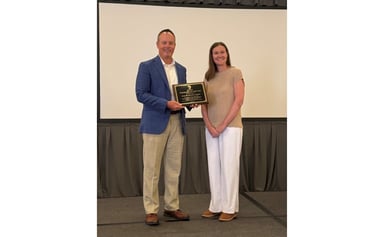
Erin is a shareholder of the Casualty Department concentrating in asbestos, mass and toxic tort matters arising out of exposure to asbestos, silica and benzene. Erin's day-to-day asbestos practice includes directly participating in all phases of litigation, from investigation to trial, throughout Western Pennsylvania.
Prior to joining the firm, Erin's practice involved the defense of complex, high exposure medical malpractice matters on behalf of several major New York area hospital systems and medical practices, at a New York City law firm. Her experience also includes construction cases, slip and fall cases, automotive accident cases, general insurance defense, and admiralty law cases. She has handled all aspects of litigation from inception of the lawsuit through assisting at trial
Erin graduated from University of Pittsburgh School of Law in 2007. During her time at Pitt, she was a member of Phi Alpha Delta Law Fraternity and served as its Vice Justice in 2005-2006. Erin served as a research assistant to the Honorable David Torrey in 2006. She participated in the Semester at Sea Program in 2005 and studied international law as well as the legal systems of various countries while traveling to Iceland, Norway, Russia, Poland, Belgium, France, Ireland, and Spain.
Erin graduated magna cum laude from Lehigh University with a B.A. in English and Political Science in 2004. She received departmental honors in Political Science.
Thought Leadership
Legal Updates for Asbestos and Mass Tort Litigation
Can Testing Gene Mutations Help in Defending Mesothelioma Claims?
February 3, 2021
If you have ever watched television, you have surely seen a commercial from a plaintiff’s firm proclaiming: “Mesothelioma is caused by asbestos exposure. If you or a family member suffers from mesothelioma, you may be entitled to financial compensation.” However, these advertisements are misleading. As advances in genetics research are made, it has become clear that occupational asbestos exposure is not the only potential cause of mesothelioma. In fact, in at least 20 to 30% of mesothelioma diagnoses, occupational asbestos exposure has nothing to do with the diagnosis. As information on other potential causes of mesothelioma increases, large payouts by industrial defendants on these cases are no longer a foregone conclusion. Let’s start with a basic scientific overview. Mesothelioma is a type of cancer that occurs in the thin layer of tissue that covers the majority of your internal organs, i.e., your mesothelium. There are several types of mesothelioma: pleural mesothelioma (mesothelioma that affects the tissue that surrounds the lungs); peritoneal mesothelioma (mesothelioma that affects the tissue in the abdomen); pericardial mesothelioma (mesothelioma that affects the tissue around the heart); and tunica vaginalis mesothelioma (mesothelioma that affects the tissue around the testicles). Mesothelioma occurs when the DNA in cells is damaged. DNA is the chemical in our cells that makes up our genes. Genes are the instructions for how our cells function, and we inherit our genes from our parents. Consequently, it makes sense in that our genes play a role in whether or not we are predisposed to various cancers, including mesothelioma. For instance, BAP1 tumor predisposition syndrome is caused by mutations in the BAP1 gene. BAP1 is an important “good” gene, which suppresses tumors, and every human has two copies of this gene: one from their father and one from their mother. BAP1 gene mutations have been found in the genes of patients with mesothelioma, in addition to various other types of cancer. P16 deletions also are a possible feature of the genes of patients with malignant mesothelioma; in fact, this deletion occurs in up to 80% of pleural mesothelioma cases and approximately 25% of peritoneal mesothelioma cases. It can be expounded from this that some people with no industrial asbestos exposure whatsoever, but with certain gene mutations, are more predisposed to developing mesothelioma than others who do not have the same genes. Likewise, many individuals with a large amount of occupational exposure to asbestos never develop mesothelioma, likely because they do not have any gene mutations. In the 2011 article “Germline BAP1 Mutations Predispose to Malignant Mesothelioma,” Joseph Testa opined that mesothelioma clustering associated with the BAP1 gene mutation is observed in some families; in fact, such clustering in families in the U.S. and Turkey have lead to up to 50% of family members developing mesothelioma. Dr. Testa’s study sequenced the BAP1 in germline DNA from one family in Wisconsin and one family in Louisiana, none of whom had any occupational asbestos exposure. In the family from Wisconsin, six affected family members (four with mesothelioma and two with other types of cancer) had identical gene mutations, whereas, unaffected family members did not. Likewise, the genes of the five affected family members (three with mesothelioma and two with other types of cancer) in the Louisiana family showed complete concordance between the BAP1 mutation status and linkage analysis. The question then becomes: What else plays a factor in these pre-disposed individuals developing mesothelioma? In 2018, Dr. Richard Attanoos wrote an article titled “Malignant Mesothelioma and its Non-Asbestos Causes,” about the developing information on the other causes of mesothelioma. Dr. Attanoos states that therapeutic radiation for other malignancies is a now a well-established cause of mesothelioma. Additionally, he noted that chronic pleural inflammation can cause mesothelioma, as diffuse malignant mesothelioma has been reported in patients with tuberculosis, chronic empyema, peritonitis and/or Crohn’s Disease. Dr. Attanoos expounded that some mesotheliomas are also idiopathic in nature and some may be caused by mineral fibers other than asbestos. Dr. Attanoos goes on to explain that while most pleural mesotheliomas (70% to 90%) in men in Europe and North America were attributable to occupational asbestos exposure; for peritoneal mesothelioma, however, the proportion was lower. Additionally, in North America, few mesotheliomas in women were attributable to asbestos exposures. Dr. Attanoos pontificates that, given amphibole asbestos exposures are presently uncommon and epidemiologic evidence, including incidences of mesothelioma in both sexes, as well as the time trend of these diagnoses in addition to the lack of occupational asbestos exposures, suggests that there are other factors which cause mesothelioma. In simpler terms, there is overwhelming evidence that recent diagnoses of mesothelioma cases are being caused by something other than occupational exposure to asbestos. Dr. Attanoos opines that the current data suggests that a smaller fraction of tumors in men and very few tumors in women are now related to asbestos. This is expounded upon in the 2018 article “Genomics and Epigenetics of Malignant Mesothelioma,” authored by Dr. Adam Sage. Dr. Sage notes that there have been global efforts to limit asbestos exposure through bans; however, a corresponding decrease in mesothelioma diagnoses has not been observed. In fact, the incidence of mesothelioma increased by almost 40% between 2005–2014. He opines that a significant portion of the newly diagnosed cases are the result of non-mining professional occupations and environmental exposures. Dr. Sage believes that germline mutations in the BAP1 gene are one of the most significant factors that lead to the development of mesothelioma. Testing for BAP1 mutations is fairly easy, especially as genetic testing continues to be on the rise. In fact, much like women with a familial history of breast cancer undergo BRCA testing, there may be a time in the near future when those with a family history of mesothelioma are given genetic testing for BAP1 mutations and P16 deletions so that they can be monitored for early detection. Even ancestral DNA testing companies, such as 23andMe and AncestryDNA, already test clients for BRCA. It is reasonable to assume that other gene mutations linked to cancer will be commonly tested in the future. Accordingly, it is likely that the presence of the BAP1 mutation will be readily available information in future asbestos litigation. There is already strong evidence to suggest that occupational asbestos exposure is not causing mesothelioma diagnoses to continue to rise. In the meantime, in order to appropriately defend occupational exposure mesothelioma cases, it will be important to question plaintiffs regarding their familial cancer history as well as any genetics testing that they have undergone. Additionally, a history of radiation therapy as well as exposure to other types of mineral fibers should be investigated. Legal Updates for Asbestos & Mass Tort Litigation – February 2020, has been prepared for our readers by Marshall Dennehey Warner Coleman & Goggin. It is solely intended to provide information on recent legal developments, and is not intended to provide legal advice for a specific situation or to create an attorney-client relationship. We welcome the opportunity to provide such legal assistance as you require on this and other subjects. If you receive the alerts in error, please send a note to tdrau@mdwcg.com. ATTORNEY ADVERTISING pursuant to New York RPC 7.1. © 2021 Marshall Dennehey Warner Coleman & Goggin. All Rights Reserved.
Defense Digest
Why Further Testing of Gene Mutations May Be the Right Stuff to Defend Against Occupational Exposure Mesothelioma Claims
January 29, 2021
Key Points: Our genes play a role in whether we are predisposed to certain types of cancer, including mesothelioma. In at least 20–30% of mesothelioma diagnoses, occupational exposure to asbestos is not the cause of the disease. If you have ever watched television, you have surely seen a commercial from a plaintiff’s firm proclaiming: “Mesothelioma is caused by asbestos exposure. If you or a family member suffers from mesothelioma, you may be entitled to financial compensation.” However, these advertisements are misleading. As advances in genetics research are made, it has become clear that occupational asbestos exposure is not the only potential cause of mesothelioma. In fact, in at least 20 to 30% of mesothelioma diagnoses, occupational asbestos exposure has nothing to do with the diagnosis. As information on other potential causes of mesothelioma increases, large payouts by industrial defendants on these cases are no longer a foregone conclusion. Let’s start with a basic scientific overview. Mesothelioma is a type of cancer that occurs in the thin layer of tissue that covers the majority of your internal organs, i.e., your mesothelium. There are several types of mesothelioma: pleural mesothelioma (mesothelioma that affects the tissue that surrounds the lungs); peritoneal mesothelioma (mesothelioma that affects the tissue in the abdomen); pericardial mesothelioma (mesothelioma that affects the tissue around the heart); and tunica vaginalis mesothelioma (mesothelioma that affects the tissue around the testicles). Mesothelioma occurs when the DNA in cells is damaged. DNA is the chemical in our cells that makes up our genes. Genes are the instructions for how our cells function, and we inherit our genes from our parents. Consequently, it makes sense in that our genes play a role in whether or not we are predisposed to various cancers, including mesothelioma. For instance, BAP1 tumor predisposition syndrome is caused by mutations in the BAP1 gene. BAP1 is an important “good” gene, which suppresses tumors, and every human has two copies of this gene: one from their father and one from their mother. BAP1 gene mutations have been found in the genes of patients with mesothelioma, in addition to various other types of cancer. P16 deletions also are a possible feature of the genes of patients with malignant mesothelioma; in fact, this deletion occurs in up to 80% of pleural mesothelioma cases and approximately 25% of peritoneal mesothelioma cases. It can be expounded from this that some people with no industrial asbestos exposure whatsoever, but with certain gene mutations, are more predisposed to developing mesothelioma than others who do not have the same genes. Likewise, many individuals with a large amount of occupational exposure to asbestos never develop mesothelioma, likely because they do not have any gene mutations. In the 2011 article “Germline BAP1 Mutations Predispose to Malignant Mesothelioma,” Joseph Testa opined that mesothelioma clustering associated with the BAP1 gene mutation is observed in some families; in fact, such clustering in families in the U.S. and Turkey have lead to up to 50% of family members developing mesothelioma. Dr. Testa’s study sequenced the BAP1 in germline DNA from one family in Wisconsin and one family in Louisiana, none of whom had any occupational asbestos exposure. In the family from Wisconsin, six affected family members (four with mesothelioma and two with other types of cancer) had identical gene mutations, whereas, unaffected family members did not. Likewise, the genes of the five affected family members (three with mesothelioma and two with other types of cancer) in the Louisiana family showed complete concordance between the BAP1 mutation status and linkage analysis. The question then becomes: What else plays a factor in these pre-disposed individuals developing mesothelioma? In 2018, Dr. Richard Attanoos wrote an article titled “Malignant Mesothelioma and its Non-Asbestos Causes,” about the developing information on the other causes of mesothelioma. Dr. Attanoos states that therapeutic radiation for other malignancies is a now a well-established cause of mesothelioma. Additionally, he noted that chronic pleural inflammation can cause mesothelioma, as diffuse malignant mesothelioma has been reported in patients with tuberculosis, chronic empyema, peritonitis and/or Crohn’s Disease. Dr. Attanoos expounded that some mesotheliomas are also idiopathic in nature and some may be caused by mineral fibers other than asbestos. Dr. Attanoos goes on to explain that while most pleural mesotheliomas (70% to 90%) in men in Europe and North America were attributable to occupational asbestos exposure; for peritoneal mesothelioma, however, the proportion was lower. Additionally, in North America, few mesotheliomas in women were attributable to asbestos exposures. Dr. Attanoos pontificates that, given amphibole asbestos exposures are presently uncommon and epidemiologic evidence, including incidences of mesothelioma in both sexes, as well as the time trend of these diagnoses in addition to the lack of occupational asbestos exposures, suggests that there are other factors which cause mesothelioma. In simpler terms, there is overwhelming evidence that recent diagnoses of mesothelioma cases are being caused by something other than occupational exposure to asbestos. Dr. Attanoos opines that the current data suggests that a smaller fraction of tumors in men and very few tumors in women are now related to asbestos. This is expounded upon in the 2018 article “Genomics and Epigenetics of Malignant Mesothelioma,” authored by Dr. Adam Sage. Dr. Sage notes that there have been global efforts to limit asbestos exposure through bans; however, a corresponding decrease in mesothelioma diagnoses has not been observed. In fact, the incidence of mesothelioma increased by almost 40% between 2005–2014. He opines that a significant portion of the newly diagnosed cases are the result of non-mining professional occupations and environmental exposures. Dr. Sage believes that germline mutations in the BAP1 gene are one of the most significant factors that lead to the development of mesothelioma. Testing for BAP1 mutations is fairly easy, especially as genetic testing continues to be on the rise. In fact, much like women with a familial history of breast cancer undergo BRCA testing, there may be a time in the near future when those with a family history of mesothelioma are given genetic testing for BAP1 mutations and P16 deletions so that they can be monitored for early detection. Even ancestral DNA testing companies, such as 23andMe and AncestryDNA, already test clients for BRCA. It is reasonable to assume that other gene mutations linked to cancer will be commonly tested in the future. Accordingly, it is likely that the presence of the BAP1 mutation will be readily available information in future asbestos litigation. There is already strong evidence to suggest that occupational asbestos exposure is not causing mesothelioma diagnoses to continue to rise. In the meantime, in order to appropriately defend occupational exposure mesothelioma cases, it will be important to question plaintiffs regarding their familial cancer history as well as any genetics testing that they have undergone. Additionally, a history of radiation therapy as well as exposure to other types of mineral fibers should be investigated. *Erin is an associate in our Pittsburgh, Pennsylvania office. She can be reached at (412) 803-1195 or enmargolin@mdwcg.com. Defense Digest, Vol. 27, No. 1, January 2021 is prepared by Marshall Dennehey Warner Coleman & Goggin to provide information on recent legal developments of interest to our readers. This publication is not intended to provide legal advice for a specific situation or to create an attorney-client relationship. ATTORNEY ADVERTISING pursuant to New York RPC 7.1. © 2021 Marshall Dennehey Warner Coleman & Goggin. All Rights Reserved. This article may not be reprinted without the express written permission of our firm. For reprints, contact tamontemuro@mdwcg.com.