
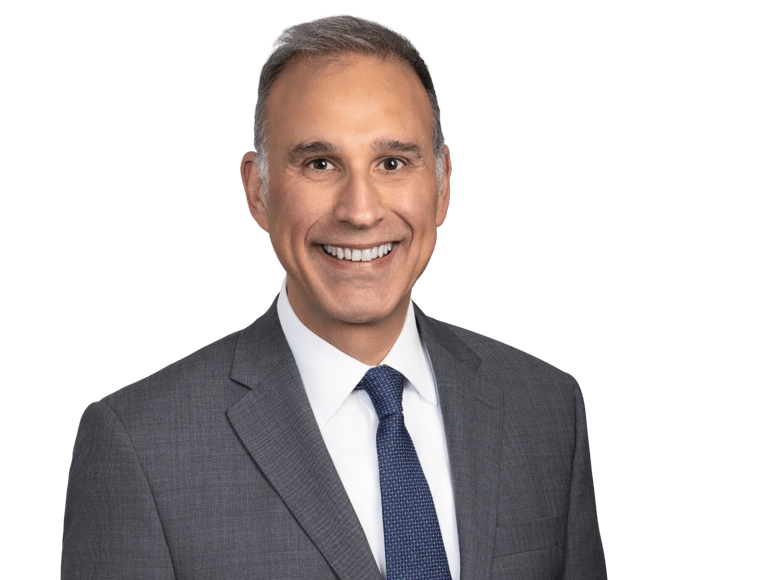
Charles has gained experience in a diverse range of practice areas throughout his career, with a specific focus on medical malpractice defense litigation since 2004. He has handled more than 200 hundred medical malpractice cases to date, representing physicians and hospitals through all phases of litigation, including trial. Charles has also represented health care providers in disciplinary hearings.
In addition to representing health care providers, Charles has experience defending commercial property owners in premises liability cases, owners and contractors in construction accident cases under New York Labor Law, a boiler manufacturer in mass-tort asbestos litigation and a major commercial airline in aviation matters. He has also defended dram shop cases.
Charles has obtained defense verdicts and achieved settlement of cases well below the amount demanded during trial and beforehand through motion practice. For instance, in representing obstetricians in birth-related injury cases, Charles successfully petitioned the court to perform genetic testing on the infant-plaintiff, the results of which led to a substantial reduction in the settlement demand.
While attending New York Law School, Charles was employed as a claims examiner for a large insurer of doctors and hospitals in the state of New York. During that time he worked with physicians in all fields of surgery and medicine, oversaw a hospital account, and worked on risk management and regulatory issues.
Charles began his legal career at Jones Hirsch Connors Miller & Bull P.C. He practices mainly in the New York City metropolitan area, in both State and Federal Courts, as well as the State of Connecticut.
Charles is a member of the New York State Medical Defense Bar Association and the New York State Bar Association. An active member of his community, Charles is a student mentor at New York Law School and has served in various leadership roles at his church.
Thought Leadership
Defense Digest
On the Pulse… Marshall Dennehey’s Connecticut Anchor: The View From State Street
September 30, 2026
Marshall Dennehey’s New Haven, Connecticut office marked its fourth year in operation earlier this year. Over the past four years the office has seen growth in the number of attorneys, support staff, and areas of practice. The attorneys in the New Haven office litigate matters both in State and Federal Courts across the entire state of Connecticut. Some lawyers in this office are also admitted to practice in New York and handle cases there in portions of the state contiguous to western Connecticut. The casualty group makes up the largest contingent of attorneys in the office. There are also attorneys who specialize in healthcare litigation who represent healthcare providers ranging from physicians to therapists as well as long term care facilities. The matters handled in the office range from professional liability, construction defect and liability, premises liability, retail liability, trucking, insurance coverage, healthcare litigation, and complex defense litigation. As our office handles cases in all jurisdictions throughout the state, collaboration is a key part of the culture at Marshall Dennehey and in the New Haven office. We have benefited from having litigators skilled in multiple areas of practice. This has resulted in the development of relationships with new clients and expansion of our long-standing clients of the firm. In addition to an increase in the number of attorneys there have been additions to the paralegal and administrative staff which have helped us provide our clients the highest level of litigation support. The smooth operation of the office is made possible by the capable leadership of our office manager, Amanda Britton, who has been on staff since the office opened in 2022. Conveniently located in the center of coastal Connecticut, and fueled by the best pizza around, the New Haven office is positioned for a bright future and continued success. Charles is the New Haven Office Managing Attorney and may be reached at CTGura@mdwcg.com.
Defense Digest
On the Pulse…Our New Haven, Connecticut, Office
October 1, 2022
In March 2022, Marshall Dennehey opened its newest office in New Haven, Connecticut, to serve the needs of existing and future clients. Located at 700 State Street, our office is a short walk from the state and federal courts in New Haven and provides Marshall Dennehey with a platform centrally located in coastal Connecticut to allow for convenient access to courts in all judicial districts throughout the state. For the past several years, Marshall Dennehey has been handling a substantial Connecticut caseload, primarily out of the firm’s Westchester, New York, office. However, increasing client demand and opportunities led to the opening of the firm’s newest office, which is staffed with four experienced attorneys, a paralegal who is in her final year of law school, and outstanding legal support professionals. I am honored to be the managing attorney of this office. I have watched Marshall Dennehey’s practice in the state of Connecticut grow steadily since I joined the firm in July 2014, along with my fellow shareholder and Connecticut office colleague, Daniel Corde. I came to Marshall Dennehey with two decades of experience devoted almost entirely to the defense of medical malpractice cases. While I attended New York Law School, I worked as a claims examiner for Medical Liability Mutual Insurance Company (MLMIC), one of the largest medical malpractice insurance carriers in the country, which gave me a strong foundation for my legal career. My practice has expanded over the years into other areas of litigation, while continuing to represent health care providers and facilities in both New York and Connecticut. In addition to representing physicians, medical practices and hospitals, our defense of long-term care, rehabilitation and therapy facilities has grown markedly in the past few years. The pandemic had also brought increased demand for psychotherapy and mental health care services, and our defense of professionals and institutions in these fields has expanded as well. Daniel Corde serves multiple jurisdictions, with admissions in both New York and Connecticut, where he has defended matters for well-known clients including IKEA, Hyatt, Raymour & Flanagan, and Dollar General. Dan has 35 years of litigation experience, including trials to verdict, arbitrations and mediations, in a wide range of practice areas such as product liability, premises liability, premises security, transportation product liability, and toxic tort, mold, and asbestos litigation matters. Further, Dan is a FAA-licensed pilot and has spent a considerable number of years managing claims for a major aviation insurer. He has served as monitoring counsel in this type of litigation, working with insurance companies, primary and excess insurers, fixed-based aviation clients and local counsel, to establish, coordinate and manage the defense of cases. He has conducted mediations across the United States. David Lane, a shareholder in the firm’s Professional Liability Department, focuses his practice on privacy and data security, intellectual property and technology litigation. With respect to privacy and data security, David represents clients through all stages of data breach response, including investigations, compliance with data breach notification laws and regulatory investigations. David has been accredited by the International Association of Privacy Professionals (IAPP) as a certified information privacy professional (CIPP/US). In addition, he has significant experience in insurance coverage and bad faith litigation, and consumer financial services litigation, defending clients and claims brought under the Fair Debt Collection Practices Act and Fair Credit Reporting Act. David also has an appellate practice, working on appeals in a variety of matters. He is admitted in New York state and federal courts and Florida state courts. He practiced out of the firm’s Manhattan office for 12 years before joining us in New Haven. Caroline Skelton is an associate in the firm’s Casualty Department. Caroline has considerable civil defense litigation experience in both New York and Connecticut, where she has handled matters involving catastrophic losses. She has handled cases involving premises liability, construction accidents and accidents in the transportation industry. Caroline’s skills in motion practice, her attention to detail and her depth of knowledge have led to many successes in motions for summary judgment. She also litigates complex breach of contract actions in which she has represented high-profile clients such as General Motors. The New Haven office is also fortunate to have a dedicated support staff comprised of Michelle Ernandez, a paralegal now in her final year of law school, two administrative assistants, Amanda Britton and Caitlin Murtha, as well as one scheduling clerk, Mara Bonnell. I look forward to developing the New Haven, Connecticut, office into a site that will extend the firm’s reach throughout the state of Connecticut and beyond. Our office is located at 700 State Street, Suite 303, New Haven, CT 06511. Our main office phone number is 203-714-4560, and our fax number 203.714.4561. My direct line 203-714-4562, and my email is ctgura@mdwcg.com. Defense Digest, Vol. 28, No. 3, October 2022 is prepared by Marshall Dennehey to provide information on recent legal developments of interest to our readers. This publication is not intended to provide legal advice for a specific situation or to create an attorney-client relationship. ATTORNEY ADVERTISING pursuant to New York RPC 7.1. © 2022 Marshall Dennehey. All Rights Reserved. This article may not be reprinted without the express written permission of our firm. For reprints, contact tamontemuro@mdwcg.com.


