.

Seth J. Schwartz

Chair, Construction Injury Practice

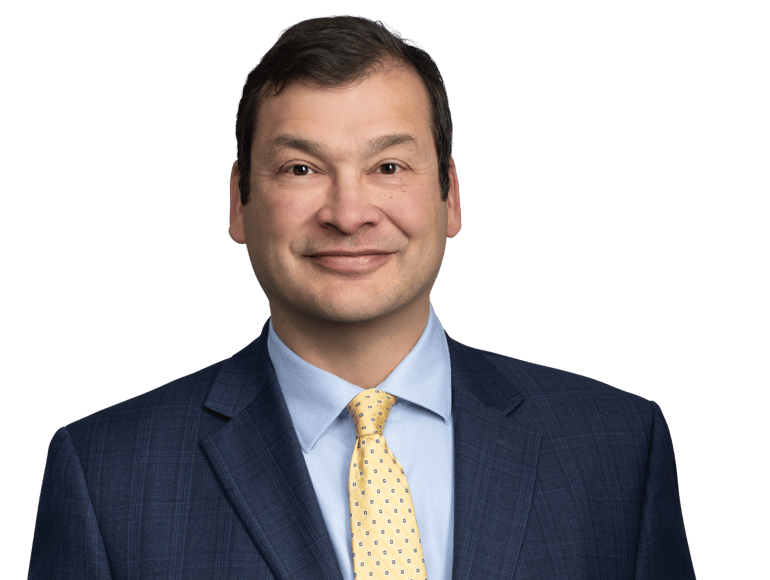
Portrait of Seth J. Schwartz

A shareholder in the firm’s Casualty Department and recipient of Martindale-Hubbell’s highest AV® Preeminent™ rating, Seth represents construction companies and contractors, trucking companies, bars, commercial property owners and managers, and amusement parks and insurers throughout Pennsylvania. His practice focuses on high-exposure matters involving catastrophic injury or death in the areas of construction accidents and defects, trucking, liquor liability, premises liability, and sports and amusement. An accomplished trial lawyer, Seth has tried numerous jury cases in Philadelphia and across eastern Pennsylvania, securing multiple defense verdicts.

Prior to joining Marshall Dennehey, Seth was a staff trial attorney for seven years at Nationwide Insurance. He handled general defense litigation including automobile liability, construction matters, and premises liability. Before joining Nationwide Insurance, Seth entered private practice at a small civil litigation firm in Philadelphia, where he handled a range of civil litigation from premises liability to complex product liability matters.

Seth was appointed to judge pro tem for the Philadelphia Court of Common Pleas and to the Investigative Division of the Philadelphia Bar Association's Commission on Judicial Selection and Retention.

Seth graduated from Temple University School of Law in 1992. He attended college at The American University where he graduated in 1988 with honors.

    • Temple University Beasley School of Law (J.D., 1992)
    • American University (B.S.B.A., cum laude, 1988)
    • Pennsylvania, 1992
    • U.S. District Court Eastern District of Pennsylvania, 1994
    • AV® Preeminent™ by Martindale-Hubbell®
    • BTI Client Service All-Star (2024)
    • Pennsylvania Bar Association
    • An Overview of Construction Defect Litigation in Pennsylvania, Nationwide Insurance Company, December 16, 2014
    • Commercial Defense Practice in New York, New Jersey & Pennsylvania, Nationwide Insurance Company, December 5, 2014
    • Commercial Defense Practice in New Jersey and Pennsylvania, Nationwide Insurance Company, December 2013
    • Brief Overview of Pennsylvania Contractual Indemnity and Additional Insured Issues, Nationwide insurance Company, April 2012
    • Numerous presentations to property managers and insurance companies regarding effective claims handling and tender issues 
    • Pennsylvania Amusement Park Association Annual Conference, 2007
    • Defense jury verdict in premises liability matter.  Seth was the only defense attorney and Plaintiff had two lawyers during trial.  Plaintiff argued spoliation of evidence, had back surgery and "boarded" over seven figures in damages.  Seth developed inconsistencies during the cross examination of Plaintiff's witnesses, and argued that Plaintiff failed to meet his burden of proof.
    • Defense jury verdict in premises liability matter.  Seth again was the only defense attorney and Plaintiff had two lawyers during trial.  Plaintiff  argued that the defendant failed to preserve evidence.  It is also noted that the defendant had witness issues with a former employee.  Plaintiff was a grandfatherly gentlemen claiming a serious a  hip injury.  Seth introduced evidence that there were gaps in Plaintiff's story, and during Seth's cross examination of Plaintiff's liability expert, the expert admitted that he did not have his entire file, although he initially told the jury he did; and, he acknowledged that the Defendant was compliant with a different set of industry regulations which he omitted to discuss during direct examination.
    • Defense jury verdict in automobile rear-end collision with negligence stipulation involving surgery and significant wage loss claim. Negligence was admitted to the jury. Significant credibility issues developed during the case, including Plaintiff's vocational expert admitting in front of the jury of failing to produce all discoverable documents. After hearing the evidence, jury returned a defense verdict, although negligence was admitted. 
    • Defense jury verdict in rear-end motor vehicle accident case. Negligence was admitted. Plaintiff alleged surgery and a significant vocational claim. Numerous inconsistencies were developed during trial involving the Plaintiff's reporting of the incident to the doctor. After deliberation, jury awarded a defense verdict. 
    • Defense jury verdict in rear-end collision with negligence stipulation involving two personal injury claims of multiple herniations and permanency. During trial, evidence was developed which revealed that Plaintiffs provided varying medical histories to different doctors. After hearing the evidence, jury returned a defense verdict. 
    • Defense jury verdict in premises liability case whereby the plaintiff, a pizza delivery person, allegedly fell on ice while delivering a pizza. During trial Plaintiff admitted on cross examination to observing alternative pathways and that he did not maintain a vigilant look out. The jury returned a defense verdict in favor of the homeowners. 
    • Christian Legal Clinics of Philadelphia

Results

Thought Leadership

Defense Digest

On the Pulse…Construction Injury Litigation Practice Group

December 1, 2023

Recent data released from the United States Bureau of Labor Statistics reveals that construction laborers accounted for 11.9% of all reported fatal falls, slips, or trips in 2020 across all occupations. Sixty percent of all construction laborers perform their work near or around moving mechanical parts or in close proximity to large moving objects. Fifty percent of these workers reportedly make use of PPE. Construction sites are among the most dangerous places to work in the United States. Indeed, in 2020 alone, construction laborers accounted for 8.9% of all workplace deaths due to exposure to harmful substances or environments. With millions of accidents reported each year, injuries to construction workers are often serious or even catastrophic.  This type of litigation is fraught with difficulty since it tends to involve sophisticated legal issues, multiple parties, multiple causes of action, complex relationships, and problematic factual situations. The law in this area continues to evolve as existing rules and precedent are continually challenged, overturned, replaced, or modified.  Marshall Dennehey’s Construction Injury Litigation Practice Group understands these complex relationships and issues. Our firm has a significant presence in the construction industry in the representation of construction companies/prime contractors, commercial property owners/ managers, developers, design professionals, and demolition, electrical, roofing, and various other trade subcontractors in a wide array of serious loss cases where there is often catastrophic injury or death. With decades of experience, our diverse team of attorneys regularly defends our clients in a multitude of personal injury matters arising out of the construction process. We handle everything from catastrophic injury or death due to contact with objects or equipment, fatal or catastrophic transportation incidents, roofing incidents, and scaffolding/ladder incidents, to the more routine worksite slip and fall incidents.  Our defense approach is aimed at the early identification of key issues and is predicated on developing the earliest possible defense strategies tailored to the individual case and client. Our involvement often begins with pre-litigation accident investigation, claims analysis, best practices related to client document and evidence retention, and early assessment of risk/liability transfer opportunities to shift liability and exposure under the terms of a construction contract, including indemnification and additional insured coverage issues. Our diverse team of trial attorneys have significant experience in handling some of the most high-profile and complex construction litigation matters taking place across the United States, and we have proven time and again, that we are ready and able to try even the most challenging construction injury matters to verdict with the skills needed to prevail.  The depth of our experience is the key to our legal defense in construction injury matters. Our professionals have considerable breadth of experience in this domain. They understand the evolving and complex laws surrounding this volatile area of practice, including issues relating to insurance coverage and claims disputes, additional insured coverage, product liability, workers’ compensation, the statutory employer doctrine, contractor licensing issues, Occupational Safety and Health Act (OSHA) compliance and workplace safety issues, and the peculiar risk doctrine. Through the use of cutting-edge technology and aggressive claim investigation, we are able to assess liability exposure and potential damages issues early on in a case so, together with the client and insurer, we can effectively resolve the case. Our unique strategy and team approach consists of experienced partners, associates, and paralegals capable of handling the basic, as well as the highly-sophisticated and complex, construction injury litigation matters throughout Pennsylvania, New Jersey, Delaware, Ohio, Florida, New York, and Connecticut.  We look forward to your inquiries and remain at your disposal for presentations or seminars your company may desire.     Defense Digest, Vol. 29, No. 4, December 2023, is prepared by Marshall Dennehey to provide information on recent legal developments of interest to our readers. This publication is not intended to provide legal advice for a specific situation or to create an attorney-client relationship. ATTORNEY ADVERTISING pursuant to New York RPC 7.1. © 2023 Marshall Dennehey. All Rights Reserved. This article may not be reprinted without the express written permission of our firm. For reprints, contact tamontemuro@mdwcg.com. 

Firm Highlights

Thought Leadership

Pennsylvania Superior Court Reaffirms Liberal Pleading Standard in Medical Malpractice Actions

Legal Roundup: Pennsylvania The Pennsylvania Superior Court has reinforced a broader fact-pleading approach that may make it more difficult for health care defendants to obtain dismissal at the preliminary objection stage. In DaSilva v. Abington Memorial Hospital, the court held that the plaintiffs’ second amended complaint satisfied Pennsylvania’s fact‑pleading requirements despite the absence of individually named negligent actors. In DaSilva, the plaintiffs filed a second amended complaint alleging that Abington Memorial Hospital was directly and vicariously negligent after the patient, who was experiencing a mental health crisis, was left unattended by hospital staff, exited the emergency department, and was struck by a vehicle, suffering serious injuries. The trial court sustained the hospital’s preliminary objections and dismissed the complaint with prejudice, stating plaintiffs “failed to plead any material factual allegations in support of their claims of negligence [and] set forth vague allegations of negligence and unidentified agency.” Id. at *5. The plaintiffs appealed. On appeal, the Superior Court reversed, holding that the complaint sufficiently pled negligence and vicarious liability claims under Pa.R.C.P. 1019(a). The court concluded that allegations describing the patient’s condition, the hospital’s awareness of that condition, and the alleged failure to monitor or prevent elopement were adequate to satisfy Pennsylvania’s pleading requirements. Significantly, the court rejected the hospital’s argument that the complaint failed because it did not identify the specific employees responsible for the alleged negligence. Instead, the court found that generalized references to “emergency room staff” were sufficient to place the hospital on notice of the claims because “the names of those who performed services for the plaintiff are known to the defendant or can be ascertained during discovery.” Id. at *12 (citing Est. of Denmark ex rel. Hurst v. Williams, 117 A.3d 300, 307 (Pa. Super. 2015)). The effect of DaSilva is that plaintiffs may proceed past the pleading stage with relatively generalized allegations, particularly in cases involving institutional defendants where relevant details are uniquely within the defendant’s control. As a result, health care defendants should anticipate that challenges to claim sufficiency may be resolved in the later stages of litigation, including discovery and summary judgment.

News

106 Marshall Dennehey Attorneys Recognized in the 2027 Editions of The Best Lawyers in America® and the Best Lawyers: Ones to Watch® in America

Marshall Dennehey is proud to highlight the firm’s 106 attorneys who have been recognized in the 2027 editions of The Best Lawyers in America® and the Best Lawyers: Ones to Watch® in America. Less than 6% of all practicing lawyers in the U.S. were selected by their peers for this recognition. Additionally, four of the firm’s attorneys received the Best Lawyers® 2027 “Lawyer of the Year” awards in their respective practice areas and demographic regions. Since it was first published in 1983, Best Lawyers® has become universally regarded as the definitive guide to legal excellence. Best Lawyers lists are compiled based on an exhaustive peer-review evaluation. For more information, please visit https://www.bestlawyers.com/. OUR 2027 LAWYERS OF THE YEAR Harrisburg, PA Christopher Reeser, Personal Injury Litigation - Defendants Kacey Wiedt, Workers Compensation Law - Employers Roseland, NJ Justin F. Johnson, Medical Malpractice Law - Defendants Leonard Leicht, Personal Injury Litigation - Defendants   OUR 2026 BEST LAWYERS IN AMERICA Philadelphia, PA Nicholas D. Bowers, Personal Injury Litigation - Defendants Josh J. T. Byrne, Professional Malpractice Law - Defendants Jefferey J. Chomko, Insurance Law James H. Cole, Insurance Law John J. Delany III, Personal Injury Litigation - Defendants Laurianne Falcone, Personal Injury Litigation - Defendants John P. Gonzales, Employment Law - Management John Hare, Appellate Practice Daniel D. Krebbs, Personal Injury Litigation - Defendants Michele Punturi, Workers' Compensation Law - Employers Bradley D. Remick, Product Liability Litigation - Defendants Andrea Cicero Rock, Workers' Compensation Law - Employers Robin M. Romano, Workers' Compensation Law - Employers Daniel J. Ryan, Jr., Personal Injury Litigation - Defendants Gary M. Samms, Professional Malpractice Law - Defendants Christopher N. Santoro, Personal Injury Litigation – Defendants; Product Liability Litigation -Defendants Josh D. Scheets, Personal Injury Litigation - Defendants Robert P. Schenk, Workers' Compensation Law - Employers Robert E. Smith, Insurance Law Robin Snyder, Litigation - Health Care Michael L. Turner, Commercial Litigation; Criminal Defense: White-Collar; Mass Tort Litigation / Class Actions - Defendants Claire Breaux Ventola, Product Liability Litigation - Defendants Pittsburgh, PA Melissa Devich Cochran, Commercial Litigation; Mass Tort Litigation / Class Actions – Defendants; Product Liability Litigation - Defendants  John F. Deasy, Personal Injury Litigation – Defendants; Product Liability Litigation - Defendants Daniel W. Deitrick, Workers' Compensation Law - Employers Douglas C. LaSota, Litigation - Construction; Mass Tort Litigation / Class Actions - Defendants Joseph V. Lesinski, Product Liability Litigation – Defendants   Christian D. Marquis, Personal Injury Litigation - Defendants Patricia A. Monahan, Insurance Law; Litigation - Insurance Patrick T. Reilly, Commercial Litigation; Mass Tort Litigation / Class Actions – Defendants; Product Liability Litigation - Defendants Brett C. Shear, Medical Malpractice Law - Defendants Teresa O. Sirianni, Education Law; Employment Law – Management; Litigation - Labor and Employment Stuart Sostmann, Product Liability Litigation – Defendants Danielle M. Vugrinovich, Mass Tort Litigation / Class Actions - Defendants Scranton, PA Sarah E. Argo, Litigation - Insurance Michael J. Connolly, Personal Injury Litigation – Defendants; Professional Malpractice Law - Defendants Matthew Keris, Litigation - Health Care; Medical Malpractice Law - Defendants John T. McGrath, Jr., Insurance Law; Medical Malpractice Law – Defendants; Product Liability Litigation - Defendants William J. McPartland, Insurance Law John R. Nealon, Product Liability Litigation - Defendants Victoria Scanlon, Health Care Law; Litigation - Health Care; Medical Malpractice Law - Defendants Michael A. Sebastian, Workers' Compensation Law - Employers Thomas A. Specht, Insurance Law; Litigation - Insurance Suzanne Tighe, Litigation Insurance Harrisburg , PA Casey Alan Coyle, Administrative/Regulatory Law; Appellate Practice; Commercial Litigation Brittany E. Bakshi, Personal Injury Litigation - Defendants Shannon P. Fellin, Workers' Compensation Law - Employers Allison Krupp, Insurance Law John R. Ninosky, Litigation – Insurance; Personal Injury Litigation - Defendants Christopher Reeser, Personal Injury Litigation - Defendants Kacey Wiedt, Workers' Compensation Law – Employers King of Prussia, PA  Michael L. Detweiler, Construction Law Joseph L. Hoynoski III, Medical Malpractice Law - Defendants Gregory J. Kelley, Construction Law, Litigation - Construction Anthony Natale III, Workers' Compensation Law - Employers Francis X. Wickersham, Workers' Compensation Law - Employers A. Judd Woytek, Workers' Compensation Law – Employers Erie, PA Patrick M. Carey, Personal Injury Litigation - Defendants Joel M. Snavely, Health Care Law; Insurance Law New Haven, CT Michael Wrona, Commercial Litigation, Litigation - Bankruptcy  Mount Laurel, NJ David D. Blake, Litigation - Insurance Barbara Davis, Personal Injury Litigation - Defendants Lynne Nahmani, Litigation - Health Care John H. Osorio, Personal Injury Litigation - Defendants John L. Slimm, Legal Malpractice Law – Defendants; Professional Malpractice Law – Defendants Roseland, NJ Robert T. Evers, Medical Malpractice Law - Defendants Justin F. Johnson, Medical Malpractice Law - Defendants Julia Klubenspies, Medical Malpractice Law - Defendants Leonard C. Leicht, Personal Injury Litigation - Defendants Patricia M. McDonagh, Appellate Practice Sunny Sparano, Litigation - Construction Randall S. Watts, Health Care Law New York, NY Tonya M. Lindsey, Medical Malpractice Law - Defendants Tampa, FL Michael Archibald, Personal Injury Litigation - Defendants Lindsay G. McCormick, Litigation – Construction Orlando, FL Thomas F. Brown, Personal Injury Litigation - Defendants Dante C. Rohr, Commercial Litigation Fort Lauderdale, FL Kimberly Kanoff Berman, Appellate Practice Patrick M. Delong, Personal Injury Litigation – Defendants Jacksonville, FL  Heather Byrer Carbone, Workers' Compensation Law - Employers Linda Wagner Farrell, Workers' Compensation Law - Employers Elizabeth B. Ferguson, Litigation - Construction James P. Hanratty, Personal Injury Litigation – Defendants Wilmington, DE Sarah B. Cole, Litigation - Insurance Benjamin K. Durstein, Workers' Compensation Law - Employers Maria R. Granaudo, Medical Malpractice Law - Defendants  Keri L. Morris-Johnston, Workers' Compensation Law - Employers Cincinnati, OH Timothy B. Schenkel, Personal Injury Litigation - Defendants David E. Williamson, Personal Injury Litigation - Defendants Cleveland, OH Vincent E. Cononico, Litigation – Insurance, Personal Injury Litigation - Defendants Jillian L. Dinehart, Personal Injury Litigation - Defendants David J. Fagnilli, Insurance Law Jason P. Ferrante, Health Care Law, Litigation - Health Care Andrew H. Isakoff, Transportation Law Leslie M. Jenny, Litigation - Health Care; Medical Malpractice Law – Defendant OUR 2026 BEST LAWYERS: ONES TO WATCH Jacksonville, FL Sean J. Reeves, Personal Injury Litigation – Defendants; Product Liability Litigation - Defendants Orlando, FL Carolin A. Pacheco, Insurance Law Mount Laurel Stacey Gorin, Insurance Law Melville, NY Kimberly Gitlin, Personal Injury Litigation – Defendants Matthew A. Gray, Insurance Law; Personal Injury Litigation - Defendants Philadelphia, PA Holli K. Archer, Health Care Law; Medical Malpractice Law – Defendants; Professional Malpractice Law Emily Pritchyk, Commercial Litigation; Product Liability Litigation – Defendants Pittsburgh, PA Taylor E. Kosko, Mass Tort Litigation / Class Actions – Defendants; Personal Injury Litigation - Defendants Alana Staniszewski, Workers' Compensation Law - Employers Michael D. Winsko, Product Liability Litigation – Defendants; Transportation Law King of Prussia, PA Richard Lechette, Commercial Litigation; Insurance Law, Personal Injury Litigation – Defendants

Thought Leadership

The Ohio Supreme Court Extends Sham-Affidavit Rule to Contradictory Expert Reports

Legal Roundup: Ohio In its June 23, 2026, decision in Moore v. Mercy Medical Center, the Ohio Supreme Court upheld a trial court’s decision to strike an expert witness’s affidavit that contradicted the opinions expressed in the expert’s prior report. This case pertains to allegations of medical malpractice after plaintiff Cheri Moore gave birth to an infant in respiratory distress who required intubation. Moore alleged that a delay in ordering an emergency cesarean section resulted in the need for intubation, causing her child’s injuries. Specifically, Moore sued Dr. Meniru, who completed his first shift at 7:00 a.m. on May 28, 2015, and did not resume treating Moore until 7:00 a.m. on May 29, 2015. One of Moore’s expert witnesses authored a report stating that the doctors, including Dr. Meniru, deviated from the standard of care by not advocating for a cesarean section in the evening of May 28, 2015. Based on this report, Dr. Meniru moved for summary judgment, arguing that the alleged breach occurred during a period when he was not on duty. In response to the summary judgment motion, the plaintiff filed an affidavit from the same expert. Although the expert expressly incorporated his previous report into his affidavit, he also offered an additional opinion: that Dr. Meniru breached the standard of care by failing to begin a cesarean section within 30 minutes of receiving reports of fetal distress. Dr. Meniru filed a motion to strike the expert’s affidavit, arguing that it contradicted the opinions set forth in his prior report in violation of the sham-affidavit rule. The sham-affidavit rule applies to “a contradictory affidavit that indicates only that the affiant cannot maintain a consistent story, or is willing to offer a statement solely for the purpose of defeating summary judgment”. Moore, supra, at ¶ 19, citing Pettiford v. Aggarwal, 126 Ohio St.3d 413, 2010-Ohio-3237. The trial court granted both the motion to strike and the motion for summary judgment, and the Fifth District affirmed. The Ohio Supreme Court accepted two questions of law: (1) whether the sham-affidavit rule applies when the sworn testimony contradicts prior unsworn statements; and (2) whether an inconsistency within the affidavit goes to credibility or admissibility, justifying an order striking the affidavit. Previous rulings by the Ohio Supreme Court regarding the sham-affidavit rule have pertained to contradictions between an affidavit and sworn deposition testimony. See, e.g., Byrd v. Smith, 2006- Ohio-3455, 110 Ohio St.3d 24, 850 N.E.2d 47. However, here, the Court was asked to apply the same rule to contradictions between a sworn affidavit and an unsworn expert report. The Court held that, because Moore’s expert incorporated his prior report into his affidavit, he effectively adopted the report as part of his sworn testimony.