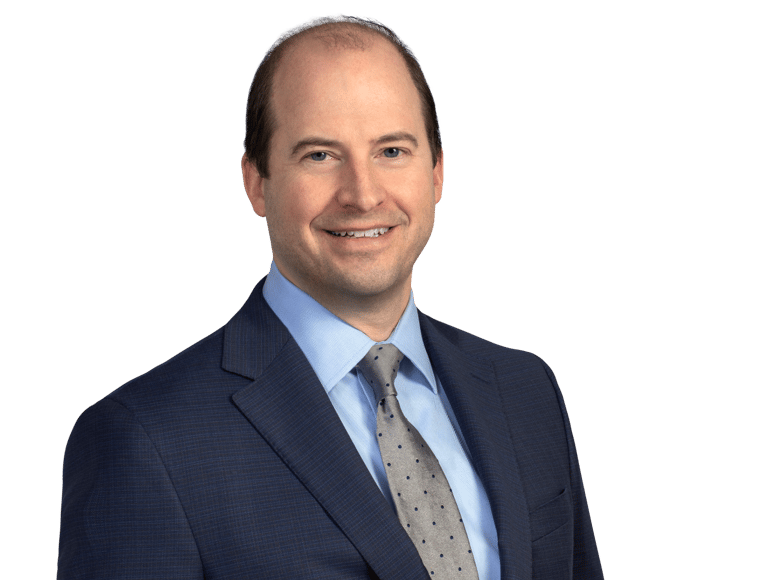
Scott is a shareholder in the Professional Liability Department with over 20 years of experience defending professionals against malpractice and other professional liability claims. He often defends lawyers against claims of malpractice and malicious prosecution. Scott also has extensive experience counseling lawyers on professional ethics and professional responsibility matters, including those facing disciplinary charges before the Office of Disciplinary Counsel as well as matters before the Pennsylvania Lawyers Fund for Client Security, the Pennsylvania Judicial Board and the Pennsylvania State Ethics Commission. While his practice is largely focused on defending lawyers and law firms, he also frequently defends accountants, engineers, real estate agents, insurance agents and design professionals in a variety of professional liability lawsuits.
Scott is well known within the Pennsylvania legal community and is a frequent speaker at industry events. Among his many professional memberships, he is a member of the House of Delegates of the Pennsylvania Bar Association and Co-Vice Chair of its Professional Liability Committee. He is also active in the Allegheny County Bar Association where he is a member of the Ethics and Lawyer Professional Liability Committee. Additionally, he is a member of the Professional Liability Defense Federation.
Prior to joining Marshall Dennehey, Scott chaired the Ethics & Legal Malpractice Team at a Pittsburgh-based firm. A graduate of Duquesne University School of Law and DePauw University, he is admitted to practice in Pennsylvania, the United States District Court for the Western District of Pennsylvania, the United States Court of Appeals for the Third Circuit and the United States Court of Federal Claims.
Thought Leadership
Legal Updates for Lawyers' Professional Liability
Pennsylvania Bar Association Formal Opinion 2025-100 Reinforces Written Fee Agreements as Essential for Compliance and Risk Management
January 1, 2026
In Formal Opinion 2025-100, the Pennsylvania Bar Association Committee on Legal Ethics and Professional Responsibility emphasizes the importance of written fee arrangements. The recent Opinion clarifies the minimum requirements of Rule 1.5 (Fees) and discusses recommended best practices to reduce disciplinary and malpractice risk. Rule 1.5(b) requires that when a lawyer has not regularly represented a client, the basis or rate of the fee must be communicated to the client in writing before or within a reasonable time after commencement of the representation. A written communication of fees is mandatory in nearly all engagements. The only exception applies when a lawyer has regularly represented the client. Although the Rules of Professional Conduct do not define “regularly,” comment [1] to the Rule explains that the exception applies where the client has an evolved understanding of the fees to be charged. The Opinion underscores that contingent fee arrangements are treated differently. Under Rule 1.5(c), a written fee agreement is always required for a contingent fee, regardless of the lawyer’s prior relationship with the client. The written contingent fee agreement must specify how the fee and expenses will be calculated. Additionally, at the conclusion of a contingent fee matter, a written closing statement showing the outcome of the matter, the remittance to the client, and the method of the determination of the fee is also required. Although the Rules of Professional Conduct only require a written statement of the basis or rate of the fee, the Committee strongly recommends a more comprehensive written fee agreement, countersigned by the client, as a best practice to avoid malpractice claims and disciplinary complaints. Fee agreements that go beyond the minimum requirements of Rule 1.5 protect the rights and interests of both the lawyer and the client, prevent misunderstandings, and ensure the lawyer’s compliance with their communication obligations under Rule 1.4. The Committee suggests that a written fee agreement can be used to clarify, among other things, the identity of the client, the scope of the representation, and the expectations and obligations of both lawyer and client. The Opinion also reminds lawyers that the writing required by Rule 1.5 must be retained for at least five years after termination of the attorney-client relationship pursuant to Rule 1.15(c). Formal Opinion 2025-100 ultimately reinforces that written fee communications protect both clients and lawyers and are an essential part the lawyer-client relationship. Legal Update for Lawyers’ Professional Liability – January 2026 is prepared by Marshall Dennehey to provide information on recent legal developments of interest to our readers. This publication is not intended to provide legal advice for a specific situation or to create an attorney-client relationship. We would be pleased to provide such legal assistance as you require on these and other subjects when called upon. ATTORNEY ADVERTISING pursuant to New York RPC 7.1 Copyright © 2026 Marshall Dennehey, all rights reserved. No part of this publication may be reprinted without the express written permission of our firm. For reprints or inquiries, or if you wish to be removed from this mailing list, contact MEDeSatnick@MDWCG.com.
Legal Updates for Lawyers' Professional Liability
Legal Updates for Lawyers’ Professional Liability - CASE LAW UPDATE
September 1, 2025
District Court for the Eastern District of Pennsylvania Upholds Agreement to Arbitrate Fee Dispute in Attorney Retainer Agreement PeriRx, LLC v. Harras, Boom & Archer, LLP, Civil No. 24-2601, 2025 WL 2447788 (E.D. of Pa. August 25, 2025) (non-precedential) The plaintiff filed a legal malpractice action against its attorneys arising out of the attorneys’ representation in a patent dispute. One of the plaintiff’s claims alleged that the attorneys misappropriated $490,000 of their funds that were in an escrow account. The defendants filed a motion to dismiss the conversion claim, alleging the claim was covered by the arbitration provision in the parties’ retainer agreement attached as an exhibit to the plaintiff’s complaint. The District Court construed the attorneys’ motion as a motion to compel arbitration, which they granted, finding there was a valid agreement to arbitrate fee disputes in section 4 of the retention agreement to which both parties agreed and affixed signatures. The court further found that the plaintiff’s allegation that the attorney used funds in the escrow account to compensate herself and her firm without sufficient explanation to the plaintiff about what work those funds supposedly covered fell within the scope of the agreed upon arbitration provision. Additionally, the court compelled arbitration of a portion of the plaintiff’s negligence claim which focused on the same fee-dispute matter. Legal Updates for Lawyers’ Professional Liability – September 2025 is prepared by Marshall Dennehey to provide information on recent legal developments of interest to our readers. This publication is not intended to provide legal advice for a specific situation or to create an attorney-client relationship. We would be pleased to provide such legal assistance as you require on these and other subjects when called upon. ATTORNEY ADVERTISING pursuant to New York RPC 7.1 Copyright © 2025 Marshall Dennehey, all rights reserved. No part of this publication may be reprinted without the express written permission of our firm. For reprints or inquiries, or if you wish to be removed from this mailing list, contact tamontemuro@mdwcg.com.