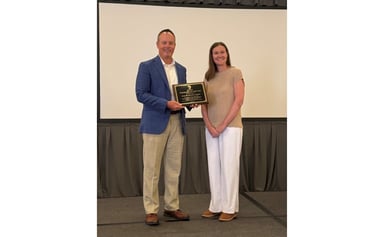
Matthew is an attorney in the Professional Liability Department, where he represents businesses, directors and officers, design professionals, contractors and homeowners associations in commercial, professional liability, construct defect, architectural, engineering, and employment disputes.
Litigating in both state and federal court, Matthew devotes a significant portion of his practice to defending design professionals and construction professionals, independently as well as through their insurance carriers, in complex construction defect suits involving a variety of claims, such as building and design-related deficiencies, code violations, negligence, breach of contract and fraud, as well as insurance coverage claims under GL policies.
Additionally, Matthew represents employers in litigation and provides advice and counsel concerning a variety of employment-related matters, including claims alleging discrimination, wrongful discharge, breach of contract and related tort claims.
Matthew graduated from the University of Florida in 2006, where he received his B.A. He obtained his juris doctor in 2010 from Stetson University College of Law. Matthew is admitted to the Bar of the state of Florida. He is admitted to practice before the Eleventh Circuit Court of Appeals and the United States District Court for the Southern, Middle and Northern Districts of Florida. Before moving into private practice, Matthew began his career at the Palm Beach County State Attorney's office, where he tried over 70 cases to verdict. Matthew also serves as an officer in the U.S. Army Reserve in the Judge Advocate General's Corps. He is a veteran of Operation Resolute Support, deploying to Afghanistan in 2016.
Thought Leadership
Legal Updates for Real Estate E&O Liability
What To Expect for Real Estate E&O In The Florida 2026 Legislative Session
February 5, 2026
Florida’s 2026 legislative session opens with an unusually heavy real estate agenda. If enacted, proposed measures could reshape transactional practices and expand compliance-driven errors-and-omissions exposure. More than 100 pre-filed bills address real property issues, with a primary focus on ad valorem tax reform, expanded disclosure and inspection regulation, and land-use and association governance changes. While full elimination of property taxes is unlikely, multiple proposals contemplate exemptions or phase-outs for homesteaded properties, seniors, disabled veterans, and first-time homebuyers. These changes directly affect property valuation, affordability analyses, and buyer-facing representations, which are all common sources of E&O claims when tax assumptions or investment projections later prove inaccurate. Several proposed bills also carry direct operational and insurance implications for real estate professionals: Transaction and Inspection Regulation: HB 65 – Requires home inspectors to meet DBPR standards and carry E&O insurance SB 832 / HB 767 – Increased transparency in residential property insurance rate disclosures Zoning and Development: SB 48 / HB 313 – Mandatory local approval of accessory dwelling units SB 208 / HB 399 – Removal of zoning barriers to promote infill development HB 837 / SB 962 – Revised land-use definitions excluding farmland Association and Property Governance: HB 465 / SB 822 – Licensing and contract requirements for community association management firms SB 750 / HB 803 – Limits on municipal administrative fees for private inspections and plan reviews SB 606 / SB 608 / SB 610 – Expanded residential pool-safety requirements E&O Takeaway: The proposed 2026 legislation reflects a shift toward greater statutory regulation of real estate transactions, inspections, disclosures, and property governance. As regulatory requirements expand, liability risk increasingly arises from failure to recognize and implement new compliance obligations, miscommunication of zoning or tax impacts, and reliance on newly regulated third-party inspection services. Brokers, managers, and their E&O carriers should closely monitor enacted provisions and update transaction checklists, disclosure protocols, and client advisory practices accordingly. Legal Update for Real Estate E&O – February 2026, is prepared by Marshall Dennehey to provide information on recent legal developments of interest to our readers. This publication is not intended to provide legal advice for a specific situation or to create an attorney-client relationship. We would be pleased to provide such legal assistance as you require on these and other subjects when called upon. ATTORNEY ADVERTISING pursuant to New York RPC 7.1 Copyright © 2026 Marshall Dennehey, all rights reserved. No part of this publication may be reprinted without the express written permission of our firm. For reprints or inquiries, or if you wish to be removed from this mailing list, contact MEDeSatnick@mdwcg.com.
Case Law Alerts
Florida increases minimum wage.
April 1, 2022
On September 30, 2022, the minimum wage will increase to $11.00 per hour. This comes after Florida’s minimum wage increased to $10.00 per hour on September 30, 2021 ($6.98 for tipped employees). The state minimum wage will continue to increase $1 per year thereafter until it reaches $15.00 per hour ($11.98 for tipped employees). After which, it will be adjusted annually based on inflation. Section 448.109, Florida Statutes, requires employers who pay their employees the Florida minimum wage to post a minimum wage notice in a visible and accessible place in each establishment where these employees work. In addition to the Florida minimum wage notice, federal law requires employers to post a notice of the federal minimum wage. Florida’s minimum wage notice is available for downloading in English, Spanish, and Creole from the Florida Department of Economic Opportunity’s website at: http://www.floridajobs.org. Case Law Alerts, 1st Quarter, April 2022 is prepared by Marshall Dennehey Warner Coleman & Goggin to provide information on recent developments of interest to our readers. This publication is not intended to provide legal advice for a specific situation or to create an attorney-client relationship. Copyright © 2022 Marshall Dennehey Warner Coleman & Goggin, all rights reserved. This article may not be reprinted without the express written permission of our firm.