.

Kevin E. Hexstall

Co-Chair, Environmental & Toxic Tort Practice

Co-Chair, Social Services & Human Services Liability

Co-Chair, Asbestos & Mass Tort Litigation

Chair, DE&I Committee

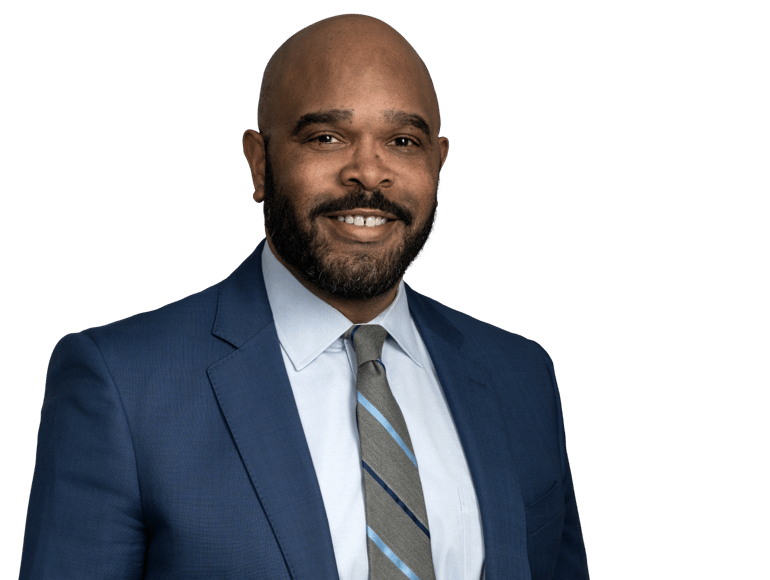
Portrait of Kevin E. Hexstall

Kevin is a member of the Casualty Department where he defends clients in suits brought against them involving environmental, toxic torts and mass torts litigation. A member of the firm's Board of Directors, he is an experienced and highly accomplished trial attorney who has successfully defended insureds in complex cases throughout the country.  

Kevin is often retained by major corporations to serve as first-chair trial counsel in cases involving catastrophic injuries or fatalities. He has represented Fortune 100 Companies in premises and product liability wrongful death claims throughout the country. Kevin also serves as lead national trial counsel for significant premises and security claims for some of the world's largest multinational retail corporations. His list of clients represented in high exposure cases also includes: a major moving equipment/storage company, auto and tire manufacturers, multiple trucking companies and the City of Philadelphia.

In addition to his experience in civil litigation, Kevin has developed a successful criminal defense practice. Prior to joining Marshall Dennehey, Kevin served as chairman of the Criminal Defense Section for a Philadelphia, Pennsylvania, law firm. He defends NFL and NBA athletes as well as entertainers, in civil and criminal proceedings.

In 1994 Kevin graduated from the University of North Carolina at Chapel Hill where he earned a Bachelors of Arts degree. He then attended Ohio Northern University – Pettit College of Law in Ada, Ohio, where in 1997 he earned a juris doctor, graduating with dean's list honors. While attending law school, Kevin served on the executive board of the Moot Court Program and received the Book Award for the Criminal Law Clinic.

Media Links

http://www.lehighvalleylive.com/easton/index.ssf/2013/04/truck_driver_in_fatal_williams_1.html

http://www.youtube.com/watch?v=HCtdLCIFlbI

http://www.nj.com/news/index.ssf/2010/08/mother_of_man_killed_in_crash.html 

    • Ohio Northern University Pettit College of Law (J.D., 1997)
    • University of North Carolina at Chapel Hill (B.A., 1994)
    • New Jersey, 1998
    • Pennsylvania, 1998
    • U.S. District Court Eastern District of Pennsylvania
    • U.S. District Court District of New Jersey
    • New York, 2026
    • ABA Tort Trial & Insurance Practice Section, National Trial Academy (2006)
    • American Lawyer Media. Recognized as one of twelve Pennsylvania minority attorneys "On the Verge" in a diversity supplement published in The Legal Intelligencer and Pennsylvania Law Weekly (2007)
    • Pennsylvania Super Lawyers (2014-2020)
    • Pennsylvania Super Lawyers Rising Star (2006-2008, 2010-2011)
    • American Bar Association
    • Diverse Partners Network
    • National Association of Criminal Defense Lawyers
    • Pennsylvania Bar Association
    • Philadelphia Bar Association:
    • 2007 Tort Trial & Insurance Practice Section, Vice Chair Toxic Tort & Environmental Law Committee
    • 2007 - 2008 Tort Trial & Insurance Practice Section, Vice Chair Diversity Committee
    • 2007 Tort Trial & Insurance Practice Section, National Leadership Academy, Member
    • 2008 - 2010 Tort Trial & Insurance Practice Section, National Leadership Academy, Taskforce Member
  • Secured a unanimous 6-0 defense verdict in a New Jersey premises liability case after the jury found no negligence on the part of the defendant. The plaintiff alleged that a six-foot drill bit fell from a retail display, causing a concussion, post-concussion syndrome and permanent cognitive impairments. The defense demonstrated that the item was displaced only after an unidentified customer struck the shelving with a shopping cart and that there was no evidence store employees knew or should have known of the condition. Through surveillance video, fact witness testimony and expert evidence, the defense also established that the impact was inconsistent with the forces necessary to cause a concussion and highlighted alternative explanations for the plaintiff's claimed injuries. Following a six-day trial, the jury returned a complete defense verdict, finding the defendant was not negligent.

    Secured a unanimous defense verdict in a premises liability matter involving a national home improvement retailer. The plaintiff alleged that she developed Complex Regional Pain Syndrome (CRPS) following a fall in the retailer's parking lot in October 2022. Plaintiff claimed that the incident necessitated significant ongoing medical treatment, including the implantation of a permanent spinal cord stimulator. The plaintiff sought substantial damages, including claims for extensive future medical care. The defense team successfully challenged the credibility of the plaintiff's allegations and expert testimony through rigorous cross-examination and the presentation of defense experts in forensic engineering, human factors, and pain management. The defense also demonstrated that the plaintiff's alleged condition was attributable to pre-existing medical issues rather than the incident at issue. Following a six-day trial, the jury deliberated for just 42 minutes before returning a unanimous verdict finding no negligence on the part of the defendant.

    Secured a no-cause verdict on behalf of a national home improvement retailer in a personal injury action. The plaintiff alleged that on May 20, 2019, she was injured at one of the retailer’s stores when an associate moved a lumber cart, causing a PVC pipe to fall and strike her head and right shoulder. She claimed permanent traumatic brain injury, concussion, and spinal injuries, supported by her orthopedic and neurologic experts. Our defense orthopedic and neurologic experts testified that the plaintiff’s reported symptoms were more consistent with malingering or a somatoform disorder. After a one-week trial and approximately 45 minutes of deliberation, the jury unanimously found the defendant was not negligent. The last demand was $1.2 million, and the final offer was $100,000.

    Obtained a defense verdict following a 10-day jury trial on behalf of a national home improvement company and garden center, where the plaintiff’s demand was over seven figures. The plaintiff, a 79-year-old female, was using a rollator (walker) to assist her walking when she fell at a garden center. Plaintiff claimed that the front wheel of her rollator struck and got caught on the raised baseplate bolts of a column, causing her to fall. The plaintiff was taken out on a stretcher with a fractured leg that required ORIF surgery and a recommendation for future hip replacement. The defense established via an in-store surveillance video, forensic engineering expert and cross-examination, that it was very unlikely that the plaintiff's rollator ever came into contact with the baseplate. Furthermore, even if the plaintiff did contact the baseplate, it was due to her being inattentive and not as a result of any alleged negligence by the garden center. The jury returned a defense verdict after only 35 minutes of deliberation.  

    Matkowsky v. Defendant (Philadelphia Court of Common Pleas Civil Division): Plaintiff's Estate filed a Wrongful Death lawsuit claiming that Plaintiff contracted and died of Lung Cancer as a result of being exposed to asbestos from Defendant's product. Result: Jury finds Defendant Not Liable.

    Commonwealth of Pennsylvania v. Defendant (Lehigh County Court of Common Pleas Criminal Division): Defendant was employed as truck driver for a major trucking corporation. He was involved in a near fatal accident which left a 21 year old woman in a coma for days. The Commonwealth of Pennsylvania claimed the Defendant was grossly negligent for running a steady red light and charged him with a Aggravated Assault by Vehicle – First Degree Felony. Result: Jury finds Defendant Not Guilty of All Charges after 90 minutes of deliberation.

    Irene Abromovich v. Defendant, et al (Philadelphia County Civil Trial Division), Co-counsel: Plaintiff alleged sustaining herniated disc which required a discectomy and a lumbar fusion as a result of a fall which occurred on Defendant's premises. Result: Philadelphia jury finds that Defendant was not negligent and returned a verdict in favor of the Defendant.
    Dimmick v. Defendant (Philadelphia Court of Common Pleas Civil Division): Plaintiff alleged that his Lung Cancer was caused by his exposure to asbestos after working with and around Defendant's products for a number of years. Result: Jury finds Defendant Not Liable.

    Carlton Baker v. Defendant (Philadelphia County Civil Trial Division): Plaintiff alleged that Defendant was negligent in supervising its employees, when he was allegedly struck with a chain at work by co-worker. Plaintiff sustained lacerations to the head requiring stitches, a black eye, soft tissue injuries to the neck and back, and permanent loss in range of motion in his arm. Result: Verdict in favor of Defense on all counts after Bench Trial before Court of Common Pleas Judge.

    Webber v. Honeywell International Inc. (Philadelphia Court of Common Pleas Civil Division) Plaintiff was diagnosed with peritoneal mesothelioma at 42 years old.  He alleged that his disease was caused by asbestos exposure from working with automobile brakes manufactured by Bendix, a predecessor company of Honeywell.  Honeywell presented evidence from numerous witnesses during the course of this five-week trial to establish that Bendix brakes did not play a role in the development of Mr. Webber’s peritoneal mesothelioma.  Result: Jury finds Honeywell not liable.

    Commonwealth of PA v. Defendant (Philadelphia Court of Common Pleas Criminal Division): Defendant charged with drugging and raping seven different women, on nine separate occasions. All nine cases consolidated for trial. Result: Philadelphia jury finds Defendant Not Guilty of 33 out of 35 counts. Defense Attorneys and Prosecutor comment on verdict.

    Sheil v. Honeywell International Inc. (Philadelphia Court of Common Pleas Civil Division) Plaintiff asserted a wrongful death claim on behalf of her deceased husband claiming that he died of peritoneal mesothelioma after making personal brake changes on 50 vehicles. Result: Jury finds Defendant Not Liable.

    Woodley v. Defendant (Philadelphia Court of Common Pleas Civil Division): Plaintiff alleged that he was suffering from Asbestosis as a result of working for a number of years with a product manufactured by Defendant. Result: Jury finds Defendant Not Liable after 2 ½ hours of deliberation.

    Frank Brooks v. Defendant, et al (Philadelphia County Civil Trial Division): Plaintiff alleged that his lung cancer was a result of exposure to asbestos from Defendant's product. Potential for Jury Verdict in excess of $1,000,000. Result: Motion to Dismiss Granted in favor of Defendant prior to Phase II of jury trial.

    Stafford v. Honeywell International Inc. (Philadelphia Court of Common Pleas Civil Division): Plaintiff asserted a wrongful death claim on behalf of her deceased husband claiming that he died of peritoneal mesothelioma after 30 years of making personal brake changes on family vehicles. Result: Jury finds Defendant Not Liable.
    United States of America v. Defendant (US District Court Eastern District of PA Criminal Court): Defendant charged with Indecent Exposure, Disorderly Conduct, and Solicitation in case involving undercover Federal Employee. Result: Defendant found Not Guilty of All Charges.

    Commonwealth of PA v. Defendant (Philadelphia Court of Common Pleas Criminal Division): Defendant charged with Carjacking, Robbery, Kidnapping, Conspiracy, and related charges. Result: Defendant found Not Guilty of All Charges.
    Commonwealth of PA v. Defendant (Philadelphia Court of Common Pleas Criminal Division): Defendant charged with Burglary, Conspiracy, and related charges. Result: Defendant found Not Guilty of All Charges.

    Commonwealth of PA v. Defendant (Chester County District Court Criminal Division): Defendant charged with Vehicular Homicide and related offenses. Result: All charges withdrawn at the Preliminary Hearing, and Defendant plead No Contest to Summary Traffic Offenses only.

    Commonwealth of PA v. Defendant (Philadelphia Court of Common Pleas Criminal Division): Defendant charged with drugging and raping three different women, on separate occasions. All three cases consolidated for trial. Result: Philadelphia jury finds Defendant Not Guilty of All charges.

    State of New Jersey v. Defendant (Atlantic County Superior Court Criminal Division): Defendant, charged with harassment of customer at area restaurant. Result: Defendant found Not Guilty of All charges at Bench Trial before Superior Court Judge.
    Commonwealth of PA v. Defendant (Centre County Municipal Court): Defendant charge with Driving Under the Influence of Alcohol. Result: Not Guilty of All Charges after Bench Trial before Municipal Court Judge.

    Commonwealth of PA v. Defendant (Philadelphia County Court of Common Pleas Criminal Division): Defendant charged with Aggravated Assault, Recklessly Endangering Another Person, and Violation of Uniform Firearms Act. Result: Defendant Found Not Guilty of All Charges.

    • From Interview to Offer: Navigating Clerkships, Networking & Career Success - Panelist, Rutgers Law School Minority Student Program, February 12, 2025
    • Lessons from the Courtroom: Building a Successful Career in Litigation - guest speaker, Villanova Criminal Law Society, October 17, 2024
    • The Top Emerging Trends in Asbestos Litigation, Perrin Conferences – Cutting Edge Asbestos Litigation, Miami, FL, March 12, 2024
    • Juries - Mock Trial, Product Liability Advisory Council 2021 Fall Conference, September 30, 2021. Kevin participated in an interactive mock jury demonstration focused on jurors and their assessment of defense attorney styles, science and problematic evidence.
    • Maintaining Relationships With Outside Counsel Panel, Perrin Conferences In-House Counsel Perspectives Symposium, June 22, 2021
    • Punitive Damages – Getting Into the Mind of the Juror, Guest Speaker, Products Liability Advisory Committee (PLAC) Conference, October 2019, Chicago, IL.
    • It’s Not Just Lung Cancer or Mesothelioma Anymore: Introducing a New Class of Asbestos Plaintiffs with “Other Cancers”, American Conference Institute’s 23rd National Forum on Asbestos Claims & Litigation, May 21 - 23, 2018, Chicago, IL
    • Speaker at Defense Research Institute National Asbestos Medicine Conference, Young Lawyers Session, New Orleans, LA, November 2016
    • Speaker at Honeywell Global Conference – "Diversity Advantage", Morristown, NJ, September 2015
    • Defending the Criminal Case, Marshall Dennehey CLE Series, February 2015
    • Strategies in Defending a Lung Cancer Case, Marshall Dennehey CLE Series, September 2014
    • Today’s Jury Pool – The Impact of Generation Y and the Social Media Revolution, Marshall Dennehey Warner Colman & Goggin CLE Series, November 2013
    • Commercial Shipping and the Jones Act, Defense Research Institute (DRI) Asbestos Medicine Seminar, November 2013
    • Mock Jury Selection in a Toxic Tort case. American Bar Association, Toxic Torts and Environmental Law Committee, TIPS 20th Annual Spring CLE Meeting, The New Frontier: Science, Technology and the Law, April 2011
    • Crime and Punishment, Ohio Northern University Pettit College of Law, Speaker, Pre-Law Undergraduate Scholars (PLUS) program, June 2010
    • Fattah Conference on Higher Education, Phildelphia, PA, Speaker, 2009, 2010
    • Some Like It Hot: Emerging Issues in Toxic Tort and Environmental Law, Moderator, Wind Energy Projects, ABA TIPS 19th Annual Spring CLE Meeting, April 2010
    • The Costs of Bet-the-Company Verdicts-Impacts and Staying Power, HB Litigation Conferences' Emerging Trends in Asbestos Litigation Conference, March 2010
    • Environmental & Toxic Tort Issues, Insurance Companies Seminars/CLEs
    • Bankruptcy -Utilizing Trust Application Information to Develop your Defense in Asbestos Litigation, CLE Seminar at Resolute Management, Inc.
    • Diversity Forum - Making Your Own Path in Today's Society, Ohio Northern University College of Law
    • Business Development and Networking: Building A Client Base, Drexel Law Co-Op
    • Power of 3: Assignment/Inclusion/Mentoring, Philadelphia Diversity Seminar
    • Criminal Justice Section of Community College of Philadelphia
    • Rowan University Career Day
    • Landis Middle School Commencement Ceremony Keynote Speaker
    • Cumberland County Community College Career Day
    • Say Yes to Education, College Seminar

Results

Appeal Successful Before the Pennsylvania Department of Human Services

We were successful on appeal of a child abuse determination levied against an Aveanna home health nurse. The three-day hearing was litigated before the PA Department of Human Services. As a result of the court’s order, the nurse’s record of child abuse is being expunged. The matter arose out of the alleged attack of a child-patient by a family dog during home nursing care. It was asserted that the nurse failed to properly supervise and protect the child, and failed to properly respond to the incident when it occurred. We established a lack of definitive proof that the nurse negligently left the child unsupervised. We also called into question the circumstances surrounding the alleged attack, including whether the dog had a known history of aggression, which led to credibility issues on the part of the family member witnesses. Medical experts also testified on the appellant’s behalf to address possible alternate explanations for the child’s injuries. Ultimately, we established that the prosecution failed to meet its burden of proof, highlighting multiple errors and inconsistencies relating to the investigation as well as the reporting processes. This is a significant outcome in a difficult jurisdiction with many problematic underlying facts (which led to the decision to not call the nurse to testify in her defense). 

Successful Representation of National Home Improvement Corporation’s Tool & Truck Rental Division

Marshall Dennehey’s trial and appellate attorneys were successful in their representation of a national home improvement retail corporation’s tool and truck rental division. Handling the case at both the trial and appellate levels, the defense was successful in convincing the New Jersey appellate court to affirm the trial court’s decision on July 23, 2024. At the trial level, the judge granted our motion for a directed verdict and dismissed the case. The plaintiff had rented a flatbed truck in 2018 to move a cabinet he had just purchased. He alleged that a store employee gave him a set of ramps to use in the truck, but while doing so, they moved and he fell, sustaining serious and permanent injury to his back. The plaintiff alleged he later returned to the store and was told that he had been given the wrong ramps. The panel said that the record included no actual evidence that the ramp did not fit the truck beyond the employee’s saying it was the wrong ramp, or that the ramp slipped because it was incompatible with the truck. Even in his testimony, the panel said the plaintiff did not actually identify any physical cause for the ramp to move. “The dearth of evidence establishing the manner and cause of the slip or slide of the ramp rendered it impossible for the jury to make a reasoned determination as to whether defendant’s purported negligence proximately caused plaintiff’s fall and injuries,” the panel said. The court, therefore, affirmed the case on appeal. 
Firm Highlights

Thought Leadership

United State District Court for the Middle District of Florida finds Evidence of Replacement Cost Value is Admissible and Recoverable Even When Repairs Have Not Been Made

The plaintiff filed a claim for damage as a result of Hurricane Ian. It claimed damages were over $24 million, but the carrier accepted partial coverage and paid $8,307.49 for secondary components. The carrier found hurricane damage to the building, but it was below the insurance policy’s $3.6 million deductible. The plaintiff sued for breach of the insurance policy. The carrier argued in a motion for summary judgment that plaintiff could not recover replacement cost value (RCV) because the property repairs had not been effectuated. The policy provided for RCV, but only after the repairs were completed. The carrier argued that because the repairs were not completed, the plaintiff was not entitled to RCV damages. The plaintiff argued the carrier could not withhold the actual cost value (ACV) due, which was the main allegation of the lawsuit, then fault it for not making the repairs to unlock the RCV. The United States District Court for the Middle District of Florida rejected the carrier’s argument, finding that when an insurer allegedly breached the policy by withholding coverage, it could not hide behind a repair-contingent provision to block the insured from RCV damages at trial. The court found the issue to be whether the contractual language designed to preclude certain coverage until after repairs are completed barred an insured from seeking those damages at trial when repairs were not complete. The court noted the Eleventh Circuit had not resolved this issue and neither side pointed to a definitive answer from the Florida Supreme Court. The court reasoned that it must look to the Sixth District Court of Appeal (6th DCA), which is the court which would have heard this case if it was in state court. The court noted the 6th DCA recently addressed this issue in Universal Prop. & Cas. Ins. Co. v. Rodriguez, 427 So. 3d 676 (Fla. 6th DCA 2026). The Rodriguez Court found that a breach of contract action is designed to adjudicate not only whether the contract was breached, but also evaluate the damages incurred had the breach not occurred, which the Rodriguez court found to be recovery of the RCV. This court also noted basic Florida contract principles compelled the same result, as a material breach frees the nonbreaching party to suspend its own performance and can demand the full benefit of its bargain, including RCV damages. Finally, the court found the distinction between a full denial and partial denial did not compel a different result. It found the policy required the carrier to acknowledge coverage and pay ACV for all covered damages, and the failure to do that is a material breach, entitling the insured to all of the damages available under the contract, which included the RCV.

Thought Leadership

Appeals Court Reverses Trial Court Order Awarding Attorney’s Fees Due to Lack of Evidence to Support Fee Awarded

The Fourth District Court of Appeal reversed the trial court’s order awarding appellate fees to People’s Trust Insurance Company based upon a lack of evidence to support the attorney’s fee award in RM & Assocs. Consulting, Inc. v. People's Trust Ins. Co., 2026 Fla. App. LEXIS 4654 (Fla. 4th DCA 2026). People’s Trust was the insurer of a residential property that had sustained water damage. RM & Associates Consulting was hired by the homeowner to perform mitigation services at the property. The homeowner assigned post-loss benefits to RM and RM subsequently filed suit against People’s Trust alleging that it had not been paid the money it was owed for the mitigation services. People’s Trust defended the lawsuit on the ground that the policy required the insured to notify the insurer before authorizing repairs so People's Trust could elect to use its preferred contractor. Because the owner did not comply with that provision, People's Trust asserted its liability was limited to the amount that its preferred contractor would have charged for the work, which People's Trust contended was $2,000. People's Trust paid that amount to RM before RM filed suit. People’s Trust filed a motion for summary judgment which was granted. RM appealed the summary judgment ruling and the ruling was upheld by the Fourth District Court of Appeal. The appellate court also granted People’s Trust’s entitlement to appellate attorney’s fees, subject to the trial court’s determination of the amount of fees, based upon an offer of judgment made by People's Trust. On remand, the trial court held an evidentiary hearing to determine the amount of attorney’s fees People’s Trust was entitled to. At the hearing, People’s Trust presented testimony from it’s fee expert, supervising trial counsel and appellate counsel. People’s Trust sought recovery of $24,866.17 for work performed by appellate counsel. The request primarily consisted of work performed in preparation of the answer brief. The fee expert testified that more than ninety hours spent preparing the answer brief was reasonable given the complexity and significance of the underlying issue. The appellate court found that the fee expert’s testimony fell short of meeting the necessary standard of demonstrating that the hours expended were necessary. The appellate court found that the billing records did not serve to cure the deficient testimony, as the billing records did not contain adequate details regarding the specific tasks performed. Rather the records contained entries such as “answer brief” which the appellate court found to be insufficient. The appellate court noted that neither the fee expert or counsel addressed how the prior research and briefing in the parallel litigation informed the work in the instant matter. The appellate court noted this was significant in that a court's attorney's fees award must exclude excessive, redundant, or otherwise unnecessary hours, citing Florida Patient's Compensation Fund v. Rowe, 472 So. 2d 1145 (Fla. 1985). Based upon the record failing to support the finding of the trial court, the 4th DCA remanded the case to the trial court for a reconsideration and redetermination of reasonable appellate attorney’s fees supported by competent substantial evidence. The 4th DCA reiterated that the fee expert’s focus on the quality of the work and the importance of the work to People’s Trust did not make up for the perceived deficiencies in the position that spending over ninety hours on a single answer brief was reasonable. Whether moving for attorney’s fees or challenging the amount of fees being sought by an opposing party, practitioners should be mindful of the evidence being used to support the claims being made. Parties should pay close attention to whether the hours being sought may be impacted by prior litigation either party may have engaged in. A party must be prepared to address how prior litigation efforts did or did not impact the amount of hours being claimed in current litigation. Lastly, billing records must be sufficiently detailed so as to support any potential future fee claim.

News

106 Marshall Dennehey Attorneys Recognized in the 2027 Editions of The Best Lawyers in America® and the Best Lawyers: Ones to Watch® in America

Marshall Dennehey is proud to highlight the firm’s 106 attorneys who have been recognized in the 2027 editions of The Best Lawyers in America® and the Best Lawyers: Ones to Watch® in America. Less than 6% of all practicing lawyers in the U.S. were selected by their peers for this recognition. Additionally, four of the firm’s attorneys received the Best Lawyers® 2027 “Lawyer of the Year” awards in their respective practice areas and demographic regions. Since it was first published in 1983, Best Lawyers® has become universally regarded as the definitive guide to legal excellence. Best Lawyers lists are compiled based on an exhaustive peer-review evaluation. For more information, please visit https://www.bestlawyers.com/. OUR 2027 LAWYERS OF THE YEAR Harrisburg, PA Christopher Reeser, Personal Injury Litigation - Defendants Kacey Wiedt, Workers Compensation Law - Employers Roseland, NJ Justin F. Johnson, Medical Malpractice Law - Defendants Leonard Leicht, Personal Injury Litigation - Defendants   OUR 2026 BEST LAWYERS IN AMERICA Philadelphia, PA Nicholas D. Bowers, Personal Injury Litigation - Defendants Josh J. T. Byrne, Professional Malpractice Law - Defendants Jefferey J. Chomko, Insurance Law James H. Cole, Insurance Law John J. Delany III, Personal Injury Litigation - Defendants Laurianne Falcone, Personal Injury Litigation - Defendants John P. Gonzales, Employment Law - Management John Hare, Appellate Practice Daniel D. Krebbs, Personal Injury Litigation - Defendants Michele Punturi, Workers' Compensation Law - Employers Bradley D. Remick, Product Liability Litigation - Defendants Andrea Cicero Rock, Workers' Compensation Law - Employers Robin M. Romano, Workers' Compensation Law - Employers Daniel J. Ryan, Jr., Personal Injury Litigation - Defendants Gary M. Samms, Professional Malpractice Law - Defendants Christopher N. Santoro, Personal Injury Litigation – Defendants; Product Liability Litigation -Defendants Josh D. Scheets, Personal Injury Litigation - Defendants Robert P. Schenk, Workers' Compensation Law - Employers Robert E. Smith, Insurance Law Robin Snyder, Litigation - Health Care Michael L. Turner, Commercial Litigation; Criminal Defense: White-Collar; Mass Tort Litigation / Class Actions - Defendants Claire Breaux Ventola, Product Liability Litigation - Defendants Pittsburgh, PA Melissa Devich Cochran, Commercial Litigation; Mass Tort Litigation / Class Actions – Defendants; Product Liability Litigation - Defendants  John F. Deasy, Personal Injury Litigation – Defendants; Product Liability Litigation - Defendants Daniel W. Deitrick, Workers' Compensation Law - Employers Douglas C. LaSota, Litigation - Construction; Mass Tort Litigation / Class Actions - Defendants Joseph V. Lesinski, Product Liability Litigation – Defendants   Christian D. Marquis, Personal Injury Litigation - Defendants Patricia A. Monahan, Insurance Law; Litigation - Insurance Patrick T. Reilly, Commercial Litigation; Mass Tort Litigation / Class Actions – Defendants; Product Liability Litigation - Defendants Brett C. Shear, Medical Malpractice Law - Defendants Teresa O. Sirianni, Education Law; Employment Law – Management; Litigation - Labor and Employment Stuart Sostmann, Product Liability Litigation – Defendants Danielle M. Vugrinovich, Mass Tort Litigation / Class Actions - Defendants Scranton, PA Sarah E. Argo, Litigation - Insurance Michael J. Connolly, Personal Injury Litigation – Defendants; Professional Malpractice Law - Defendants Matthew Keris, Litigation - Health Care; Medical Malpractice Law - Defendants John T. McGrath, Jr., Insurance Law; Medical Malpractice Law – Defendants; Product Liability Litigation - Defendants William J. McPartland, Insurance Law John R. Nealon, Product Liability Litigation - Defendants Victoria Scanlon, Health Care Law; Litigation - Health Care; Medical Malpractice Law - Defendants Michael A. Sebastian, Workers' Compensation Law - Employers Thomas A. Specht, Insurance Law; Litigation - Insurance Suzanne Tighe, Litigation Insurance Harrisburg , PA Casey Alan Coyle, Administrative/Regulatory Law; Appellate Practice; Commercial Litigation Brittany E. Bakshi, Personal Injury Litigation - Defendants Shannon P. Fellin, Workers' Compensation Law - Employers Allison Krupp, Insurance Law John R. Ninosky, Litigation – Insurance; Personal Injury Litigation - Defendants Christopher Reeser, Personal Injury Litigation - Defendants Kacey Wiedt, Workers' Compensation Law – Employers King of Prussia, PA  Michael L. Detweiler, Construction Law Joseph L. Hoynoski III, Medical Malpractice Law - Defendants Gregory J. Kelley, Construction Law, Litigation - Construction Anthony Natale III, Workers' Compensation Law - Employers Francis X. Wickersham, Workers' Compensation Law - Employers A. Judd Woytek, Workers' Compensation Law – Employers Erie, PA Patrick M. Carey, Personal Injury Litigation - Defendants Joel M. Snavely, Health Care Law; Insurance Law New Haven, CT Michael Wrona, Commercial Litigation, Litigation - Bankruptcy  Mount Laurel, NJ David D. Blake, Litigation - Insurance Barbara Davis, Personal Injury Litigation - Defendants Lynne Nahmani, Litigation - Health Care John H. Osorio, Personal Injury Litigation - Defendants John L. Slimm, Legal Malpractice Law – Defendants; Professional Malpractice Law – Defendants Roseland, NJ Robert T. Evers, Medical Malpractice Law - Defendants Justin F. Johnson, Medical Malpractice Law - Defendants Julia Klubenspies, Medical Malpractice Law - Defendants Leonard C. Leicht, Personal Injury Litigation - Defendants Patricia M. McDonagh, Appellate Practice Sunny Sparano, Litigation - Construction Randall S. Watts, Health Care Law New York, NY Tonya M. Lindsey, Medical Malpractice Law - Defendants Tampa, FL Michael Archibald, Personal Injury Litigation - Defendants Lindsay G. McCormick, Litigation – Construction Orlando, FL Thomas F. Brown, Personal Injury Litigation - Defendants Dante C. Rohr, Commercial Litigation Fort Lauderdale, FL Kimberly Kanoff Berman, Appellate Practice Patrick M. Delong, Personal Injury Litigation – Defendants Jacksonville, FL  Heather Byrer Carbone, Workers' Compensation Law - Employers Linda Wagner Farrell, Workers' Compensation Law - Employers Elizabeth B. Ferguson, Litigation - Construction James P. Hanratty, Personal Injury Litigation – Defendants Wilmington, DE Sarah B. Cole, Litigation - Insurance Benjamin K. Durstein, Workers' Compensation Law - Employers Maria R. Granaudo, Medical Malpractice Law - Defendants  Keri L. Morris-Johnston, Workers' Compensation Law - Employers Cincinnati, OH Timothy B. Schenkel, Personal Injury Litigation - Defendants David E. Williamson, Personal Injury Litigation - Defendants Cleveland, OH Vincent E. Cononico, Litigation – Insurance, Personal Injury Litigation - Defendants Jillian L. Dinehart, Personal Injury Litigation - Defendants David J. Fagnilli, Insurance Law Jason P. Ferrante, Health Care Law, Litigation - Health Care Andrew H. Isakoff, Transportation Law Leslie M. Jenny, Litigation - Health Care; Medical Malpractice Law – Defendant OUR 2026 BEST LAWYERS: ONES TO WATCH Jacksonville, FL Sean J. Reeves, Personal Injury Litigation – Defendants; Product Liability Litigation - Defendants Orlando, FL Carolin A. Pacheco, Insurance Law Mount Laurel Stacey Gorin, Insurance Law Melville, NY Kimberly Gitlin, Personal Injury Litigation – Defendants Matthew A. Gray, Insurance Law; Personal Injury Litigation - Defendants Philadelphia, PA Holli K. Archer, Health Care Law; Medical Malpractice Law – Defendants; Professional Malpractice Law Emily Pritchyk, Commercial Litigation; Product Liability Litigation – Defendants Pittsburgh, PA Taylor E. Kosko, Mass Tort Litigation / Class Actions – Defendants; Personal Injury Litigation - Defendants Alana Staniszewski, Workers' Compensation Law - Employers Michael D. Winsko, Product Liability Litigation – Defendants; Transportation Law King of Prussia, PA Richard Lechette, Commercial Litigation; Insurance Law, Personal Injury Litigation – Defendants

Thought Leadership

First DCA Reverses Excessive Jury Award Unsupported by the Evidence

In December 2019, the plaintiffs filed a claim with Universal for damages caused by a water and sewage back up through the plumbing system and existing through multiple fixtures including the washing machine drain, kitchen sink, dishwasher, bathtub and toilet. Universal investigated the claim, issued payment for resulting water damage totaling $7,000.00 in actual cash value ($12,000.00 in replacement cost value). The plaintiffs sought additional benefits for work needed to access the below-slab cast iron plumbing system due to the failure of the system from rust, deterioration, corrosion and breaks in the line. Universal denied any additional benefits for access. In 2021, the plaintiffs filed suit. During litigation, Universal sent a plumber to inspect the home and the plumber concluded the pipes were clogged but could be cleaned. The plaintiffs’ plumber testified that the plumbing system needed to be replaced due to holes and openings in the pipes. The plaintiffs introduced two estimates prepared by Triad Restoration services totaling $79,680.22 in replacement cost value and $50,219.97 in actual cash value and an executed contract with another company for repairs with the amounts of repair redacted. Since the insurance policy did not provide coverage for repair or replacement of the plumbing system, the jury only had to decide whether the plumbing system needed to be replaced, and if it did, Universal would owe for the access costs; the jury verdict form required the jury to determine both the replacement cost value and actual cash value amounts. The jury asked if it had to rely on the Triad estimates for their amounts. The trial court advised the amount awarded had to be based on the evidence presented at trial and the law given by the trial court. The jury awarded $335,000.00 in replacement cost value or $305,000.00 in actual cash value. Universal motioned for a new trial arguing the amount awarded was unsupported by the evidence and then moved for remittitur. The trial court denied both motions and this appeal followed. The court found that while a jury’s verdict should only be disturbed with caution and discretion, the trial court must give the properly challenged award close scrutiny and determine whether it bears a reasonable relation to the damaged provided, is supported by the evidence, and could have been reached in a logical manner by reasonable means §768.74(3), (5)(d)-(e), Fla. Stat. The court found the trial court did consider the statutory requirements at the hearing on Universal’s remittitur motion and was concerned about a reasonable relation to the amount of damages proved and injury suffered and whether the award was supported by the evidence, but ultimately denied the motion, reasoning that the jury had been properly instructed to fairly and adequately compensate the plaintiffs. The court noted the only evidence providing the basis for the jury verdict was Triad’s estimates and those valued the plaintiffs' claimed loss at $79,680.22 in replacement cost value and $50,219.97 in actual cash value; no valuation evidence reasonably supported the jury verdict. The plaintiffs argued that the jury was entitled to consider more than the estimates, but the court conveyed the evidence provided did not give the jury a way to reach the amounts they awarded. The court was also not swayed by the plaintiffs’ argument regarding inflation and later price increases, but the court noted that no evidence via the contract, nor testimony regarding increase in labor, material, fuel or construction costs were entered into the record.  The court concluded the jury may draw reasonable inferences from the evidence, but it may not supply a damages number by speculation. The court did not find any of the plaintiffs’ remaining argument persuasive either. The court reversed the denial of Universal’s remittitur motion and motion for new trial as to damaged and remanded the case. The court ended its opinion with advising the trial court must determine whether replacement cost value or actual cash value is the property measure of damages under the policy and order remittitur in an amount consistent with that determination and the evidence.