.

Brad is a shareholder in the Casualty Department and concentrates his practice on the defense of companies and individuals in a wide array of civil litigation matters. He has successfully litigated cases involving automobile and trucking liability, premises liability, breach of warranty, insurance coverage/bad faith litigation and general liability matters. Brad’s experience includes efficiently managing files from inception through settlement or verdict. Brad also has significant alternative dispute resolution experience, having resolved hundreds of cases through mediation and arbitration throughout Pennsylvania.

Additionally, Brad handles fraudulent claims as part of our Fraud and SIU group. He conducts Examinations Under Oath, depositions, mediations, and appears for bench trials and arbitration hearings.

Brad has been awarded an AV® Preeminent™ rating by Martindale-Hubbell. Throughout his career, he has been active in the preparation of articles in his fields of concentration and has given numerous presentations to clients regarding various casualty defense-related matters. 

In addition to his legal practice, Brad is involved with several organizations throughout the community. Brad is a USA Hockey On-Ice official and officiates games at the high school and college levels throughout the tri-state area. Brad performs legal pro-bono work on behalf of the Wills for Heroes Foundation, providing wills and powers of attorney to police officers and EMTs. Formerly, Brad served as a founding member of the Board of Directors for the Gift of Adoption Fund-Pittsburgh Chapter, a national charitable organization.  

Brad is a 2010 graduate of West Virginia University. He received his juris doctor from the Case Western Reserve University School of Law in 2013, where he served as an executive editor of the school’ Journal of Law-Medicine. While in law school, Brad received a merit-based academic scholarship for outstanding academic performance.
 

    • Case Western Reserve University School of Law (J.D., 2013)
    • West Virginia University (B.S., 2010)
    • Pennsylvania, 2013
    • U.S. District Court Western District of Pennsylvania, 2013
    • AV® Preeminent™ by Martindale-Hubbell®
    • The Best Lawyers: Ones to Watch®, Insurance Law; Personal Injury Litigation - Defendants (2021-2025)
    • The Best Lawyers: Ones to Watch©, Product Liability Litigation – Defendants (2024-2025)
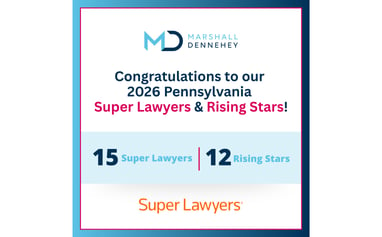
    • Pennsylvania Super Lawyers Rising Star (2023-2026)
    • Allegheny County Bar Association
    • American Bar Association
    • Gift of Adoption Fund, Board of Directors
    • West Virginia University Alumni Association, Pittsburgh Chapter, Board of Directors
  • Obtained a defense verdict following a jury trial related to an automobile accident.  Brad’s client admitted to liability for causing the accident at trial. Despite this admission, during trial Brad was able to convince the jury that Plaintiff’s limited tort selection applied and that her alleged injuries did not breach the limited tort threshold. The jury returned a verdict against Plaintiff on the limited tort issue, resulting in a complete defense verdict.

    Secured an extremely favorable verdict following a jury trial solely on damages arising out of a motor vehicle accident. Plaintiff alleged a collision with the Defendant’s large truck caused serious head and neck injuries. Through cross examination, Brad was able to demonstrate the Plaintiff’s injuries were largely related to significant pre-accident and degenerative medical conditions. At the conclusion of trial, the jury awarded Plaintiff less than four percent of her settlement demand.

    Negotiated a mid-trial settlement equivalent to less than six percent of the Plaintiff's demand on behalf of an automotive dealership. The Plaintiff sought compensation for spinal injuries allegedly caused by a hazardous condition on the company's premises. Extensive discovery revealed the Plaintiff had a pre-existing history of spinal issues unrelated to the incident in question. Additionally, evidence from social media and surveillance was leveraged to undermine the credibility of the Plaintiff's allegations. The case was settled just prior to opening statements.

    Successfully defended a national carsharing company, resulting in a dismissal of all claims. The case involved a multi-party suit arising out of a commercial auto accident. Through aggressive pleading, Brad obtained a dismissal by arguing that both Federal and State law provisions prohibited any claims against the company. Brad additionally argued the facts as set forth in Plaintiff’s Complaint failed to establish any duty and/or breach on the client’s behalf.

    Obtained a favorable settlement in seven-figure lawsuit, involving a tractor-trailer accident. Following significant discovery, Brad was able to secure a settlement significantly below Plaintiff’s initial demand, after uncovering pre-accident medical records, which identified various inconsistencies related to Plaintiff’s alleged medical damages.

    Secured a dismissal of Plaintiff's claims via a Motion for Summary Judgment in a lawsuit involving a six-vehicle commercial automobile accident. Brad argued Plaintiff's own deposition testimony, along with documentary evidence failed to establish any negligence on the part of the Defendant.

    Secured a favorable verdict in a non-jury trial based on an alleged breach of an automobile warranty. Following testimony, the judge awarded less than ten percent of Plaintiff’s pre-trial settlement demand.

    Successfully defended an insurance company in multiple direct lawsuits brought by an insured. Plaintiff alleged property damages arising out of a motor vehicle accident. Plaintiff also alleged, in a separate lawsuit, that the insurance company failed to comply with the terms of a warranty and acted in bad faith. Brad argued that Plaintiff lacked standing to bring these suits, while also disputing the merits of Plaintiff’s allegations. The cases were dismissed via a Motion for Judgment Non Pros and a Motion for Summary Judgment.

    Secured a dismissal of all claims via Summary Judgment on behalf of a national grocery store chain. Plaintiff alleged she was caused to fall in the store due to an accumulation of a wet substance. Deposition testimony and written discovery revealed that Plaintiff could not identify what the substance was, how long it had been present, or whether the store had notice of the substance. Based upon this the Court granted the store’s Motion for Summary Judgment.

    Negotiated a favorable settlement in a six-figure UIM/Bad Faith case. Discovery and deposition evidence revealed Plaintiff had pre-existing injuries, which were not initially reported. Research further revealed Plaintiff working a second, under-the-table job during her alleged disability period. This information eventually led to a successful settlement on behalf of our client.

    Secured a dismissal of Plaintiffs' claims in a product liability lawsuit brought against a national manufacturer. Plaintiffs alleged they sustained property damage due to a defective washing machine. Brad argued that Plaintiffs could not establish the requisite expert testimony to pursue a specific design theory; or the requisite documentary evidence to proceed under a malfunction theory. As a result, the Court granted the Defendant's Motion for Summary Judgment.

    Obtained Summary Judgment on behalf of an insurance agency in a seven-figure negligent procurement case. The trial court’s ruling was based upon a determination of a lack of fiduciary duty, misrepresentation, and causation on behalf of both the insurance agent and agency.

    Successfully defended a global food service corporation against a Plaintiff alleging various violations under 42 U.S.C. 1981 and 42 U.S.C. 1985. In our client’s Motion for Judgment on the Pleadings, Brad argued Plaintiff’s section 1981 right to contract claims were invalid as she failed to demonstrate any contractual impairments. Brad argued Plaintiff’s section 1985 claims were barred by the intracorporate conspiracy doctrine, as the alleged conspiracy involved two employees of the same company. Plaintiff’s claims were dismissed in their entirety.

    Obtained a defense judgement at arbitration on behalf of an apartment complex in a case involving a Plaintiff's suit for invasion of privacy and negligent infliction of emotional distress. Brad argued that Plaintiff's claims for invasion of privacy were legally insufficient, as there existed no proof of an actual intrusion. He further argued that Plaintiff could not pursue her negligent infliction of emotional distress claim, as she suffered no physical harm.

    Obtained multiple defense judgments on behalf of various auto manufacturers involved in breach of warranty lawsuits.

    • Defense Litigation: Key Concepts and Current Developments, Marshall Dennehey Client Seminar, March 2026
    • Defense Perspectives: Bodily Injury and Bad Faith Claims, Marshall Dennehey Client Seminar, April 2025
    • Discovery 2.0: Understanding and Utilizing New-Age Discovery Sources, ClaimsXChange Annual Conference, October 2024
    • Northeastern Casualty and Worker’s Compensation Litigation Trends, Marshall Dennehey Client Seminar, June 2024.
    • Auto and Premises Liability Case Strategy and Evaluation, Marshall Dennehey Client Seminar, May 2024
    • Pennsylvania and New Jersey Defense Litigation Updates and Strategies, Marshall Dennehey Client Seminar, June 2023
    • Pennsylvania Transportation Claim Valuation, Marshall Dennehey Client Seminar, September 2022
    • Continuing Impact of COVID-19 & Case Law Updates, Marshall Dennehey Client Seminar, March 2022
    • Best Practices for Claim Log Notes, Marshall Dennehey Client Seminar, June 2021
    • Special Damages in Auto and Trucking Claims in Pennsylvania, Marshall Dennehey Client Seminar, January 2020
    • Arbitration – Practice and Procedure, Marshall Dennehey Internal Presentation, June 2019
    • Social Media Evidence, Marshall Dennehey Client Seminar, February 2017
    • Premises Liability Claims in Pennsylvania, Client Seminar, June 2015
    • UIM/UM & Bad Faith Law Updates, Client Seminar, May 2014  

Results

Thought Leadership

Firm Highlights

Thought Leadership

New Jersey Workers’ Compensation Legislation Updates

Since June 1, 2026, there have been no new New Jersey workers’ compensation related cases from the Appellate or Supreme Courts. As such, below will highlight any new legislative updates since February. A1023 | S3984 - Medical Use of Cannabis Under Certain Circumstances This requires workers’ compensation, PIP, and health insurance coverage for the medical use of cannabis under certain circumstances. It was introduced on January 13, 2026 and referred to the Assembly Financial Institutions and Insurance Committee. It was also introduced on March 19, 2026 and referred to the Senate Commerce Committee. A1045  - Certain Injuries to Volunteer and Professional Public Safety and Law Enforcement Personnel This revises workers’ compensation coverage for certain injuries to volunteer and professional public safety and law enforcement personnel. It was introduced on January 13, 2026 and referred to the Assembly Labor Committee. A1384 | S2757 - Reduce Statute of Limitations in Medical Fee Disputes This reduces statute of limitations from six years to two years in medical fee disputes in workers’ compensation matters. It was introduced on January 13, 2026 and referred to the Senate Labor Committee. It was also introduced on the same day and referred to the Assembly Labor Committee. A1870 | S1379 - Workers' Compensation Benefits For Certain Workers Due to September 11, 2001 Terrorist Attacks This provides workers’ compensation benefits for certain public safety workers who developed illness or injury as result of responding to September 11, 2001 terrorist attacks. It was introduced on January 13, 2026 and referred to the Assembly Labor Committee. It was also introduced on the same day and referred to the Senate Labor Committee. On February 5, 2026, it was reported from the Senate Committee, 2nd Reading, and referred to the Senate Budget and Appropriations Committee. A2779 | S1521 - Excludes Certain Illegal Aliens This excludes certain illegal aliens from workers’ compensation and temporary disability benefits. It was introduced on January 13, 2026 and referred to the Senate Labor Committee. It was also introduced on the same day and referred to the Assembly Labor Committee. A2792 | S1555 -  Prevent Intoxicated Employees from Workers’ Compensation This prevents intoxicated employees from receiving workers’ compensation. It was introduced on January 13, 2026 and referred to the Senate Labor Committee. It was also introduced on the same day and referred to the Assembly Labor Committee. A3167 | S2372 - Workers’ Compensation Insurance Requirements for Certain Corporations and Partnerships This concerns workers’ compensation insurance requirements for certain corporations and partnerships. It was introduced on January 13, 2026 and referred to the Senate Labor Committee. It was also introduced on the same day and referred to the Assembly Labor Committee. A3548 | S3571 – Maximum Benefits for Certain Volunteers This provides certain volunteer and other workers with maximum compensation benefit for workers' compensation claim regardless of outside employment. It was introduced on January 13, 2026 and referred to the Senate Labor Committee. On March 2, 2026, it was reported from the Senate Committee, 2nd Reading, and referred to the Senate Budget and Appropriations Committee. It was also introduced on the same day and referred to the Assembly Labor Committee. On May 7, 2026, it was reported and referred to Assembly State and Local Government Committee. A3724 - Personal Liability to Employer Officers for Failure to Pay for Coverage This provides personal liability for owner, executive officer, or executive director of employer for failure to pay for workers' compensation coverage. It was introduced on January 13, 2026 and referred to the Assembly Labor Committee. On May 7, 2026, it was reported and referred to Assembly Judiciary Committee. A4617  - Certain Workers' Compensation Supplemental Benefits and Funding Method This concerns certain workers' compensation supplemental benefits and funding method. For a permanently and totally disabled worker or surviving dependents after December 31, 1979, with some exceptions, this bill provides for an annual cost of living adjustment in the weekly workers’ compensation benefit rate. It was introduced on March 10, 2026 and referred to the Assembly Labor Committee. S241 - Inclusion in Database of Appointed Officials This requires that workers’ compensation judges and administrative law judges be included in database of appointed officials. It was introduced on January 13, 2026 to the Senate, Referred to Senate State Government, Wagering, Tourism & Historic Preservation Committee. S2290 -  Mandatory Retirement Age This increases statutory mandatory retirement age for Supreme Court Justices, Superior Court Judges, Tax Court Judges, Administrative Law Judges, and Workers’ Compensation Judges from 70 to 72. It was introduced on January 13, 2026 and referred to the Senate Judiciary Committee. S3144 - Testimony in Workers’ Compensation This concerns submission of testimony in workers’ compensation claims. It was introduced on January 13, 2026 and referred to the Senate Labor Committee. S3342  - Increase Mandatory Retirement Age This increases statutory mandatory retirement age for Supreme Court Justices, Superior Court Judges, Tax Court Judges, Administrative Law Judges, and Workers’ Compensation Judges from 70 to 75. It was introduced on February 5, 2026 and referred to the Senate Judiciary Committee.

Thought Leadership

Appellate Court Rejects Horizontal Immunity Defense to Company Not Acting as Statutory Subcontractor

The First District Court of Appeal held that a property management company was not entitled to horizontal immunity under section 440.10(1)(e), Florida Statutes, in a negligence action brought by an employee of another company working on the property. The claimant was injured while servicing a swimming pool at an apartment complex. His employer had contracted with the property owner to maintain the pool. Following the accident, the claimant received workers' compensation benefits through his employer’s carrier. The claimant subsequently filed a negligence action against the property management company, alleging that it failed to maintain the premises in a reasonably safe condition and failed to warn him of a dangerous condition that caused his injuries. The property management company had been retained by the property owner to maintain the complex in good operating condition and to perform routine maintenance and repair work. The property management company argued that it was immune from suit under section 440.10(1)(e) of Florida’s Workers’ Compensation Law. That provision grants immunity to a subcontractor providing services in conjunction with a contractor on the same project or contract work from civil actions brought by employees of another subcontractor, subject to limited exceptions. According to the property management company, it qualified as a subcontractor working on the same project as the claimant’s employer and was therefore entitled to horizontal immunity. The trial court agreed and entered summary judgment in its favor. On appeal, however, the claimant argued, and the appellate court agreed, that horizontal immunity applies only when a contractor has sublet work arising from a contractual obligation owed to a third party. The court noted that prior decisions consistently held that an entity acting solely on its own behalf as the owner of property, rather than pursuant to a contract with a third party, is not a “contractor” under section 440.10(1), even when it hires other companies to perform work on the property. In Teed, the property management company could not establish that the property owner had a primary contractual obligation to a third party to maintain either the apartment complex or the swimming pool, which it then delegated to the claimant’s employer or the property management company. As a result, the property owner did not qualify as a statutory contractor, and the property management company was not a subcontractor entitled to horizontal immunity under section 440.10(1)(e). The First District therefore reversed the lower court’s ruling and remanded the case for further proceedings on the claimant’s negligence claim.

Thought Leadership

Commonwealth Court Holds That a Claimant Who Was Struck By a Car While Crossing the Street During an Unpaid Break Was In the Course and Scope of Employment

This case involved a claim petition filed by a claimant who sustained injuries after being struck by a vehicle while crossing the street in front of the employer’s premises. The employer denied the claim based on course and scope, as the accident occurred during one of two mandatory fifteen (15) minute breaks provided to the claimant. The claimant would punch out at the beginning of a break and punch back in when the break was over.  On the date of the incident, the claimant punched out and left the building to get lunch at a restaurant, which required her to cross the employer’s parking lot, and then a public street, where the injury occurred. The Workers Compensation Judge (WCJ) dismissed the petition, noting that that during the two mandatory fifteen-minute breaks per shift allowed by the employer, the claimant was free to leave the employer’s premises, and during breaks, permitted to engage in whatever activity she desired. The WCJ found that at the time of the accident, the claimant was on her own time, in the middle of the street, and going to get lunch.   The claimant filed an appeal with the Worker’s Compensation Appeal Board (Board), and the Board reversed.  According to the Board, the claimant’s location was still on the employer’s premises, as the claimant was taking her customary route while using a reasonable ingress/egress from the employer.  Further, the Board found that the “Personal Comfort Doctrine” applied, as the claimant was on a momentary departure to take care of her personal comfort, within the window of time she was allotted for her break.  The Board remanded the case, and a WCJ granted the claim petition.  The Board affirmed, and the employer appealed to the Commonwealth Court. Before the Court, the employer argued that the claimant was not in the course and scope of her employment, because the injury did not occur on its premises, and the claimant was outside the bounds of the Personal Comfort Doctrine. The Court, however, rejected these arguments, and dismissed the employer’s appeal.  The Court noted that the break given to the claimant was so cursory, when she set out to relieve her hunger for her own personal comfort,  she remained in the course of her employment when she sustained her injuries.  A Petition for Allowance of Appeal in the Supreme Court has been filed by the Employer, Giant Eagle.