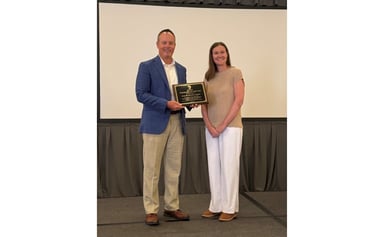
Tom has practiced in Orlando since 1999 and has litigated in state and federal courts throughout Florida. He has extensive litigation experience in insurance defense, including personal injury claims involving premises liability, automobile collisions, trucking accidents and also employment practices liability and product liability.
Tom received his undergraduate degree from the University of Central Florida. Tom worked extensively in litigation as a legal assistant for ten years and earned the University of Central Florida Legal Assistant Award of Distinction in 1991. Tom attended law school at the University of Akron where he worked with the trial team, interned with the City of Stow Law Department and Prosecutor’s office, and was selected to Who’s Who Among American Law School Students. Tom received his juris doctor from the University of Akron School of Law in 1999.
Tom is a member of Most Precious Blood Catholic Church of Oviedo. He has worked with the American Heart Association (Heart Walk Team Captain, 2008-2012, Heart Walk Logistics Committee, 2008-2009, and Advocacy Team, 2012), the Pancreatic Cancer Action Network (PanCan 5k volunteer, 2009-2011), and the University of Akron School of Law (Admission Ambassador, 2007-Present). Tom is also an adjunct professor for the University of Central Florida's College of Health and Public Affairs (Legal Studies program).
Tom is licensed to practice in all Florida state courts and in the United State District Court for the Middle District of Florida.
Thought Leadership
Defense Digest
Overcoming the Daubert Challenge With Your Billing and Coding Expert
September 1, 2024
Key Points: The Florida Standard Jury Instructions pertaining to plaintiff’s medical expenses instruct the jury to consider and award damages for the reasonable value or expense of medical care and treatment necessarily or reasonably obtained by plaintiff in the past or future. It is plaintiff’s burden at trial to prove the reasonableness of his or her medical expenses. Once he or she testifies to the amount of the medical bills and introduces them into evidence, it is a jury question whether the bills and charges represent reasonable and necessary medical expenses. If scientific technical or other specialized knowledge will assist the trier of fact in understanding the evidence or in determining a fact in issue, a witness qualified as an expert by knowledge, skill, experience, training, or education may testify about it in the form of an opinion or otherwise, if: the testimony is based on sufficient facts or data; the testimony is the product of reliable principles and methods; and the witness has applied the principles and methods reliably to the facts of the case. In a recent slip and fall case we handled in Broward County, Florida, the plaintiff moved to strike a retail store’s billing and coding expert under Daubert from testifying at trial as to the usual, customary, and reasonable charges of the plaintiff’s medical-related expenses. Among other things, the plaintiff alleged the billing and coding expert relied on incomplete, unverifiable information, including her own opinion testimony, which the plaintiff averred would only confuse the jury. In opposition, we argued the billing and coding expert had sufficient specialized knowledge, experience, and training and was adequately qualified to express her expert opinions regarding the plaintiff’s medical bills and how those bills compare to the prevailing and customary rates charged in the medical community and specific geographical location where the services were performed and that such testimony would assist the trier of fact in understanding the evidence related to those reasonable charges for the alleged treatment provided to the plaintiff. The plaintiff’s position would make it impossible for a defendant to contest whether the charges claimed are usual, customary, and reasonable. It would also be contrary to Florida law, which acknowledges a defendant’s right in personal injury litigation to argue to a jury that a plaintiff’s medical bills are unreasonable. See e.g., Katzman v. Rediron Fabrication, Inc., 76 So. 3d 1060, 1065 (Fla. 4th DCA 2011) (sufficiently explained below why certain hospital billing information was necessary as part of determining whether a treating doctor billed non-litigation patients at a lower rate for the same medical services is “admissible evidence regarding the reasonableness of medical expenses”); Giacalone v. Helen Ellis Mem'l Hosp. Found., Inc., 8 So. 3d 1232, 1235 (Fla. 2d DCA 2009) (stating that reasonableness of bills can be determined by looking at: (1) the relevant market for services, including the rates charged by other similarly situated providers for similar services; (2) the usual and customary rate the provider charges and receives for its services; and (3) the provider's internal cost structure). The plaintiff in our case also argued that the medical and billing coding expert did not employ a sufficiently reliable scientific methodology in forming the basis for her expert opinion. In pertinent part, the plaintiff cited testimony from the expert that, as part of her methodology, she would input data from the medical billing charges (CPT coding) into a nationally recognized data base in order to obtain what the usual, customary, and reasonable charges were, in her expert opinion, for the plaintiff’s medical treatment. This method, according to the plaintiff, was not sufficiently reliable under Daubert and was, therefore, inadmissible. Simply inputting data into a database, according to the plaintiff, does not survive Daubert. In response, we cited Cordero v. Target Corporation, 2019 WL 13080580 (2019), where the federal court had already spoken on the same legal challenge under Rule 702 of the Federal Rules of Evidence as it relates to the admissibility of expert opinion testimony from a medical and billing coding expert. The Cordero court held that the medical billing and coding expert who specifically utilized the Context 4 Healthcare UCR database—the exact same database used by the billing and coding expert in our case—was qualified to render expert opinions on the reasonableness of the medical charges based on, among other things, the expert’s nine years of experience in reviewing the reasonableness of medical charges and nearly thirteen years of experience in establishing and reviewing “fee schedules using standards such as UCR databases and negotiating out-of-network reimbursement amounts (based on UCR data and commercial insurance allowable fees.” Id. at 23-24. In applying Cordero and Daubert to our case, we referred the court to the testimony of our billing and coding expert, who testified at length as to the methodology utilized to determine the reasonable value of past medical bills uniformly employed by medical billing professionals based on proper CPT coding for the medical services performed, together with the sources and data obtained, which, in her expert opinion, were not arbitrary. It was further argued that our expert utilized the same methodology throughout her 30 years in the medical billing and coding industry. Our expert relied on nationally recognized medical billing and coding standards, federal regulations, and geographically specific modifiers based on the particular categories of medical care. The expert’s methodology was “based on billing rules and coding standards that dictate how medical services are billing in the United States, which are federally regulated, and the application of pricing databases specific to the category of care, community and year in which the service was provided.” As part of her methodology, as indicated above, the billing and coding expert utilized the nationally recognized and generally accepted UCR database (Context 4 Health Care) to review, analyze, and determine what the UCR charges should have been for the medical treatment and services provided to the plaintiff. Additionally, our expert testified that she reviewed the plaintiff’s medical records and billing, including a review and verification of the CPT codes inputted by the providers, to determine if the providers listed and billed the services under the correct CPT codes. In essence, the methodology employed in our case was the same methodology utilized by thousands of medical providers throughout the United States inasmuch as those same or similar databases were used to establish and implement their fee schedules. Overall, we were able to successfully establish that our medical and billing coding expert relied on sufficient and reliable data, the testimony was based on reliable and verifiable methods, and the expert applied those nationally recognized scientific methods to the facts of our case. As a consequence, the Circuit Court denied the plaintiff’s motion in its entirety and ruled that our medical and billing coding expert was permitted to testify at trial and to provide expert opinion testimony on what the usual, reasonable, and customary charges should be for the plaintiff’s medical treatment and related expenses. The court’s decision led to a favorable settlement of the litigation shortly thereafter. Frank and Tom are both members of our Casualty Department and work in our Orlando, Florida, office. Defense Digest, Vol. 30, No. 3, September 2024, is prepared by Marshall Dennehey to provide information on recent legal developments of interest to our readers. This publication is not intended to provide legal advice for a specific situation or to create an attorney-client relationship. ATTORNEY ADVERTISING pursuant to New York RPC 7.1. © 2024 Marshall Dennehey. All Rights Reserved. This article may not be reprinted without the express written permission of our firm. For reprints, contact tamontemuro@mdwcg.com.
Defense Digest
Limiting the Opinions of Plaintiff’s Non-Retained Expert Witnesses Regarding Injury Causation and Permanency
March 1, 2024
Key Points: Plaintiff’s non-retained experts are treating physicians, and their testimony at trial should be limited to their scope of treatment, diagnosis, and prognosis with respect to the injuries alleged. Plaintiff’s treating physicians lack the proper foundation to provide expert opinion testimony on medical causation and permanency unless they take the plaintiff’s history relating to an incident and review the records of the plaintiff’s other physicians. When a plaintiff discloses a treating physician as a non-retained medical expert, this non-retained expert’s testimony should be limited to exclude testimony regarding medical causation and permanency unless there is a proper predicate for such testimony. To lay the proper predicate, the physician must have reviewed the plaintiff’s medical records from other treating physicians, and the physician should obtain a history from the plaintiff that describes the manner in which the plaintiff was allegedly injured. For instance, in a slip and fall case, the history should include the manner in which the plaintiff allegedly slipped and fell. Where the treating physician fails to review the medical records from the plaintiff’s other medical providers and fails to obtain a history of how the plaintiff allegedly came to be injured, there is an argument that the non-retained expert/treating physician should be precluded from testifying about injury causation and permanency. Pursuant to § 90.702, Fla. Stat., Daubert v. Merrell Dow Pharm., Inc., 509 U.S. 579 (1993), and other applicable Florida law, a trial court must make two preliminary factual determinations prior to permitting expert testimony: (1) whether the expert testimony will assist the trier of fact in understanding the evidence or in determining a fact in issue; and (2) whether the witness is qualified by knowledge, skill, experience, training, or education to express an opinion on the matter. Under Daubert, the trial court is specifically assigned a gatekeeper task of ensuring that an expert’s testimony, whether scientific or non-scientific, rests on a reliable foundation and is relevant to the task at hand. Id. See also Kumho Tire Co. v. Carmichael, 526 U.S. 137, 141, 148-49 (1999); Corwin v. Walt Disney World Co., 475 F.3d 1239, 1250 (11th Cir. 2007). In Cooper v. Marten Transp., Ltd., 539 Fed. Appx. 963, 967 (11th Cir. 2013), the Eleventh Circuit explained that causation “could not be determined through a physical examination and the chronology of events alone.” The court further noted in that case that neither physician explained the basis for their opinions. Id. Courts frequently exclude causation opinion testimony of expert witnesses who base their opinions on a plaintiff’s account of the facts without consideration of other possible causes of injury. See Carmody v. State Farm Mut. Auto. Ins. Co., 2015 WL 5542534, at *3 (M.D. Fla. Sep. 18, 2015). Moreover, even if an expert is qualified, the expert must have a sufficient factual predicate underlying those opinions. Florida Statute § 90.705(2), explicitly states: “[i]f the [opposing] party establishes prima facie evidence that the expert does not have a sufficient basis for the opinion, the opinions and inferences of the expert are inadmissible unless the party offering the testimony establishes the underlying facts or data.” The legislative history of the rule emphasizes that this subsection intends to provide protection for opposing counsel so that expert opinions that are completely unqualified will not be admitted and risk prejudicing the jury. See Florida Statute § 90.705, Law Revision Counsel Note (1976). “In this instance, the protection of using cross-examination to expose the flaws in the opinion is not sufficient in all cases.” Id. In a recent slip and fall case in Broward County, Florida, the plaintiff disclosed a non-retained expert/treating physician who was a pain management specialist. This doctor had not been provided and had not otherwise reviewed any medical records regarding the plaintiff’s post-incident treatment, other than his own records. He had not obtained a history from the plaintiff of how the plaintiff had allegedly slipped and fallen or how the plaintiff was allegedly injured. In this particular case, the physician admitted in deposition that he was not retained to provide any opinion testimony regarding any permanent injury. The opinions of the physician regarding the plaintiff’s medical condition were based solely on subjective statements made by the plaintiff, that the alleged injuries occurred as a result of the incident (without any history of the incident itself or how the plaintiff came to be injured as a result of the incident), together with the medical treatment related to the physician’s care of the plaintiff (in a vacuum, without any medical treatment history related to the care and treatment provided by the plaintiff’s other treating physicians). There was no record evidence of any attempt by the non-retained expert/treating physician to eliminate other possible causes of the plaintiff’s conditions. Additionally, there was no record evidence that this physician conducted a review of the plaintiff’s pre- or post-incident medical history. Accordingly, it was reasonable to conclude that the doctor intended to identify the condition for treatment purposes rather than to determine its exact source. See generally, Turner v. Iowa Fire Equipment, Co., 229 F.3d 1202, 1205 (8th Cir. 2000). Furthermore, none of the plaintiff’s medical records revealed information to demonstrate that the doctor made any “attempt to consider all the possible causes, or to exclude each potential cause until only one remained, or to consider which of two or more non-excludable causes was more likely to have caused the condition.” Id. at 1208 (holding that the trial court did not abuse its discretion in excluding treating physician causation opinion, based exclusively upon the medical history obtained from the plaintiff, which indicated no respiratory problems, and the temporal relationship between the incident and the onset of symptoms); see also, e.g., State, Div. of Risk Mgmt. v. Martin, 690 So.2d 651 (Fla. 1st DCA 1997) (holding that a doctor’s testimony did not constitute competent substantial evidence as to causation because it was based on speculation, made without knowledge of claimant’s relevant medical history, and based “virtually entirely” upon claimant’s false report of causal connection between the accident and a subsequent surgery); In re Paoli R. R. Yard PC’B Litigation, 35 F.3d 717 (3d Cir. 1994) (holding that for purposes of determining admissibility of expert medical testimony, part of differential diagnosis is using standard techniques to rule out alternative causes and, thus, where defendant points to a plausible alternative cause and the doctor offers no explanation for why he or she has concluded that was not the sole cause, the doctor’s methodology is unreliable); Berry v. CSX Transp. Inc., 709 So.2d 552, 571 (Fla. 1st DCA 1998) (holding that expert witness’ testimony regarding causation of a railroad employee’s malady was admissible in toxic tort litigation, as the expert employed a scientifically acceptable differential diagnosis method in an attempt to eliminate other possible causes of symptoms and his opinion was not based upon the employee’s personal history, medical records, physical examinations, and medical tests, but upon sufficient epidemiological data, facts, and personal observations); David v. Nat’l R.R. Passenger Corp., 801 So. 2d 223, 227 (Fla. 2d DCA 2001). On the other hand, in the recent Broward County case, we argued that the defendants’ experts could opine regarding issues of causation because they actually applied standard techniques of differential diagnosis through the review of prior medical records, examinations, diagnostic films, discovery, depositions, investigation, statements, and photographs. The Circuit Court in Broward County granted the defendants’ motion in limine to preclude causation opinions from the plaintiff’s treating non-retained physician. In our case, we had the perfect storm of the physician not having taken a history as to how the incident occurred or how the alleged injuries were caused by the incident, coupled with the plaintiff’s attorney not having provided any other treatment records to the physician, as well as the physician’s concession that he was not retained to provide an opinion on permanency. However, based on the case law, the argument to preclude opinion testimony by a treating physician as to causation and permanency should not hinge on whether the latter concession is made by the physician during deposition. *Tom is special counsel in our Orlando, Florida, office. He can be reached at (407) 420-4418 or tjslogar@mdwcg.com. Frank Madia is an associate in our Orlando office who can be reached at (407) 420-4410 or flmadia@mdwcg.com. Heather, also in our Orlando office, is an associate who can be reached at (407) 505-4680 or HCTruitt@mdwcg.com. Defense Digest, Vol. 30, No. 1, March 2024, is prepared by Marshall Dennehey to provide information on recent legal developments of interest to our readers. This publication is not intended to provide legal advice for a specific situation or to create an attorney-client relationship. ATTORNEY ADVERTISING pursuant to New York RPC 7.1. © 2024 Marshall Dennehey. All Rights Reserved. This article may not be reprinted without the express written permission of our firm. For reprints, contact tamontemuro@mdwcg.com.