.

Taniesha K. Salmons

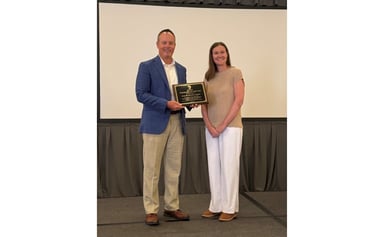
Portrait of Taniesha K.  Salmons

Taniesha is a member of the Casualty Department handling litigation involving premises and product liability. She represents major grocery retailers, condominium and homeowners’ associations, business owners and private property owners in premises liability matters.

Taniesha additionally defends manufacturers and distributors of tools, automatic doors, machinery and other heavy industrial equipment in product liability matters. She also assists in the defense of fire loss cases and complex product liability cases involving catastrophic losses.

Taniesha is a two-time graduate of the “U,” University of Miami, Coral Gables, Florida, where she received both her bachelor’s and juris doctor, achieving the honor of Dean’s Scholar.

After law school, Taniesha joined a boutique plaintiff's firm in the Brickell neighborhood of Miami, Florida, where she litigated in the areas of employment discrimination, admiralty and personal injury law. She relocated to the Philadelphia area, originally joining Marshall Dennehey in the Philadelphia office as an associate in the Casualty Department in 2005. Taniesha took time off from the practice of law to build and support her growing family and returned to Marshall Dennehey in 2022.   

A certified arbitrator in Philadelphia, Taniesha is admitted to practice in the Commonwealth of Pennsylvania, The United States District Court, Eastern District of Pennsylvania, the State of New Jersey, the United States District Court of New Jersey, the State of Florida, and the United States District Court, Southern District of Florida. 

    • University of Miami School of Law (J.D., 2002)
    • University of Miami (B.A., 1999)
    • Florida, 2002
    • U.S. District Court Southern District of Florida, 2003
    • New Jersey, 2005
    • Pennsylvania, 2005
    • U.S. District Court District of New Jersey, 2005
    • U.S. District Court Eastern District of Pennsylvania, 2006
    • Philadelphia Bar Association
    • Florida Bar Association
    • Montgomery County Bar Association
    • The Agnes Irwin School, Leadership Advisory Committee 2017-2019, DEI Committee 2019-2021, Trustee 2020-2021
    • Obtained defense verdict, sitting second chair, in the Philadelphia Court of Common Pleas. The plaintiff alleged that she tripped and fell on a defect on our client's stairs outside of a row home property in the Olney section of Philadelphia. While waiting to enter the home the women thought they heard a gunshot and took off running down the steps. The plaintiff fell and sustained a tibial plateau fracture and a meniscal tear. She had surgery and permanent hardware inserted in her leg. She was unable to return to her job for several months and had almost $58,000 in past medical bills and lost wages on the board. There was a chunk of the stairs missing, but neither the plaintiff nor the witnesses could say definitively what caused her fall. The jury found negligence but no causation after less than an hour of deliberations. 
    • Obtained summary judgement on behalf of a homeowner in a 10 Plaintiff negligence action arising from a house-fire.  In granting summary judgement, the Philadelphia Court of Common Pleas agreed that Plaintiffs’ failure to secure a cause and origin expert was fatal to their case, where the fire was alleged to be electrical in nature and thus outside the purview of the average juror. 

Results

Thought Leadership

Defense Digest

Even While the Snow Is Falling, You May Be Liable

September 1, 2024

Key Points: The Middle District Court affirms the viability of the “hills and ridges” doctrine in Pennsylvania.  The Middle District Court provides insight into the factual inquiries necessary to reap the benefits of this longstanding doctrine. The “hills and ridges” doctrine is a long-standing and well-entrenched legal principle in Pennsylvania that protects an owner or occupier of land from liability for generally slippery conditions resulting from ice and snow where the owner has not permitted the ice and snow to unreasonably accumulate in ridges or elevations. Convery v. Prussia Associates, 2000 WL 233243, at *1 (E.D. Pa Mar. 1, 2000) (quoting Morin v. Traveler’s Rest Motel, Inc., 704 A.2d 1085, 1087 (Pa. Super. 1997)). Oftentimes, the factual inquiry to determine the applicability of this doctrine is whether the ice and snow were permitted to unreasonably accumulate. In other words, the factfinder must first determine how long the ice and snow were permitted to remain on the land once the icy or snowy weather conditions subsided, and whether that time was reasonable.  A concurrent and lesser-known factual inquiry is whether the slippery condition resulted from ice and snow. For this inquiry, the factfinder must determine whether the snow and ice on the land was related to an entirely natural accumulation or whether it was influenced by human intervention. It is based on this latter inquiry that the court denied the summary judgment motions of the defendant landowners and the defendant snow remediation contractor in the very recent personal injury action. Sanner v. Airbnb, Inc., et. al., 2024 WL 1356693 (M.D. Pa. Mar. 29, 2024).  Therein, the facts taken in favor of the plaintiff established that the plaintiff, Ms. Sanner, and her friends secured the short-term rental of Elona and Xhemali Lopari's property via Airbnb. When Sanner arrived on February 5th, there were patches of ice on the driveway. On February 6th, when she arrived back from snow tubing, there were patches of ice on the driveway that she was aware of and could avoid. On February 7th, the date her friends were scheduled to depart from the property, during heavy snow, Sanner went outside to assist her two friends in clearing snow from their cars. Sanner recalled that the driveway was covered in snow when she fell. Sanner did not inspect what caused her to fall or observe ice on the driveway on February 7th. The Loparis had a verbal contract with the defendant Harry Amato to perform ice and snow removal services at the subject property.  In finding that a genuine issue of material fact remained, thus defeating summary judgment, the court acknowledged the possible applicability of the hills and ridges doctrine during a snowstorm but noted that the doctrine does not apply to localized patches of ice or circumstances when the icy condition is created by human intervention. Sanner, 2024 WL 1356693, at *4 (quoting Williams v. United States, 507 F. Supp. 121, 123 (E.D. Pa. 1981). The court explained that the doctrine only applies to situations where the ice is the result of an entirely natural accumulation. While the fact that it was snowing heavily on the day of Sanner’s fall indicated that the hills and ridges doctrine could be applicable, Amato’s role in previously clearing the driveway raised a question as to whether the driveway’s condition on February 7th was influenced by human intervention. The parties had not provided definitive evidence establishing either that Sanner fell on ice that existed prior to February 7th, or because of new icy conditions caused by the morning storm, or even because of new icy conditions caused by the clearing of the snow from the two vehicles. In Sanner, the possibility of a causal link between the human intervention causing the hazardous condition created enough of an issue of material fact to defeat the defendants’ motions.  The question now remains for both the plaintiff and the defendants: How will they specifically identify whether the icy and snowy conditions originated artificially or naturally? Stay tuned.  Taniesha is a member of the Casualty Department and works in our Philadelphia, Pennsylvania, office.    Defense Digest, Vol. 30, No. 3, September 2024, is prepared by Marshall Dennehey to provide information on recent legal developments of interest to our readers. This publication is not intended to provide legal advice for a specific situation or to create an attorney-client relationship. ATTORNEY ADVERTISING pursuant to New York RPC 7.1. © 2024 Marshall Dennehey. All Rights Reserved. This article may not be reprinted without the express written permission of our firm. For reprints, contact tamontemuro@mdwcg.com.

Firm Highlights

Thought Leadership

Perlmutter Provides Predictability for Punitive Damages Claims in Florida

In a much anticipated decision, the Florida Supreme Court provided clarity for the standards of proof for punitive damages claims in Perlmutter v. Federal Insurance Company, SC2024-0058 (Fla. June 11, 2026). Litigants and trial judges must be mindful of the standards laid out by the Court. And, defense practitioners must be prepared to alter their strategies to defend against such claims. Perlmutter came to the Court from the Fourth District, based on conflict jurisdiction with decisions from the Second and Fifth District and on certification of a question of great public importance as to the standard of proof for punitive damages claims at the pleading stage. Fed. Ins. Co. v. Perlmutter, 376 So. 3d 24, 29 (Fla. 4th DCA 2023). In the underlying case, the Fourth District made two conclusions. First, it held that a “trial court must consider the evidentiary showing by all parties at the hearing on the motion to amend, that is, evidence ‘in the record’ and evidence ‘proffered by the claimant.’”  376 So. 3d at 33. Second, the Fourth held that it “interpreted section 768.72(1) and (2) to require the trial court to make a preliminary determination of whether a reasonable jury, viewing the totality of proffered evidence in the light most favorable to the movant, could find by clear and convincing evidence that punitive damages are warranted.  Id. at 34 (underscoring in the original). In making these conclusions, the court cautioned trial courts that the “preliminary determination” analysis did not entitle the trial court to decide whether the evidence is clear and convincing and noted that the trial court should not weigh evidence and should not determine witness credibility. Id. The Florida Supreme Court accepted jurisdiction and answered the certified question in the negative. It quashed the decision below and remanded the case for application of the following standards: The trial court should consider only the evidence identified or proffered by the claimant; it should not entertain an evidentiary counter-submission from the opponent. The trial court should consider whether a reasonable person could conclude based on the claimant’s evidence, that the defendant committed “intentional misconduct” or “gross negligence” as defined in section 768.72(2) or section 768.72(3). The trial court must review the request for punitive damages in the context of the underlying claims. The trial court should not apply the clear and convincing standard of proof in reviewing the sufficiency of the evidence at the pleading stage. The trial court does not act as a fact-finder; the trial court must not weigh the claimant’s evidence—it cannot decide the truth of the matter. The trial court must consider the record evidence and the proffered evidence in the light most favorable to the plaintiff, but the allegations in the proposed amended complaint are not themselves evidence. Perlmutter, SC2024-0058 at 13-15 (emphasis added). In explaining these standards, the Court interpreted the text of the statute and compared it to a related statute which governs punitive damages in the nursing home context. The nursing home statute expressly calls for evidentiary submissions by “the parties” and expressly tells the trial court to determine whether there is a reasonable basis to believe the claimant could satisfy the “clear and convincing evidence” standard at trial. Id. at 17-18 (comparing the text of section 768.72(1), Florida Statutes, with section 400.0237, Florida Statutes). Without that express language in section 768.72, the statute could not be applied in the same manner. With these standards specially delineated for the trial courts, the Court is “confident that its interpretation of section 768.72(1) will not frustrate the effectiveness of the statute in accomplishing the Legislature’s textually evident purposes.” Id.  at 22 (cleaned up). This remains to be seen. While Perlmutter provides predictability and clarity for trial courts when reviewing the evidentiary submissions in support of a punitive damages claim, the decision will not likely impact the numbers of punitive damages motions filed. Rather, these new parameters will change the way claims are defended, reminiscent of a time when rulings on punitive damages were only subject to certiorari review and appellate courts were limited in reviewing procedural errors. This decision will likely deflate the level-playing field that Florida Rule of Appellate Procedure 9.130(a)(3)(G) addressed by allowing appeals of orders granting and denying punitive damages amendments. Further, Perlmutter may have impliedly created a call to action for the Legislature to amend section 768.72(1) in the same manner it amended section 400.0237 to allow the courts to analyze “admissible evidence submitted by the parties” and determine at a hearing whether there is a reasonable basis to believe the claimant at trial would be able to demonstrate by “clear and convincing evidence” that the recovery of punitive damages is warranted. Until then, defendants must adjust their strategies. To adapt to these new standards, defense practitioners will need to tailor their strategy for defending punitive damages claims since they can no longer submit a counter-proffer or urge a court to apply the clear and convincing standard at the pleading phase. Instead, defendants will need to attack the deficiencies in the claimant’s pleadings and proffer. If the trial court fails to serve as a gatekeeper, and does not apply the above standards, then defendants can pursue an interlocutory appeal under Rule 9.130(a)(3)(G). If a nonfinal appeal is taken, then defendants should move to stay any intrusive financial discovery while the appellate court analyzes the issues on appeal. Finally, defendants should utilize Florida Rule of Civil Procedure 1.510 to serve as a screening device to allow the trial court to analyze all evidence and prevent nonmeritorious punitive damages claims from proceeding to a jury.

Thought Leadership

Appeals Court Reverses Trial Court Order Striking Complaint as Sanction for Violating Discovery Order

All Dry USA v. Savell, 2026 WL 816093 (Fla. 1st DCA 2026) The First District Court of Appeal reversed the trial court’s order denying All Dry USA’s complaint as a sanction for violating a discovery order. The appellate court found that All Dry USA’s failure to comply with the trial court’s case management order did not give the trial court the authority to strike All Dry USA’s pleadings. All Dry USA provided water mitigation, mold remediation, and a restorative tarp at the property owned by the Savells. The property had been damaged by Hurricane Sally. All Dry USA provided invoices for the three services it performed in the amount of $90,130.61. The Savells refused to pay the invoices, stating that while they had retained All Dry USA, there was no agreement reached regarding the cost of the services. All Dry USA proceeded to file a lawsuit against the Savells, alleging breach of contract and unjust enrichment. The Savells answered the lawsuit and served discovery upon All Dry USA. All Dry USA failed to respond to the discovery requests and the Savells moved for an order compelling discovery. The trial court issued an order compelling All Dry USA to respond to Savells discovery requests and comply with all outstanding discovery deadlines per the case management order. On the day its responses were due, All Dry USA filed a motion to extend the deadline to comply with the court’s order. Before the motion was ruled upon, the Savells filed a motion to have All Dry USA’s complaint stricken for violating the trial court’s order compelling All Dry USA’s responses. The trial court granted the motion to strike, and then granted the Savell’s request for entry of default final judgment, based upon there no longer being an operative complaint. The First District Court of Appeal reversed, ruling that an order striking pleadings is justified if it is found that a party has violated numerous discovery orders, or has shown a “deliberate and contumacious disregard of the court's authority.” Mercer v. Raine, 443 So. 2d 944, 946 (Fla. 1983). The appellate court stated that a trial court’s authority to strike pleadings is not unbridled and that the situation before the court did not justify the striking of All Dry USA’s pleadings. In reaching its decision, the First District focused on the fact that the trial court only addressed the potential prejudice to Savell by All Dry USA failing to respond to discovery and seeking an extension of the deadline. The appellate court stated that prejudice is not the only factor to be considered and that the trial court needed to address if All Dry USA’s behavior in failing to comply with the discovery order was willful and deliberate.  The First District also stated that nothing in rule 1.200 or 1.380 grants a trial court the authority to strike a pleading because certain case management deadlines are not met. The appellate court held that the Florida Rules of Civil Procedure allow trial courts to bring the parties in, order them to comply with the case management discovery deadlines, and then strike pleadings if the subsequent discovery orders are disobeyed. This ruling shows the importance of understanding the authority that is binding on the trial court a party is appearing in front of. The First District’s view on a trial court’s ability to strike pleadings is in contrast with other appellate court’s throughout Florida.

Result

No-Cause Jury Verdict Secured in Wrongful Death Trial

We successfully obtained a no-cause jury verdict in a 13-day wrongful death trial. The decedent, a 59-year-old man, was admitted to the emergency room on February 15, 2019, with complaints of abdominal pain, decreased appetite, and constipation, despite the use of laxatives. The patient did not complain of any nausea, vomiting, or diarrhea. He had a significant medical history including diabetes, hypertension, prior coronary artery stenting, morbid obesity (with past gastric bypass surgery), longstanding ventral hernia, and back pain. A CT scan revealed multiple hernias and a potential closed-loop bowel obstruction, leading to a surgery consultation. Our client, an emergency general surgeon, interpreted that the patient did not have a closed loop or any significant obstruction and recommended non-surgical management. The patient was approved to have clear liquids, and had a vomiting incident shortly after, but our client was not notified. The patient was returned to NPO status, and after improving overnight, he was returned to “clears” and additional medical and renal consults were ordered. Our client did not receive any communications from the residents/nurses of any changes in the patient’s condition. On February 18, 2019, two rapid responses were called due to increased heart rate and vomiting. It is believed that the vomiting resulted in aspiration, causing sepsis, ultimately leading to the patient’s death. During the trial, the plaintiff’s sole medical expert highlighted imaging on the wrong hernia, which called into question all of his opinions in the case. We made key objections related to the expert testimony, limiting what the allegations were, and preventing new allegations from being made. After approximately two and a half hours of deliberating, the jury returned a no-cause verdict. 

News

Marshall Dennehey’s John J. Hare Brings Home Attorney of the Year Honors; Firm Named Litigation Department of the Year in Two Categories

Marshall Dennehey took home top honors in three categories at the The Legal Intelligencer’s 2026 Pennsylvania Legal Awards, held June 11 in Philadelphia. The first place awards include: Attorney of the Year: John J. Hare, Chair of the firm’s Appellate Advocacy & Post-Trial Practice Group and Executive Committee member, together with Charles “Chip” Becker of Kline & Specter Litigation Department of the Year, Appellate – Third Win in a Row! Litigation Department of the Year, Product Liability/Mass Torts “There is no one more deserving of Attorney of the Year honors than John. This award is a testament to his exceptional skill, dedication, and leadership—qualities that truly exemplify the very best of our firm,” said G. Mark Thompson, Marshall Dennehey’s President & CEO. “These honors also reflect the strength and depth of our product liability, mass torts, and appellate practices across Pennsylvania and beyond, underscoring our ongoing commitment to delivering outstanding results for our clients.” Attorney of the Year – John J. Hare, Marshall Dennehey, together with Charles “Chip” Becker, Kline & Specter Over the past year, John and Charles were opposing counsel in many of the highest-profile civil appeals in Pennsylvania. John is renowned as a preeminent appellate lawyer on the defense side, and Chip on the plaintiff's side. They have opposed each other repeatedly, exhibiting peerless professionalism and exceptional civility, while zealously litigating under the unremitting pressure of high-profile litigation and record-setting verdicts totaling more than $3.5 billion. They have also collaborated, outside of litigation, on many commissions, committees, and projects of importance to the Pennsylvania judiciary and legal community. Litigation Department of the Year – Appellate Law, Winner (previous winner, 2025 and 2024) 2025 was another standout year for the firm’s Appellate Advocacy & Post‑Trial Practice Group, led by John J. Hare, which was retained to challenge many of Pennsylvania’s “nuclear” verdicts—awards exceeding $10 million. Notably, the department persuaded the Pennsylvania Superior Court to reverse a Philadelphia judgment of $1.09 billion, the largest judgment ever overturned by a Pennsylvania appellate court. The group’s 11 full‑time Pennsylvania‑based appellate lawyers are at the center of Pennsylvania’s most high-profile matters, bringing more than 150 years of combined appellate experience. They routinely handle post‑trial and appellate matters and are frequently engaged to participate in and monitor trials in high‑exposure cases to ensure that critical legal issues are properly raised and preserved for appeal. Litigation Department of the Year – Product Liability/Mass Torts, Winner This marks the first win for the firm’s Pennsylvania Product Liability and Mass Torts practices, which operate within our Casualty Department, managed by Matthew Schorr and Jeff Rapattoni. For almost five decades, Fortune 500 product manufacturers/distributors and their insurers have turned to these groups to defend their litigation. Led by Bradley D. Remick and Vlada Tasich, our Product Liability group’s success can be attributed to its commitment to keeping abreast of ever-changing legal theories, judicial viewpoints, and evolving technology impacting the product liability landscape. Our attorneys have successfully handled thousands of product liability matters in all jurisdictions across the state. Likewise, our mass tort litigation practice – divided into Asbestos & Mass Tort, and Environmental & Toxic Tort Litigation –  has defended manufacturers, distributors, contractors, and premises owners in thousands of personal injury and other claims. Led by Kevin E. Hexstall and Patrick T. Reilly, most attorneys in these groups have more than 20 years of experience, and our seasoned trial team has tried hundreds of cases to verdict, consistently achieving strong results through both trials and settlements. In addition to these awards, Marshall Dennehey was a Litigation Department of the Year finalist for Professional Liability.

Thought Leadership

Unanimous New Jersey Supreme Court Holds That Personal Emails of Public Employees and Officials are Subject to OPRA

In Rosetti v. Ramapo-Indian Hills Regional High School Board of Education, the New Jersey Supreme Court unanimously held that government-related emails, which are contained within personal email accounts, are government records under the Open Public Records Act (OPRA), and a log of those emails must be produced when requested. In reaching this decision, the court conducted an analysis of the OPRA and cited previous cases that held that emails do in fact fall within OPRA’s definition of a record and must be produced when requested pursuant to the Act. The court in Rosetti then had to answer the question as to whether public officials’ personal email accounts that are used for government purposes are subject to OPRA, and found that they are. Rosetti made an OPRA request to the Board of Education seeking email logs from Board members’ personal email accounts. The Board refused to produce the logs and indicated that it was not under any obligation to produce personal email account logs, only from government-related email accounts. The issue was whether a log had to be produced for Board members’ personal email accounts, which they used to conduct Board business. The Board argued that while it was possible to create a log for government-related email accounts through its IT Department, it was not possible to do so for personal email accounts. The court rejected this argument and ruled that Board members are required to search their personal email accounts and create a log of government-related emails housed in those accounts. Once completed, each Board member then must submit a certification detailing the searches that were conducted. The court went one step further with a suggestion to government employees and officials, stating, “[g]overnment agencies should strongly advise their employees, elected officials, and others engaged in government-related business to refrain from using their personal email accounts when conducting government-related business.”  Please do not hesitate to contact me with any questions regarding this case and others pertaining to the OPRA.