.

Stuart H. Sostmann

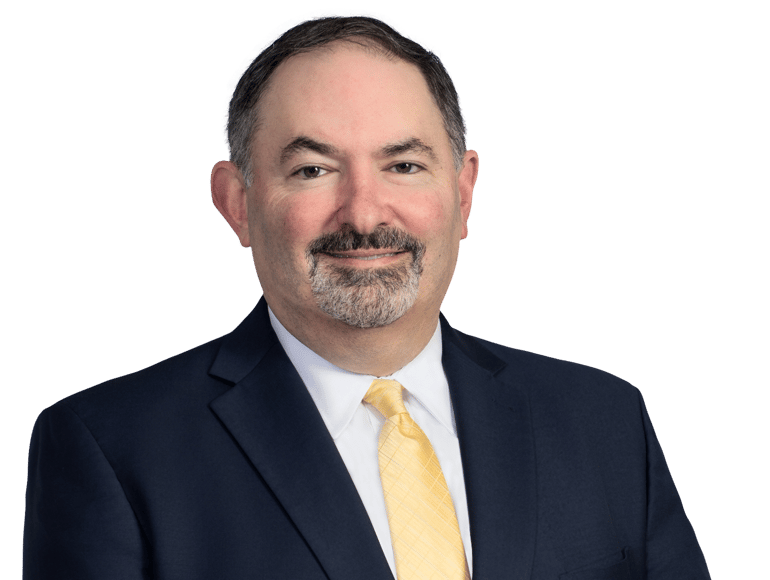
Portrait of Stuart H. Sostmann

With over two decades of experience as a litigator, Stuart concentrates his practice in the area of commercial general liability. He routinely handles high exposure matters in the fields of product liability, premises liability, auto liability, construction litigation, marine liability, dram shop and commercial litigation. This includes cases involving personal injuries and property damage claims.

As the Managing Attorney of the firm's third-largest office, Stuart oversees the daily operations, including the supervision of 75 employees. In addition to his managerial duties, Stuart serves as the Casualty Supervisor, where he ensures that all client matters are handled promptly, professionally, and effectively by the team of attorneys.

In his career, Stuart has represented manufacturers, suppliers and retailers in product liability matters, including electronics, medical equipment, food products, appliances, farm equipment, plumbing equipment, power tools, toys and sports and recreational equipment. He frequently represents property owners, retailers, pharmacies, general contractors, subcontractors and utilities in premises liability litigation. He has tried numerous cases to verdict in counties throughout Western Pennsylvania.

A significant portion of Stuart’s practice has been devoted to construction litigation. These cases are highly complex and require deep industry knowledge and experience. Stuart has handled a wide range of construction injury and defect cases, representing contractors, subcontractors, material suppliers, engineers, architects, and other construction professionals throughout Pennsylvania. His experience includes defending against claims involving construction defects such as water intrusion from faulty roofing or window and door seals, cracked foundations or improper waterproofing, structural and design issues, mold intrusion, drywall defects, and soil subsidence, heaving, or movement.

Stuart attended the University of Pittsburgh graduating with a B.A. in Political Science. He then attended the University of Pittsburgh School of Law where he participated in the Appellate Moot Court Program, Student Bar Association and the Health Law Certificate Program. He obtained his juris doctor from the University of Pittsburgh School of Law.

Stuart currently serves on the Marshall Dennehey Diversity, Equity and Inclusion Committee working to improve the recruitment, retention and advancement of diverse attorneys and professionals. He is the former President of the Pennsylvania Defense Institute, an organization of civil defense attorneys, executives of insurance companies and self-insured corporations. Stuart is also a member of the Allegheny County Bar Association and the Academy of Trial Lawyers of Allegheny County. Among his many honors, he is Rated AV® Preeminent™ by LexisNexis Martindale-Hubbell and is recognized among the Best Lawyers in America for his work in product liability litigation. Stuart is additionally recognized as Pennsylvania Super Lawyer.

    • University of Pittsburgh School of Law (J.D., 1999)
    • University of Pittsburgh (B.A., cum laude, 1996)
    • Pennsylvania, 1999
    • Supreme Court of the United States, 2023
    • AV® Preeminent™ by Martindale-Hubbell®
    • The Best Lawyers in America®, "Lawyer of the Year," Pittsburgh, Product Liability Litigation – Defendants (2026)
    • The Best Lawyers in America®, Product Liability Litigation - Defendants (2022-2026)
    • Pennsylvania Super Lawyers (2018-2022; 2025-2026)
    • Allegheny County Bar Association
    • American Bar Association
    • Pennsylvania Defense Institute, President 2022-2023; Executive VP of Operations 2021-2022; Executive VP of Programming 2020-2021
    • AI in the Legal Profession, Marshall Dennehey Client Presentation, September 2024
    • Civil Litigation State of Affairs – The Impact of COVID-19 in Pennsylvania and New Jersey & What’s Next, Marshall Dennehey Client Webinar, May, 2021
    • An Overview of Construction Defect Litigation in Pennsylvania, Nationwide Insurance Company, December 16, 2014
    • Commercial Defense Practice in New York, New Jersey & Pennsylvania, Nationwide Insurance Company, December 5, 2014
    • Brief Overview of Pennsylvania Contractual Indemnity and Additional Insured Issues, Nationwide Insurance Company, April 2012
    • Discoverability and Proper Use of Claim Notes, Berkley Mid-Atlantic, October 2011
    • “Yes! Waivers of Liability for Recreational Activities Are Still Effective in Pennsylvania,” Defense Digest, Vol. 23, No. 1, March 2017
    • "Timing Is Everything, Even for Bad Faith Claims," Defense Digest, Vol. 6, No. 1, February 2000 
    • Obtained a defense verdict following a three-day jury trial in a slip and fall injury case. The plaintiff slipped in the lobby of a commercial building and claimed a serious and ongoing injury to her right shoulder.  Plaintiff alleged she fell due to a wet floor caused by the facilities management’s cleaning process and the lack of sufficient visible wet floor caution signs. Plaintiff underwent two surgeries, claimed ongoing pain and suffering, and sought $500,000 prior to trial. We represented the building ownership and the facilities management company. Problematic for the defense was the lack of a surveillance video of the incident, photographs of the lobby contemporaneous to the incident, or an incident report.  Despite this, we persuaded the jury to find for the Defense by establishing a consistent and credible history of habitual practice in the placement of wet floor signs across the lobby in highly visible areas. We also won the credibility battle through our well-prepared witnesses.  Although faced with a sympathetic plaintiff with a substantiated history of medical treatment, we succeeded by presenting the case using “old school” personal injury defense tactics that were necessary due to the lack of video, photographs, and documentation.    
    • Successfully argued a precedent-setting case in the Pennsylvania Superior Court where a waiver of subrogation clause in a construction contract was applied to building damages caused by a windstorm three years after the project was completed. 
    • Successfully defended a product installer at trial in a single vehicle accident, where the placement of the product in the vehicle was claimed to be the cause of the crash at high speed.  A defense verdict was obtained after a 5 day jury trial where the demand was $800,000 prior to trial.

Results

Defense Verdict Following Jury Trial in Slip and Fall Case in the Court of Common Pleas of Allegheny County.

The plaintiff slipped in the lobby of a commercial building and claimed a serious and ongoing injury to her right shoulder. She alleged she fell due to a wet floor caused by the facilities management’s cleaning process and the lack of sufficient visible wet floor caution signs. The plaintiff underwent two surgeries, claimed ongoing pain and suffering, and sought $500,000 prior to trial.  We represented the building ownership and the facilities management company. Problematic for the defense was the lack of a surveillance video of the incident, photographs of the lobby contemporaneous to the incident, or an incident report. Despite this, we persuaded the jury to find for the defense by establishing a consistent and credible history of habitual practice in the placement of wet floor signs in highly visible areas across the lobby.  We also won the credibility battle through our well-prepared witnesses. Although faced with a sympathetic plaintiff with a substantiated history of medical treatment, our attorneys succeeded by presenting the case using “old school” personal injury defense tactics that were necessary due to the lack of video, photographs, and documentation. 

Defense Verdict Secured in Slip-and-Fall Jury Trial

We obtained a defense verdict following a three-day jury trial in a slip-and-fall injury case in the Court of Common Pleas of Allegheny County. The plaintiff slipped in the allegedly wet lobby of a commercial building and claimed a serious and ongoing injury to her right shoulder. Problematic for our case was the lack of a surveillance video of the incident, photographs of the lobby contemporaneous to the incident, or an incident report. Despite this, we persuaded the jury to find for the defense by establishing a consistent and credible history of habitual practice in the placement of wet floor signs across the lobby in highly visible areas. 

Thought Leadership

How I Made Office Managing Attorney: 'Stay True to Yourself, and Things Will Work Out to Your Benefit,' Says Stuart Sostmann of Marshall Dennehey

January 3, 2025

"When I was a younger attorney, I displayed arrogance at times to cover up various insecurities. My advice would be to stay true to yourself, and things will work out to your benefit."

Defense Digest

On the Pulse…Construction Injury Litigation Practice Group

December 1, 2023

Recent data released from the United States Bureau of Labor Statistics reveals that construction laborers accounted for 11.9% of all reported fatal falls, slips, or trips in 2020 across all occupations. Sixty percent of all construction laborers perform their work near or around moving mechanical parts or in close proximity to large moving objects. Fifty percent of these workers reportedly make use of PPE. Construction sites are among the most dangerous places to work in the United States. Indeed, in 2020 alone, construction laborers accounted for 8.9% of all workplace deaths due to exposure to harmful substances or environments. With millions of accidents reported each year, injuries to construction workers are often serious or even catastrophic.  This type of litigation is fraught with difficulty since it tends to involve sophisticated legal issues, multiple parties, multiple causes of action, complex relationships, and problematic factual situations. The law in this area continues to evolve as existing rules and precedent are continually challenged, overturned, replaced, or modified.  Marshall Dennehey’s Construction Injury Litigation Practice Group understands these complex relationships and issues. Our firm has a significant presence in the construction industry in the representation of construction companies/prime contractors, commercial property owners/ managers, developers, design professionals, and demolition, electrical, roofing, and various other trade subcontractors in a wide array of serious loss cases where there is often catastrophic injury or death. With decades of experience, our diverse team of attorneys regularly defends our clients in a multitude of personal injury matters arising out of the construction process. We handle everything from catastrophic injury or death due to contact with objects or equipment, fatal or catastrophic transportation incidents, roofing incidents, and scaffolding/ladder incidents, to the more routine worksite slip and fall incidents.  Our defense approach is aimed at the early identification of key issues and is predicated on developing the earliest possible defense strategies tailored to the individual case and client. Our involvement often begins with pre-litigation accident investigation, claims analysis, best practices related to client document and evidence retention, and early assessment of risk/liability transfer opportunities to shift liability and exposure under the terms of a construction contract, including indemnification and additional insured coverage issues. Our diverse team of trial attorneys have significant experience in handling some of the most high-profile and complex construction litigation matters taking place across the United States, and we have proven time and again, that we are ready and able to try even the most challenging construction injury matters to verdict with the skills needed to prevail.  The depth of our experience is the key to our legal defense in construction injury matters. Our professionals have considerable breadth of experience in this domain. They understand the evolving and complex laws surrounding this volatile area of practice, including issues relating to insurance coverage and claims disputes, additional insured coverage, product liability, workers’ compensation, the statutory employer doctrine, contractor licensing issues, Occupational Safety and Health Act (OSHA) compliance and workplace safety issues, and the peculiar risk doctrine. Through the use of cutting-edge technology and aggressive claim investigation, we are able to assess liability exposure and potential damages issues early on in a case so, together with the client and insurer, we can effectively resolve the case. Our unique strategy and team approach consists of experienced partners, associates, and paralegals capable of handling the basic, as well as the highly-sophisticated and complex, construction injury litigation matters throughout Pennsylvania, New Jersey, Delaware, Ohio, Florida, New York, and Connecticut.  We look forward to your inquiries and remain at your disposal for presentations or seminars your company may desire.     Defense Digest, Vol. 29, No. 4, December 2023, is prepared by Marshall Dennehey to provide information on recent legal developments of interest to our readers. This publication is not intended to provide legal advice for a specific situation or to create an attorney-client relationship. ATTORNEY ADVERTISING pursuant to New York RPC 7.1. © 2023 Marshall Dennehey. All Rights Reserved. This article may not be reprinted without the express written permission of our firm. For reprints, contact tamontemuro@mdwcg.com. 
Firm Highlights

Result

No-Cause Jury Verdict Secured in Wrongful Death Trial

We successfully obtained a no-cause jury verdict in a 13-day wrongful death trial. The decedent, a 59-year-old man, was admitted to the emergency room on February 15, 2019, with complaints of abdominal pain, decreased appetite, and constipation, despite the use of laxatives. The patient did not complain of any nausea, vomiting, or diarrhea. He had a significant medical history including diabetes, hypertension, prior coronary artery stenting, morbid obesity (with past gastric bypass surgery), longstanding ventral hernia, and back pain. A CT scan revealed multiple hernias and a potential closed-loop bowel obstruction, leading to a surgery consultation. Our client, an emergency general surgeon, interpreted that the patient did not have a closed loop or any significant obstruction and recommended non-surgical management. The patient was approved to have clear liquids, and had a vomiting incident shortly after, but our client was not notified. The patient was returned to NPO status, and after improving overnight, he was returned to “clears” and additional medical and renal consults were ordered. Our client did not receive any communications from the residents/nurses of any changes in the patient’s condition. On February 18, 2019, two rapid responses were called due to increased heart rate and vomiting. It is believed that the vomiting resulted in aspiration, causing sepsis, ultimately leading to the patient’s death. During the trial, the plaintiff’s sole medical expert highlighted imaging on the wrong hernia, which called into question all of his opinions in the case. We made key objections related to the expert testimony, limiting what the allegations were, and preventing new allegations from being made. After approximately two and a half hours of deliberating, the jury returned a no-cause verdict. 

Thought Leadership

Ohio Supreme Court Holds That a Binding Appraisal Award May Not Be Set Aside Absent Specific Evidence of Manifest Mistake or Fraud

On July 23, 2026, the Ohio Supreme Court issued a rare opinion on the binding effect of an appraisal award in a property insurance policy.  The Court in One Church held: A binding appraisal award will not be set aside unless an error is so palpably wrong that it undermines the intent of the agreement, such as corruption or gross mistake, not a mere error of judgment—To plead a claim of mistake with particularity as required by Civ.R. 9(B), facts alleged in a complaint must constitute the elements of mistake—Allegation that additional, hidden damage was discovered after appraisal award failed to state a claim of mistake that could justify setting aside binding appraisal.  The case arose out of a claim brought by One Church against its insurer, Brotherhood Mutual Insurance Company for roof damage from a storm. Pursuant to the terms of the insurance policy, the parties agreed to submit the matter to appraisal. The two appraisers inspected the building, and both appraisers agreed that the damages were $313,271.98. The insurer paid the agreed appraised amount.  Thereafter, the insured submitted a claim for an additional $206,663.09 in damages. The insured argued that these additional damages were not discovered until after the repairs began, and that they should be permitted to submit an additional claim, even though there had already been a binding appraisal of damages. The insurer refused to pay the additional damages, and the insured sued for breach of contract and bad faith.  In the trial court, the insurer moved to dismiss for failure to state a claim, arguing that the binding appraisal award barred any further claims. The insured took the position that additional hidden damages could not be discovered until after the repairs began, and therefore there was a mutual mistake. The trial court dismissed the case on the insurer’s motion, because there was no “evidence of fraud, misfeasance, or mistake”. The Court of Appeals agreed that appraisal awards are generally binding, but noted that an appraisal award can be set aside for fraud or manifest mistake. The Court of Appeals reversed and remanded the case to the trial court, finding that the insured had pled mistake with sufficient particularity. The insurer appealed to the Ohio Supreme Court. On appeal, the Ohio Supreme Court reversed the Court of Appeals, and reinstated the trial court decision dismissing the case for failure to state a claim upon which relief can be granted. The Supreme Court found that since the insured had already demanded appraisal, and the appraisal award was binding, “something more than error of judgement, such as corruption in the arbitrator, or gross mistake” must be pled with particularity, and proven for the insured to override the appraisal award. Since the complaint did not allege fraud or manifest mistake with sufficient particularity, something more than a mere error of judgment, the complaint was insufficient to state a claim.  The complaint in this case did not challenge the appraisal award. It pled that additional damages were discovered that were not apparent when the appraisal was done. It did not specify “who discovered the damages, how they were discovered, where they were found, why they were previously hidden, or why they rise to the level of a manifest mistake that the “appraiser would have corrected...had it been called to his attention”. Id at ¶22 citing Lakewood Mfg. Co. v. Home Ins. Co. of New York, 422 F.2d 796, 798 (6th Cir. 1970). Cases deciding the effect of appraisal awards are unusual. The Ohio Supreme Court’s decision in One Church relies primarily on 19th century case law for its conclusion. This emphasizes the fact that there is minimal case law deciding the effect of binding appraisal clauses in property insurance policies, and makes this case all the more significant. A lengthy dissent was written by Justice Fisher, who would have affirmed the Court of Appeals decision reversing and remanding the case for a decision on the merits. Of course, the decision works both ways, and an insurer dissatisfied with a binding appraisal award will likewise be without further recourse absent evidence of corruption, fraud, misfeasance, or manifest mistake, which must be pled with particularity. To constitute manifest mistake, “the mistake must be of such character that the arbitrator or appraiser would have corrected it had it been called to his attention.”  Lakewood Mfg. Co. v. Home Ins. Co. of New York, 422 F.2d 796, 798 (6th Cir. 1970).  The majority opinion does not specifically identify what would have been sufficient to plead mistake with particularity, or if the insured could have amended the complaint to overcome the deficiencies. The dissent argues that this was not really a case alleging mistake, but rather a question of contract interpretation. The insured did not challenge the appraisal, but argued that the hidden damage was not part of the appraisal, and the appraisal only covered the known damages.  However, this argument did not carry the day with the majority.  *Thomas F. Glassman, a shareholder in Marshall Dennehey’s Cincinnati office, filed a brief in the Ohio Supreme Court on behalf of the Ohio Association of Civil Trial Attorneys, in support of the insurer’s position.


