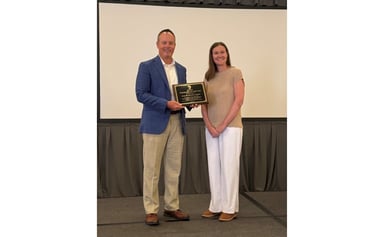
Ryan is a member of both the Securities & Investments Professional Liability and Privacy and Data Security Practice Groups. He represents FINRA member firms, registered representatives and registered investment advisors in state and federal court as well as in Financial Industry Regulatory Authority (FINRA) arbitration and expungement proceedings in addition to a wide range of investigations, examinations, inquiries and enforcement matters. Ryan’s privacy and data security practice involves defending clients in both privacy-related litigation, and technology related claims and litigation as well as handling regulatory investigations for clients from a wide breadth of industries in matters stemming from data privacy and security incidents.
Prior to joining the firm, Ryan was an Assistant District Attorney in the Economic and Cyber Crimes Unit of the Philadelphia District Attorney’s Office. In his role as a prosecutor, Ryan gained significant trial experience with a particular focus on white-collar and computer-based crimes. Ryan also worked at FINRA where he assisted in bringing enforcement actions against broker-dealers and their registered representatives. Ryan’s time at FINRA gives him a unique insight into the ever-changing regulatory landscape his clients face, including the protection of financial and personal customer information under the SEC’s Regulation S-P. Ryan began his legal career at a boutique litigation firm where he represented professional athletes in investment fraud cases where he helped recover millions of dollars in losses.
Ryan is a member of the Advisory Board of St. Francis de Sales School, an independent, non-Archdiocesan elementary school located in West Philadelphia that provides a Catholic education to a diverse student body of all faiths and backgrounds most of whom come from economically depressed areas of Philadelphia.
Ryan is a 2008 graduate of Fairfield University where he earned a Bachelor of Arts Degree and a 2012 graduate of Syracuse University College of Law where he graduated cum laude.
Results
Thought Leadership
Proposed FINRA Rule 3290—A Regulatory Breakthrough or a Halfhearted Attempt at Real Reform?
June 10, 2025
In an era of rapid innovation and expanding financial services, the lines between professional roles and personal ventures are blurrier than ever. Against this evolving backdrop, FINRA has introduced Proposed Rule 3290—its most significant attempt in decades to overhaul how it regulates the outside business activities (OBAs) and private securities transactions (PSTs) of registered representatives. This proposed rule seeks to replace two longstanding, often-criticized rules—Rules 3270 and 3280—with a unified framework intended to simplify compliance, reduce ambiguity, and reflect the realities of today’s financial market-place. But is this truly a modernization of outdated regulations or merely a cosmetic update that fails to address the core concerns of broker-dealers and their registered representatives?
Case Law Alerts
Panel Dismisses Claimant’s Claims Without Prejudice in Their Entirety Pursuant to Rule 12504 of the Code for Lack of FINRA Jurisdiction
January 1, 2025
The claimant’s claim related to the alleged unsuitability of her investment in CFSI stock. However, the panel unanimously granted the respondents’, Moody Capital and Rosenstein, motion to dismiss pursuant to FINRA Rule 12504. Specifically, for various reasons, including that the claimant never held a customer account with the respondents containing any of the securities at issue, the panel found the respondents were not associated with the account(s), security(ies) or conduct at issue in the Statement of Claim. Case Law Alerts, 1st Quarter, January 2025 is prepared by Marshall Dennehey to provide information on recent developments of interest to our readers. This publication is not intended to provide legal advice for a specific situation or to create an attorney-client relationship. Copyright © 2024 Marshall Dennehey, all rights reserved. This article may not be reprinted without the express written permission of our firm.