.

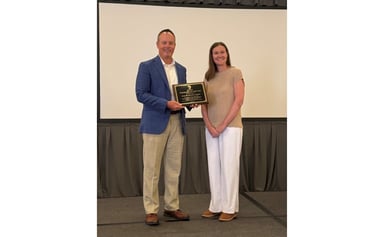
Robert J. Fitzgerald

Portrait of Robert J. Fitzgerald

Bob is the managing attorney of the Workers' Compensation Department in the firm's Mount Laurel office. He devotes his entire practice to workers' compensation defense litigation, providing experienced counsel to employers and insurance carriers. Bob has represented employers in many industries, including retail services, hospitals and health care, banking, construction, manufacturing and distribution. Through his extensive litigation experience and educational offerings, Bob has helped clients achieve significant monetary savings and reduce their workers' compensation expenditures.

Bob works in tandem with his clients to develop risk management and litigation strategies that best suit their business needs and goals. He stays abreast of current trends, and frequently authors articles and conducts seminars on issues impacting workers’ compensation in New Jersey. Bob is a regular contributor to the firm’s quarterly newsletter, Defense Digest, and the New Jersey Defense Association publications, and is a frequent presenter for our monthly What’s Hot in Workers’ Comp Live webinar.  

Bob is admitted to practice in New Jersey and Pennsylvania, as well as the U.S. District Courts for New Jersey and the Eastern District of Pennsylvania. He earned his juris doctor from Widener University School of Law, where he was a member of Phi Delta Phi, Honor Chapter. Bob is an active member of the New Jersey Self Insurers' Association, New Jersey Defense Association and New Jersey State Bar Association.

    • Widener University Delaware Law School (J.D., 2000)
    • Temple University (B.A., 1994)
    • New Jersey, 2000
    • Pennsylvania, 2000
    • U.S. District Court Eastern District of Pennsylvania, 2000
    • U.S. District Court District of New Jersey, 2000
    • New Jersey Super Lawyer Rising Star (2006-2007, 2010)
      The Super Lawyers list is issued by Thomson Reuters. A description of the selection methodology can be found here. No aspect of this advertisement has been approved by the Supreme Court of New Jersey.
    • New Jersey Defense Association
    • New Jersey Self Insurers' Association
    • New Jersey State Bar Association
    • Know When to Hold ’em, When to Fold ’em! Best Bets to Limit Exposure in Claims Management, National Comp 2024, Las Vegas, NV, October 16, 2024
    • Open Mic: Ask the Experts, New Jersey Self Insurers’ Association Annual Conference, April 24, 2024
    • A State-By-State Guide to Avoiding Attorneys' Fees and Sanctions, Marshall Dennehey Workers' Compensation Seminar, October 27, 2022
    • Workers' Compensation Winter Roundup, Graham Company webinar, December 15, 2020
    • Setting the Strategy Stage: When to Deny and Fight a Workers’ Compensation Claim, Marshall Dennehey webinar, October 30, 2020
    • The Intersection of Workers' Compensation and Health Care, Marshall Dennehey Workers' Compensation Seminar, October 24, 2019
    • What Do You Want From Your Defense Attorney, Marshall Dennehey Workers' Compensation Seminar, October 25, 2018
    • Ingredients for Successfully Defending Claims for Work Injuries at Home, Marshall Dennehey Workers' Compensation Seminar, October 19, 2017
    • Do's and Don'ts of Fact Witnesses, Marshall Dennehey Workers' Compensation Seminar, October 27, 2016
    • Put Me In Coach: Top 10 Opportunities in Claims and Litigation Management, Marshall Dennehey Workers' Compensation Seminar, October 22, 2015
    • Social Media Update, Marshall Dennehey Workers' Compensation Seminar, October 30, 2014
    • IMEs: How They Really Work, Roadmap to Success - Understanding Workers' Compensation, Marshall Dennehey seminar, October 24, 2013
    • Workers’ Compensation Law Update, Insurance Society of Philadelphia, February 15, 2013; January 27, 2012; April 20, 2011; March 2010
    • Psych Injuries and How They Relate to Banks, How and When to Settle a Case, and Dissecting Medical Records, Client Seminar, May 2010
    • Recent Changes in the New Jersey Workers' Compensation Act, Client Seminar, October 2008
    • “New Jersey Appellate Division Continues to Turn Away Alleged Intentional Workplace Injury Claims,” Defense Digest, 2025-09-01, Vol. 31, No. 3
    • “New Jersey Supreme Court Holds That in a Civil Action, the Jury, Not the Judge, Decides the Issue of Whether There Is a Special Employee Relationship,” Defense Digest, Vol. 29, No. 3, September 2023
    • "Penalties, Sanctions and Other Bad Employee Words," Defense Digest, Vol. 28, No. 3, October 2022
    • "I've Got Your Papers Right Here! New Jersey Appellate Division Reverses Extending Workers' Compensation to Owner Based on Alleged Producer and Carrier Errors," Defense Digest, Vol. 28, No. 1, April 2022
    • “New Jersey Workers’ Compensation and Property Leases. Two Greats Tastes That Don’t Taste Great Together,” Defense Digest, Vol. 27, No. 5, December 2021
    • “Better Not Be Late! Workers’ Compensation Occupational Exposure Claims and the Statute of Limitations,” Defense Digest, Vol. 27, No. 2, March 2021
    • “New Jersey Supreme Court Once Again Affirms Employers’ Subrogation Rights,” Defense Digest, Vol. 26, No. 3, September 2020
    • "Workers’ Comp Update: The NJ Supreme Court One Again Affirms an Employers’ Subrogation Rights," New Jersey Defense Magazine, July 2020
    • “The Appellate Division Beats Back Another Challenge to the Intentional Injury Exception of the New Jersey Workers’ Compensation Statute,” Defense Digest, Vol. 25, No. 3, September 2019
    • “New Jersey Workers’ Compensation Section 40 Subrogation Provisions Beat Back a Challenge by the Motor Vehicle Insurance Verbal Threshold,” Defense Digest, Vol. 25, No. 1, March 2019
    • “Dot Your I’s and Cross Your T’s. Insurance Coverage Cancellation Must Be Done Right in New Jersey Workers’ Compensation,” Defense Digest, December 2018, Vol. 24, No. 4
    • "Bifurcation, Compensability and Other Confusing Things in New Jersey Workers’ Compensation," Defense Digest, Vol. 24, No. 3, September 2018
    • "Burdens of Proof and the New Jersey Workers’ Compensation Second Injury Fund," Defense Digest, Vol. 23, No. 2, June 2017; New Jersey Defense Association Newsletter, Spring 2018
    • "Workers’ Compensation Liens Rule!!! The Appellate Division Fends Off Another Challenge to Section 40 of New Jersey’s Worker’s Compensation Statute," Defense Digest, Vol. 22, No. 4, December 2016
    • “What Did You Know and When? The Latest Analysis of the “Discovery Rule” Exception to the Statue of Limitations Defense,” Defense Digest, Vol. 22, No. 3, September 2016
    • "More Than 100% Disabled? The New Jersey Appellate Division's Latest Analysis of Permanent/Total Disability Benefit Awards," Defense Digest, Vol. 22, No. 1, March 2016 and New Jersey Defense Association Newsletter, Spring 2016
    • “Appellate Division Approves, but Limits, Sanctions in New Jersey Workers’ Compensation Proceedings,” Defense Digest, Vol. 21, No. 3, September 2015
    • “The Appellate Division Weakens Workers’ Compensation Dismissal Orders,” Defense Digest, Vol. 21, No. 1, March 2015
    • "Let It Snow! Let it Snow! Let It Snow! There Is No Bad Weather Exception to the Coming and Going Rule for NJ Workers’ Compensation," Defense Digest, Vol. 20, No. 3, September 2014 and New Jersey Defense Association Newsletter, Fall 2015
    • "Not So Fast!!! The Court Reverses Dismissal of Unjust Enrichment Claim for Overpayment of Workers’ Compensation Benefits," Defense Digest, Vol. 19, No. 4, December 2013
    • "Further Expansion of Governmental Immunity Exception to Workers' Compensation Section 40 Liens," Defense Digest, Vol. 19, No. 2, June 2013
    • "Exclusive Remedy Doctrine Of Workers' Compensation Act Is Reaffirmed," New Jersey Law Journal, October 26, 2012
    • "Look Out Below! Petitioner's Intentional Injury Claims Falls Short of Piercing the New Jersey Workers' Compensation Bar," Defense Digest, Vol. 18, No. 1, March 2012
    • "Once Again, There Is No Pain Or Suffering – Damages That Is – In New Jersey Workers' Compensation," Defense Digest, Vol. 17, No. 2, June 2011; New Jersey Defense Association Newsletter, Fall 2011
    • "Once Is Enough! When It Comes To Considering Evidence Of The Plaintiff's Intentional Injury By The Employer And Loss Of The Workers' Compensation Bar," Defense Digest, Vol. 16, No. 4, December 2010
    • "Life Is About Choices – So Too Is New Jersey Workers' Compensation Law When Addressing An Employer's Section 40 Lien Against A Pennsylvania Motor Vehicle Insurance Policy," Defense Digest, Vol. 16, No. 1, March 2010; New Jersey Self-Insurers Association Newsletter, August 2010
    • "My Boss Made Me Do It! The Appellate Division Examines the Compensability of Injuries that Occur During Employer-Sponsored Social Events," Defense Digest, Vol. 15, No. 4, December 2009
    • "Strict Statutory Interpretation - New Jersey Supreme Court Affirms Determination Of Improper Cancellation of Workers' Compensation Insurance Coverage," Defense Digest, Vol. 15, No. 2, June 2009
    • "Liar! Liar! -- The Appellate Division Upholds The Imposition Of Penalties Under The Fraud Provisions Of The New Jersey Workers' Compensation Law," Defense Digest, Vol. 14, No. 4, December 2008
    • "Appellate Division Affirms Determination Of Improper Workers' Compensation Insurance Cancellation, Despite Carrier's Utilization Of State Insurance Bureau's Electronic Filing Procedures," Defense Digest, Vol. 14, No. 2, June 2008
    • "Exclusive Remedy Applies Despite Violation of Contract," New Jersey Law Journal, September 17, 2007
    • "Construction Company's Violation of Minority Business Contract Does Not Remove Protection of Exclusive Remedy Doctrine for Special Employer," Defense Digest, Vol. 13, No. 1, March 2007
    • "Actual Lost Income Must Be Shown," New Jersey Law Journal, December 11, 2006
    • "Last Call! The New Jersey Supreme Court Waters Down the Intoxication Defense in Workers' Compensation," Defense Digest, Vol. 12, No. 4, December 2006
    • "A Watered Down Intoxication Defense," New Jersey Law Journal, November 6, 2006
    • "Prove It! -- The Appellate Division Restates The Petitioner's Burden Of Proof For New Jersey Workers' Compensation Temporary Disability Benefits," Defense Digest, Vol. 12, No. 3, September 2006
    • "The Appellate Division Further Clarifies The Computation Of Weekly Wages Under The New Jersey Workers' Compensation Act," Defense Digest, Vol. 12, No. 1, March 2006
    • Successfully proved that client was not liable for any workers' compensation benefits for a quadraplegic who had a catastrophic fall at the respondent's quarry where the petitioner alleged the respondent was acting as a general contractor. Daryl Hopkins v. Lehigh Hanson, et al., Claim Petition no. 2012-12762, et al., (JWC E. Cox, Jun 16, 2015)
    • Successfully proved that petitioner, a graduate student and teaching assistant, was not considered an employee of a university when he was performing research for his graduate degree.

Results

Successfully Defended a Claim for Permanent/Total Disability Benefits Where the Potential Exposure Exceeded Half a Million Dollars

We successfully defended a claim for permanent/total disability benefits and significantly lowered our client’s exposure. Given the petitioner’s age and the exposure of the case, our client faced a potential indemnity exposure of more than $500,000. Prior to trial, the petitioner refused to accept any settlement offer below permanent/total disability benefits. Following the petitioner’s testimony at trial, the judge dismissed the claim for permanent/total disability benefits and recommended a partial disability settlement, which equated to approximately $57,000 (only 10% of the potential cost) in total exposure, which was accepted by the petitioner.  

Medical provider claim petition dismissed, with prejudice.

The parties were litigating a motion for medical treatment in which a physician was recommending an additional spinal surgery. The physician moved forward without authorization and performed spinal surgery on the petitioner. In order to complete the surgery, the physician brought in several ancillary services, including a vendor to perform diagnostic monitoring during the surgery. Following the surgery, the medical provider submitted its bills to the carrier, which were rejected based upon the lack of authorization. After a medical provider claim petition was filed, the respondent filed a motion to dismiss the matter for failure to obtain the requisite statutory authorization. The medical provider argued that it was only providing ancillary services and, therefore, did not require the authorization of the carrier under the New Jersey Workers’ Compensation Statute. The medical provider also argued that they were the “victim” since they were advised by the physician that the procedure was authorized. The judge rejected both arguments, holding that all medical providers including providers that provide ancillary services for surgical procedures, are required to obtain the same authorization for their treatment, or risk not receiving financial reimbursement.

Thought Leadership

Defense Digest

Watch That First Step! New Jersey Again Addresses The Eternal Battle of Intentional injuries vs. The Exclusive Remedy Doctrine

March 1, 2026

Key Points: The exclusive remedy doctrine bars a petitioner from filing a personal injury suit arising out of a workplace injury. The exclusive remedy doctrine can be overcome if a petitioner can prove an “intentional injury.” A petitioner has a high burden of proof under a multi-part analysis to succeed on an intentional injury claim. The Appellate Division of the New Jersey Superior Court once again reaffirmed the strength of the exclusive remedy doctrine of the New Jersey Workers’ Compensation Statute against alleged intentional injury claims in Jonathan Little v VDM Metals USA, LLC, et al., 2025 WL 3276688 (NJ Super. App. Div. Nov. 25, 2025). In this case, the petitioner worked as a material handler for VDM, a steel manufacturer, when he sustained a compensable fall while exiting a trailer. The petitioner was clearing packing materials on a flat-rack trailer: an open trailer with only two sides – front and back. The petitioner sustained head injuries in the fall and was unable to describe the accident. The petitioner’s supervisor, Frendly Blas, provided some details leading up to the accident, although he did not witness the fall. Blas testified that, prior to the accident, the petitioner received safety training on fall prevention. Blas estimated the flat-rack trailer bed sat five or six feet off the ground. Further, a "RollaStep Mobile Platform," intended to protect workers from falls whenever they accessed a surface at least four feet off the ground, was near the truck, but not used at the time of the fall. Blas was responsible for ensuring the use of the RollaStep, but did not remember why it was not used during the incident. An OSHA report confirmed the RollaStep was positioned nearby the trailer. OSHA determined the primary cause of the accident was complacency, as it appeared the RollaStep was generally not used when there were only a few steel plates being unloaded. The petitioner’s expert report in the personal injury case indicated that training records did not show the petitioner received specific training on flat-rack trailers. The petitioner filed a personal injury action for negligence, gross negligence, and intentional wrongs against the employer, VDM. More specifically, the petitioner asserted VDM failed to provide adequate training, safety measures, and protective equipment, along with not providing enough staff to safely operate the facility. After discovery concluded, VDM won a motion for summary judgment. The trial court found that the plaintiff failed to establish that VDM’s conduct was an intentional act sufficient to surmount the Act's high bar, and dismissed the petitioner’s complaint.  The court employed the two-part standard test in Laidlow v. Hariton Mach. Co., 790 A.2d 884, 894-896 (N.J. 2002): the court determined the petitioner had not established his injuries were substantially certain to occur or fell outside the "facts of life" attendant to industrial employment. On appeal, the petitioner argued the trial court erred in granting summary judgment, as he established sufficient facts to show the defendant's intentional conduct. The petitioner contended that the record contained facts sufficient to show that adequate training was not provided related to unloading the flat-rack trailer or protecting his safety by using the RollaStep safety measure. Thus, claiming the fall from an elevated surface could not be a fact of industrial life for someone that finished and packed material. The Appellate Division affirmed the dismissal, noting that the intentional wrong exception in Laidlow is interpreted very narrowly so that as many work-related injury claims as possible can be processed exclusively within the workers' compensation system. Thereunder, to successfully prove an intentional injury claim the petitioner must prove: that the employer knew that its actions are substantially certain to result in injury or death to the employee; and the resulting injury and the circumstances of its infliction on the worker must be (a) more than a fact of life of industrial employment and (b) plainly beyond anything the legislature intended the Act to immunize. Laidlow, 790 A.2d at 894. Further, the petitioner bears the burden of establishing both the "conduct" and "context" prongs. To satisfy the conduct requirement, a petitioner must show a defendant acted with "substantial certainty” that injury or death would result. Again, mere knowledge and appreciation of a risk is insufficient. In this case, the court noted VDM failed to utilize the RollaStep during small unloading jobs, and that OSHA concluded that the defendant failed to provide the RollaStep due to "complacency."  However, the court also noted there was no evidence to suggest any employees previously fell from a trailer while unloading it. Further, the petitioner was not unloading the truck, but exiting the trailer after the work was completed. Thus, even presuming his inexperience with “unloading," the petitioner was not handling or removing the metal sheets when the fall occurred. Additionally, the petitioner was trained to avoid falls, albeit not specifically to avoid falls from flat-rack trailers. Without evidence that VDM was aware of a known or heightened danger, any lack of training, even considered together with VDM’s failure to use a RollaStep, did not demonstrate that the defendant was substantially certain that harm would arise from its actions. Additionally, there was no evidence that the defendant deliberately and deceptively removed the safety device from the location. Even if VDM knew that the failure to use the RollaStep created some degree of danger, mere knowledge by an employer that a workplace is dangerous does not equate to an “intentional wrong."  The court noted that it had rejected the idea that a longstanding negligent or reckless practice should be deemed an intentional wrong under the Act simply because the risk posed by an ongoing wrongful practice will eventually occur. While this case does not necessarily add anything new to the “intentional injury” test, it is a great reminder as to the court’s analysis of such claims. Again, a petitioner has a very high burden of proving both the “conduct” and “context” prongs under Supreme Court’s Laidlow decision. The purpose of the exclusive remedy doctrine is to keep work claims in the workers’ compensation forum, while only the most egregious cases dealing with poor employer conduct can pierce the bar. Regardless of this decision, employers and carriers should always take great strides in insuring workplace safety. If you have any questions about your workplace safety program and procedures, please reach out to your TPA carrier and counsel for advice before the next potential work injury.  Robert Fitzgerald works in our Mount Laurel, NJ office. He can be reached at (856) 414-6009 or RJFitzgerald@mdwcg.com.

Defense Digest

New Jersey Appellate Division Continues to Turn Away Alleged Intentional Workplace Injury Claims

September 1, 2025

Key Points: New Jersey Appellate Division, once again, turns away intentional injury claim in an attempt to overcome the workers’ compensation bar. To prove an intentional wrong under the Workers’ Compensation Act, a plaintiff must show that: (1) the employer knows its actions are substantially certain to result in injury or death to the employee; and that (2) the resulting injury and the circumstances of its infliction on the worker must be (a) more than a fact of life of industrial employment and (b) plainly beyond anything the Legislature intended the Workers’ Compensation Act to immunize. The New Jersey Appellate Division has once again turned away an intentional injury claim in an attempt to overcome the workers’ compensation bar in Estate of Michael Alexander et al., v. Northeast Sweepers, et al., and Crisdel Construction, et al., 2025 WL 1711136 (N.J. App. Div. Jun 19, 2025). The case itself has an extensive record and a long procedural history, including two prior appeals, from a workplace injury going back to 2014. For purposes of this article, we have cited only the most relevant facts from the court’s analysis of the intentional injury issue. On July 11, 2014, Mike Alexander, an employee of Crisdel Construction, was struck by a sweeper truck owned by Northeast Sweepers and operated by a co-employee of Crisdell, Christopher Hackett. Alexander was taken to a hospital and passed away approximately one month later. Crisdel was the general contractor and was responsible for milling and paving operations. Alexander had served as a milling foreman on the resurfacing project. At the time of the accident, Alexander was wearing a reflective safety vest, hard hat, and a flashlight that had been turned on. The resurfacing work area consisted of two lanes of the New Jersey turnpike and the right shoulder. Crisdel had 12 pieces of machinery, including milling and paving equipment, two sweepers, and at least five dump trucks.  The work area was illuminated by the lights from various vehicles and the moon, but there were no light towers. The sweeper trucks and milling machines had lights, which pointed several feet directly behind each vehicle. The sweeper trucks and milling machines also had backup alarms, but the milling and paving work generated a great deal of noise in the work area. Workers at the scene had not reviewed a written traffic control plan before the accident. The workers had gathered at the outset of the night to discuss where they would be operating and what they would be doing that night. There were no flag persons or spotters. Hackett had over 15,000 hours of experience in operating the sweeper, and Northeast considered him to be a “senior operator.” Before the accident, some workers, including Alexander, had discussed that Hackett was a “dangerous operator.” Approximately one week beforehand, Alexander had allegedly brought his concerns to the attention of the project manager. There were, however, no formal complaints regarding Hackett or his job performance. It was Crisdel’s practice to assign a dump truck to each sweeper truck for efficiency and safety reasons. At the time of the accident, however, no dump truck was near Hackett’s sweeper. The accident occurred when Hackett drove his sweeper around a milling machine and struck Alexander. At his deposition, Hackett testified: “I think it was my error. I missed [Alexander] in my line of sight. And I’m responsible for a human life.” OSHA conducted an investigation and determined that Crisdel had failed to “furnish employment and a place of employment which were free from recognized hazards that were causing or likely to cause death or serious physical harm to employees,” and failed to “establish a pre-planned traffic pattern for pedestrian and construction traffic . . . to ensure the safety of the employees working and walking within the construction work zone.” The “type of violation” was noted as “serious,” but not “willful” or “repeated.”  In an amended complaint brought in their civil action related to Alexander’s death, plaintiffs, Estate of Mike Alexander, deceased, by Lorraine Alexander as Executrix of the Estate, and Lorraine Alexander, individually, alleged that Crisdel had engaged in conduct that constituted intentional wrongs that resulted in Alexander’s death. Alexander and his estate had received workers’ compensation benefits related to the accident. In Crisdel’s answer, it asserted the affirmative defense that the plaintiffs’ claims were barred by the New Jersey Workers’ Compensation Act. Crisdel then moved for summary judgment to dismiss the plaintiffs’ claims against it.  The trial court granted summary judgment in favor of Crisdel and found that the plaintiffs had failed to produce evidence that would allow a reasonable trier of fact to conclude that Crisdel had committed an intentional wrong. The trial court also reasoned that the accident which caused Alexander’s death was in the nature of the type of accidents that occur in construction areas. The plaintiffs then appealed the order granting summary judgment to Crisdel.  The Appellate Court first noted that the Workers’ Compensation Act reflects a historic trade-off whereby employees relinquish their right to pursue common-law remedies in exchange for automatic entitlement to certain, but reduced, benefits whenever they suffer injuries by accidents arising out of and in the course of employment. Rodriguez v. Shelbourne Spring, LLC, 327 A.3d 134, 140 (N.J. 2024) (quoting Millison v. E.I. Du Pont de Nemours & Co., 501 A.2d 505, 512 (N.J. 1985)). The only exception to the workers’ compensation bar is for injuries caused by intentional wrongs. Richter v. Oakland Bd. of Educ., 252 A.3d 161, 178-179 (N.J. 2021) (quoting Laidlow v. Hariton Mach. Co., 790 A.2d 884, 894 (N.J. 2002)). To prove an intentional wrong under the Workers’ Compensation Act, a plaintiff must show that: (1) the employer must know its actions are substantially certain to result in injury or death to the employee; and that (2) the resulting injury and the circumstances of its infliction on the worker must be (a) more than a fact of life of industrial employment and (b) plainly beyond anything the Legislature intended the Workers’ Compensation Act to immunize. Id. The court noted that the New Jersey Supreme Court has explained that “the ‘substantial certainty' test is still a high standard to meet: to avoid allowing employees to circumvent the Act, courts must demand a virtual certainty before employees can proceed under the intentional wrong exception to sue their employer in tort." Van Dunk v. Reckson Assocs. Realty Corp., 45 A.3d 965, 978 (N.J. 2012) (quoting Millison, 501 A.2d at 514). In this appeal, the plaintiffs identified six specific areas of safety protocols or devices that were allegedly known to and ignored by Crisdel on the night of the accident: (1) work lighting, (2) audible backup alarms, (3) properly functioning mirrors, (4) dedicated dump trucks, (5) the use of spotters, and (6) a written traffic control plan. The plaintiffs also argued that Crisdel ignored the complaints concerning Hackett’s dangerous operation of the sweeper and failed to learn from prior incidents.  In their detailed analysis of each allegation, the court noted that none of the evidence pointed to by the plaintiffs constituted evidence of an intentional wrong within the meaning of the Act. The court also noted there were no formal complaints regarding Hackett’s job performance and that he was not previously involved in any accidents while operating a sweeper. Concerning the OSHA violations, the court noted that there were no prior OSHA citations at the New Jersey Turnpike job site and that the subsequent OSHA violation cited Crisdel for “serious” issues but not “willful” violations. Moreover, the New Jersey Supreme Court has explained that OSHA safety violations do not, on their own, establish the virtual certainty required to prove an intentional wrong. Van Dunk, 45 A.3d at 978. See also Laidlow, 790 A.2d at 898. This case illustrates the constant barrage of intentional injury claims being asserted against the workers’ compensation bar. In a construction scenario such as this, the two most common means of attack, lately, are whether the employer had safety training, programs, and/or protocols prior to a workplace accident, and whether there was a significant violation in any subsequent OSHA investigation. All employers are urged to routinely update their safety programs to make sure that they, at a minimum, meet the OSHA standards and, preferably, go beyond those standards. Further, employers should designate employee health and safety compliance as a top priority, not just for the personnel directly involved in the department, but for every employee in the organization, to prevent a workers’ compensation liability.  Bob is a member of the Workers’ Compensation Department. He can be reached at (856) 414-6009 or RJFitzgerald@mdwcg.com.    Defense Digest, Vol. 31, No. 3, September 2025, is prepared by Marshall Dennehey to provide information on recent legal developments of interest to our readers. This publication is not intended to provide legal advice for a specific situation or to create an attorney-client relationship. ATTORNEY ADVERTISING pursuant to New York RPC 7.1. © 2025 Marshall Dennehey. All Rights Reserved. This article may not be reprinted without the express written permission of our firm. For reprints, contact tamontemuro@mdwcg.com.


Firm Highlights

Thought Leadership

Pennsylvania Supreme Court Holds Self-Referral Prohibition Does Not Cover Prescriptions Written by Physicians with Ownership Interests in Dispensing Pharmacies

700 Pharmacy v. Bureau of Workers’ Compensation Fee Review Hearing Office (State Workers’ Insurance Fund); Nos. 97, 98, 99, 100, 101 MAP 2024; decided June 16, 2026; by Justice Mundy.   In this case, Drs. Miteswar Purewal and Shailen Jalali, treating physicians for workers’ compensation claimants, wrote prescriptions for various medications that were filled by 700 Pharmacy. The worker’s compensation insurer refused to pay for the prescriptions on the basis that they were illegal self-referrals under the Act. 700 Pharmacy subsequently filed fee review applications with The Bureau of Workers’ Compensation Medical Fee Review Office. At a fee review hearing, both physicians stipulated they had a financial interest in the pharmacy.  The physicians argued that the Anti-Referral Provision of the Act does not bar self-referrals on prescription drugs and pharmaceutical services, since the provision does not specifically identify prescription drugs. The Fee Review Hearing Officer rejected this argument and found that prescriptions for medications are prohibited under the “goods or services” language included in the provision. 700 Pharmacy appealed to the Commonwealth Court, and the court affirmed, agreeing with the Hearing Officer’s interpretation of “goods and services” as encompassing prescriptions. 700 Pharmacy appealed to the Supreme Court.  The Supreme Court reversed the decisions of the Hearing Officer and the Commonwealth Court, holding that the term “goods and services” in the Anti-Referral Provision of the Act did not include prescriptions. According to the Court, “goods and services” was not a catch-all, but simply explanatory as to the eight enumerated categories in the provision. The provision (Section 306(f.1)(3)(iii)) reads, in pertinent part: Notwithstanding any other provision of law, it is unlawful for a provider to refer a person for laboratory, physical therapy, rehabilitation, chiropractic, radiation oncology, psychometric, home infusion therapy  or diagnostic imaging, goods or services pursuant to this section if the provider has a financial interest with the person or in the entity that receives the referral. The Court said that if the General Assembly wanted to specifically include prescription drugs and pharmaceutical services in the Anti-Referral Provision, they would have done so. They pointed out that prescription drugs and pharmaceutical services were included by the legislature in Section 306 (f.1)(3)(vi) of the Act as to reimbursement, and claimed that their omission from the Anti-Referral Provision supports the conclusion that those services are not included in the Anti-Referral Provision’s self-referral prohibition.

Thought Leadership

Coverage Determined, Judgment Paid, Bad Faith Survives: Fourth DCA’s Opinion Highlights the Distinction Between Contractual and Extra-Contractual Damages

In Healthy Food Experts, LLC v. Amguard Ins. Co., No. 4D2025-0181 (4th DCA June 10, 2026), the Fourth District Court of Appeal explained that an insurer’s payment of a judgment in a breach of contract case does not automatically eliminate a later bad faith claim seeking extra-contractual damages. The decision provides guidance on when a first-party bad faith claim may still proceed after a coverage dispute has already been resolved by a judgment. Healthy Food Experts, LLC involved a dispute related to a property damage claim submitted under a commercial insurance policy issued by the insurer following a ceiling collapse at the insured’s restaurant. The insurer denied coverage for the insured’s losses for business personal property and business income, but extended coverage for the food spoilage losses. As a result, the insured filed a breach of contract action and ultimately obtained a jury verdict. The insurer appealed the verdict and, while the appeal was pending, the insured filed a Civil Remedy Notice (CRN) seeking payment for the judgment plus interest. The insurer failed to cure the CRN within the statutory sixty-day cure period, but paid the judgement in full with accrued interest following the appeals court’s per curiam affirmance. Nevertheless, the insured filed a first party bad faith lawsuit claiming to have suffered extra-contractual damages. In response to the bad faith suit, the insurer filed a Motion to Dismiss for failure to state a cause of action, relying on Fridman v. Safeco Insurance Co. of Illinois, 185 So. 3d 1214 (Fla. 2016) stating that damages were fixed by judgment of the breach of contract suit and the insured could not recover additional damages beyond those already awarded. The insurer also argued that the judgment did not exceed the insured’s policy limits, which was a required element of a first party bad faith claim. The trial court dismissed the bad faith action based on Fridman, concluding the insured could not seek any additional damages.  The insured appealed the court’s ruling to the Fourth DCA arguing the trial court’s order conflicts with Florida law and misapplies Fridman, as a contractual damage determination in the underlying suit establishes the “condition precedent to prosecute a first party bad faith action.” Cingari v. First Protective Ins. Co., 377 So. 3d 1169, 1174 (Fla. 4th DCA 2024). Further, the insured argued that the only purpose to the binding language in Fridman is to prevent the re-litigating of the same damages, which in this case are the contractual damages. The insured asserted the damages were not the “same” as they were seeking consequential damages from the insurer’s alleged bad faith. The Fourth District emphasized in its ruling that a first party bad faith claim is not ripe for litigation until there has been the following: a determination of the insurer’s liability for coverage; a determination of the extent of the insured’s contractual damages, and the required civil remedy notice is filed pursuant to §624.155(3)(a).  Demase v. State Farm Fla. Ins. Co., 239 So. 3d 218, 221 (Fla. 5th DCA 2018) The court concluded that the necessary conditions were satisfied as the jury verdict determined both coverage and the extent of the insured’s contractual damages, and the insured properly filed a civil remedy notice, so the bad faith claim was ripe for litigation. The Fourth DCA further explained the insured could not seek contractual damages in its bad faith action, which was previously litigated in its breach of contract suit. However, the court determined the insured could seek “extra-contractual damages,” which were not recoverable in the insured’s breach of contract suit, which may include interest, court cost, and reasonable attorney’s fees incurred by the insured. Further, the court held excess judgment is not essential in a first party bad faith claim and the insurer’s late payment of the judgment did not preclude the insured’s bad faith action. As a result, the Fourth District Court of Appeals reversed the trial court’s final dismissal order of the bad faith action. This opinion highlights the distinction between contractual and extra-contractual damages. Moreover, this case demonstrates that a judgment does not necessarily end the dispute in a first party property claim as it is could also serve as a prerequisite of a bad faith action. The decision serves as a reminder that insurers may face bad faith exposure notwithstanding the payment of a judgment in an underlying breach of contract action.

News

Marshall Dennehey’s John J. Hare Brings Home Attorney of the Year Honors; Firm Named Litigation Department of the Year in Two Categories

Marshall Dennehey took home top honors in three categories at the The Legal Intelligencer’s 2026 Pennsylvania Legal Awards, held June 11 in Philadelphia. The first place awards include: Attorney of the Year: John J. Hare, Chair of the firm’s Appellate Advocacy & Post-Trial Practice Group and Executive Committee member, together with Charles “Chip” Becker of Kline & Specter Litigation Department of the Year, Appellate – Third Win in a Row! Litigation Department of the Year, Product Liability/Mass Torts “There is no one more deserving of Attorney of the Year honors than John. This award is a testament to his exceptional skill, dedication, and leadership—qualities that truly exemplify the very best of our firm,” said G. Mark Thompson, Marshall Dennehey’s President & CEO. “These honors also reflect the strength and depth of our product liability, mass torts, and appellate practices across Pennsylvania and beyond, underscoring our ongoing commitment to delivering outstanding results for our clients.” Attorney of the Year – John J. Hare, Marshall Dennehey, together with Charles “Chip” Becker, Kline & Specter Over the past year, John and Charles were opposing counsel in many of the highest-profile civil appeals in Pennsylvania. John is renowned as a preeminent appellate lawyer on the defense side, and Chip on the plaintiff's side. They have opposed each other repeatedly, exhibiting peerless professionalism and exceptional civility, while zealously litigating under the unremitting pressure of high-profile litigation and record-setting verdicts totaling more than $3.5 billion. They have also collaborated, outside of litigation, on many commissions, committees, and projects of importance to the Pennsylvania judiciary and legal community. Litigation Department of the Year – Appellate Law, Winner (previous winner, 2025 and 2024) 2025 was another standout year for the firm’s Appellate Advocacy & Post‑Trial Practice Group, led by John J. Hare, which was retained to challenge many of Pennsylvania’s “nuclear” verdicts—awards exceeding $10 million. Notably, the department persuaded the Pennsylvania Superior Court to reverse a Philadelphia judgment of $1.09 billion, the largest judgment ever overturned by a Pennsylvania appellate court. The group’s 11 full‑time Pennsylvania‑based appellate lawyers are at the center of Pennsylvania’s most high-profile matters, bringing more than 150 years of combined appellate experience. They routinely handle post‑trial and appellate matters and are frequently engaged to participate in and monitor trials in high‑exposure cases to ensure that critical legal issues are properly raised and preserved for appeal. Litigation Department of the Year – Product Liability/Mass Torts, Winner This marks the first win for the firm’s Pennsylvania Product Liability and Mass Torts practices, which operate within our Casualty Department, managed by Matthew Schorr and Jeff Rapattoni. For almost five decades, Fortune 500 product manufacturers/distributors and their insurers have turned to these groups to defend their litigation. Led by Bradley D. Remick and Vlada Tasich, our Product Liability group’s success can be attributed to its commitment to keeping abreast of ever-changing legal theories, judicial viewpoints, and evolving technology impacting the product liability landscape. Our attorneys have successfully handled thousands of product liability matters in all jurisdictions across the state. Likewise, our mass tort litigation practice – divided into Asbestos & Mass Tort, and Environmental & Toxic Tort Litigation –  has defended manufacturers, distributors, contractors, and premises owners in thousands of personal injury and other claims. Led by Kevin E. Hexstall and Patrick T. Reilly, most attorneys in these groups have more than 20 years of experience, and our seasoned trial team has tried hundreds of cases to verdict, consistently achieving strong results through both trials and settlements. In addition to these awards, Marshall Dennehey was a Litigation Department of the Year finalist for Professional Liability.

Result

No-Cause Jury Verdict Secured in Wrongful Death Trial

We successfully obtained a no-cause jury verdict in a 13-day wrongful death trial. The decedent, a 59-year-old man, was admitted to the emergency room on February 15, 2019, with complaints of abdominal pain, decreased appetite, and constipation, despite the use of laxatives. The patient did not complain of any nausea, vomiting, or diarrhea. He had a significant medical history including diabetes, hypertension, prior coronary artery stenting, morbid obesity (with past gastric bypass surgery), longstanding ventral hernia, and back pain. A CT scan revealed multiple hernias and a potential closed-loop bowel obstruction, leading to a surgery consultation. Our client, an emergency general surgeon, interpreted that the patient did not have a closed loop or any significant obstruction and recommended non-surgical management. The patient was approved to have clear liquids, and had a vomiting incident shortly after, but our client was not notified. The patient was returned to NPO status, and after improving overnight, he was returned to “clears” and additional medical and renal consults were ordered. Our client did not receive any communications from the residents/nurses of any changes in the patient’s condition. On February 18, 2019, two rapid responses were called due to increased heart rate and vomiting. It is believed that the vomiting resulted in aspiration, causing sepsis, ultimately leading to the patient’s death. During the trial, the plaintiff’s sole medical expert highlighted imaging on the wrong hernia, which called into question all of his opinions in the case. We made key objections related to the expert testimony, limiting what the allegations were, and preventing new allegations from being made. After approximately two and a half hours of deliberating, the jury returned a no-cause verdict. 

Thought Leadership

Unanimous New Jersey Supreme Court Holds That Personal Emails of Public Employees and Officials are Subject to OPRA

In Rosetti v. Ramapo-Indian Hills Regional High School Board of Education, the New Jersey Supreme Court unanimously held that government-related emails, which are contained within personal email accounts, are government records under the Open Public Records Act (OPRA), and a log of those emails must be produced when requested. In reaching this decision, the court conducted an analysis of the OPRA and cited previous cases that held that emails do in fact fall within OPRA’s definition of a record and must be produced when requested pursuant to the Act. The court in Rosetti then had to answer the question as to whether public officials’ personal email accounts that are used for government purposes are subject to OPRA, and found that they are. Rosetti made an OPRA request to the Board of Education seeking email logs from Board members’ personal email accounts. The Board refused to produce the logs and indicated that it was not under any obligation to produce personal email account logs, only from government-related email accounts. The issue was whether a log had to be produced for Board members’ personal email accounts, which they used to conduct Board business. The Board argued that while it was possible to create a log for government-related email accounts through its IT Department, it was not possible to do so for personal email accounts. The court rejected this argument and ruled that Board members are required to search their personal email accounts and create a log of government-related emails housed in those accounts. Once completed, each Board member then must submit a certification detailing the searches that were conducted. The court went one step further with a suggestion to government employees and officials, stating, “[g]overnment agencies should strongly advise their employees, elected officials, and others engaged in government-related business to refrain from using their personal email accounts when conducting government-related business.”  Please do not hesitate to contact me with any questions regarding this case and others pertaining to the OPRA.