.

Keith M. Andresen

Co-Chair, New York Construction & Labor Law

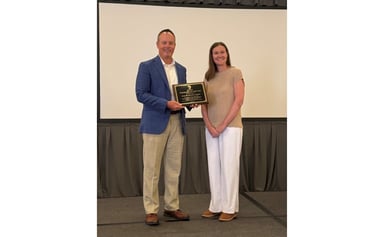
Portrait of Keith M. Andresen

Keith is a shareholder in the Casualty Department and Co-Chair of the New York Construction & Labor Law practice. As an insurance defense litigator, he devotes his practice to premises liability, automobile liability and New York State Labor Law matters. He also has experience defending property damage and construction defect claims.

Keith also has experience assisting small businesses with proactive claim solutions. 

He graduated from Long Island University in 2003 with honors and earned his juris doctor from CUNY Law School in 2006 where he was a member of law review.

Outside of the office he enjoys spending his time with his wife and two children, watching the Mets and running.

    • City University of New York School of Law (J.D., 2006)
    • Long Island University (B.A., cum laude, 2002)
    • New York, 2007
    • U.S. District Court Eastern District of New York
    • U.S. District Court Southern District of New York
    • New York Metro Super Lawyer Rising Star, 2015-2017
    • New York State Bar Association
    • Secured a favorable decision from the Appellate Division, Second Department, in a premises liability action involving claims that two alleged trip-and-fall incidents exacerbated the plaintiff’s preexisting injuries. During discovery, the defense uncovered three undisclosed motor vehicle accidents that were potentially relevant to the plaintiff’s claimed injuries. After the trial court denied defendants’ motion to compel related records, Keith and Allison successfully appealed. The Appellate Division reversed and directed the plaintiff to provide authorizations for records relating to the undisclosed accidents for in camera review. The decision reinforces a defendant’s right to obtain discovery concerning prior and subsequent accidents when a plaintiff places the nature, extent, aggravation, or exacerbation of injuries at issue.

    • Successfully opposed the plaintiff’s motion to restore the action, resulting in the dismissal of all claims against our insured.​This motor vehicle accident on July 1, 2017. The plaintiff never properly effectuated service within the timeframe of CPLR 306-b, and the defendant moved to dismiss. The plaintiff then filed an order to show cause to vacate the dismissal. The defendant opposed this, and we substituted in for the defendant Vivek Soni. The court denied plaintiff’s order to show cause as the plaintiff did not show any reasonable excuse for failing to interpose opposition timely to the underlying motion. The prior order was not vacated, and the case was dismissed against our insured.

    • Successfully obtained dismissal of a premises liability action arising from an alleged sidewalk trip-and-fall after establishing that the plaintiff’s claims were barred by the statute of limitations. ​In this premises liability case, the plaintiff tripped and fell on the insured's sidewalk on July 18, 2021. However, the plaintiff missed the statute of limitations, and we filed a pre-answer motion to dismiss under CPLR 3211. After oral argument, our motion was granted, and the case was dismissed.
    • Successfully won a dismissal of a New York Labor Law case before the Supreme Court, New York County. ​Plaintiff's counsel withdrew from this case after potential fraud issues were raised by the defense. The plaintiff proceeded pro se and then did not appear at further court conferences. The judge later dismissed the case entirely. 
    • New York State Labor Law Primer, Marshall Dennehey Client Presentation, July 29, 2025

Results

Thought Leadership

Case Law Alerts

Court of Appeals Narrows “Arising Out of Performance of Work” Standard

April 1, 2026

In Dibrino v. Rockefeller Center North, Inc., (2025 N.Y. Slip Op 070077, December 18. 2025), the plaintiff-carpenter was injured while using an electrical subcontractor’s ladder at the worksite. The general contractor and owner sought contractual indemnification against the electrical subcontractor citing the “arising out of the performance of the work” provision within the contract. The electrical subcontractor moved to dismiss the contractual indemnification claims. The court of appeals found that the provision was not triggered due to the plaintiff’s unauthorized use of an unattended ladder instead of using the scaffold and ladder supplied by his co-worker. This seems to narrow the “arising out of work” trigger for contractual indemnity analysis. A subcontractor’s specific work and actions at any construction site must be scrutinized under this case in order to ascertain whether indemnity provisions are triggered.

Case Law Alerts

New York’s AVOID Act Imposes Strict Deadlines on Third-Party Actions Starting April 2026

January 1, 2026

On December 19, 2025, Governor Kathy Hochul signed the Avoiding Vexatious Overuse of Impleading to Delay (AVOID) Act (L. 2025, ch. 704), amending CPLR § 1007 to impose, for the first time, strict deadlines on third-party practice in New York civil litigation. Effective April 18, 2026, the Act is intended to streamline cases and curb delay tactics caused by late or excessive impleading, while shifting greater responsibility to both defendants and plaintiffs to identify all potentially liable parties early in the case. Under the new rules, defendants must file third-party complaints within 60 days of serving an answer when based on contractual indemnification, or within 60 days of learning of a potentially liable party under common-law theories. Second-tier third-party actions must be filed within 45 days, with subsequent tiers limited to 30 days and then 20 days. Extensions are capped at 30 days absent a court order, and no impleader is permitted after the filing of the Note of Issue; late filings will be severed or dismissed without prejudice and may not later be consolidated back into the main action. Limited exceptions apply, including certain workplace injury claims against employers (such as “grave injury” cases or when the employer’s identity was unknown), where parties have up to 120 days from the relevant triggering event. While designed to accelerate litigation, the AVOID Act may introduce new practical challenges. Counsel—particularly in complex matters like construction cases—will need to investigate liability and pursue tenders much earlier, potentially leading to expanded discovery, additional depositions, and increased motion practice. Although rights to contribution or indemnity are preserved through separate actions, settlements with plaintiffs may waive contribution rights, complicating resolution and potentially giving plaintiffs a strategic tool to restrict third-party practice and risk transfer.

Firm Highlights

Result

No-Cause Jury Verdict Secured in Wrongful Death Trial

We successfully obtained a no-cause jury verdict in a 13-day wrongful death trial. The decedent, a 59-year-old man, was admitted to the emergency room on February 15, 2019, with complaints of abdominal pain, decreased appetite, and constipation, despite the use of laxatives. The patient did not complain of any nausea, vomiting, or diarrhea. He had a significant medical history including diabetes, hypertension, prior coronary artery stenting, morbid obesity (with past gastric bypass surgery), longstanding ventral hernia, and back pain. A CT scan revealed multiple hernias and a potential closed-loop bowel obstruction, leading to a surgery consultation. Our client, an emergency general surgeon, interpreted that the patient did not have a closed loop or any significant obstruction and recommended non-surgical management. The patient was approved to have clear liquids, and had a vomiting incident shortly after, but our client was not notified. The patient was returned to NPO status, and after improving overnight, he was returned to “clears” and additional medical and renal consults were ordered. Our client did not receive any communications from the residents/nurses of any changes in the patient’s condition. On February 18, 2019, two rapid responses were called due to increased heart rate and vomiting. It is believed that the vomiting resulted in aspiration, causing sepsis, ultimately leading to the patient’s death. During the trial, the plaintiff’s sole medical expert highlighted imaging on the wrong hernia, which called into question all of his opinions in the case. We made key objections related to the expert testimony, limiting what the allegations were, and preventing new allegations from being made. After approximately two and a half hours of deliberating, the jury returned a no-cause verdict. 

Thought Leadership

The Enforceability of Online Arbitration Agreements Remains Unresolved in Pennsylvania, But the Pennsylvania Superior Court has Provided Substantive Guidance on the Issue

Key Points: The Pennsylvania Supreme Court confirms that an order compelling arbitration is not immediately appealable as collateral orders. The outcome of Chilutti II has generally left the substantive enforceability issues with browsewrap agreements unresolved in Pennsylvania. Until this issue is resolved by the Pennsylvania courts, companies operating in the Commonwealth should strive to ensure that their registration websites and/or application screens conspicuously present arbitration agreements in manners which ensure their users and consumers assent to the terms of the agreements by following the standards set forth in Chilutti I. Browsewrap agreements have been defined as agreements “‘in which a website offers terms that are disclosed only through a hyperlink and the user supposedly manifests assent to those terms simply by continuing to use the website,’ and typically do not require an electronic signature.” See, Cobb v. Tesla, Inc., 2026 WL 458470, at *1 n. 2 (Pa. Super. Feb. 18, 2026) (citation omitted). They are largely regarded as the “if you keep using this, you agree to everything buried in this link” terms embedded into almost every online agreement consumers and users sign before proceeding with purchases of goods and/or services. While consumers are generally aware of them, many almost never click on the link, nor read them in their entirety. This leaves many consumers and users ignorant of the terms and impact of such agreements. However, one’s ignorance of the otherwise neatly-tucked-away terms rarely renders them unenforceable. The issue of the enforceability of browsewrap agreements has been up for debate for some time in many jurisdictions, including Pennsylvania. Indeed, Pennsylvania had a brief grip on this issue for a period in time. Specifically, in 2023, an en banc Superior Court set forth heightened standards for companies to meet in order to secure assent and enforce browsewrap arbitration agreements. See Chilutti v. Uber Techs., Inc., 300 A.3d 430 (Pa.Super. 2023) (en banc) (“Chilutti I”) Chilutti I involved a husband and wife who sued Uber and its subsidiaries after the wife, a wheelchair bound passenger using Uber’s rideshare service, fell, struck her head, and lost consciousness due to her uber driver failing to provide a seatbelt and making an aggressive turn during the trip. The Chilutti’s filed a negligence lawsuit against Uber and its subsidiaries. In response, the defendants moved to compel arbitration, arguing that “the couple’s conduct on the company’s website and application — when they registered for the ridesharing service — signified that they agreed to be bound by the mandatory arbitration provision found in the hyperlinked terms and conditions.” The trial court granted the defendants’ petition and stayed the proceedings pending the results of arbitration, and the Chilutti’s appealed. On appeal, the Superior Court addressed two issues. First, it addressed the issue of whether it had jurisdiction to hear the appeal. A divided Superior Court determined that it did, with its basis for the holding being that the order from which the Chilutti’s appealed was a collateral order. Next, the Superior Court set out to address the merits of the Chilutti’s substantive claim. The Superior Court concluded that the parties lacked a valid agreement to arbitrate. Its rationale was that Uber’s website and application did not provide reasonably conspicuous notice of the terms to the Chiluttis. In reaching this decision, the en banc Superior Court held that browsewrap arbitration agreements are enforceable in Pennsylvania only if the registration website and application screens explicitly inform consumers that they are waiving the right to a jury trial, the registration process cannot be completed until the consumer is fully informed of this waiver, and, when the agreement is available via hyperlink, the waiver appears at the top of the first page of the terms in bold, capitalized text. Since the ruling, Pennsylvania courts have applied Chilutti I to determine if browsewrap agreements are enforceable.  For instance, the Allegheny County Court of Common Pleas invoked Chilutti I to reject an agreement that lacked an express jury-trial waiver on the assent screen.  See Miller v. Festival Fun Parks, LLC, 92 WDA 2025 (C.P. Alleg. Cnty. Mar. 24, 2025). Similarly, the Superior Court has held that notice which failed to explicitly state the consumer was waiving a jury-trial right did not “me[e]t the strict burden set forth by our en banc Court in Chilutti I.” Pierce v. FloatMe Corp., 348 A.3d 1077, 1088 (Pa. Super. 2025). While the issue of enforceability of browsewrap agreements appeared to have been resolved by Chilutti I, Pennsylvania courts’ grip on this issue has been slackened by the Pennsylvania Supreme Court’s January 21, 2026, opinion in Chilutti II. See Chilutti v. Uber Techs., Inc., 349 A.3d 826 (Pa. 2026) (“Chilutti II”). Therein, the Supreme Court did not address the merits of the Chiluttis’ substantive claim, but rather the issue of whether the Superior Court had appellate jurisdiction to immediately review the orders staying litigation pending arbitration. The Court ultimately vacated the en banc opinion on jurisdictional grounds, holding that the Superior Court did not have appellate jurisdiction because the trial court’s order from which the Chiluttis appealed did not qualify as a collateral order and, thus, the Superior Court erred in holding to the contrary and lacked jurisdiction to entertain the merits” of the Chiluttis’ substantive claim. As such, Chilutti II has rendered Chilutti I nonbinding, and the issue of enforceability of online arbitration agreements remains unresolved. However, in light of the fact the Supreme Court did not address or comment on the merits of the Chiluttis’ appeal, Chilutti I is still meaningful. Specifically, it provides guidance as to the standards a company should strive to meet to ensure they have obtained users’ assent so that they are able to enforce online arbitration agreements. Additionally, it may serve as persuasive authority in judges’ evaluations of petitions and/or motions to compel browsewrap arbitration agreements until this particular issue is properly put before our appellate courts. Keanna works in our Pittsburgh, PA office. She can be reached at (412) 803-1174 or KASeabrooks@MDWCG.com.

Thought Leadership

Featured Conversations... Key Takeaways from A.M. Best’s Webinar on the Misuse Defense in Product Liability Claims, Featuring Michael Salvati

Michael Salvati, shareholder in our Philadelphia office, was a panelist for the April A.M. Best webinar, “The Misuse Defense: Strategic Approaches to Defending Product Liability Claims for Insurers.” During the program, Michael and his fellow panelists offered practical, jurisdiction‑specific guidance on how misuse and failure‑to‑warn theories intersect in modern product liability litigation. Michael emphasized the unique challenges these claims present—particularly in states like Pennsylvania, where evidentiary rules diverge sharply from those applied in many other jurisdictions. Failure to Warn as the “Flip Side” of Misuse Salvati explained that failure‑to‑warn allegations often arise as a direct counter to a misuse defense. As he noted, “If our misuse defense is that the plaintiff didn't use a product properly or safely, then the failure to warn claim is that we didn't tell them how to use it properly.” He emphasized that these claims can stem from either the absence of warnings or criticisms of existing warnings, such as insufficient specificity or lack of clarity about risks. Pennsylvania’s Unique Evidentiary Landscape One of Salvati’s most notable points was the stark difference in how Pennsylvania treats evidence of compliance with industry standards. He highlighted that Pennsylvania is “one of the only states…where that evidence is not admissible” in strict liability cases. Manufacturers cannot rely on compliance with ANSI, UL, ISO, or even federal safety standards to defend the product against a strict liability claim—because the focus is solely on the product itself, not the manufacturer’s conduct. Salvati acknowledged the challenge this creates for defense counsel and clients who expect such compliance to carry weight. Understanding the Three Defect Theories Salvati also walked through the three primary defect theories recognized in many jurisdictions: - Design defect – a flaw in the product’s intended design - Manufacturing defect – a deviation affecting a specific unit - Failure to warn – inadequate instructions or warnings He noted that warnings claims are increasingly significant and sometimes stand alone when design or manufacturing theories are weak. As he put it, plaintiffs often default to warnings claims because “the default position seems to be, ‘If I got hurt, there must be something wrong.’” Warranties and State‑by‑State Variations Salvati addressed how breach‑of‑warranty claims fit into the broader framework, explaining that implied warranties—such as merchantability—often overlap with strict liability in Pennsylvania. He emphasized the importance of understanding local nuances, as warranty law and admissibility rules vary widely across states. Looking Ahead: The Growing Importance of Warnings In his closing remarks, Salvati stressed that warnings should never be treated as an afterthought in product liability defense. He observed that warnings‑only claims are becoming more common and urged manufacturers and insurers to continually evaluate the clarity and completeness of their instructions and warnings. His takeaway: “We should always be talking about what are the instructions that come with our products…to bolster a misuse defense.” Listen to the complete webinar here: https://www3.ambest.com/conferences/events/eventregister.aspx?event_id=WEB1074.