.

Jillian L. Dinehart

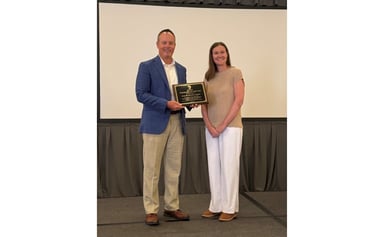
Portrait of Jillian L. Dinehart

Jillian is a member of the firm’s Professional Liability Department where she focuses her practice across a broad spectrum of professional liability matters, including but not limited to, the defense of municipalities and their employees, non profit directors and officers, real estate professionals, insurance agents and brokers, and employers. She has practiced in both state and federal courts and has argued before the Sixth Circuit Court of Appeals.

Jillian has been defending municipalities and their employees since 2013 and she has continued this practice with Marshall Dennehey, now leading the Cleveland office’s professional liability practice.  Although varied, Jillian’s public-sector liability practice focuses on police practices, sovereign immunity issues as well as labor and employment claims. Her employment practice extends to private employers, defending claims before the Ohio Civil Rights Commission, the EEOC, Ohio and federal courts regarding discrimination, harassment and retaliation, including claims brought pursuant to Title VII, the ADA, ADEA, the FMLA, trade secret litigation, whistleblower actions, housing discrimination and related tort claims.   

In her real estate work, Jillian has a strong track record of obtaining favorable results for real estate agents, real estate brokers, title agents, and home inspectors in cases brought against them related to alleged negligence, misrepresentation, disclosure errors, and contract disputes.  Jillian also concentrates her practice on D&O liability defending condominium and homeowners associations, as well as their directors, officers, and property managers, in matters involving alleged breaches of fiduciary duty, declaration disputes, real property document issues, and FHA, HUD and Fair Housing claims.  Additionally, she routinely defends insurance agents and brokers and miscellaneous professionals in matters pertaining to negligence, errors and omissions.  Jillian also has lived experience in non-profit D&O liability as a volunteer president of the board to a local community development corporation.

Further, Jillian’s practice extends to privacy and data breach matters, where she helps clients manage cyber risk and navigate incident response, containment, and compliance obligations. She also has experience defending corporate and individual insureds in product liability, construction, premises liability, and personal injury claims. 

A native of New York’s Finger Lakes region, Jillian earned her Bachelor’s Degree in Political Science from SUNY Albany. She received her juris doctor from Case Western Reserve University School of Law, where she launched her litigation career as an award winning student in the Criminal Defense Clinic. Before joining the firm in 2017, she gained valuable public sector experience as a judicial staff attorney and assistant director of law—skills she continues to draw upon in her advocacy for political subdivision clients.

Outside the office, Jillian can often be found enjoying live music or exploring the Cleveland MetroParks with her husband and their dogs.

    • Case Western Reserve University School of Law (J.D., 2010)
    • State University of New York at Albany (B.A., magna cum laude, 2006)
    • Ohio, 2010
    • U.S. District Court Northern District of Ohio, 2014
    • U.S. Court of Appeals 6th Circuit, 2015
    • The Best Lawyers: Ones to Watch®, Health Care Law (2023)
    • The Best Lawyers: Ones to Watch©, Personal Injury Litigation - Defendants (2024)
    • The Best Lawyers in America©, Personal Injury Litigation - Defendants (2026)
    • American Bar Association
    • Cleveland Metropolitan Bar Association
    • Ohio Personal Injury Litigation: Secrets Only the Top Attorneys Know, National Business Institute (NBI) Webinar, December 15, 2022
    • Political Subdivision Tort Liability, Cuyahoga County Common Pleas Court, August 2015
    • Brief Advice Clinic with Legal Aid Society of Greater Cleveland, 2009
    • Immigration Clinic with Catholic Charities, 2009
    • AmeriCorps Service Member benefitting Legal Aid of Western New York, 2009
    • Jillian’s Motion to Dismiss was affirmed on appeal after the Ninth District Court of Appeals found that Plaintiff had sued a non sui juris entity by suing a county department in a personal injury suit.  The Plaintiff initially filed suit against the department, and later dismissed without prejudice to allow more time to develop Plaintiff’s medical records.  When he refiled his suit, he again named a county department as the defendant.  Jillian filed a Motion to Dismiss arguing that a county department does not have the capacity to be sued.  Plaintiff then filed a Motion to Amend the Complaint and named the county.  Jillian then filed a Motion to Dismiss the Amended Complaint arguing that the plaintiff was outside of the statute of limitations and that the change in defendant could not relate back to the originally filed suit.  Plaintiff’s argument that naming the department was merely a misnomer and that the Amended Complaint should relate back to the original filing failed and the trial court dismissed the case.  After oral argument, the appellate court affirmed the decision.
    • In 2023, Jillian went to trial in a motor-vehicle accident case in which she represented a driver that had died while the case was pending.  There was also a large, financially successful, corporate co-defendant represented by other counsel.  The plaintiff had sustained a broken arm in the accident that was surgically repaired.  Jillian’s client had admitted liability, so the case was solely to be heard on the value of the injury, and the liability of the corporate co-defendant.  Likely counting on the deep pockets of the co-defendant, the Plaintiff’s pre-suit demand was not rationally related to the injury or in the realm of similar verdicts in the region.  During the first day of trial, Jillian formed a clear rapport with the jury panel, often engaging in friendly banter with the potential jurors about their own experiences in car accidents, injuries similar to the plaintiff’s, and the social impact of surgical scars.  This rapport was in direct contrast to a very dry voir dire by plaintiff’s counsel and was bolstered by a similarly friendly voir dire by the co-defendant’s counsel.  The parties completed their opening statements and returned to court in the morning, at which time the plaintiff asked to engage in settlement discussions.  As a result of Jillian’s trial performance, the case settlement for $1.5 Million less than the plaintiff’s demand the day before trial.

Results

Successfully Defended a Suburban Mayor in a Defamation Case

We successfully defended an appeal of a trial court decision dismissing a defamation claim against a suburban mayor. The plaintiff, a former police officer, brought actions against a former city mayor and related defendants, asserting defamation, false light and related claims. The plaintiff alleged that statements made during a press conference disparaged him and violated a non-disparagement clause in his separation agreement. The court ruled the defamation and false light claims were correctly barred by the one-year statute of limitations under R.C. 2305.11(A) where the saving statute, R.C. 2305.19(A), permitted refiling in federal court, but did not toll limitations for subsequent state filings after the federal court dismissal. The appellate court also found the former mayor’s statements, regarding police leaders who allegedly retaliated against her, were deemed truthful and, thus, not defamatory or disparaging.   

Summary Judgment Won in Slip and Fall Case Involving a Large Supermarket Chain

We won summary judgment in Franklin County, Ohio, for a large supermarket chain in a slip-and-fall case. The plaintiff alleged he slipped and fell in the parking lot on ice that remained more than two days after the most recent snow fall and after the lot had been plowed and salted by a co-defendant. The plaintiff’s expert opined that no amount of remaining snow or ice is acceptable and that the standard of care according to the Ohio Building Code requires complete removal in order to maintain a “slip-resistant” surface. However, in Ohio, a premises owner is not liable for natural accumulations of snow and ice because persons are expected to appreciate the danger. The plaintiff’s expert did not opine as to what the defendants should have done, other than to completely remove the snow and ice. The court struck the plaintiff’s expert’s untested opinion as being unhelpful to a jury and found that the Ohio Building Code did not apply to the plaintiff’s pleadings without a claim for negligence per se. In disregarding the expert opinions, the court also found that the remaining snow and ice was “natural,” even though there had been attempted removal.

Thought Leadership

Case Law Alerts

Aw Heck, As-Applied Challenges do not Implicate a Conviction

April 1, 2026

A new ruling from SCOTUS gives a lesson in Greek mythology, but more importantly makes it a near certainty that civil-rights plaintiffs will be able to run their malicious prosecution suit through summary judgment, despite a conviction. The oral argument led many to believe that the justices felt this was a complicated case, but in Olivier v. City of Brandon, a unanimous Court found that a suit that seeks prospective relief from arrest is not barred by the previous ruling in Heck v. Humphrey. Heck holds that a civil suit cannot invalidate a criminal conviction and is most often cited in cases arguing dismissal of a malicious prosecution claim because the plaintiff had been found guilty of the relevant charge. However, under Olivier, if the same plaintiff pleads prospective injunctive relief, the case may continue without an ad damnum request for damages. The result is an as-applied constitutional challenge of the law under which the plaintiff was convicted. There is no question that there is merit in reviewing the constitutionality of statutes and ordinances – but the as-applied challenge comes with significant expense and limited functional results. The Court even acknowledges that for Olivier to succeed in his suit for prospective relief, a court would find “something past should not have occurred” – that “something past” being a conviction in most cases. To come to this conclusion and avoid the implications of Heck, Justice Kagan drew a parallel to a citizen that seeks to enjoin enforcement of an ordinance that would prevent the plaintiff from exercising his free speech in the manner he desires – of course before the exercise actually occurs. There is no question that Heck does not apply in the case of a preliminary injunction, but Olivier presents an interesting glance into a criminal justice system that allows an accused to challenge the constitutionality during the criminal trial, get convicted, then challenge the constitutionality again in a civil suit. Practitioners should consider a request for prospective relief as an as-applied constitutional challenge that will likely need to be briefed at the summary judgment stage, therefore requiring discovery into the circumstances of the arrest.

Case Law Alerts

Totality of the Circumstances: Tasing Okay in Immediate Passive Resistance

January 1, 2026

In a colorful opinion from the Sixth Circuit, the court found that it was not excessive force to tase the plaintiff when he refused to supply his hand for cuffing in the wake of more significant refusals to submit to the police officers’ authority. Feagin marks a return to the totality of the circumstances review, holding that there must be a comprehensive look at any relevant event that influences the use of force. The officers first encountered Mr. Feagin driving a Lincoln SUV, windows down, drinking liquor, smoking marijuana and driving down the middle of the street, causing the police vehicle to go into the ditch. There was a short pursuit before Mr. Feagin pulled over into a crowded supermarket parking lot, at which time the officers noticed the rear window appeared to be shot out. As the officers approached the vehicle, Mr. Feagin rolled up the windows. When an officer reached the driver’s side window, the SUV began to roll backwards. The officers banged on the windows, and the SUV stopped rolling. Mr. Feagin opened the driver’s door, and the officers grabbed his arm, causing him to limply lean out the door, at which time he began to resist and struggled to keep his body inside the driver’s compartment. During this struggle, bullets were falling from Mr. Feagin’s pockets. Once on the ground, the two officers tried to get Mr. Feagin cuffed, one officer attempt to grab his left arm, while the other had a partial hold on his torso. Mr. Feagin’s right arm remained free and flailing against the SUV. The officer holding Mr. Feagin’s torso tased him, allowing the officers to fully detain Mr. Feagin and place him in the rear of the police cruiser. Mr. Feagin alleged that the tase was excessive force, and the district court agreed, finding there was a question of fact, whether Mr. Feagin was actively or passively resisting at the time the taser was used. The Sixth Circuit reversed, holding that the entire encounter with Mr. Feagin should be considered, during which there were numerous times of active resistance. The Circuit Court also held that, even if the taser was utilized during the “twilight” between active and passive resistance, the doubt should be resolved in favor of the officer making split second decisions where the threat or degree of resistance is unclear. The court held: “We impose liability on individual officers only in the rare instance where an officer tases a suspect who posed no danger and was fully compliant with officer’s commands or had completely ceased resisting at the time of tasing.” A dissenting opinion (J. Clay) pressed for a more limited review of the case, finding that the argument was based in fact, as opposed to legal analysis. In assessing the Circuit Court’s duty, the majority opinion railed against the dissent to hold: "[T]he mere existence of ‘competing allegations on both sides’ does not stand in the way of us assessing whether legal arguments likewise exist. (***) We instead consider the facts in a light most favorable to the plaintiff. Any other approach risks eliminating our review altogether in this setting. After all, facts permeate every qualified immunity dispute. And qualified immunity exists to protect against a government official’s mistake of both fact and law. Those protections would be ‘effectively lost if’ an appeal were dismissed and a case ‘permitted to go to trial’ simply because a party highlighted factual disputes in the court of appeal. So rather than throwing up our hands whether the parties disagree over the facts or whenever the district court has assessed the record, we instead roll up our sleeves and train our attention on any remaining legal questions." (Internal citations omitted.) The Feagin opinion should be cited by every defense practitioner in a tasing case or in a case where it seems the fact questions should outweigh the legal analysis.

Firm Highlights

Result

No-Cause Jury Verdict Secured in Wrongful Death Trial

We successfully obtained a no-cause jury verdict in a 13-day wrongful death trial. The decedent, a 59-year-old man, was admitted to the emergency room on February 15, 2019, with complaints of abdominal pain, decreased appetite, and constipation, despite the use of laxatives. The patient did not complain of any nausea, vomiting, or diarrhea. He had a significant medical history including diabetes, hypertension, prior coronary artery stenting, morbid obesity (with past gastric bypass surgery), longstanding ventral hernia, and back pain. A CT scan revealed multiple hernias and a potential closed-loop bowel obstruction, leading to a surgery consultation. Our client, an emergency general surgeon, interpreted that the patient did not have a closed loop or any significant obstruction and recommended non-surgical management. The patient was approved to have clear liquids, and had a vomiting incident shortly after, but our client was not notified. The patient was returned to NPO status, and after improving overnight, he was returned to “clears” and additional medical and renal consults were ordered. Our client did not receive any communications from the residents/nurses of any changes in the patient’s condition. On February 18, 2019, two rapid responses were called due to increased heart rate and vomiting. It is believed that the vomiting resulted in aspiration, causing sepsis, ultimately leading to the patient’s death. During the trial, the plaintiff’s sole medical expert highlighted imaging on the wrong hernia, which called into question all of his opinions in the case. We made key objections related to the expert testimony, limiting what the allegations were, and preventing new allegations from being made. After approximately two and a half hours of deliberating, the jury returned a no-cause verdict. 

Thought Leadership

The Enforceability of Online Arbitration Agreements Remains Unresolved in Pennsylvania, But the Pennsylvania Superior Court has Provided Substantive Guidance on the Issue

Key Points: The Pennsylvania Supreme Court confirms that an order compelling arbitration is not immediately appealable as collateral orders. The outcome of Chilutti II has generally left the substantive enforceability issues with browsewrap agreements unresolved in Pennsylvania. Until this issue is resolved by the Pennsylvania courts, companies operating in the Commonwealth should strive to ensure that their registration websites and/or application screens conspicuously present arbitration agreements in manners which ensure their users and consumers assent to the terms of the agreements by following the standards set forth in Chilutti I. Browsewrap agreements have been defined as agreements “‘in which a website offers terms that are disclosed only through a hyperlink and the user supposedly manifests assent to those terms simply by continuing to use the website,’ and typically do not require an electronic signature.” See, Cobb v. Tesla, Inc., 2026 WL 458470, at *1 n. 2 (Pa. Super. Feb. 18, 2026) (citation omitted). They are largely regarded as the “if you keep using this, you agree to everything buried in this link” terms embedded into almost every online agreement consumers and users sign before proceeding with purchases of goods and/or services. While consumers are generally aware of them, many almost never click on the link, nor read them in their entirety. This leaves many consumers and users ignorant of the terms and impact of such agreements. However, one’s ignorance of the otherwise neatly-tucked-away terms rarely renders them unenforceable. The issue of the enforceability of browsewrap agreements has been up for debate for some time in many jurisdictions, including Pennsylvania. Indeed, Pennsylvania had a brief grip on this issue for a period in time. Specifically, in 2023, an en banc Superior Court set forth heightened standards for companies to meet in order to secure assent and enforce browsewrap arbitration agreements. See Chilutti v. Uber Techs., Inc., 300 A.3d 430 (Pa.Super. 2023) (en banc) (“Chilutti I”) Chilutti I involved a husband and wife who sued Uber and its subsidiaries after the wife, a wheelchair bound passenger using Uber’s rideshare service, fell, struck her head, and lost consciousness due to her uber driver failing to provide a seatbelt and making an aggressive turn during the trip. The Chilutti’s filed a negligence lawsuit against Uber and its subsidiaries. In response, the defendants moved to compel arbitration, arguing that “the couple’s conduct on the company’s website and application — when they registered for the ridesharing service — signified that they agreed to be bound by the mandatory arbitration provision found in the hyperlinked terms and conditions.” The trial court granted the defendants’ petition and stayed the proceedings pending the results of arbitration, and the Chilutti’s appealed. On appeal, the Superior Court addressed two issues. First, it addressed the issue of whether it had jurisdiction to hear the appeal. A divided Superior Court determined that it did, with its basis for the holding being that the order from which the Chilutti’s appealed was a collateral order. Next, the Superior Court set out to address the merits of the Chilutti’s substantive claim. The Superior Court concluded that the parties lacked a valid agreement to arbitrate. Its rationale was that Uber’s website and application did not provide reasonably conspicuous notice of the terms to the Chiluttis. In reaching this decision, the en banc Superior Court held that browsewrap arbitration agreements are enforceable in Pennsylvania only if the registration website and application screens explicitly inform consumers that they are waiving the right to a jury trial, the registration process cannot be completed until the consumer is fully informed of this waiver, and, when the agreement is available via hyperlink, the waiver appears at the top of the first page of the terms in bold, capitalized text. Since the ruling, Pennsylvania courts have applied Chilutti I to determine if browsewrap agreements are enforceable.  For instance, the Allegheny County Court of Common Pleas invoked Chilutti I to reject an agreement that lacked an express jury-trial waiver on the assent screen.  See Miller v. Festival Fun Parks, LLC, 92 WDA 2025 (C.P. Alleg. Cnty. Mar. 24, 2025). Similarly, the Superior Court has held that notice which failed to explicitly state the consumer was waiving a jury-trial right did not “me[e]t the strict burden set forth by our en banc Court in Chilutti I.” Pierce v. FloatMe Corp., 348 A.3d 1077, 1088 (Pa. Super. 2025). While the issue of enforceability of browsewrap agreements appeared to have been resolved by Chilutti I, Pennsylvania courts’ grip on this issue has been slackened by the Pennsylvania Supreme Court’s January 21, 2026, opinion in Chilutti II. See Chilutti v. Uber Techs., Inc., 349 A.3d 826 (Pa. 2026) (“Chilutti II”). Therein, the Supreme Court did not address the merits of the Chiluttis’ substantive claim, but rather the issue of whether the Superior Court had appellate jurisdiction to immediately review the orders staying litigation pending arbitration. The Court ultimately vacated the en banc opinion on jurisdictional grounds, holding that the Superior Court did not have appellate jurisdiction because the trial court’s order from which the Chiluttis appealed did not qualify as a collateral order and, thus, the Superior Court erred in holding to the contrary and lacked jurisdiction to entertain the merits” of the Chiluttis’ substantive claim. As such, Chilutti II has rendered Chilutti I nonbinding, and the issue of enforceability of online arbitration agreements remains unresolved. However, in light of the fact the Supreme Court did not address or comment on the merits of the Chiluttis’ appeal, Chilutti I is still meaningful. Specifically, it provides guidance as to the standards a company should strive to meet to ensure they have obtained users’ assent so that they are able to enforce online arbitration agreements. Additionally, it may serve as persuasive authority in judges’ evaluations of petitions and/or motions to compel browsewrap arbitration agreements until this particular issue is properly put before our appellate courts. Keanna works in our Pittsburgh, PA office. She can be reached at (412) 803-1174 or KASeabrooks@MDWCG.com.

Thought Leadership

PA Superior Court Upholds Household Vehicle Exclusion in Favor of Erie When Stacking Was Not Implicated

Key Points: A household vehicle exclusion was upheld under an Erie Policy when the estate of deceased insureds sought UIM coverage when the insureds were occupying a motorcycle owned by the insureds, but the motorcycle was not covered by Erie’s Policy. The PA Superior Court distinguished Gallagher v. GEICO, in which Gallagher, unlike the Erie insured, had recovered UM/UIM, thus rendering the "household exclusion" an impermissible waiver of stacking. Here, with no UIM recovery from any source, the issue of stacking, much less impermissible waiver of stacking, never arose. In sum, the household vehicle exclusion is a valid exclusion when stacking is not implicated. In the Pennsylvania Superior Court case of Erie Ins. Exchange v. Estate of Kennedy, 350 A.3d 219 (Pa. Super. 2025), the court upheld Erie’s denial of coverage under the household vehicle exclusion in the Erie Policy when the insureds were occupying a motorcycle not covered under the policy. Dennis and Elissa Kennedy, Erie insureds, died in a single-vehicle motorcycle accident, with Dennis driving. Dennis insured the motorcycle with Progressive, which paid its liability limits to Elissa, after which Elissa sought household stacked Erie UIM coverage. Erie denied coverage under its "household exclusion" applicable to vehicles owned by insureds, but not covered by Erie's policy. The trial court granted judgment in favor of Erie on the ground that such benefits were barred by an exclusion applicable when an insured has suffered damages while occupying a vehicle owned by a relative and not covered under the policy, i.e. the household vehicle exclusion. Finding that the exclusion was valid, the PA Superior Court affirmed. The court found the facts of the case and policy exclusion analogous to the case of Erie Ins. Exchange v. Mione, 289 A.3d 524 (Pa. 2023). In Mione, a motorcyclist was injured in an accident with another vehicle whose driver was both at fault and underinsured. The motorcyclist's insurance policy did not include UM/UIM coverage. However, the motorcyclist had two household policies covering other vehicles, including stacked UM/UIM coverage, as well a household vehicle exclusion. UM/UIM benefits were therefore denied, and the motorcyclist argued that the exclusion was invalid because it did not comport with the statutory waiver requirements of Section 1738. The PA Supreme Court rejected the argument, explaining that UM/UIM coverage could not be procured in the "first instance" under the motorcyclist's household policies as “[F]or a household vehicle exclusion to be acting as an impermissible de facto waiver of stacking, the insured must have received UM/UIM coverage under some other policy first, or else is not implicated at all.” The motorcyclist had not received any UM/UIM benefits under his own motorcycle policy, so there was nothing for the UM/UIM benefits of the household policies to "stack on" to, and as such, Section 1738 was not implicated. The court also distinguished the case from Gallagher v. Geico, 201 A.3d 131 (Pa. 2009), in which a motorcyclist was injured in an accident caused by another driver who was underinsured. The motorcyclist had purchased two policies, each of which provided stacked UM/UIM benefits. The first policy covered only the motorcycle; the second covered two automobiles, while also containing a "household exclusion," which precluded UM/UIM benefits. The PA Supreme Court held that the exclusion was invalid because the resulting waiver of UM/UIM coverage did not comport with the statutory requirements of Section 1738. The court distinguished the Kennedy’s case from Gallagher as the Kennedy’s were attempting to stack UM/UIM coverages from (a) the Progressive Motorcycle Policy under which Dennis Kennedy was the only insured, and (b) the Erie Policy under which Dennis Kennedy and Elissa J. Kennedy were the insureds. Crucially, the court found that the party from whom the right to stack UM/UIM benefits under the Erie policy was derived (Elissa J. Kennedy) was not an insured under the motorcycle policy. In other words, no one paid for Elissa J. Kennedy to receive UM/UIM benefits under the motorcycle policy, so that policy afforded her no contractual right to such coverage in the first instance. The court further reasoned that the "miscellaneous vehicle" exclusion in the Erie Policy was valid because the insured, Elissa J. Kennedy, had not first received UM/UIM coverage under Dennis Kennedy's Motorcycle Policy. In conclusion, the Court found Gallagher inapposite, and Mione compelled the affirmance of the trial court's ruling upholding Erie’s denial of coverage pursuant to the household vehicle exclusion. Christin is a Shareholder in our King of Prussia, Pennsylvania, office. She can be reached at 610-354-8279 or clkochel@mdwcg.com.

Thought Leadership

Featured Conversations... Key Takeaways from A.M. Best’s Webinar on the Misuse Defense in Product Liability Claims, Featuring Michael Salvati

Michael Salvati, shareholder in our Philadelphia office, was a panelist for the April A.M. Best webinar, “The Misuse Defense: Strategic Approaches to Defending Product Liability Claims for Insurers.” During the program, Michael and his fellow panelists offered practical, jurisdiction‑specific guidance on how misuse and failure‑to‑warn theories intersect in modern product liability litigation. Michael emphasized the unique challenges these claims present—particularly in states like Pennsylvania, where evidentiary rules diverge sharply from those applied in many other jurisdictions. Failure to Warn as the “Flip Side” of Misuse Salvati explained that failure‑to‑warn allegations often arise as a direct counter to a misuse defense. As he noted, “If our misuse defense is that the plaintiff didn't use a product properly or safely, then the failure to warn claim is that we didn't tell them how to use it properly.” He emphasized that these claims can stem from either the absence of warnings or criticisms of existing warnings, such as insufficient specificity or lack of clarity about risks. Pennsylvania’s Unique Evidentiary Landscape One of Salvati’s most notable points was the stark difference in how Pennsylvania treats evidence of compliance with industry standards. He highlighted that Pennsylvania is “one of the only states…where that evidence is not admissible” in strict liability cases. Manufacturers cannot rely on compliance with ANSI, UL, ISO, or even federal safety standards to defend the product against a strict liability claim—because the focus is solely on the product itself, not the manufacturer’s conduct. Salvati acknowledged the challenge this creates for defense counsel and clients who expect such compliance to carry weight. Understanding the Three Defect Theories Salvati also walked through the three primary defect theories recognized in many jurisdictions: - Design defect – a flaw in the product’s intended design - Manufacturing defect – a deviation affecting a specific unit - Failure to warn – inadequate instructions or warnings He noted that warnings claims are increasingly significant and sometimes stand alone when design or manufacturing theories are weak. As he put it, plaintiffs often default to warnings claims because “the default position seems to be, ‘If I got hurt, there must be something wrong.’” Warranties and State‑by‑State Variations Salvati addressed how breach‑of‑warranty claims fit into the broader framework, explaining that implied warranties—such as merchantability—often overlap with strict liability in Pennsylvania. He emphasized the importance of understanding local nuances, as warranty law and admissibility rules vary widely across states. Looking Ahead: The Growing Importance of Warnings In his closing remarks, Salvati stressed that warnings should never be treated as an afterthought in product liability defense. He observed that warnings‑only claims are becoming more common and urged manufacturers and insurers to continually evaluate the clarity and completeness of their instructions and warnings. His takeaway: “We should always be talking about what are the instructions that come with our products…to bolster a misuse defense.” Listen to the complete webinar here: https://www3.ambest.com/conferences/events/eventregister.aspx?event_id=WEB1074.