
.

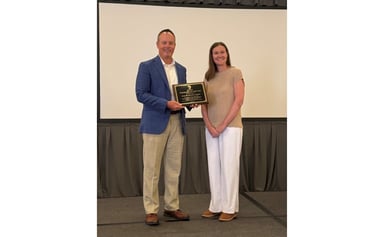
Holly is a shareholder in the firm's Professional Liability Department where she focuses on Florida director & officer disputes in not-for-profit condominium and other community associations. These disputes include Fair Housing Act (FHA) claims, condo disputes under Chapter 718, Florida Statutes, and homeowners’ association disputes under Chapter 720. Holly has strong defense experience at every level including pre-suit and for actions filed before various governmental agencies, as well as in state and federal courts.

Holly's practice is also focused on a variety of employment disputes. Holly has defended multiple employment discrimination, harassment, and retaliation claims at all levels including disability and racial discrimination claims before the Equal Employment Opportunity Commission (EEOC).

Further, Holly has also handled a variety of consumer financial services litigation and compliance matters. She has additionally been involved in a range of other civil litigation matters including breach of contract issues, commercial disputes and real estate actions.

Holly received her juris doctor from Hofstra University School of Law after majoring in Economics and English at Florida International University. She is admitted to practice law in the states of Florida, New York, and New Jersey, and enjoys reading all manner of fiction.

Thought Leadership

Legal Updates for Real Estate E&O Liability

The Listing Agreement Controls in Real Estate Commission Dispute Between Broker and Seller

May 7, 2026

Carmona Realty Group, LLC, a licensed real estate broker, pursued a commission after procuring multiple offers at or above the listing price for a Miami property, but the seller repeatedly rejected or ignored those offers while attempting to increase the price outside the written listing agreement. The parties had executed an exclusive right of sale listing agreement setting the price at $499,500 and providing for a 5% commission. Although the seller later signed separate “instructions to agents” imposing additional requirements such as appraisal contingencies, inspection attachments, and deposit conditions, those instructions were never signed by the broker and were not referenced in the listing agreement. After at least seven offers were presented, including full-price or above-list offers, the seller declined to proceed, citing varying reasons including furniture inclusion, shutters, and financing terms, while also informally seeking a higher price. The Third District Court of Appeal reversed the trial court’s ruling in favor of the seller, holding that the “instructions to agents” were not incorporated into the listing agreement and could not be used to defeat the broker’s entitlement to a commission. Applying Florida contract principles and the statute of frauds, the court emphasized that modifications to a listing agreement must be in writing and signed by both parties, and that mere contemporaneous documents lacking mutual assent and cross-reference do not become part of the contract. The court further found that the broker satisfied its obligation by producing ready, willing, and able buyers on the agreed terms, and that the seller’s later-asserted justifications did not negate the broker’s right to compensation. This decision underscores the importance of real estate brokers and professionals ensuring that all material terms and conditions are clearly incorporated into the listing agreement itself, as well as documenting all communications when sellers reject conforming offers for reasons outside the contract.

Legal Updates for Real Estate E&O Liability

Florida Legislative Update: Proposed E&O Insurance Requirement for Home Inspectors

February 5, 2026

New Florida legislation, if enacted, would require licensed home inspectors to maintain errors and omissions (E&O) insurance as a condition of licensure. While Florida has long regulated the home inspection profession, the state has historically not required professional liability insurance for inspection errors or omissions. Florida home inspectors are regulated under Part XV (titled “Home Inspections”), of Chapter 468, Florida Statutes. Section 468.8322, Florida Statutes, currently requires licensed home inspectors to maintain commercial general liability insurance of at least $300,000, but it does not require home inspectors to carry E&O insurance. Without a statutory requirement, Florida home inspectors have had the ability to voluntarily acquire E&O insurance. According to a 1994 study conducted by the Florida House of Representatives, only 30% of responsive licensed home inspectors carried E&O insurance. When inspection disputes and litigation regarding home inspection errors arise, this often leads to other real estate professionals paying the price. As a result, buyer’s agents, listing agents, real estate companies, title agents/companies, and brokers often find themselves defending various claims of negligence, breach of fiduciary duty, a failure to disclose material information, and related allegations that are premised on inspection issues. When an inspector lacks E&O insurance, plaintiffs’ counsels tend to view the inspector as a limited recovery source and, instead, pursue the insured real estate professionals, whose E&O policies provide a clearer path to recovery. Even where the professionals had no control over the inspection itself, they often incur substantial defense costs simply by being named in a lawsuit as a related. In practice, this dynamic often shifts inspection-related liability away from the inspecting professional and toward transaction participants with mandatory E&O coverage. Florida Senate Bill 360 (2026), titled “Home Inspectors,” has been introduced to the senate as of January 13, 2026, and is currently under committee consideration. Bill 360 provides an update to Section 468.8322, Florida Statutes, so that licensed home inspectors will be required to maintain both a commercial general liability policy and an E&O policy in the amount of $500,000 per policy. If enacted, it would take effect July 1, 2026. A statutory E&O requirement for home inspectors could materially alter the litigation landscape. With mandatory professional liability coverage, home inspectors would be more likely to be named as primary defendants in claims arising from inspection errors or omissions. Florida’s consideration of an E&O insurance mandate for home inspectors reflects growing attention to professional liability within residential real estate transactions. For real estate professionals, the proposal signals a potential rebalancing of inspection-related risk and underscores the importance of continued risk management practices, even as responsibility for inspection errors is more squarely aligned with the professionals who perform them. Legal Update for Real Estate E&O – February 2026, is prepared by Marshall Dennehey to provide information on recent legal developments of interest to our readers. This publication is not intended to provide legal advice for a specific situation or to create an attorney-client relationship. We would be pleased to provide such legal assistance as you require on these and other subjects when called upon. ATTORNEY ADVERTISING pursuant to New York RPC 7.1 Copyright © 2026 Marshall Dennehey, all rights reserved. No part of this publication may be reprinted without the express written permission of our firm. For reprints or inquiries, or if you wish to be removed from this mailing list, contact MEDeSatnick@mdwcg.com.

Firm Highlights

Thought Leadership

Commonwealth Court Holds That a Claimant Who Was Struck By a Car While Crossing the Street During an Unpaid Break Was In the Course and Scope of Employment

This case involved a claim petition filed by a claimant who sustained injuries after being struck by a vehicle while crossing the street in front of the employer’s premises. The employer denied the claim based on course and scope, as the accident occurred during one of two mandatory fifteen (15) minute breaks provided to the claimant. The claimant would punch out at the beginning of a break and punch back in when the break was over.  On the date of the incident, the claimant punched out and left the building to get lunch at a restaurant, which required her to cross the employer’s parking lot, and then a public street, where the injury occurred. The Workers Compensation Judge (WCJ) dismissed the petition, noting that that during the two mandatory fifteen-minute breaks per shift allowed by the employer, the claimant was free to leave the employer’s premises, and during breaks, permitted to engage in whatever activity she desired. The WCJ found that at the time of the accident, the claimant was on her own time, in the middle of the street, and going to get lunch.   The claimant filed an appeal with the Worker’s Compensation Appeal Board (Board), and the Board reversed.  According to the Board, the claimant’s location was still on the employer’s premises, as the claimant was taking her customary route while using a reasonable ingress/egress from the employer.  Further, the Board found that the “Personal Comfort Doctrine” applied, as the claimant was on a momentary departure to take care of her personal comfort, within the window of time she was allotted for her break.  The Board remanded the case, and a WCJ granted the claim petition.  The Board affirmed, and the employer appealed to the Commonwealth Court. Before the Court, the employer argued that the claimant was not in the course and scope of her employment, because the injury did not occur on its premises, and the claimant was outside the bounds of the Personal Comfort Doctrine. The Court, however, rejected these arguments, and dismissed the employer’s appeal.  The Court noted that the break given to the claimant was so cursory, when she set out to relieve her hunger for her own personal comfort,  she remained in the course of her employment when she sustained her injuries.  A Petition for Allowance of Appeal in the Supreme Court has been filed by the Employer, Giant Eagle.

Thought Leadership

Not So Fast. . . The Limitations of the Pennsylvania RELRA in Plaintiffs’ Civil Actions Against Real Estate Broker and Licensee Defendants

Much has been made of the importance and weight of the Pennsylvania Real Estate Licensing and Registration Act, 63 P.S. §§ 455.101, et. seq. (RELRA or Act). After all, a real estate broker generally cannot recover any commission absent a signed agreement that complies with RELRA. But can a plaintiff rely on RELRA as a distinct cause of action in a civil action as to a real estate broker or licensee defendant? The Superior Court has emphatically held that he or she cannot. In the unpublished opinion P. Perez Real Est. Holdings, LLC et. al. v. Home Sale Real Est. Servs., Inc., et al., No. 256 MDA 2025, 2025 WL 35389888 (Pa. Super. Ct. December 10, 2025), the Superior Court held that the Act “does not contemplate private actions for money damages as an enforcement mechanism and consequently, does not create a private cause of action.” citing Schwarzwaelder v. Fox, 895 A.2d 614, 620 (Pa. Super. 2006). While the Act authorizes the Bureau of Professional and Occupational Affairs, State Real Estate Commission, to regulate the conduct governed by RELRA, the Act alone does not create a stand-alone legal cause of action as to a broker-defendant in a civil action. See P. Perez, citing Schwarwaelder at 620. Nor can it be stated that RELRA creates or imposes any legally cognizable duties on real estate brokers or licensees. While the Act contains and refers to general concepts of duty (e.g. the agent must “exercise reasonable professional skill and care which meets the practice standards required by this act” and “to deal honestly and in good faith” 63 P.S. §§606.1 (a)(1),(2), or the broker has a duty to the buyer of property to take “action that is consistent with the buyer’s interest in transaction.”  63 P.S. §§606.3 (1)), these general concepts are secondary to the duties imposed by the required written agreement between the broker and consumer. For example, in P. Perez, a case in which the buyers-plaintiffs argued that the real estate broker failed to investigate recent legislation that would affect buyer’s intentions to convert the property to commercial space, the agreement between buyer and broker contained the following provision in the “Buyer’s Due Diligence” clause: Buyer acknowledges that Brokers, their licensees, employees, officers or partners have not made an independent examination or determination of the structural soundness of the property, the age or condition of the components, environmental conditions, the permitted uses, nor of conditions existing in the locale where the property is situated. . . Accordingly, the broker defendants expressly disclaimed any duty to buyers to inform them or determine whether any applicable zoning classifications, laws, or ordinances in the township applied to the properties in question. Moreover, the Superior Court refused to read provisions of the Act into the Agreement, citing Skiff re Buss, Inc. v. Buckingham Review, LP, 991 A.2d 956 (Pa. Super. 2010). In defending civil actions it is important for the defense attorney to identify any causes of action predicated solely on RELRA. Preliminary objections may be warranted to the extent that the plaintiff asserts RELRA as a stand-alone cause of action for monetary damages, a position struck down by the Superior Court of Pennsylvania in P. Perez.  Moreover, any attempt to create or heighten duties as to the broker defendants may be countered by the general proposition that the courts will not inject the vague concepts of “reasonable professional skill” or “good faith” where the written agreement has express provisions regarding the duties of the parties. Ironically, although RELRA is an important Act with which all realtors, brokers, and licensees should be familiar to guarantee that their commissions are in fact timely paid, it is not a strong stand-alone mechanism for a plaintiff’s attempts to recover monetary damages in a civil action.

Thought Leadership

Pennsylvania Superior Court Confirms RESDL Claims Are Subject to a Two-Year Statute of Repose

The Pennsylvania Superior Court recently concluded that claims under the Real Estate Seller Disclosure Law (“RESDL”) are subject to a two-year statute of repose running from the settlement date. This decision will further assist defending errors and omission claims against real estate agents as it bars any RESDL action commenced more than two years after the settlement date regardless of when the defect was discovered.  In Hollinger v. Deitrich, 2026 Pa. Super. LEXIS 328 (June 23, 2026), the buyers entered into an agreement of sale in April of 2017 to purchase a residential property. The settlement occurred in June of 2017. The buyers reviewed the seller disclosures that revealed the property had a sump pump in working order and a sump pit. The disclosures further noted no water infiltration into the basement, but disclosed rehab, an addition to the property and prior sewage backup.  Shortly after the settlement and closing, the buyers experienced flooding in their basement. In March of 2020, the buyers filed suit against the seller, the buyers’ real estate agent and broker and the seller’s real estate agent and broker alleging various causes of action including a violation of RESDL. The buyers alleged that they sought assurances from the agent defendants that no water infiltration occurred on the property. They further alleged that both agents lived in the area and should have known about the neighborhood water infiltration issues. The trial court granted summary judgment for the seller and the seller’s agents and dismissed the RESDL violation.  Relying on the Supreme Court’s decision in Gidor v. Mangus d/b/a Mangus Inspections, 345 A.3d 629 (Pa. 2025), the court explained that a statute of limitation begins to run from the time of the injurious occurrence or a discovery of the same. However, a statute of repose runs for a statutorily determined period after a definitively established event. Notably, a statute of repose eliminates a cause of action regardless of when the claim accrues. Because of this, a plaintiff may not invoke the discovery rule or other equitable tolling considerations.  RESDL requires that an action for damages, as a result of a violation of this chapter, must be commenced within two years after the date of final settlement. The court found that Section 7311(b) was clear and unambiguous that an action for damages pursuant to this chapter must be commenced within a certain time after a definitely established event that is independent of any injury or discovery of any injury. Since the buyers sued over two years after closing on the property, their statutory claims were time-barred. The court explained that the seller disclosure statement could not support common law or consumer protection claims, as using it would improperly expand remedies beyond the statute’s terms. Accordingly, the court upheld the trial court’s summary judgment ruling that the buyers’ claims under RESDL were barred by the statute of repose.  Accordingly, defense counsel should scrutinize complaints involving RESDL claims to ensure that such claims have been timely brought within two-years of the settlement date. A plaintiff will no longer be able to invoke the discovery roll to expand the time frame.