.

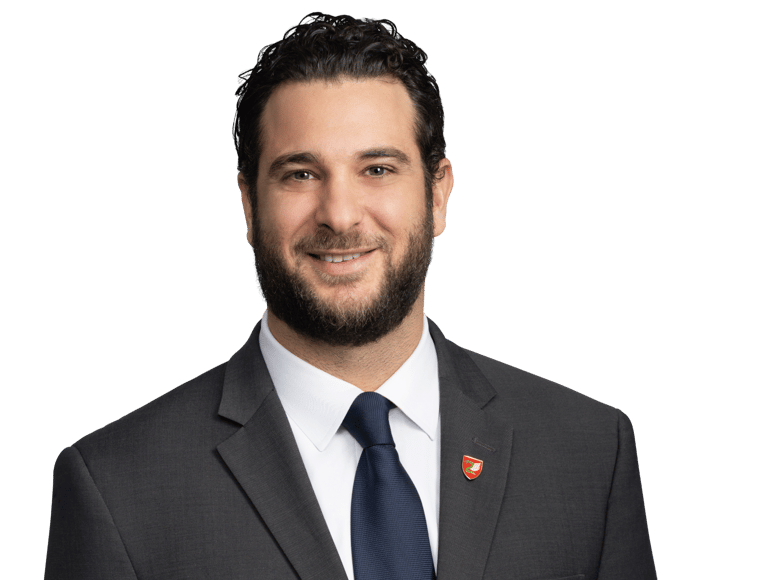
Evan is an associate in the Casualty Department, where he focuses in the areas of premises liability, construction injury, product liability, transportation, and general liability.

Evan gained invaluable legal experience through his 2018-2021 internship with the Honorable Richard A. Lloret of the Eastern District of Pennsylvania. After serving as legal intern during his 1L summer, Evan was invited to remain in chambers with Judge Lloret throughout the remainder of his law school tenure. There, Evan drafted several habeas corpus and helped facilitate settlement conferences and arbitrations.   

Before attending law school, Evan worked as a private intelligence analyst for a security consulting firm, serving as head analyst for several Fortune 500 companies. 

As an undergraduate at the University of Pennsylvania, Evan had the invaluable experience of interning at the Israeli Embassy in Washington D.C., where he conducted research pertaining to the World Bank, national aid agencies, and international private sector projects concerning water and agriculture. 

Evan is an editorial contributor to the Times of Israel, writing columns pertaining to geopolitics and international relations, including an article selected as a top-featured editorial.  

Prior to attending university, Evan served as a sergeant in the Paratrooper Brigade of the Israeli Defense Forces.

    • Rutgers Law School (J.D., 2021)
    • University of Pennsylvania (B.A., cum laude, 2016)
    • Pennsylvania, 2021

Results

Dismissal Secured in Food Poisoning and Hepatitis A Case

We successfully obtained dismissal of their client in a death-from-food-poisoning and hepatitis A case. The plaintiff, Joyce Neeld, executrix of the Estate of Alfred Neeld, alleged that Mr. Neeld passed away due to an outbreak of hepatitis A in southeast Pennsylvania, which was widely covered by the news at the time. The plaintiff, who claimed that Mr. Neeld passed away after eating at Gino’s Pizzeria and Ristorante, was seeking several million dollars from every food provider that served the restaurant, including our client. Fortunately, the plaintiff stipulated to our dismissal.

Summary Judgment Granted in Major Jury Case Involving Serious Injuries

We successfully argued a motion for summary judgment on a major jury case where we represented a tenant shop owner. The plaintiff opposed our motion, alleging, inter alia, serious injuries to a shoulder and surgery. There were many moving pieces in this case, including indemnity issues, an alleged triple net lease and joinder after the statute of limitations. The plaintiff tripped and fell on a sidewalk that was under repair outside of our client’s store. We were joined by the original defendant, the landlord. We argued the plaintiff had no direct cause of action against us as we were joined after the statute of limitations; there was no evidence of record of our involvement as plaintiff did not visit our store; we were not responsible for the sidewalk repair; and the original defendant landlord was responsible for the sidewalk in question as the lease was ambiguous as to who was responsible for external repairs.   

Thought Leadership

Case Law Alerts

Philadelphia Jury Issued $5,071,974 Award to Plaintiff for Economic Damages and $1 Million for Noneconomic Damages.

October 1, 2024

The plaintiff claimed he was helping to unload a box truck at the facility where he worked when one of the pallets fell on him, crushing his lower body. The cargo weighed approximately 1,500 pounds and had been loaded by the manufacturer/consignor, defendant Ingram Micro. The shipper and owner of the box truck, F&E Transport, was also named as a defendant. The plaintiff reportedly sustained C7 and T3-T5 vertebrae fractures, a left femur fracture, bilateral pelvic fractures and crush injuries. The plaintiff underwent fixation surgeries to his femur, hip, and pelvis and required opiate and non-opiate pain medication. The plaintiff was diagnosed with PTSD and experienced urinary incontinence, erectile dysfunction and memory issues. He was unable to return to his former occupation. According to the plaintiff, the heavy pallets were dangerously double stacked and had shifted during shipping. The plaintiff contended that Ingram Micro had been warned by his employer that double stacking was dangerous and a hazard to its employees. However, the load was double stacked regardless. The plaintiff claimed Ingram Micro acted in a malicious, wanton, willful and oppressive manner, and/or showed reckless indifference to the interest of others, warranting punitive damages. Regarding F&E Transport, the plaintiff claimed it failed to ensure that the interior frame of its truck and the load bars were in a proper and safe condition. A jury assigned liability at 80% to Ingram Micro and 20% to the plaintiff. The jury found in favor of F&E Transport and declined to award punitive damages.    Case Law Alerts, 4th Quarter, October 2024 is prepared by Marshall Dennehey to provide information on recent developments of interest to our readers. This publication is not intended to provide legal advice for a specific situation or to create an attorney-client relationship. Copyright © 2024 Marshall Dennehey, all rights reserved. This article may not be reprinted without the express written permission of our firm.

Case Law Alerts

As an Incident Occurred While Transporting a Passenger in New Jersey, Insurance Company’s Endorsement 7212 Acted to Increase Its Underinsured Motorist’s Coverage Limits to Meet New Jersey’s Limits of $1.5 Million as Specified by New Jersey Law.

January 1, 2024

The plaintiff, who was driving for Uber at the time of the accident, alleged that the defendant’s insured, Claudio Palacios-Serrano, negligently operated his motor vehicle by failing to stop and/or yield to the plaintiff’s vehicle, who had the right-of-way before making a left turn. The plaintiff claimed injuries to the head, cervical, thoracic and lumbar spine, as well as a traumatic brain injury, concussion post-concussion syndrome, post-traumatic headaches, loss of balance, aggravation of cervical disc herniations and cervical radiculopathy.  The defendant’s insured pled guilty to careless driving in municipal court. Prior to the accident, the defendant, Farmers Insurance, issued a policy of automobile insurance to Rasier LLC, Rasier-CA LLC, Rasier-DC LLC, and Rasier-PA LLC (wholly owned subsidiaries of Uber). Accordingly, the plaintiff was insured under the Farmers Insurance policy as a Transportation Network Company Driver who was providing a prearranged ride to a passenger that originated in the state of Pennsylvania.  Because the crash occurred while transporting a passenger in the state of New Jersey, Farmers Insurance endorsement 7212 acted to increase its Underinsured Motorist’s Coverage limits to meet the limits of $1.5 million as specified by New Jersey law. The jury awarded the plaintiff $125,000 in non-economic damages and $600,000 in economic damages, for a total of $725,000.    Case Law Alerts, 1st Quarter, January 2024 is prepared by Marshall Dennehey to provide information on recent developments of interest to our readers. This publication is not intended to provide legal advice for a specific situation or to create an attorney-client relationship. Copyright © 2024 Marshall Dennehey, all rights reserved. This article may not be reprinted without the express written permission of our firm.

Firm Highlights

Thought Leadership

U.S. Supreme Court Decides Key Issue Regarding Interstate Freight Broker Liability

Freight brokers are intermediaries.  They connect shippers of goods with trucking companies that transport those goods.  Freight brokers match a load of freight with a trucking company and oversee the logistics of the transportation. For a number of years there has been a division among the Federal Circuits regarding the potential liability of freight brokers when the trucking companies that they retain for interstate loads are involved in accidents.  At the center of this division was the Federal Aviation Administration Authorization Act of 1994 (FAAAA).  Some Federal Circuit Courts have held that state law negligent hiring claims against freight brokers were preempted by the FAAAA .  Other Federal Circuits Courts have held that even if preemption applied, the “safety exception” in the FAAAA saved state law negligent hiring claims from federal preemption.  On May 14, 2026, the U.S. Supreme Court addressed the conflict in Montgomery v. Caribe Transport II, LLC, et al, No24-1238. In that case freight broker C.H. Robinson selected Caribe Transport to haul an interstate load. The commercial truck driver employed by Caribe Transport allegedly caused an accident and the plaintiff, Montgomery, was seriously injured. Montgomery brought an action against the driver, Caribe Transport and C.H. Robinson. The allegation against C.H. Robinson was that it negligently retained Caribe Transport when it knew, or should have known, that it was an unsafe company. The Seventh Circuit Court of Appeals held that Montgomery’s claims against C.H. Robinson were preempted by the FAAAA. The plaintiff appealed to the U.S. Supreme Court.  The U.S. Supreme Court’s decision focused primarily on the safety exception in the FAAAA.  That provision provides that the FAAAA preemption “…shall not restrict the safety regulatory authority of a State with respect to motor vehicles.” C.H. Robinson argued, as freight brokers historically have, that their function was not “with respect to motor vehicles” because they do not own trucks or employ drivers. They are merely intermediaries, connecting entities who need freight moved with entities who can do that job. Therefore, C.H. Robinson argued that preemption applied, not the safety exception. The U.S. Supreme Court did not accept that argument. The Court focused on the meaning of the phrase “with respect to” in the safety exception. The Court held that it means “referring to”, “concerning” or “regarding”. Therefore, writing for a unanimous Court, Justice Barrett concluded that “[r]equiring C.H. Robinson to exercise ordinary care in selecting a carrier therefore “concerns” motor vehicles—most obviously, the trucks that will transport the goods. So, Montgomery’s negligent-hiring claim falls within the FAAAA’s safety exception, which saves it from preemption.” Justice Kavanaugh, in his concurring opinion, noted the effect this ruling may have on freight brokers and their insurers throughout the country: Importantly, the Court's decision today should not be read to mean that brokers will routinely be subject to state tort liability in the wake of truck accidents. As even plaintiff's counsel stressed, brokers should be able to successfully defend against state tort suits if the brokers have acted reasonably and arranged transportation with reputable trucking companies. Tr. of Oral Arg. 27-29. In plaintiff's counsel's words, the brokers "just have to hire carriers that actually have a reasonable policy," and "the broker is not going to have a problem if it's asking the hard questions of the carrier." Id., at 42, 45. In addition, the proximate-cause requirement in typical state tort law should help protect brokers from excessive liability. Id., at 25. That said, the brokers rightly caution against naivete. In the real world, as the brokers forcefully respond, state tort law can be unpredictable, and the costs to brokers of litigation and insurance may be significant even when brokers prevail in lawsuits. Moreover, the costs of litigation and insurance, as well as the costs of brokers' conducting more substantial inquiries into trucking companies, will cascade through the economy and be paid in part by American consumers in the form of higher prices. The concerns expressed by the brokers are legitimate and weighty. The key point here is that freight brokers can no longer claim they are protected from negligent retention claims by the FAAAA (in cases involving interstate transportation). The challenge will be to determine what is considered ”reasonable efforts” used by brokers when retaining transportation companies. 

Result

No-Cause Jury Verdict Secured in Wrongful Death Trial

We successfully obtained a no-cause jury verdict in a 13-day wrongful death trial. The decedent, a 59-year-old man, was admitted to the emergency room on February 15, 2019, with complaints of abdominal pain, decreased appetite, and constipation, despite the use of laxatives. The patient did not complain of any nausea, vomiting, or diarrhea. He had a significant medical history including diabetes, hypertension, prior coronary artery stenting, morbid obesity (with past gastric bypass surgery), longstanding ventral hernia, and back pain. A CT scan revealed multiple hernias and a potential closed-loop bowel obstruction, leading to a surgery consultation. Our client, an emergency general surgeon, interpreted that the patient did not have a closed loop or any significant obstruction and recommended non-surgical management. The patient was approved to have clear liquids, and had a vomiting incident shortly after, but our client was not notified. The patient was returned to NPO status, and after improving overnight, he was returned to “clears” and additional medical and renal consults were ordered. Our client did not receive any communications from the residents/nurses of any changes in the patient’s condition. On February 18, 2019, two rapid responses were called due to increased heart rate and vomiting. It is believed that the vomiting resulted in aspiration, causing sepsis, ultimately leading to the patient’s death. During the trial, the plaintiff’s sole medical expert highlighted imaging on the wrong hernia, which called into question all of his opinions in the case. We made key objections related to the expert testimony, limiting what the allegations were, and preventing new allegations from being made. After approximately two and a half hours of deliberating, the jury returned a no-cause verdict. 

Thought Leadership

PA Middle District Dismisses Claims Against School District and its Superintendent, Principal, Special Education Director, and Classroom Teacher

A five-year-old special education student was enrolled in the Wyoming Valley West School District and attended the State Street Elementary School during the 2024-2025 school year. The student refused to clean up classroom toys at dismissal. When his teacher allegedly grabbed him by the wrist to walk him back to his seat, the student dropped to the floor and began crying. The teacher then allegedly grabbed the student by the ankle and dragged him across the floor. Following an investigation, criminal charges were not advanced by the county DA, and the school permitted the teacher to return to the classroom. The student’s parents sued, lodging thirteen legal counts under both state and federal law, which sought monetary damages from the teacher, the school district, the superintendent, the principal, and the director of special education. The plaintiff’s 42 USC 1983 claims were dismissed as to the school district for failure to allege a policy or custom violation, and the failure to alleged deliberate indifference in the failure-to-train context. As to the superintendent, building principal, and special education director, the Section 1983 claims were also dismissed for failure to allege personal involvement on the part of the individuals. Regarding an equal protection claim asserted against all defendants, the motion to dismiss was also granted for a failure to advance a plausible equal protection claim, holding that “plaintiffs' single-act allegations do not include a factual basis to even infer that the act was motivated by discriminatory animus rather than some other non-discriminatory impulse.” The court further dismissed the plaintiff’s negligence-based claims including negligence against the teacher and district administrators, NIED, and vicarious liability under the Political Subdivision Tort Claims Act (PSTCA). The federal claims under the IDEA, Section 504, and the ADA were also dismissed in various respects. The IDEA claim was dismissed against all defendants with prejudice for failure to exhaust administrative remedies. The Section 504 claims against the individual defendants were also dismissed with prejudice, as districts, not individuals, are the recipients of federal funds under Section 504. However, the Section 504 and ADA claims were dismissed without prejudice as to defendant Wyoming Valley West, and the plaintiff was permitted leave to amend.