.

Dana A. Gittleman

Chair, Real Estate E&O Liability Practice Group

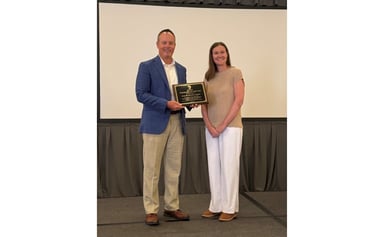
Portrait of Dana A. Gittleman

When professionals are faced with claims and lawsuits alleging professional negligence, breach of fiduciary duty and more, Dana provides a vigorous response and defense.  As a member of the Professional Liability Department, she routinely defends claims and lawsuits brought against insurance agents and brokers, attorneys, financial entities, large product manufacturers, lenders, directors and officers and other professionals.

Dana also serves as Chair of the firm's Real Estate E&O Liability Practice Group where she provides legal defense for real estate agents, real estate brokers, title agents, home inspectors, appraisers and mortgage brokers in cases brought against them.

Dana understands the disruption and angst professionals experience when claims are brought against them. With over 10 years of civil litigation experience, she approaches each matter with empathy and a strong determination to efficiently resolve the actions brought against her clients. A typical day in her practice might involve securing court dismissals on dispositive motions, mitigating risk via alternative dispute resolution, or collaborating with clients on defense strategy for swift case resolution.

Committed to mentorship and providing guidance to younger attorneys, Dana is also Chair of the firm's Executive Committee Advisory Council, a distinguished group of firm leaders whose purpose is to enhance the communication between the Executive Committee and younger members of the firm's professional ranks, including associates, special counsel and junior shareholders.

Dana is a member of the Professional Liability Underwriting Society (PLUS) and serves on the PLUS Mid-Atlantic Chapter Steering Committee. She frequently contributes articles to PLUS Blog. She is also an active member of the Professional Liability Defense Federation (PLDF) Insurance Law Committee, as well as the Philadelphia Bar Association having previously served on its Young Lawyers Division Executive Committee. She has been recognized by the Best Lawyers organization as a Best Lawyers: Ones to Watch since 2021, and she has been selected a Pennsylvania Super Lawyer Rising Star since 2019.

A graduate of Emory University, she received her juris doctor from the Villanova University School of Law where she was a Dean's Merit Scholarship recipient. While at Villanova, Dana served as a managing editor for student work for the Villanova Sports & Entertainment Law Journal.

    • Villanova University Charles Widger School of Law (J.D., 2012)
    • Emory University (B.A., 2008)
    • Pennsylvania, 2012
    • New Jersey, 2013
    • U.S. District Court Eastern District of Pennsylvania, 2014
    • The Best Lawyers: Ones to Watch®, Insurance Law; Product Liability Litigation - Defendants (2021-2025)
    • Pennsylvania Super Lawyers Rising Star (2019-2022)
    • Philadelphia Bar Association, Young Lawyers Division Executive Committee (2015-2017); YLD Treasurer (2016), Vice Chair (2017)
    • Professional Liability Underwriting Society (PLUS)
    • PLUS Mid-Atlantic Chapter, Steering Committee Member
    • PLUS E&O Think Tank Committee
    • Professional Liability Defense Federation Insurance Law Committee
    • NovUs, the Young Alumni Chapter of the Villanova University School of Law, Former President
    • Developing Your Own Brand, Villanova University Charles Widger School of Law, March 16, 2026
    • PLUS Podcast: Insurance Agent E&O - Top Ten Tips for Risk Management Series, Episode 3, October 13, 2025
    • PLUS Podcast: Insurance Agent E&O - Top Ten Tips for Risk Management SeriesEpisode 2, August 7, 2025
    • PLUS Podcast: Insurance Agent E&O - Top Ten Tips for Risk Management SeriesEpisode 1, June 9, 2025
    • Insurance Agent and Broker Webinar, Philadelphia Insurance Company, April 1, 2025
    • Defending Home Inspector Claims - Prevention and Defense, Client Webinar, October 15, 2024
    • Risk Management for Insurance Agents & Brokers, Pittsburgh I-Day, October 8, 2024
    • Attorney Well-Being as a Matter of Professional Competence, Professional Liability Defense Federation Annual Meeting, September 26, 2024
    • Insurance E&O Litigation Trends and Best Practices, Client Seminar, May 7, 2024
    • Defending Home Inspector Claims - Prevention and Defense, Client Webinar, March 26, 2024
    • Defending Home Inspectors Claims - Prevention and Defense, Client Webinar, March 6, 2023
    • You Passed the Bar, Now What? How to Succeed in Your First Year as an Attorney, and How to Gain Experience, Philadelphia Bar Association Young Lawyers Division Bootcamp, October 28, 2016
    • Obtained a summary judgment dismissal in a Philadelphia Commerce Court commercial litigation matter. The case involved claims of unfair competition and tortious interference brought by one adult day care center against our client, a competing facility. The allegations centered on purported violations of regulations issued by the Pennsylvania Department of Aging and the Office of Long Term Living. The plaintiff’s final demand was $2 million, and no settlement offers were made before the trial court granted summary judgment.  
    • Obtained summary judgment for our insurance agent client, culminating in a dismissal with prejudice of all professional negligence claims.
    • Obtained a defense verdict in a Fourth Amendment civil rights trial in the Eastern District of Pennsylvania.​ The plaintiff alleged that a public agency violated his Fourth Amendment rights by searching and seizing his personal property after his vehicle was impounded. The defense witnesses each testified that the vehicle was never searched by the public agency and that the public agency does not have a policy or custom of searching vehicles once they are impounded, which was an essential element of the plaintiff's constitutional violation claim. After less than 15 minutes of deliberation, the jury unanimously found that the plaintiff failed to demonstrate that the public agency violated his constitutional rights, granting judgment in favor of the public agency defendant. 
    • Obtained dismissal with prejudice in Federal Court, Middle District of PA, for insurance broker client in a case involving liability / commercial insurance coverage claims related to lost business income as a result of government mandated closures triggered by the COVID-19 pandemic.
    • Secured voluntary withdrawal with prejudice of all claims against law firm client in action alleging legal malpractice, breaches of fiduciary duties and breach of contract.
    • Developed factual and legal bases for successful Motion for Summary Judgment for our attorney/law firm client, dismissing a complex legal malpractice action involving claims of professional negligence and fraudulent inducement, arising from an underlying personal injury litigation which concluded with a $700,000 settlement. Following discovery in the professional malpractice action related to coverage and liability issues, the court granted our motion dismissing the complaint in its entirety against the law firm and individual attorney defendants. For further details, click here.
    • Achieved dismissal of real estate agent in action seeking litigation costs and fees for purported failure to disclose a contractual term encumbering plaintiff’s property.
    • Secured voluntary withdrawal of civil suit alleging negligence and fraud against insurance broker following filing of Preliminary Objections.
    • Prevailed on Preliminary Objections on behalf of home inspector client in litigation alleging breach of contract, negligence, and breach of express and implied warranty claims.
    • Defended insurance agency in Chester County Court of Common Pleas action alleging negligence and breach of contract arising from damage to large landscaping equipment. Following discovery and before trial, settled suit on behalf of client with nominal payment, a fraction of the total exposure and settlement demand.
    • Extricated school district client from litigation alleging negligence for personal injury incident occurring on school bus with no settlement offered or tendered on behalf of client.
    • Obtained voluntary dismissal with prejudice of insurance broker client at suit inception. 
    • Obtained dismissal with prejudice of large automobile manufacturer on Preliminary Objections. The case involved product liability/product defect claims against our client, which were dismissed on procedural and substantive bases.
    • Assisted first chair counsel in successful jury trial in Philadelphia County Court of Common Pleas on behalf of large automobile manufacturer/distributor.  
    • Obtained dismissal of large automobile manufacturer on Motion for Judgment on the Pleadings in breach of warranty claim. 
    • Obtained defense verdict at arbitration involving claims for breach of contract/indemnification sought for hail/storm related roof damage.
    • Secured dismissal of defendants in a U.S. District Court for the Eastern District of Pennsylvania matter alleging claims including defamation, libel, slander, intentional and negligent infliction of emotional distress, invasion of privacy, false light and false imprisonment

Results

Montgomery County Court Dismisses Lawsuit Against Insurance Broker

We obtained dismissal of our insurance broker client on Motion for Summary Judgment in the Montgomery County Court of Common Pleas, Pennsylvania, on the basis of no duty breached, and lack of causation. Claimants asserted a professional negligence theory for allegedly allowing a commercial insurance policy to lapse, failing to notify the policyholder claimant of the lapse or cancellation, and allowing a subsequent gap in coverage to exist after the policy cancelled, when an underlying loss occurred. However, after completed discovery depositions and expert discovery, we successfully moved for summary judgment, arguing the policy cancelled because of the policyholder’s own failure to comply with premium audit requirements, rather than any liability or breach of standard of care by the insurance broker.

MD Successfully Defends Low Verdict Against Insurance Broker that Plaintiff Challenged on Appeal

In a case where an insurance broker faced claims of professional negligence, Carol VanderWoude (Philadelphia) successfully defended the plaintiff’s appeal from a verdict obtained by Tim Ventura and Dana Gittleman (Philadelphia). The verdict against our client, an independent insurance broker, was well below the lost value of UIM coverage (i.e., $1 million), which the plaintiff sought to recover based on an alleged breach of the professional standard of care in failing to procure an endorsement for $ 1 million in UIM coverage on the plaintiff’s decedent’s commercial auto policy.  The verdict is notable because, at trial, the client gave unexpected testimony which impacted liability, and when confronted with the client’s new trial testimony, our standard of care expert conceded a breach of the professional standard of care. Still, causation/damages were contested, and it was disputed at trial that the plaintiff’s decedent would have actually received $1 million in coverage. Tim elicited testimony on cross-examination of the plaintiff’s expert to show that there was no evidence establishing the insurer would have provided additional UIM coverage even if the endorsement had been purchased.  Prior to trial the parties entered into a stipulation stating that damages were capped at the value of the lost coverage, $1 million. Plaintiff’s counsel challenged the low verdict on various grounds, focusing on the fact that our expert conceded a breach of a standard of care based on the client’s unexpected trial testimony. He argued that, as a matter of law, the damages amount was the lost value of the coverage and the verdict should be increased to $1 million. The trial court agreed with our arguments, raised in opposition to the plaintiff’s post-trial motions, that the low verdict amount was supported by the record and that the plaintiff’s requests for post-trial relief were otherwise waived for various reasons.  The Superior Court affirmed in a unanimous decision.   

Thought Leadership

Firm Highlights

Thought Leadership

What’s Hot in Workers’ Comp - News and Results*

RESULTS Lela Eke (Roseland) secured a significant victory in a catastrophic injury workers’ compensation matter involving an above-knee amputation and approximately $2 million in past medical bills. After more than a year of litigation over Motions for Medical and Temporary Benefits and a subsequent Motion to Compel/Payment of Bills, the claimant sought an order requiring payment of medical expenses for which certain providers had intervened and were pursuing their own claims through separate counsel. We argued that the intervenors’ bills were not properly before the court and should not be included in the MMT Order. The court agreed, finding that the bills were outside the scope of the MMT Order and further determining that the employer had complied with the other applicable requirements. As a result, the claimant’s counsel was not entitled to a potential 25% fee on the approximately $2 million in intervenors’ medical bills, preserving up to approximately $500,000 in potential savings. The ruling also preserved the client’s ability to negotiate the outstanding medical bills rather than requiring their immediate payment. Andrew Maffett (Harrisburg) obtained a favorable result in a Pennsylvania workers’ compensation matter. The matter involved the employer’s petitions to suspend and terminate workers’ compensation benefits arising from a July 22, 2024 work injury. With respect to the suspension petition, the employer presented fact-witness testimony that modified-duty work was available within the claimant’s treating physician’s restrictions. The judge credited that testimony and granted the suspension petition effective May 19, 2025. With respect to the termination petition, the employer presented testimony from an expert that the claimant had fully recovered from the work injury. The judge credited that testimony and granted the termination petition effective June 5, 2025. As a result, the employer was permitted to discontinue indemnity and medical benefits related to the July 22, 2024 injury and pursue supersedeas fund reimbursement for wage loss and medical benefits paid during the litigation. Perry Merlo (Harrisburg) secured a favorable decision in a Pennsylvania workers’ compensation matter involving a dispute over wage-loss benefits. The parties stipulated that the claimant had sustained a work injury but left unresolved whether he was entitled to indemnity benefits for the period from June 2, 2025, through November 17, 2025. The claimant testified that the employer had failed to accommodate his work restrictions during that time. In response, we presented testimony from an employer fact witness establishing that the claimant had been provided work within his restrictions without any loss of wages. The judge credited the employer’s witness over the claimant and denied the claim for approximately five months of wage-loss benefits, resulting in a favorable decision for the employer. William Murphy (Roseland) obtained a favorable resolution in a New Jersey workers’ compensation matter pending in Newark. The claim involved alleged injuries to the lower back, bilateral knees, and bilateral hands. We filed a motion seeking dismissal as to the carrier, arguing that coverage was not in effect on the date of the alleged accident. The judge granted the motion and entered an order dismissing the carrier from the case. William Murphy (Roseland) obtained a dismissal in a New Jersey workers’ compensation matter. The claim involved allegations of occupational exposure resulting in orthopedic, neurologic, and pulmonary disabilities. After numerous delays by the claimant’s counsel in prosecuting the matter, we successfully obtained a dismissal for lack of prosecution. The dismissal resulted in a complete resolution of the claim. William Murphy (Roseland) successfully dismissed a New Jersey workers’ compensation claim involving allegations of a decade-long occupational exposure. The claimant alleged orthopedic, neurologic, and pulmonary disabilities arising from the exposure. After the claimant’s counsel failed to take the necessary steps to advance the matter, we pursued dismissal for lack of prosecution. The court granted the request, bringing the claim to a complete and favorable conclusion. William Murphy (Roseland) successfully secured the dismissal with prejudice of two New Jersey workers’ compensation medical provider applications seeking a combined $71,534.47. The applications arose from medical treatment allegedly related to a September 11, 2021 workplace injury. We challenged the claims on jurisdictional grounds, arguing that the underlying accident occurred in New York and lacked a sufficient connection to New Jersey. Despite the two matters being assigned to different judges of compensation, both judges agreed with the jurisdictional argument and entered orders dismissing the respective claims with prejudice on July 23 and 24, 2026. The result eliminated $71,534.47 in claimed exposure. Tony Natale (King of Prussia) obtained a defense verdict in a workers' compensation case in Pennsylvania. The claimant sustained a work-related injury in the form of a bilateral knee strain during the course and scope of employment. She continued to treat for these injuries without cessation. She originally refused a job offer to return to work and continued treatment. A board-certified orthopedic surgeon who specializes in knee injuries examined her and found that despite the varied and somewhat bizarre subjective pain complaints, there were no objective corroborative findings to support ongoing injury or disability. This medical expert testimony was proffered and accepted by the court as credible, resulting in a full defense verdict. Michele Punturi (Philadelphia) successfully prosecuted a Termination Petition involving a 71-year-old certified nursing assistant who suffered a work injury to the lumbar spine with a pre-existing back condition, the latter of which the claimant denied. The defense medical expert, a Board-certified orthopedic surgeon with a specialty in surgical treatment of spinal injuries, examined the claimant and his opinions were found competent, credible and persuasive supporting a full recovery based upon a comprehensive physical examination, review of medical records and x-rays of the lumbar spine as well as three MRIs of the lumbar spine in 2023, 2024 and 2025 revealing no post-traumatic findings nor an aggravation of her pre-existing lumbar condition. Michele demonstrated claimant’s expert lacked the expertise and experience and his focus was on pain management. The judge rejected claimant’s medical expert as not credible even though he attempted to support an aggravation of her underlying degenerative disc disease. The judge further rejected claimant’s testimony given her efforts to unequivocally deny prior back injury going as far as to say it would be a lie to say she had a prior low back injury despite the medical records that clearly demonstrated prior treatment along with medication for her lumbar spine. Also, the demonstration of her sporadic treatment further supported a lack of credibility as did favorable surveillance showing her active.   *Prior Results Do Not Guarantee a Similar Outcome NEWS Judd Woytek (King of Prussia) is speaking at the National Comp conference in Las Vegas in September. He joins a group of panelists to present “Older, Wiser, But Costlier to Heal: What an Aging Workforce Means for Employers and for the Industry,” a discussion focused on the challenges employers face in balancing safety, compliance, and productivity as the workforce continues to age. Judd and his co-presenters will address proactive strategies to reduce workplace risk, support older employees, navigate age-discrimination and workers’ compensation issues, and build a safer, more resilient workforce. For more information, visit National Comp. Conference and Trade Show.

Thought Leadership

Commonwealth Court Holds That a Claimant Who Was Struck By a Car While Crossing the Street During an Unpaid Break Was In the Course and Scope of Employment

This case involved a claim petition filed by a claimant who sustained injuries after being struck by a vehicle while crossing the street in front of the employer’s premises. The employer denied the claim based on course and scope, as the accident occurred during one of two mandatory fifteen (15) minute breaks provided to the claimant. The claimant would punch out at the beginning of a break and punch back in when the break was over.  On the date of the incident, the claimant punched out and left the building to get lunch at a restaurant, which required her to cross the employer’s parking lot, and then a public street, where the injury occurred. The Workers Compensation Judge (WCJ) dismissed the petition, noting that that during the two mandatory fifteen-minute breaks per shift allowed by the employer, the claimant was free to leave the employer’s premises, and during breaks, permitted to engage in whatever activity she desired. The WCJ found that at the time of the accident, the claimant was on her own time, in the middle of the street, and going to get lunch.   The claimant filed an appeal with the Worker’s Compensation Appeal Board (Board), and the Board reversed.  According to the Board, the claimant’s location was still on the employer’s premises, as the claimant was taking her customary route while using a reasonable ingress/egress from the employer.  Further, the Board found that the “Personal Comfort Doctrine” applied, as the claimant was on a momentary departure to take care of her personal comfort, within the window of time she was allotted for her break.  The Board remanded the case, and a WCJ granted the claim petition.  The Board affirmed, and the employer appealed to the Commonwealth Court. Before the Court, the employer argued that the claimant was not in the course and scope of her employment, because the injury did not occur on its premises, and the claimant was outside the bounds of the Personal Comfort Doctrine. The Court, however, rejected these arguments, and dismissed the employer’s appeal.  The Court noted that the break given to the claimant was so cursory, when she set out to relieve her hunger for her own personal comfort,  she remained in the course of her employment when she sustained her injuries.  A Petition for Allowance of Appeal in the Supreme Court has been filed by the Employer, Giant Eagle.

Thought Leadership

New Jersey Workers’ Compensation Legislation Updates

Since June 1, 2026, there have been no new New Jersey workers’ compensation related cases from the Appellate or Supreme Courts. As such, below will highlight any new legislative updates since February. A1023 | S3984 - Medical Use of Cannabis Under Certain Circumstances This requires workers’ compensation, PIP, and health insurance coverage for the medical use of cannabis under certain circumstances. It was introduced on January 13, 2026 and referred to the Assembly Financial Institutions and Insurance Committee. It was also introduced on March 19, 2026 and referred to the Senate Commerce Committee. A1045  - Certain Injuries to Volunteer and Professional Public Safety and Law Enforcement Personnel This revises workers’ compensation coverage for certain injuries to volunteer and professional public safety and law enforcement personnel. It was introduced on January 13, 2026 and referred to the Assembly Labor Committee. A1384 | S2757 - Reduce Statute of Limitations in Medical Fee Disputes This reduces statute of limitations from six years to two years in medical fee disputes in workers’ compensation matters. It was introduced on January 13, 2026 and referred to the Senate Labor Committee. It was also introduced on the same day and referred to the Assembly Labor Committee. A1870 | S1379 - Workers' Compensation Benefits For Certain Workers Due to September 11, 2001 Terrorist Attacks This provides workers’ compensation benefits for certain public safety workers who developed illness or injury as result of responding to September 11, 2001 terrorist attacks. It was introduced on January 13, 2026 and referred to the Assembly Labor Committee. It was also introduced on the same day and referred to the Senate Labor Committee. On February 5, 2026, it was reported from the Senate Committee, 2nd Reading, and referred to the Senate Budget and Appropriations Committee. A2779 | S1521 - Excludes Certain Illegal Aliens This excludes certain illegal aliens from workers’ compensation and temporary disability benefits. It was introduced on January 13, 2026 and referred to the Senate Labor Committee. It was also introduced on the same day and referred to the Assembly Labor Committee. A2792 | S1555 -  Prevent Intoxicated Employees from Workers’ Compensation This prevents intoxicated employees from receiving workers’ compensation. It was introduced on January 13, 2026 and referred to the Senate Labor Committee. It was also introduced on the same day and referred to the Assembly Labor Committee. A3167 | S2372 - Workers’ Compensation Insurance Requirements for Certain Corporations and Partnerships This concerns workers’ compensation insurance requirements for certain corporations and partnerships. It was introduced on January 13, 2026 and referred to the Senate Labor Committee. It was also introduced on the same day and referred to the Assembly Labor Committee. A3548 | S3571 – Maximum Benefits for Certain Volunteers This provides certain volunteer and other workers with maximum compensation benefit for workers' compensation claim regardless of outside employment. It was introduced on January 13, 2026 and referred to the Senate Labor Committee. On March 2, 2026, it was reported from the Senate Committee, 2nd Reading, and referred to the Senate Budget and Appropriations Committee. It was also introduced on the same day and referred to the Assembly Labor Committee. On May 7, 2026, it was reported and referred to Assembly State and Local Government Committee. A3724 - Personal Liability to Employer Officers for Failure to Pay for Coverage This provides personal liability for owner, executive officer, or executive director of employer for failure to pay for workers' compensation coverage. It was introduced on January 13, 2026 and referred to the Assembly Labor Committee. On May 7, 2026, it was reported and referred to Assembly Judiciary Committee. A4617  - Certain Workers' Compensation Supplemental Benefits and Funding Method This concerns certain workers' compensation supplemental benefits and funding method. For a permanently and totally disabled worker or surviving dependents after December 31, 1979, with some exceptions, this bill provides for an annual cost of living adjustment in the weekly workers’ compensation benefit rate. It was introduced on March 10, 2026 and referred to the Assembly Labor Committee. S241 - Inclusion in Database of Appointed Officials This requires that workers’ compensation judges and administrative law judges be included in database of appointed officials. It was introduced on January 13, 2026 to the Senate, Referred to Senate State Government, Wagering, Tourism & Historic Preservation Committee. S2290 -  Mandatory Retirement Age This increases statutory mandatory retirement age for Supreme Court Justices, Superior Court Judges, Tax Court Judges, Administrative Law Judges, and Workers’ Compensation Judges from 70 to 72. It was introduced on January 13, 2026 and referred to the Senate Judiciary Committee. S3144 - Testimony in Workers’ Compensation This concerns submission of testimony in workers’ compensation claims. It was introduced on January 13, 2026 and referred to the Senate Labor Committee. S3342  - Increase Mandatory Retirement Age This increases statutory mandatory retirement age for Supreme Court Justices, Superior Court Judges, Tax Court Judges, Administrative Law Judges, and Workers’ Compensation Judges from 70 to 75. It was introduced on February 5, 2026 and referred to the Senate Judiciary Committee.