.

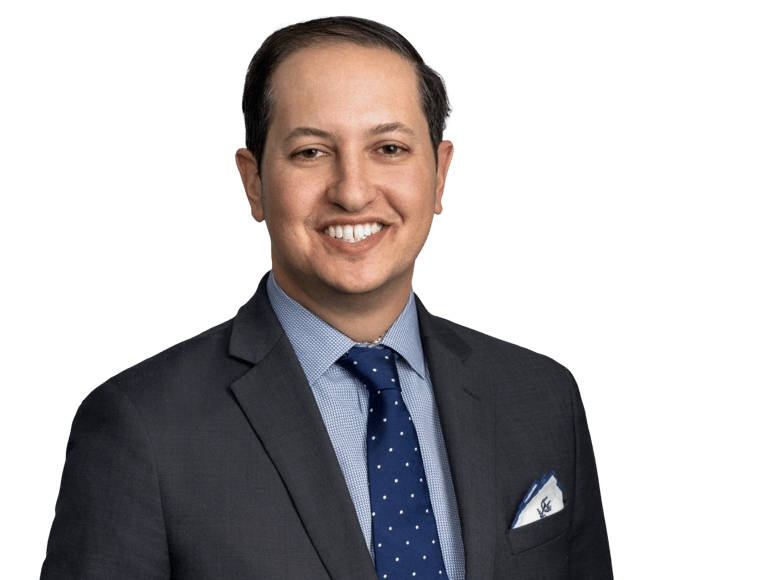
Ariel C. Brownstein

Portrait of Ariel C. Brownstein

Ariel, a shareholder in the Casualty Department, focuses his practice on insurance fraud and Special Investigation Unit (SIU) litigation with particular emphasis on large loss fraud and medical provider fraud. His practice in the area of fraud investigation consists of assessing and analyzing fraud by both medical providers and falsified claims brought by his client's insureds. In doing so, Ariel has represented a significant number of insurance carriers on these issues and has assisted in multi-million dollar high-profile medical provider fraud investigations and law suits in various states.

Moreover, Ariel has litigated on behalf of many different clients in favor of protecting the interests of insurance carriers in court seeking to disclaim coverage for fraudulent claims. He has taken numerous comprehensive Examinations Under Oath on SIU-related issues throughout New Jersey and Pennsylvania. In particular, he has assisted in several high-value and high-profile matters regarding carrier recovery of monies paid to fraudulent medical providers and fraudulent motor vehicle accidents. Furthermore, Ariel has litigated extensive insurance fraud and other personal injury protection related matters in the National Arbitration Forum (NAF)/Forthright and Superior Court for his clients.

During his career, Ariel has handled several high value cases on behalf of his clients. In one particular case, the amount sought by the Claimant was denied by the arbitrator due material misrepresentations made by the insured regarding his prior medical history and his injuries at the time of the subject loss during an Examination Under Oath, conducted by Ariel.  In another matter, Ariel successfully argued that a claimant was subject to a personal injury protection benefit limit selected by the named insured, a live-in boyfriend and the amount demanded, was denied.

Prior to joining the firm, Ariel served as a law clerk for the Honorable Richard Geiger in Cumberland County Superior Court. His responsibilities included researching criminal law precedence, reviewing memoranda and pre-trial motions, and mediating civil lawsuits.

    • Widener University Delaware Law School (J.D., 2008)
    • University of Delaware (B.S., 2005)
    • New Jersey, 2008
    • Pennsylvania, 2008
    • New Jersey Super Lawyer Rising Star (2013-2023)
      The Super Lawyers list is issued by Thomson Reuters. A description of the selection methodology can be found here. No aspect of this advertisement has been approved by the Supreme Court of New Jersey.
    • Camden County Bar Association
    • International Association of Special Investigative Units
    • New Jersey Special Investigations Association
    • New Jersey State Bar Association
    • Pennsylvania Bar Association
    • Modern Staged Accidents & Provider Fraud, NICB Mid-Atlantic Region Training Event 2026, February 4, 2026  
    • Ping! Utilizing Modern Technology to Answer the Who, Where and When of First-Party Claims, NJSIA General Membership Meeting, December 9th, 2022
    • Ping! Utilizing Modern Technology to Answer the Who, Where and When of  First-Party Claims, Marshall Dennehey Insurance Fraud 360 Seminar, Lafayette Hill, PA, June, 2022 
    • Medical Investigator's Guide to the Modern SIU Claim, Speaker, New Jersey Special Investigators Association (NJSIA) Annual Conference, Atlantic City, NJ, October 2019
    • NJ PIP: Building Better Medical Reviews, Marshall Dennehey Insurance Fraud 360 Seminar, Lafayette Hill, PA, June, 2018
    • Current Fraud Trends PIP - NJ, Marshall Dennehey Insurance Fraud 360 Seminar, Lafayette Hill, PA, June, 2016
    • Case Law Alerts, regular contributor, January 2018-present
    • “Put a Pin in It: Getting a Grip on Medical Provider Fraud Costs and Acupuncture Claims**,” Defense Digest, Vol. 21, No. 1, March 2015
    • "PUT A PIN IN IT - Getting a Grip on Medical Provider Fraud Costs and Acupuncture Claims," Claims Management, December 2014
    • “When a Vehicle Is an Automobile – The Maze of Statutory and Case Law in New Jersey for Determining Eligibility for PIP Benefits,” Defense Digest, Vol. 20, No. 4, December 2014
    • "Winning Legal Strategies for Combating A Prickly Problem "Sticking" New Jersey PIP Carriers," co-author, Defense Digest, Vol. 19, No. 2, June 2013

Thought Leadership

Legal Update for Fraud/Special Investigation

SIU Gets a Boost: NJ Supreme Court Affirms Insurers' Right to Litigate, Not Arbitrate, Fraud Claims

July 21, 2026

In a significant win for insurers' Special Investigation Units, the New Jersey Supreme Court clarified that statutory insurance fraud and racketeering claims may proceed in court rather than through PIP arbitration. At issue was whether insurance fraud claims brought under New Jersey's Insurance Fraud Prevention Act (IFPA) and the state's Anti-Racketeering Act (NJ RICO) are subject to mandatory arbitration under the Automobile Insurance Cost Reduction Act’s (AICRA) PIP dispute-resolution framework. Allstate had sued a network of medical practices, physicians, and related corporate entities, alleging a scheme to extract more than $1.7 million in PIP benefits through fraudulent and misleading billing. The trial court dismissed Allstate's complaint and compelled arbitration, reading AICRA's arbitration clause — which covers "any dispute regarding the recovery of... benefits" under PIP coverage, N.J.S.A. 39:6A-5.1(a) — as sweeping in fraud and racketeering claims along with routine benefit disputes. The Supreme Court affirmed the Appellate Division's reversal, adopting Judge Gilson's opinion below (480 N.J. Super. 566 (App. Div. 2025)) as its own reasoning. The Court held that IFPA and RICO claims fall outside the scope of AICRA's PIP arbitration mechanism because that "streamlined and specialized" process cannot grant the relief those statutes contemplate — treble damages, injunctive relief, broad discovery, and joinder of third parties — and because arbitrators lack authority to award compensatory or treble damages to an insurer. The Court also rejected the argument that Allstate's own Decision Point Review Plans independently compel arbitration, finding those plan provisions no broader than AICRA's own arbitration clause. Notably, the Court expressly disagreed with the Third Circuit's contrary holding in GEICO v. Mt. Prospect Chiropractic Center, 98 F.4th 463 (3d Cir. 2024), concluding it is not bound by that federal interpretation of New Jersey law. Insurers retain the right to pursue IFPA and RICO claims in the Law Division, with a jury trial. For SIU units and NJ insurance carriers, this decision is a significant win: it forecloses defense clinics' primary procedural tool for shunting fraud investigations into limited-scope PIP arbitration, where treble damages, RICO relief, and meaningful discovery were never realistically available. Carriers building cases against fraudulently structured clinics, straw-owned practices, or coordinated billing networks can now proceed with confidence that a well-pleaded IFPA/RICO complaint stays in the Law Division rather than being diverted to arbitration on a motion to compel. Practically, this strengthens SIU's leverage in settlement negotiations, preserves civil discovery tools (subpoenas, depositions, joinder of related corporate entities) critical to unwinding complex ownership and referral schemes, and resolves the split with the Third Circuit in favor of NJ insurers — at least as a matter of state law. Expect increased reliance on IFPA civil actions, rather than PIP arbitration demands, as SIU's primary enforcement vehicle going forward.

Case Law Alerts

Minnesota Court of Appeals Upholds Insurance‑Fraud Conviction, Validating Industry Fraud‑Impact Testimony

July 20, 2026

The Minnesota Court of Appeals affirmed Mark Jenni's insurance fraud conviction, which arose after he certified a Park Rapids property as his primary residence on a Liberty Mutual homeowner's policy and then filed an $80,000-plus burglary claim he never reported to the sheriff—on a property where he had previously submitted denied claims through a different carrier. On appeal, Jenni argued prosecutorial misconduct, contending the prosecutor improperly elicited testimony that roughly 10% of claims are non-meritorious and that fraud costs run into the "billions" ultimately borne by consumers. He also claimed that closing arguments improperly appealed to Hubbard County jurors' financial self-interest. The court rejected both arguments, holding the investigator's testimony was relevant to establish his background and context, finding that the prosecutor's "cost to consumers" framing explained why application misrepresentations are criminalized rather than urging conviction on community-interest grounds. For the industry, the decision is favorable to SIU and fraud-prosecution efforts: it endorses carrier fraud-investigator testimony about industry-wide fraud prevalence and cost as admissible context, and it gives prosecutors latitude to argue the downstream consumer-cost rationale without crossing into impermissible community-conscience appeals. The practical takeaway for carriers and SIU referrals is that the "fraud drives up everyone's premiums" narrative—long a staple of fraud-bureau messaging—has now been validated as proper evidentiary and argumentative framing, at least in Minnesota.


Firm Highlights

Result

No-Cause Jury Verdict Secured in Wrongful Death Trial

We successfully obtained a no-cause jury verdict in a 13-day wrongful death trial. The decedent, a 59-year-old man, was admitted to the emergency room on February 15, 2019, with complaints of abdominal pain, decreased appetite, and constipation, despite the use of laxatives. The patient did not complain of any nausea, vomiting, or diarrhea. He had a significant medical history including diabetes, hypertension, prior coronary artery stenting, morbid obesity (with past gastric bypass surgery), longstanding ventral hernia, and back pain. A CT scan revealed multiple hernias and a potential closed-loop bowel obstruction, leading to a surgery consultation. Our client, an emergency general surgeon, interpreted that the patient did not have a closed loop or any significant obstruction and recommended non-surgical management. The patient was approved to have clear liquids, and had a vomiting incident shortly after, but our client was not notified. The patient was returned to NPO status, and after improving overnight, he was returned to “clears” and additional medical and renal consults were ordered. Our client did not receive any communications from the residents/nurses of any changes in the patient’s condition. On February 18, 2019, two rapid responses were called due to increased heart rate and vomiting. It is believed that the vomiting resulted in aspiration, causing sepsis, ultimately leading to the patient’s death. During the trial, the plaintiff’s sole medical expert highlighted imaging on the wrong hernia, which called into question all of his opinions in the case. We made key objections related to the expert testimony, limiting what the allegations were, and preventing new allegations from being made. After approximately two and a half hours of deliberating, the jury returned a no-cause verdict. 

Thought Leadership

Ohio Supreme Court Holds That a Binding Appraisal Award May Not Be Set Aside Absent Specific Evidence of Manifest Mistake or Fraud

On July 23, 2026, the Ohio Supreme Court issued a rare opinion on the binding effect of an appraisal award in a property insurance policy.  The Court in One Church held: A binding appraisal award will not be set aside unless an error is so palpably wrong that it undermines the intent of the agreement, such as corruption or gross mistake, not a mere error of judgment—To plead a claim of mistake with particularity as required by Civ.R. 9(B), facts alleged in a complaint must constitute the elements of mistake—Allegation that additional, hidden damage was discovered after appraisal award failed to state a claim of mistake that could justify setting aside binding appraisal.  The case arose out of a claim brought by One Church against its insurer, Brotherhood Mutual Insurance Company for roof damage from a storm. Pursuant to the terms of the insurance policy, the parties agreed to submit the matter to appraisal. The two appraisers inspected the building, and both appraisers agreed that the damages were $313,271.98. The insurer paid the agreed appraised amount.  Thereafter, the insured submitted a claim for an additional $206,663.09 in damages. The insured argued that these additional damages were not discovered until after the repairs began, and that they should be permitted to submit an additional claim, even though there had already been a binding appraisal of damages. The insurer refused to pay the additional damages, and the insured sued for breach of contract and bad faith.  In the trial court, the insurer moved to dismiss for failure to state a claim, arguing that the binding appraisal award barred any further claims. The insured took the position that additional hidden damages could not be discovered until after the repairs began, and therefore there was a mutual mistake. The trial court dismissed the case on the insurer’s motion, because there was no “evidence of fraud, misfeasance, or mistake”. The Court of Appeals agreed that appraisal awards are generally binding, but noted that an appraisal award can be set aside for fraud or manifest mistake. The Court of Appeals reversed and remanded the case to the trial court, finding that the insured had pled mistake with sufficient particularity. The insurer appealed to the Ohio Supreme Court. On appeal, the Ohio Supreme Court reversed the Court of Appeals, and reinstated the trial court decision dismissing the case for failure to state a claim upon which relief can be granted. The Supreme Court found that since the insured had already demanded appraisal, and the appraisal award was binding, “something more than error of judgement, such as corruption in the arbitrator, or gross mistake” must be pled with particularity, and proven for the insured to override the appraisal award. Since the complaint did not allege fraud or manifest mistake with sufficient particularity, something more than a mere error of judgment, the complaint was insufficient to state a claim.  The complaint in this case did not challenge the appraisal award. It pled that additional damages were discovered that were not apparent when the appraisal was done. It did not specify “who discovered the damages, how they were discovered, where they were found, why they were previously hidden, or why they rise to the level of a manifest mistake that the “appraiser would have corrected...had it been called to his attention”. Id at ¶22 citing Lakewood Mfg. Co. v. Home Ins. Co. of New York, 422 F.2d 796, 798 (6th Cir. 1970). Cases deciding the effect of appraisal awards are unusual. The Ohio Supreme Court’s decision in One Church relies primarily on 19th century case law for its conclusion. This emphasizes the fact that there is minimal case law deciding the effect of binding appraisal clauses in property insurance policies, and makes this case all the more significant. A lengthy dissent was written by Justice Fisher, who would have affirmed the Court of Appeals decision reversing and remanding the case for a decision on the merits. Of course, the decision works both ways, and an insurer dissatisfied with a binding appraisal award will likewise be without further recourse absent evidence of corruption, fraud, misfeasance, or manifest mistake, which must be pled with particularity. To constitute manifest mistake, “the mistake must be of such character that the arbitrator or appraiser would have corrected it had it been called to his attention.”  Lakewood Mfg. Co. v. Home Ins. Co. of New York, 422 F.2d 796, 798 (6th Cir. 1970).  The majority opinion does not specifically identify what would have been sufficient to plead mistake with particularity, or if the insured could have amended the complaint to overcome the deficiencies. The dissent argues that this was not really a case alleging mistake, but rather a question of contract interpretation. The insured did not challenge the appraisal, but argued that the hidden damage was not part of the appraisal, and the appraisal only covered the known damages.  However, this argument did not carry the day with the majority.  *Thomas F. Glassman, a shareholder in Marshall Dennehey’s Cincinnati office, filed a brief in the Ohio Supreme Court on behalf of the Ohio Association of Civil Trial Attorneys, in support of the insurer’s position.
