.

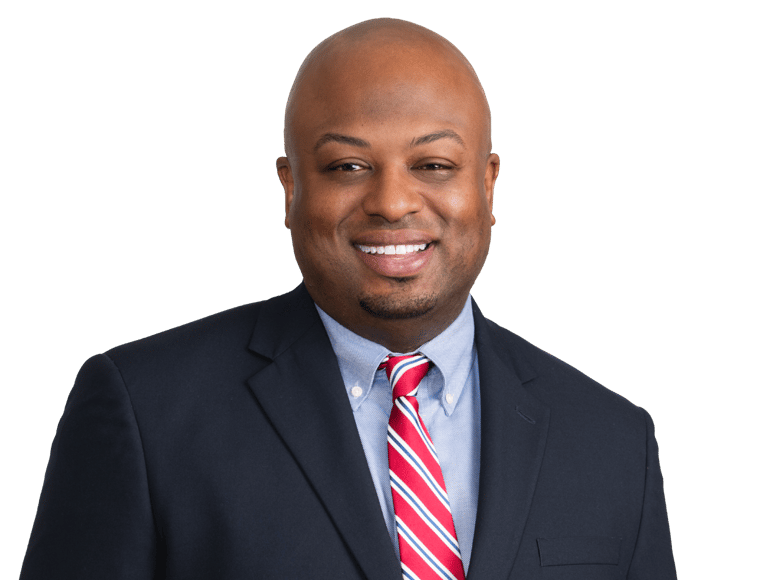
Alan C. Nash

Co-Chair, Premises & Retail Liability Practice

Portrait of Alan C. Nash

Alan Carroll “A.C.” Nash is a senior civil defense attorney and business leader whose practice focuses on the defense of insureds, corporations, and public entities in complex, high-exposure litigation. He concentrates on negligent security, wrongful death, product liability, automobile and commercial transportation claims, liquor liability, construction liability and premises liability matters.

A.C. also maintains a substantial public-sector and municipal defense practice, representing municipalities and law enforcement agencies in state and federal civil rights litigation, including claims alleging false arrest, malicious prosecution, and excessive force. His experience in this space includes defending matters throughout Florida in both trial and appellate courts.

A.C. serves as the Casualty Supervisor of the Fort Lauderdale office of Marshall Dennehey, where he oversees the day-to-day operations of the casualty department and leads a large team of attorneys handling complex and catastrophic-loss cases. In this role, he is responsible not only for legal strategy and quality control, but also for client relationships, attorney development, and overall practice performance.

Before joining Marshall Dennehey, A.C. was a trial associate at a Fort Lauderdale–based law enforcement and municipal defense firm with more than 30 years of history. Working closely with firm leadership, he played a key role in defending public entities and law enforcement officers in high-stakes civil rights litigation across Florida.

A.C. earned his juris doctor from Florida State University College of Law in 2007. While in law school, he served as a certified legal intern with the Second Judicial Circuit, trying approximately 40 jury and non-jury criminal cases. He was a member and coach of the Mock Trial Team, served as a student ambassador and traveling recruiter, sat on the Dean’s Cabinet, acted as the Fifth Circuit Governor for the American Bar Association, and received the Distinguished Pro Bono Award upon graduation.

A South Florida native, A.C. earned his undergraduate degree in Public Relations from the University of Florida, graduating early. Prior to law school, he worked in public relations and marketing, including managing state and national accounts for a Miami-based firm and later executing advertising and marketing programs for two Fortune 100 companies. This background continues to inform his approach to client development and litigation strategy.

A.C. is deeply committed to mentorship and community involvement. He mentors students at the elementary, secondary, undergraduate, and law school levels and has served in leadership and advisory roles with multiple professional and civic organizations. 

    • Florida State University College of Law (J.D., 2007)
    • University of Florida (B.S., 2003)
    • Florida, 2007
    • U.S. District Court Middle District of Florida, 2008
    • U.S. District Court Northern District of Florida, 2008
    • U.S. District Court Southern District of Florida, 2008
    • U.S. Court of Appeals 11th Circuit, 2008
    • AV® Preeminent™ by Martindale-Hubbell®
    • "Best Mentors Award" by the Daily Business Review (2022)
    • The Florida Bar Leadership Academy, Fellow (2013 - 2014)
    • Florida Legal Elite (2010, 2012)
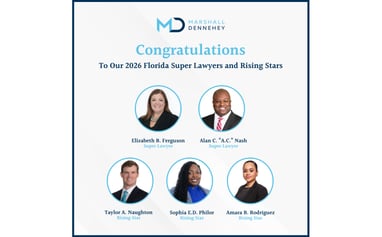
    • Florida Super Lawyer (2019-2026)
    • Florida Super Lawyer Rising Star (2012-2018)
    • Rated for Civil Litigation by Lead Counsel, a service of Thomson Reuters, 2015
    • "Rising Star" by the Daily Business Review (2014)
    • Seventeenth Judicial Circuit Professionalism Panel (2017-2025)
    • South Florida Legal Guide, Up & Comer (2018-2021)
    • Thomson Reuters Stand-Out Lawyer (2025)
    • Claims & Litigation Management Alliance
    • DRI - Diversity for Success Seminar and Expo, Expo Chair 2016 - 2018
    • DRI - Diversity for Success Seminar and Expo, Marketing Chair, 2013 - 2015
    • DRI - Diversity Committee, Chair to the Marketing Subcommittee
    • DRI - Diversity Committee, Liaison to the Aviation Law Committee
    • DRI - Retail and Hospitality Seminar, Committee Member 2016 - Present
    • Federation of Defense & Corporate Counsel, Member
    • Florida Association of Police Attorneys, 2010
    • The Florida Bar - Student Education/Admissions to The Bar Committee
    • Florida Defense Lawyers Association, Board Member, 2017 - 2019
    • Florida Sheriffs Association, 2020 - present
    • RIMS Broward County Chapter, Board of Directors, 2021
    • Chair, Seventeenth Judicial Circuit Grievance Committee "H", 2018 – 2021
    • T.J. Reddick Bar Association, Executive Board, 2012 - 2013
    • From Incident to Outcome, 2026 Florida RIMS Educational Conference, July 30, 2026
    • AI: The Cat 5 Storm Affecting Your Claims and Employees, Florida Broward County RIMS Chapter, April 15, 2026
    • Negligent Security Claims - Premises Under Attack, Marshall Dennehey Client Seminar, July 25, 2025
    • Florida’s New Civil Procedure and Rules, Florida Tampa Bay RIMS Chapter, May 21, 2025
    • The Yellow Brick Road to Litigation Success – What Happens When Carriers and Defense Counsel Team Up? CLM Annual Conference, Dallas, TX, April 10, 2025
    • Relevant Procedural Rule Changes for Risk Manager, Broward County RIMS Chapter Meeting, Ft. Lauderdale, FL, January 15, 2025
    • DE&I – Your Ally in the War for Talent, Florida RIMS Educational Conference, August 1, 2024
    • New Florida Tort Reform Changes Under HB 837, Tampa Bay RIMS Chapter Meeting, Tampa, FL, October 18, 2023
    • Civil Rights for Uncivil Times, International Association of Claims Professionals (IACP) 2023 Conference, June 22, 2023
    • Claims Inflation in Property & Casualty Litigation, ILG 360º London Annual Conference 2023, March 15, 2023
    • Talkin' Bout My Generations, RIMS - Broward County Chapter Meeting & Presentation, October 19th, 2022
    • Talkin' Bout My Generations, 2022 Florida RIMS Educational Conference, Naples, FL, July 27th, 2022
    • Successful Strategies for Effective Mediation, Marshall Dennehey Client Seminar, July 20, 2022
    • Roundtable Discussion: Civil Litigation and Nailing On-Campus Interviews, FSU College of Law - Black Law Students Association, November 8, 2021
    • Litigation & Trial Considerations When Representing/Defending Law Enforcement, NAPO’s Annual 2021 Legal Seminar, West Palm Beach, FL, October 4, 2021
    • Anti-Social Practical Strategies Insurers Can Implement – panel member, 2021 DRI-IADC Virtual Roundtable, September 2021
    • Civil Litigation State of Affairs – The Impact of COVID-19 in Florida & What’s Next, Marshall Dennehey Client Webinar, June 2021
    • Negligent Security: Foreseeable Crime - Believable Risk, ILG Virtual Conference, March 22, 2021
    • 56 Feds are Coming: Strategies Using the Upcoming Florida Summary Judgment Standard, Marshall Dennehey Client Webinar, January 15, 2021
    • Negligence 101 - A Pennsylvania and Florida Legal Overview, Marshall Dennehey Client Presentation, December 15, 2020
    • Negligent Tenants Expose Negligent Landlords, Marshall Dennehey Florida Claims Symposium – Casino Royale, Tampa, FL, September 20, 2018
    • Moderator: In-House Counsel Roundtable, DRI Retail & Hospitality Conference, Chicago, IL, May, 2018
    • Panelist: Broward County Bar Association - Young Lawyer's Section Boot Camp, June 6, 2017
    • Featured Speaker/Panelist: Making The Career Decision That Is Best For You, Atlantic Technical College 2017 College & Career Summit , Ft. Lauderdale, FL, January 26, 2017
    • Defending Negligent Security Claims, RIMKUS' 9th Annual CLE/CE Seminar, October 21, 2016
    • Negligent Security Claims: If the Crime is Foreseeable, the Risk is Believable, RIMS - Central Florida Chapter, November 19, 2015
    • Using Crime Grids in Negligent Security Claims, Marshall Dennehey Florida Claims Symposium - The Best Defense is a Good Offense, Orlando, FL, September 17, 2014
    • Diversity for Success Seminar, DRI, Moderator, 2013
    • Stand Your Ground Forum, Nova Law School, Moderator, 2012
    • Paralegal Program - Professor of Contracts, Legal Research/Writing and Constitutional Law, Brown Mackie College, 2009 - 2010
    • Fort Lauderdale Community Development Corporation, Vice President, 2012
    • Fort Lauderdale Community Development Corporation, Board Member, 2008 - Present
    • Grant of judgment as a matter of law for the Sheriff's department and individual deputy in an excessive force federal trial involving the shooting death of a suspect.
    • Defense verdict in a federal trial for the Sheriff's department and individual deputy in an excessive force case involving the use of a canine.
    • Grant of dismissal in a federal case involving the alleged interference of a prisoner's rights to access the courts and to free speech.
    • Grant of dismissal in a federal case wherein plaintiff alleged that a private corporation acted under color of law and violated his 8th Amendment Rights.

Thought Leadership

Defense Digest

On the Pulse…The Blitz Is Coming: Pranks, Perception and the Risk of Draft Day

June 1, 2025

In April, the high-stakes world of the NFL Draft took over the airwaves. Millions were made and fumbled away as each round unfolded. Scouting reports were dissected, 40-yard dash times debated, and the patience of each player was tested. Beyond the fanfare stood a cautionary tale for civil defense lawyers. In litigation, as in football, perception, reputation, and outside interference can blindside the best-prepared team.  Shadeur Sanders and his father, Deion, commanded headlines throughout the college football season and into the draft. However, it was Jaxson Ulbrich, son of Falcons defensive coordinator, Jeff Ulbrich, who stole a moment of spotlight both infamously and immaturely. After obtaining a private draft-day phone number, Jaxson prank-called Sanders, whose draft stock had unexpectedly fallen. He claimed that Sanders would be drafted by the Saints but would have to wait. While it was quickly revealed that he had been “trolled,” this event signifies how easily misinformation can spread and how pranks can carry real consequences. The NFL fined Jeff Ulbrich $100,000, and the Falcons organization was fined $250,000.  In civil defense cases, surprises, misinformation, public manipulation, and ambush tactics are commonplace. Plaintiff lawyers, while mostly ethical, can sometimes push the envelope. According to the ABA, almost 300,000 lawyers are publicly disciplined for ethical misconduct each year. Therefore, a video that paints your client in unfavorable light, one that it is selectively edited, like Shannon Sharpe alleges, or one that is outright misleading, may become the order of the day. Once public, the reputational harm spreads faster than the truth can catch up. Headlines follow, juries are tainted, and the reputation of your client can plummet overnight. Insurers then start asking hard questions.  The call to Sanders wasn’t just a joke. It could be actionable. In Florida and many other jurisdictions, the actions of Ulbrich could possibly be considered tortious interference with a current or prospective business relationship. This tort occurs when a third party intentionally disrupts a known business relationship, thereby causing damages. More specifically, the elements of the tort for tortious interference with a business relationship includes: (1) the existence of a business relationship or contract, (2) knowledge of the business relationship or contract on the part of the defendant, (3) an intentional and unjustified interference with the business relationship, and (4) damages. See Howard v. Murray, 184 So. 3d 1155 (Fla. 1st DCA 2015). An action for tortious interference with a prospective business relationship requires a business relationship evidenced by an actual and identifiable understanding or agreement which, in all probability, would have been completed had the defendant not interfered. See Ferguson Transp., Inc. v. North Am. Van Lines, Inc., 687 So. 2d 821, 822 (Fla. 1996). Although numerous explanations for his draft slide exist (i.e., his lack of a real agent, combine opt-out, alleged poor interviews, etc.), Sanders could argue that the prank compounded doubt, shifted teams’ perceptions about drafting him, and thereby contributed to his slide. The same dynamic applies in tort litigation. When perception turns, the liability profile of a company can collapse, even without wrongdoing.  In 2005, Anna Ayala alleged that she found a human finger in her chili at a Wendy’s in California. After a month-long investigation, it was determined that the incident was a hoax orchestrated by Ayala. Unfortunately, Wendy’s suffered work cutbacks as business fell as much as 50% in some areas.  In 2020, rumors began on Reddit that Wayfair was allegedly involved in child trafficking. The claims were that their throw pillows and storage cabinets were a front for these nefarious activities. Social media ran with this information, complete with photographs, screen shots, and celebrity statements. The rumors were a hoax.  In 2011, not even the Golden Arches was safe. A photo was captured and spread on social media that provided that, as an insurance measure due, in part, to a string of robberies, certain customers would be required to pay an additional fee of $1.50 per transaction. This, too, was a hoax, and McDonald’s stated: “This is, unfortunately, an example of how rumors can out speed the truth. Over the last 48 hours, we've been tweeting and striving to clarify that this is a hoax.” Nevertheless, the public was slow to believe McDonald’s statement, and the hashtag #SeriouslyMcDonalds trended. The law is catching up to the age of virility and meme culture. However, as the aforementioned warnings demonstrate, hoaxes can have impacts that far outlive the “joke.” It can be a draft-day prospect losing millions or a client losing trust; in all scenarios, narrative controls and perception matters.  Whether it is Sanders waiting for a life-changing call or a business defending its decades of good will, the threats aren’t always head-on. Sometimes, the blitz is coming from your blindside.    Defense Digest, Vol. 31, No. 2, June 2025, is prepared by Marshall Dennehey to provide information on recent legal developments of interest to our readers. This publication is not intended to provide legal advice for a specific situation or to create an attorney-client relationship. ATTORNEY ADVERTISING pursuant to New York RPC 7.1. © 2025 Marshall Dennehey. All Rights Reserved. This article may not be reprinted without the express written permission of our firm. For reprints, contact tamontemuro@mdwcg.com.

Legal Update for Florida Civil Litigation

Florida Passes Tort Reform: What You Need to Know

March 27, 2023

On March 24, 2023, Florida Governor Ron DeSantis signed House Bill 837, “Civil Remedies,” into law. HB 837 contains sweeping tort reform that will uproot the landscape of Florida civil litigation. The changes apply to causes of action accruing after the effective date—March 24, 2023. Prior to the bill becoming law, plaintiffs’ firms, anticipating this monumental change, filed approximately 100,000 lawsuits. These filings represent approximately 77% of the total cases filed since January 1, 2023.[1] Below is a brief summary of the changes and the potential impact the new law brings.    NEW MODIFIED COMPARATIVE NEGLIGENCE STANDARD    HB 837 changes Florida’s standard from “pure” comparative negligence to “modified” comparative negligence. This aligns Florida with a majority of the other states who have already adopted a “modified” comparative negligence standard. This new standard does not apply in medical negligence actions.   Previously, a plaintiff was entitled to recover a percentage of damages proportionate to the degree of fault of the defendant. Under “modified” comparative negligence, if a plaintiff is more negligent than the defendant, the plaintiff cannot recover.    This new standard will likely reduce the number of cases brought in which the plaintiff was the predominant cause of his or her own harm.    TWO-YEAR STATUTE OF LIMITATIONS FOR GENERAL NEGLIGENCE CLAIMS   HB 837 amends section 95.11, Florida Statutes, which sets forth the statutes of limitations for various causes of action. The bill now reduces the statute of limitations for general negligence from four years to two years.    This may encourage plaintiffs to file suit earlier as plaintiffs and their counsel will prepare their cause of action and evaluate the validity of their claims at an earlier juncture. This will also increase the ability to obtain evidence closer to the time of the alleged incident.    Where liability is contested, plaintiffs may be deterred from filing suit sooner. The two-year statute of limitations could also be used as leverage to effectuate earlier settlement and resolution of claims, especially pre-suit.    ADMISSIBILITY OF EVIDENCE IN PAST AND FUTURE MEDICAL EXPENSES    HB 837 changes the evidence that plaintiffs can introduce to establish past and future medical expenses. Previously, with the exception of services paid by Medicare or Medicaid, plaintiffs were permitted to board the full amount of medical bills charged for services rendered. This was without evidence of any adjustments or reductions and was prior to a post-verdict setoff for adjustments by private insurance. If plaintiffs had Medicare or Medicaid, only the amounts actually paid by Medicare or Medicaid were admissible as evidence of past medical expenses.    Now, the evidence offered to prove the amount of damages for past medical bills that have been satisfied is limited to the evidence of the amount actually paid, regardless of the source of payment. For unpaid past medical bills, admissible evidence will depend whether the plaintiff has health care coverage, Medicare, or Medicaid:    •    If plaintiff has health care coverage but obtains treatment under letter of protection or does not submit charges, evidence of amount that health care coverage would have paid to satisfy charges, plus plaintiff’s share of medical expenses, is admissible. Evidence of reasonable amounts that were billed to plaintiff for medically-necessary treatment or services is also admissible.  •    If plaintiff does not have insurance, or has Medicare or Medicaid, evidence of 120 percent of Medicare reimbursement rate in effect is admissible.  •    If there is no applicable Medicare rate, evidence admissible is 170 percent of applicable state Medicaid rate.    Damages that may be recovered may not include any amount in excess of the evidence of medical treatment and services expenses admitted. Further, it cannot exceed the sum of amounts actually paid, amounts necessary to satisfy charges due and owing, and the amounts necessary for reasonable and necessary future medical treatment and services.    For future medical bills, the “usual and customary” amount also depends on whether the plaintiff has health care coverage:    •    If plaintiff has health care coverage other than Medicare or Medicaid, evidence of amount that could be satisfied if charges were submitted, in addition to portion of medical expenses under insurance contract, is admissible.  •    If plaintiff does not have insurance, or has Medicare or Medicaid, evidence of 120 percent of Medicare reimbursement rate in effect is admissible.  •    If there is no applicable Medicare rate, evidence admissible is 170 percent of applicable state Medicaid rate.    LETTERS OF PROTECTION AND REFERRALS MUST BE DISCLOSED    If a plaintiff treats under a letter of protection, the letter of protection must be disclosed, as must all bills for medical expenses, which must be itemized and coded. Whether the plaintiff was referred for treatment under the letter of protection must also be disclosed, along with who referred the plaintiff. If the plaintiff is referred for treatment under a letter of protection by their attorney, disclosure of the referral is permitted, notwithstanding the attorney-client privilege, as the financial relationship between the law firm and the medical provider is relevant to the issue of bias of the testifying medical provider. This new law overturns the Florida Supreme Court’s decision in Worley v. Central Florida Young Men’s Christian Ass’n, Inc., 228 So. 2d 18 (Fla. 2017).    BAD FAITH – NEW DUTY OF INSUREDS AND IMPACT ON DAMAGES    Now, in every bad faith action in Florida, the insured, claimant, and/or their representative have a duty to act in good faith in providing information, making demands, setting deadlines, and attempting to settle the claim. The trier of fact may consider whether the insured, claimant and/or their representative acted in good faith and may reasonably reduce the amount of damages awarded. Mere negligence remains insufficient to bring a claim for bad faith against an insurer.   BAD FAITH – CHANGES TO 90-DAY PERIOD, ADMISSIBILITY, AND STATUTE OF LIMITATIONS    No bad faith action can lie if an insurer tenders the lesser of the policy limits or the amount demanded by the plaintiff within 90 days after receiving actual notice of the claim and sufficient evidence supporting the claim. It is not bad faith if the insurer does not tender, and the existence of the 90 days is inadmissible in any action seeking bad faith. Should the insurer not tender, the statute of limitations is extended for an additional 90 days.    BAD FAITH – WHEN INSURER IS NOT LIABLE FOR FAILURE TO PAY POLICY LIMITS FOR MULTIPLE CLAIMS EXCEEDING LIMITS    If multiple claims arising out of a single occurrence exceed the policy limits, the insurer is not liable beyond the policy limits for failure to pay any or all of the policy limits within 90 days if:   •    The insurer files an interpleader to determine rights of claims, and if found in excess of policy limits, claimants are entitled to a prorated share; or  •    The insurer makes full policy limits available at binding arbitration, in which claimants are entitled to a pro rata share of policy limits as determined by the arbitrator, who must also consider comparative fault and the likely outcome of trial. If a claim is resolved by the arbitrator, a general release must be executed by the claimant to the insured party whose claim is resolved.    NEGLIGENT SECURITY – NEW PRESUMPTION AGAINST LIABILITY AND CONSIDERATION OF FAULT OF ALL PARTIES   In a negligent security action against the owner or operator of real property by a person lawfully on the property who was harmed by the criminal act of a third party, the trier of fact is now required to consider the fault of all persons who contributed to the injury or death, including the criminal actor. Moreover, the owner or operator of the property cannot be held negligent for damages to a third party attempting to commit, or engaged in committing, any criminal act on the property.    HB 837 also creates a presumption against negligent security liability for the owner or operator of a “multifamily residential property” if the burden of proof is met to demonstrate “substantial compliance” with crime assessments, crime and safety training for employees, and safety and security measures which include:   •    Security camera system at points of exit and entry that maintains the video retrievable for 30 days;  •    A lighted parking lot from dusk to dawn;  •    Lighting in common areas, porches, walkways, and laundry rooms from dusk to dawn;  •    A deadbolt measuring at least one inch in every door;  •    Locking devices on every window and sliding door;  •    Locked gates at pool fence areas; and  •    A peephole or viewer on door that does not have a window or window next to the door.    CONTINGENCY FEE MULTIPLIER – NEW LODESTAR FEE PRESUMPTION   Previously, Florida case law allowed for courts to consider and award contingency fee multipliers to attorneys’ fees, based on factors which included but were not limited to: the relevant market if contingency fee multipliers were required to obtain competent counsel; whether the attorney mitigated the risk of nonpayment; the amount involved, the results obtained, the type of fee arrangement between the attorney and client; and likelihood of success at the outset of the action.    HB 837 now changes the ability to obtain a contingency fee multiplier by creating a “strong presumption” that the “lodestar” fee, the number of hours which would have reasonably been spent by an attorney and multiplying that number by a reasonable hourly rate, is sufficient and reasonable. This can only be overcome in rare and exceptional circumstances in which evidence has been presented that competent counsel could otherwise not have been retained.    ONE-WAY ATTORNEYS’ FEES – LIMITED APPLICABILITY    Previously, “one-way attorneys’ fees” applied in situations in which an insured prevailed in an action against an insurer. One-way attorneys’ fees in insurance cases now only apply to declaratory judgment actions for the determination of insurance coverage against an insurer after a denial of coverage of a claim, which does not include a defense under a reservation of rights. If a declaratory judgment is granted in favor of the insured against the insurer, the court shall award reasonable attorneys' fees, which are limited to those incurred in the action.    Further, section 768.79, Florida Statutes, also known as the “offer of judgment” or “proposal for judgment” statute, will apply to any civil action involving an insurance contract.   ______________________________________________   [1] Ron Hurtibise, Civil Case Filings Surge Before DeSantis Signed Sweeping Lawsuit Reform Bill, SUN-SENTINEL, (March 24, 2023, 6:55 p.m.), https://www.sun-sentinel.com/news/politics/fl-bz-case-filing-surge-before-tort-reform-20230324-7ze7uzxslbcndcaaessd4bmgzy-story.html. The material in this law alert has been prepared for our readers by Marshall Dennehey. It is solely intended to provide information on recent legal developments and is not intended to provide legal advice for a specific situation or to create an attorney-client relationship. We welcome the opportunity to provide such legal assistance as you require on this and other subjects. If you receive the alerts in error, please send a note to tamontemuro@mdwcg.com. ATTORNEY ADVERTISING pursuant to New York RPC 7.1. © 2023 Marshall Dennehey. All Rights Reserved.

Firm Highlights

Thought Leadership

Not So Fast. . . The Limitations of the Pennsylvania RELRA in Plaintiffs’ Civil Actions Against Real Estate Broker and Licensee Defendants

Much has been made of the importance and weight of the Pennsylvania Real Estate Licensing and Registration Act, 63 P.S. §§ 455.101, et. seq. (RELRA or Act). After all, a real estate broker generally cannot recover any commission absent a signed agreement that complies with RELRA. But can a plaintiff rely on RELRA as a distinct cause of action in a civil action as to a real estate broker or licensee defendant? The Superior Court has emphatically held that he or she cannot. In the unpublished opinion P. Perez Real Est. Holdings, LLC et. al. v. Home Sale Real Est. Servs., Inc., et al., No. 256 MDA 2025, 2025 WL 35389888 (Pa. Super. Ct. December 10, 2025), the Superior Court held that the Act “does not contemplate private actions for money damages as an enforcement mechanism and consequently, does not create a private cause of action.” citing Schwarzwaelder v. Fox, 895 A.2d 614, 620 (Pa. Super. 2006). While the Act authorizes the Bureau of Professional and Occupational Affairs, State Real Estate Commission, to regulate the conduct governed by RELRA, the Act alone does not create a stand-alone legal cause of action as to a broker-defendant in a civil action. See P. Perez, citing Schwarwaelder at 620. Nor can it be stated that RELRA creates or imposes any legally cognizable duties on real estate brokers or licensees. While the Act contains and refers to general concepts of duty (e.g. the agent must “exercise reasonable professional skill and care which meets the practice standards required by this act” and “to deal honestly and in good faith” 63 P.S. §§606.1 (a)(1),(2), or the broker has a duty to the buyer of property to take “action that is consistent with the buyer’s interest in transaction.”  63 P.S. §§606.3 (1)), these general concepts are secondary to the duties imposed by the required written agreement between the broker and consumer. For example, in P. Perez, a case in which the buyers-plaintiffs argued that the real estate broker failed to investigate recent legislation that would affect buyer’s intentions to convert the property to commercial space, the agreement between buyer and broker contained the following provision in the “Buyer’s Due Diligence” clause: Buyer acknowledges that Brokers, their licensees, employees, officers or partners have not made an independent examination or determination of the structural soundness of the property, the age or condition of the components, environmental conditions, the permitted uses, nor of conditions existing in the locale where the property is situated. . . Accordingly, the broker defendants expressly disclaimed any duty to buyers to inform them or determine whether any applicable zoning classifications, laws, or ordinances in the township applied to the properties in question. Moreover, the Superior Court refused to read provisions of the Act into the Agreement, citing Skiff re Buss, Inc. v. Buckingham Review, LP, 991 A.2d 956 (Pa. Super. 2010). In defending civil actions it is important for the defense attorney to identify any causes of action predicated solely on RELRA. Preliminary objections may be warranted to the extent that the plaintiff asserts RELRA as a stand-alone cause of action for monetary damages, a position struck down by the Superior Court of Pennsylvania in P. Perez.  Moreover, any attempt to create or heighten duties as to the broker defendants may be countered by the general proposition that the courts will not inject the vague concepts of “reasonable professional skill” or “good faith” where the written agreement has express provisions regarding the duties of the parties. Ironically, although RELRA is an important Act with which all realtors, brokers, and licensees should be familiar to guarantee that their commissions are in fact timely paid, it is not a strong stand-alone mechanism for a plaintiff’s attempts to recover monetary damages in a civil action.

Thought Leadership

Pennsylvania Superior Court Confirms RESDL Claims Are Subject to a Two-Year Statute of Repose

The Pennsylvania Superior Court recently concluded that claims under the Real Estate Seller Disclosure Law (“RESDL”) are subject to a two-year statute of repose running from the settlement date. This decision will further assist defending errors and omission claims against real estate agents as it bars any RESDL action commenced more than two years after the settlement date regardless of when the defect was discovered.  In Hollinger v. Deitrich, 2026 Pa. Super. LEXIS 328 (June 23, 2026), the buyers entered into an agreement of sale in April of 2017 to purchase a residential property. The settlement occurred in June of 2017. The buyers reviewed the seller disclosures that revealed the property had a sump pump in working order and a sump pit. The disclosures further noted no water infiltration into the basement, but disclosed rehab, an addition to the property and prior sewage backup.  Shortly after the settlement and closing, the buyers experienced flooding in their basement. In March of 2020, the buyers filed suit against the seller, the buyers’ real estate agent and broker and the seller’s real estate agent and broker alleging various causes of action including a violation of RESDL. The buyers alleged that they sought assurances from the agent defendants that no water infiltration occurred on the property. They further alleged that both agents lived in the area and should have known about the neighborhood water infiltration issues. The trial court granted summary judgment for the seller and the seller’s agents and dismissed the RESDL violation.  Relying on the Supreme Court’s decision in Gidor v. Mangus d/b/a Mangus Inspections, 345 A.3d 629 (Pa. 2025), the court explained that a statute of limitation begins to run from the time of the injurious occurrence or a discovery of the same. However, a statute of repose runs for a statutorily determined period after a definitively established event. Notably, a statute of repose eliminates a cause of action regardless of when the claim accrues. Because of this, a plaintiff may not invoke the discovery rule or other equitable tolling considerations.  RESDL requires that an action for damages, as a result of a violation of this chapter, must be commenced within two years after the date of final settlement. The court found that Section 7311(b) was clear and unambiguous that an action for damages pursuant to this chapter must be commenced within a certain time after a definitely established event that is independent of any injury or discovery of any injury. Since the buyers sued over two years after closing on the property, their statutory claims were time-barred. The court explained that the seller disclosure statement could not support common law or consumer protection claims, as using it would improperly expand remedies beyond the statute’s terms. Accordingly, the court upheld the trial court’s summary judgment ruling that the buyers’ claims under RESDL were barred by the statute of repose.  Accordingly, defense counsel should scrutinize complaints involving RESDL claims to ensure that such claims have been timely brought within two-years of the settlement date. A plaintiff will no longer be able to invoke the discovery roll to expand the time frame.

News

106 Marshall Dennehey Attorneys Recognized in the 2027 Editions of The Best Lawyers in America® and the Best Lawyers: Ones to Watch® in America

Marshall Dennehey is proud to highlight the firm’s 106 attorneys who have been recognized in the 2027 editions of The Best Lawyers in America® and the Best Lawyers: Ones to Watch® in America. Less than 6% of all practicing lawyers in the U.S. were selected by their peers for this recognition. Additionally, four of the firm’s attorneys received the Best Lawyers® 2027 “Lawyer of the Year” awards in their respective practice areas and demographic regions. Since it was first published in 1983, Best Lawyers® has become universally regarded as the definitive guide to legal excellence. Best Lawyers lists are compiled based on an exhaustive peer-review evaluation. For more information, please visit https://www.bestlawyers.com/. OUR 2027 LAWYERS OF THE YEAR Harrisburg, PA Christopher Reeser, Personal Injury Litigation - Defendants Kacey Wiedt, Workers Compensation Law - Employers Roseland, NJ Justin F. Johnson, Medical Malpractice Law - Defendants Leonard Leicht, Personal Injury Litigation - Defendants   OUR 2026 BEST LAWYERS IN AMERICA Philadelphia, PA Nicholas D. Bowers, Personal Injury Litigation - Defendants Josh J. T. Byrne, Professional Malpractice Law - Defendants Jefferey J. Chomko, Insurance Law James H. Cole, Insurance Law John J. Delany III, Personal Injury Litigation - Defendants Laurianne Falcone, Personal Injury Litigation - Defendants John P. Gonzales, Employment Law - Management John Hare, Appellate Practice Daniel D. Krebbs, Personal Injury Litigation - Defendants Michele Punturi, Workers' Compensation Law - Employers Bradley D. Remick, Product Liability Litigation - Defendants Andrea Cicero Rock, Workers' Compensation Law - Employers Robin M. Romano, Workers' Compensation Law - Employers Daniel J. Ryan, Jr., Personal Injury Litigation - Defendants Gary M. Samms, Professional Malpractice Law - Defendants Christopher N. Santoro, Personal Injury Litigation – Defendants; Product Liability Litigation -Defendants Josh D. Scheets, Personal Injury Litigation - Defendants Robert P. Schenk, Workers' Compensation Law - Employers Robert E. Smith, Insurance Law Robin Snyder, Litigation - Health Care Michael L. Turner, Commercial Litigation; Criminal Defense: White-Collar; Mass Tort Litigation / Class Actions - Defendants Claire Breaux Ventola, Product Liability Litigation - Defendants Pittsburgh, PA Melissa Devich Cochran, Commercial Litigation; Mass Tort Litigation / Class Actions – Defendants; Product Liability Litigation - Defendants  John F. Deasy, Personal Injury Litigation – Defendants; Product Liability Litigation - Defendants Daniel W. Deitrick, Workers' Compensation Law - Employers Douglas C. LaSota, Litigation - Construction; Mass Tort Litigation / Class Actions - Defendants Joseph V. Lesinski, Product Liability Litigation – Defendants   Christian D. Marquis, Personal Injury Litigation - Defendants Patricia A. Monahan, Insurance Law; Litigation - Insurance Patrick T. Reilly, Commercial Litigation; Mass Tort Litigation / Class Actions – Defendants; Product Liability Litigation - Defendants Brett C. Shear, Medical Malpractice Law - Defendants Teresa O. Sirianni, Education Law; Employment Law – Management; Litigation - Labor and Employment Stuart Sostmann, Product Liability Litigation – Defendants Danielle M. Vugrinovich, Mass Tort Litigation / Class Actions - Defendants Scranton, PA Sarah E. Argo, Litigation - Insurance Michael J. Connolly, Personal Injury Litigation – Defendants; Professional Malpractice Law - Defendants Matthew Keris, Litigation - Health Care; Medical Malpractice Law - Defendants John T. McGrath, Jr., Insurance Law; Medical Malpractice Law – Defendants; Product Liability Litigation - Defendants William J. McPartland, Insurance Law John R. Nealon, Product Liability Litigation - Defendants Victoria Scanlon, Health Care Law; Litigation - Health Care; Medical Malpractice Law - Defendants Michael A. Sebastian, Workers' Compensation Law - Employers Thomas A. Specht, Insurance Law; Litigation - Insurance Suzanne Tighe, Litigation Insurance Harrisburg , PA Casey Alan Coyle, Administrative/Regulatory Law; Appellate Practice; Commercial Litigation Brittany E. Bakshi, Personal Injury Litigation - Defendants Shannon P. Fellin, Workers' Compensation Law - Employers Allison Krupp, Insurance Law John R. Ninosky, Litigation – Insurance; Personal Injury Litigation - Defendants Christopher Reeser, Personal Injury Litigation - Defendants Kacey Wiedt, Workers' Compensation Law – Employers King of Prussia, PA  Michael L. Detweiler, Construction Law Joseph L. Hoynoski III, Medical Malpractice Law - Defendants Gregory J. Kelley, Construction Law, Litigation - Construction Anthony Natale III, Workers' Compensation Law - Employers Francis X. Wickersham, Workers' Compensation Law - Employers A. Judd Woytek, Workers' Compensation Law – Employers Erie, PA Patrick M. Carey, Personal Injury Litigation - Defendants Joel M. Snavely, Health Care Law; Insurance Law New Haven, CT Michael Wrona, Commercial Litigation, Litigation - Bankruptcy  Mount Laurel, NJ David D. Blake, Litigation - Insurance Barbara Davis, Personal Injury Litigation - Defendants Lynne Nahmani, Litigation - Health Care John H. Osorio, Personal Injury Litigation - Defendants John L. Slimm, Legal Malpractice Law – Defendants; Professional Malpractice Law – Defendants Roseland, NJ Robert T. Evers, Medical Malpractice Law - Defendants Justin F. Johnson, Medical Malpractice Law - Defendants Julia Klubenspies, Medical Malpractice Law - Defendants Leonard C. Leicht, Personal Injury Litigation - Defendants Patricia M. McDonagh, Appellate Practice Sunny Sparano, Litigation - Construction Randall S. Watts, Health Care Law New York, NY Tonya M. Lindsey, Medical Malpractice Law - Defendants Tampa, FL Michael Archibald, Personal Injury Litigation - Defendants Lindsay G. McCormick, Litigation – Construction Orlando, FL Thomas F. Brown, Personal Injury Litigation - Defendants Dante C. Rohr, Commercial Litigation Fort Lauderdale, FL Kimberly Kanoff Berman, Appellate Practice Patrick M. Delong, Personal Injury Litigation – Defendants Jacksonville, FL  Heather Byrer Carbone, Workers' Compensation Law - Employers Linda Wagner Farrell, Workers' Compensation Law - Employers Elizabeth B. Ferguson, Litigation - Construction James P. Hanratty, Personal Injury Litigation – Defendants Wilmington, DE Sarah B. Cole, Litigation - Insurance Benjamin K. Durstein, Workers' Compensation Law - Employers Maria R. Granaudo, Medical Malpractice Law - Defendants  Keri L. Morris-Johnston, Workers' Compensation Law - Employers Cincinnati, OH Timothy B. Schenkel, Personal Injury Litigation - Defendants David E. Williamson, Personal Injury Litigation - Defendants Cleveland, OH Vincent E. Cononico, Litigation – Insurance, Personal Injury Litigation - Defendants Jillian L. Dinehart, Personal Injury Litigation - Defendants David J. Fagnilli, Insurance Law Jason P. Ferrante, Health Care Law, Litigation - Health Care Andrew H. Isakoff, Transportation Law Leslie M. Jenny, Litigation - Health Care; Medical Malpractice Law – Defendant OUR 2026 BEST LAWYERS: ONES TO WATCH Jacksonville, FL Sean J. Reeves, Personal Injury Litigation – Defendants; Product Liability Litigation - Defendants Orlando, FL Carolin A. Pacheco, Insurance Law Mount Laurel Stacey Gorin, Insurance Law Melville, NY Kimberly Gitlin, Personal Injury Litigation – Defendants Matthew A. Gray, Insurance Law; Personal Injury Litigation - Defendants Philadelphia, PA Holli K. Archer, Health Care Law; Medical Malpractice Law – Defendants; Professional Malpractice Law Emily Pritchyk, Commercial Litigation; Product Liability Litigation – Defendants Pittsburgh, PA Taylor E. Kosko, Mass Tort Litigation / Class Actions – Defendants; Personal Injury Litigation - Defendants Alana Staniszewski, Workers' Compensation Law - Employers Michael D. Winsko, Product Liability Litigation – Defendants; Transportation Law King of Prussia, PA Richard Lechette, Commercial Litigation; Insurance Law, Personal Injury Litigation – Defendants

Thought Leadership

Commonwealth Court Holds That a Claimant Who Was Struck By a Car While Crossing the Street During an Unpaid Break Was In the Course and Scope of Employment

This case involved a claim petition filed by a claimant who sustained injuries after being struck by a vehicle while crossing the street in front of the employer’s premises. The employer denied the claim based on course and scope, as the accident occurred during one of two mandatory fifteen (15) minute breaks provided to the claimant. The claimant would punch out at the beginning of a break and punch back in when the break was over.  On the date of the incident, the claimant punched out and left the building to get lunch at a restaurant, which required her to cross the employer’s parking lot, and then a public street, where the injury occurred. The Workers Compensation Judge (WCJ) dismissed the petition, noting that that during the two mandatory fifteen-minute breaks per shift allowed by the employer, the claimant was free to leave the employer’s premises, and during breaks, permitted to engage in whatever activity she desired. The WCJ found that at the time of the accident, the claimant was on her own time, in the middle of the street, and going to get lunch.   The claimant filed an appeal with the Worker’s Compensation Appeal Board (Board), and the Board reversed.  According to the Board, the claimant’s location was still on the employer’s premises, as the claimant was taking her customary route while using a reasonable ingress/egress from the employer.  Further, the Board found that the “Personal Comfort Doctrine” applied, as the claimant was on a momentary departure to take care of her personal comfort, within the window of time she was allotted for her break.  The Board remanded the case, and a WCJ granted the claim petition.  The Board affirmed, and the employer appealed to the Commonwealth Court. Before the Court, the employer argued that the claimant was not in the course and scope of her employment, because the injury did not occur on its premises, and the claimant was outside the bounds of the Personal Comfort Doctrine. The Court, however, rejected these arguments, and dismissed the employer’s appeal.  The Court noted that the break given to the claimant was so cursory, when she set out to relieve her hunger for her own personal comfort,  she remained in the course of her employment when she sustained her injuries.  A Petition for Allowance of Appeal in the Supreme Court has been filed by the Employer, Giant Eagle.