.

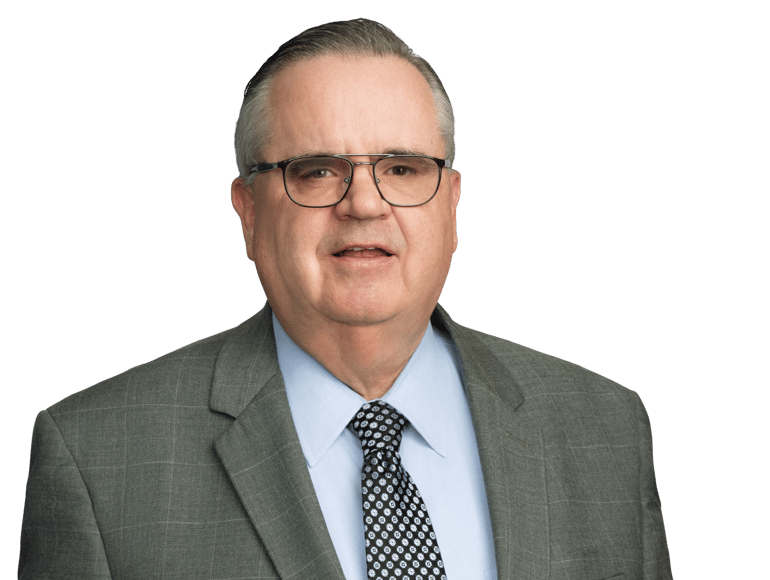
John T. McGrath Jr.

Office Managing Attorney

Co-Chair, Automobile Liability Practice

Portrait of John T. McGrath Jr.

John (Jack) is a member of the Casualty Department and co-chair of the firm's auto liability practice. He focuses his practice on the defense of auto liability, representing over a thousand automobile cases to conclusion. The majority of cases ended in defense verdicts or verdicts lower than the settlement offers. Jack is also the managing shareholder and casualty supervising attorney of the firm's Scranton office with responsibility for the daily operations and oversight of the office's attorneys and support staff.

Jack is a graduate of Penn State University and a former member of law enforcement, having worked for the Lackawanna Sheriff's Department. While attending the Widener University School of Law, Jack worked as the commercial sales manager for ADT Security Systems in Philadelphia and southern New Jersey from 1988 through 1996.

Jack joined Marshall Dennehey in January of 1997 and became a shareholder in 2004. He is currently the lead attorney for the Dunmore High School Mock Trial Team and a basketball coach in his community.

    • Widener University Delaware Law School (J.D., 1995)
    • The Pennsylvania State University (B.S., 1985)
    • Pennsylvania, 1996
    • U.S. District Court Middle District of Pennsylvania, 1996
    • AV® Preeminent™ by Martindale-Hubbell®
    • The Best Lawyers in America©, Insurance Law; Medical Malpractice Law - Defendants; Product Liability Litigation - Defendants (2024-2026)
    • American Board of Trial Advocates
    • Lackawanna County Bar Association
    • Luzerne County Bar Association
    • Pennsylvania Bar Association
    • "The Relationship Between the Handling Attorney and the Claims Professional in Auto Liability," Defense Digest, Vol. 22, No. 1, March 2016
    • Defense of several auto cases in which the plaintiffs were killed. In each of these cases the demand was far in excess of the policy limits.
    • Defense of numerous auto cases involving pedestrians. Many of these cases have been tried to defense verdicts where the plaintiffs' injuries far exceeded the available coverage.
    • Defense of a hospital where the plaintiff was one of their own staff physicians who had a seizure while at work and was unable to return to his position as a physician. The allegations were that more should have been done initially when he had the seizure and the hospital should have been better equipped to deal with such situations. The lost wages alleged in this matter were over $7 million.
    • Defended an auto case in which the plaintiff was killed and plaintiff's counsel evoked the Dead Man's Rule. We were able to show that his expert, a state police officer, had interviewed our insured, thereby negating the Dead Man's Rule. The Superior Court agreed with our argument, and the defense verdict that we obtained in this litigation was upheld.
    • Defended an oncologist in a case where the plaintiff, an ophthalmologist who claimed he could no longer work, had multiple experts, including vocational, economic, psychiatric, orthopedic, and neurological practitioners. The initial demand was for our policy limits of $500,000. Through the use of our experts in a non-binding mediation, we were able to show the plaintiffs' experts would not hold up in front of a jury, and the case resolved for an amount far below the policy limits.
    • Obtained defense verdicts in several auto cases in northeast Pennsylvania where the underinsured motorist claims had gone to arbitration and six-figure awards have been granted. Most involved a minor impact with just soft tissue injuries.

Results

Thought Leadership

Defense Digest

On the Pulse…Our Scranton, Pennsylvania, Office

June 1, 2023

The Scranton office of Marshall Dennehey is now in its 30th year. The firm began in Scranton with two attorneys practicing workers’ compensation law. Over the years, it has grown, and today, when it is at full capacity, there are 23 lawyers in the office. Attorneys presently working in the Scranton office, including myself, Ben Nicolosi, Leo Bohanski, Ross Carrozza, Pat Boland, and Robert Smith, have been with the firm over two decades. Many of those just mentioned have been here for over 25 years, and Ross has been here since the office opened. Over the last few years, several of our longest-tenured and esteemed attorneys have retired. Jim Pocius, John Aponick, Jim Wilson, Joe Vender, and Jennifer Callahan all retired, each having had between 20 and 30 years experience with the firm. Replacing that talent is almost impossible, but we have been very fortunate to bring on some young attorneys and lateral hires who have allowed our office to continue to flourish and grow. The experience and talent in our practice department is unmatched in Northeastern Pennsylvania. Those groups include workers’ compensation, casualty, professional liability, and health care. The workers’ compensation group is led by Mike Sebastian. Mike has worked in the workers’ compensation realm for over 30 years and has a long and distinguished list of clients who rely on him for all their workers’ compensation matters. As he has for many years, Ross Carrozza also ably litigates workers’ compensation cases. In addition, Ross is a leading expert in Medicare Set-Asides. The 60 years of combined experience possessed by Mike and Ross in workers’ compensation is an asset to the Scranton office and allows us to handle the most involved and difficult workers’ compensation cases.  The Casualty Department in the Scranton office presently has six attorneys: Ben Nicolosi, John Nealon, Leo Bohanski, Sarah Argo, Mike Connolly, and myself. Our experience in the casualty arena is envied by all of our competitors. Collectively, the department has tried over 200 cases to verdict in the counties in which we serve. Presently, I act as the firm’s Auto Liability Practice Group Chair. Ben Nicolosi handles high-profile trucking accident and product liability matters. Although many of the cases the department handles contain requests for punitive damages, no one in our department has ever been hit with a punitive damage award. Considering the volume of cases we handle and their serious nature, that is truly an accomplishment. There is not a casualty case or issue the Scranton office has not handled, and handled effectively. The Casualty Department litigates auto accidents, dram shop cases, product liability matters, construction defect cases, slip and falls, and any other type of casualty case that finds its way to our office.  Our Professionally Liability Department, when fully staffed, is the largest department in our office. Presently, William McPartland, who is the Co-Chair of our Special Education Law Practice Group, works with several school districts throughout Northeastern Pennsylvania. Many of the school districts in Luzerne, Lackawanna, and the outlying counties rely on Will for all of their education law practice needs. He also handles employment law and civil rights cases. Mark Kozlowski and Patrick Boland have very similar practices, which include civil rights, municipal, and professional liability practice litigation. They represent attorneys, engineers, and architects, and do a significant amount of work with homeowners associations and any disputes arising therein. Their practice continues to grow. Presently, Jordan Mazzoni, an associate, works with both of them, assisting with their growing practice.  Rob Smith is also in the Professional Lability Department, handling (almost exclusively) bad faith cases. Rob has a very large practice in this extremely specialized area, and several carriers look to him to handle their bad faith litigation. Underinsured motorist and uninsured motorist cases continue to be one of the biggest practice areas in the state for bad faith. Rob would certainly be considered an expert in that area.  Finally, Tom Specht is a member of our Appellate Advocacy and Post-Trial Practice Group. He litigates appeals in state and federal courts, having done so for the past 25 years. He also handles serious and complex pre-trial matters/motions (of a dispositive nature) and assists trial counsel in their preparation for trial, as well as appellate trial monitoring and motion/strategic assistance at trial. Tom’s practice is extremely varied, in that he litigates cases from every practice area within the firm and has the ability and experience to assist at any stage of the litigation process. He is a helpful, valuable resource for all of the attorneys in the office.  Our Professional Liability Department in the Scranton office is larger than those of all of our competitors in the area combined. This means that, if you were to put all of the professional liability attorneys in Northeastern Pennsylvania, other than those working for Marshall Dennehey, in one room, and the Marshall Dennehey attorneys in another, our department would outnumber the attorneys in the other room. Their expertise is unmatched. The variety of cases they handle is truly something to marvel at.  Last, but not least, is our Health Care Department. It is composed of five attorneys presently and will be expanding shortly. Victoria Scanlon is the supervising attorney in the Health Care Liability Practice Group of the Scranton office. She is an experienced litigator with nearly 20 years of experience representing physicians, midwives, nurse practitioners, nurses, physical therapists, hospitals, ambulatory service centers, and more. She also works with long-term personal care facilities and providers. Vicky has tried many cases to verdict and is an outstanding trial attorney.  Missy Dziak, a shareholder, as well, and has, for more than a decade, defended nurses, nurse practitioners, registered nurses, and really anyone in the health care field. She is licensed in both Pennsylvania and New York. Aside from medical malpractice, she also represents and advises one of the largest national independent food service distributors, providing strategic legal guidance in high-exposure litigation. Missy serves on Marshall Dennehey’s Diversity, Equality, and Inclusion Committee, which works to improve the recruitment, retention, and advancement of diverse attorneys and professionals. Missy is a member of the Pennsylvania Bar Association’s Commission on Women and Profession and the Promotion of Women. She also has tried several cases to verdict in both Pennsylvania and New York.  Matt Keris is a shareholder in the Health Care Department who defends doctors as well as long-term care facilities. He is the Chair of the Electronic Medical Record and Audit Trail Practice Group. Matt tried the first case in Pennsylvania to verdict during the COVID-19 pandemic in July of 2020. Matt is the president of the DRI Foundation, which focuses on wellness and charitable interests affiliated with the Defense Research Institute. He is a former DRI board member and is currently on the steering committee for the Annual Insurance Roundtable. Matt was formerly president of the Pennsylvania Defense Institute and continues to serve as co-chair of the Medical Malpractice Liability Committee. Finally, he has twice-served as president of the Pennsylvania Association for Healthcare Risk Management and is an active member of the Claims and Litigation Alliance for American Legal Connections. Matt has tried many cases to verdict with over 20 years of experience in the field.  Rob Aldrich has worked his entire career defending health care professionals and institutions against malpractice liability claims in Pennsylvania and New York. Rob specializes in defending dental malpractice and long-term care liability cases. Rob also has extensive experience defending trucking and transportation companies in auto liability cases. Finally, he serves as an at-large board member for the Pennsylvania Defense Institute.  Patty Lafferty also has been a great addition to the healthcare department. Patty has 20 years of litigation experience, with approximately ten years focusing solely on the defense of health care providers. She represents physicians, nurses, advance practice providers, physician group hospitals, and skilled nursing facilities in medical malpractice cases throughout Northeastern Pennsylvania. Prior to joining us, Patty tried cases as a prosecutor in the Lackawanna County District Attorney’s Office. She tried multiple felony and misdemeanor cases. She was also an Assistant City Solicitor for the City of Scranton, working with the mayor, prior to joining Marshall Dennehey. Patty is an active member in the legal community, serving on the Board of Directors for the Lackawanna County Bar Association.  As outlined above, the Health Care Department has tried dozens and dozens of cases to verdict. Their experience and knowledge makes them the leading medical malpractice department in Northeastern Pennsylvania.  Scranton continues to be fortunate in that we have an experienced support staff that can be depended on to go well above and beyond their job classifications. We have several paralegals and administrative support staff who have been with us for 10-25 years. Their dedication to their jobs and the attorneys they work with is appreciated. Each and every one of them can be counted on to assist in any project or trial that may be on the horizon. They are willing and able to help when others are either out of the office or overworked. The teamwork and comradery amongst and between them is an asset to our firm.  The team of professionals assembled in the Scranton office provides outstanding legal services to all of the clients. Presently, our footprint in Pennsylvania consists of Tioga, Bradford, Susquehanna, Wayne, Lycoming, Sullivan, Wyoming, Montour, Columbia, Lackawanna, Luzerne, Pike, Monroe, and Carbon counties, as well as the Middle and Eastern Districts of Pennsylvania, and the Third Circuit Court of Appeals.  All of the attorneys mentioned above live and, for the most part, grew up in the Northeast Pennsylvania area. Our knowledge of the courts, judges, and the procedures followed in each of the counties and federal courts around us allows this office to represent our clients in a professional and efficient manner, which the courts truly appreciate. Our attorneys are on a first-name basis with many of the judges we litigate before and their support staff. This allows us to represent our clients in a way that is unrivaled in the area. Also interesting is the differences in the counties in which we work. Most of the counties would be considered extremely conservative, but three of them are considered by our clients to be leaning liberal or extremely liberal. Having the knowledge to navigate these counties and courts goes a long way in providing the best advice and representation to our clients.  Our office’s experience and ability to handle a wide variety of cases at any stage of the litigation process—investigation, pretrial, discovery, trial, arbitration, mediation, settlement, or appeal—allows our clients to rest easy, knowing that they are getting excellent representation no matter the type of case or its procedural posture. The amount of work we receive in Northeastern Pennsylvania from our clients is greatly appreciated, and I believe is attributable to the fine work done by each of our attorneys, paralegals, and administrative staff. We are simply the best law firm (not just defense) in Northeast Pennsylvania.     Defense Digest, Vol. 29, No. 2, June 2023, is prepared by Marshall Dennehey to provide information on recent legal developments of interest to our readers. This publication is not intended to provide legal advice for a specific situation or to create an attorney-client relationship. ATTORNEY ADVERTISING pursuant to New York RPC 7.1. © 2023 Marshall Dennehey. All Rights Reserved. This article may not be reprinted without the express written permission of our firm. For reprints, contact tamontemuro@mdwcg.com.

Firm Highlights

Thought Leadership

Mitigating Long-Tail Liability: Delaware Court Reaffirms Five-Year Workers’ Compensation Deadline

Williamson v. Donald F. Deaven, Inc., No. N25A-07-004 FWW, 2026 LX 252526 (Del. Super. Ct. June 2, 2026) Claimant was involved in a compensable industrial work accident on May 12, 1995, for a low back injury.  Following this, he received compensation for temporary total disability benefits from July 1996 to September 1996 and for sustaining a permanent impairment in 1997 and 1998. For the next 23 years, the claimant continued treatment and paid his own medical bills without submitting them to the employer’s insurer. In November 2021, the claimant filed a petition seeking payment for medical expenses, including prospective surgery and a resulting period of total disability. The employer moved to dismiss the petition, arguing it was barred by Delaware’s five-year statute of limitations (19 Del. C. § 2361(b)). Pursuant to 18 Del. C. § 3914, insurers must provide prompt written notice of the applicable statute of limitations to invoke the five-year deadline. Due to the age of the case, neither party had a comprehensive file of the claim and the Board had archived its file of the matter. The carrier’s computer system retained only bare information indicating that payments occurred and agreements and receipts were filed with the Board in 1997. While the claimant argued that the employer could not prove it provided the mandatory statutory notice, the Hearing Officer recovered the archived file, which contained two “Receipts for Compensation Paid” signed by the claimant. The receipts explicitly contained the required five-year limitation language, which the claimant testified to signing at the hearing. The claimant also attempted to introduce evidence of payments he claimed the employer made, which would have extended the statute of limitations. As a preliminary matter, the hearing officer excluded the testimony about the payments because the claimant did not produce them to the employer. The Board found in favor of the employer and dismissed the claimant’s petition as time-barred. The claimant appealed the Board’s decision, arguing that he never received adequate notice of the statute of limitations and that the hearing officer’s evidentiary ruling was an abuse of discretion. The Court held that the archived, signed receipts constituted substantial evidence that the insurer fulfilled its statutory notice requirements. Therefore, the claimant’s petition was time-barred under the statute of limitations provisions of 19 Del. C. § 2361(b). Furthermore, the Court reinforced strict procedural compliance: it rejected the claimant’s attempts to introduce evidence of payment on appeal, ruling the argument was waived for failure to preserve it while the matter was still before the Board. This recent ruling by the Court underscores the importance and necessity of robust data preservation and precise compliance with notice requirements. For risk managers, employers, and insurers, the decision highlights how tight administrative execution protects against catastrophic long-tail liability.

Thought Leadership

Congress Passes Financial Exploitation Prevention Act

On June 25, 2026, the House passed the Financial Exploitation Prevention Act of 2025 (“the Act”) by a vote of 414 to 2. The Act allows financial advisors and firms to delay suspicious transactions regarding the accounts of clients who are 65 or older, if they believe financial exploitation has occurred or is about to take place. With the advancement of technology and AI, the House’s overwhelming bipartisan passage of the Financial Exploitation Prevention Act represents an important step in strengthening the financial industry’s ability to combat the growing threat of elder financial exploitation. The Act recognizes what advisors have long known that financial professionals are often the first to detect suspicious behavior but have historically lacked clear legal authority to intervene before irreversible financial harm occurs. From the industry’s perspective, the bill accomplishes several important objectives, including the following: (1) Provides a practical “pause button” by allowing financial professionals to temporarily delay certain transaction requests when there is a reasonable belief that a senior or vulnerable adult is being financially exploited; (2) Empowers financial professionals to act by providing greater certainty that firms can act in good faith to protect clients without unnecessary legal risk; and (3) Strengthens investor protection without sacrificing client rights by allowing temporary delays based on a reasonable suspicion of exploitation, which is intended only to allow additional review and not to deny clients access to their money indefinitely. In sum, the Financial Exploitation Prevention Act will equip financial professionals with practical, carefully tailored tools to stop suspected financial exploitation before client assets are lost. By allowing firms to temporarily delay suspicious transactions under defined circumstances, Congress is recognizing the critical role advisors play as the first line of defense against increasingly sophisticated fraud schemes. The Act strikes an appropriate balance between protecting vulnerable investors and preserving individual financial autonomy, while reinforcing collaboration among advisors, families, and law enforcement to combat financial exploitation. The bill now awaits Senate action.

Thought Leadership

New Jersey Expands Family Leave Protections Effective July 17, 2026

On January 17, 2026, Governor Murphy signed into law legislation expanding the New Jersey Family Leave Act (NJFLA). Beginning July 17, 2026, significant amendments to the NJFLA will expand job-protected family leave to smaller businesses and more employees across the state. The new law broadens coverage by lowering the threshold for private employers from 30 employees to 15 employees, meaning many smaller businesses will now be subject to the NJFLA. Employees of state and local government agencies will continue to be covered regardless of the size of the employer. The amendments also make it easier for employees to qualify for leave. Under the revised law, an employee will be eligible after three months of employment and at least 250 hours worked during the preceding 12 months, replacing the previous requirement of 12 months of employment and 1,000 hours worked. Currently, New Jersey's Temporary Disability Insurance (TDI) and Family Leave Insurance (FLI) programs provide eligible employees with wage replacement while they are on leave but do not independently guarantee job protection. The recent amendments to the New Jersey Family Leave Act (NJFLA) expand these protections by extending job-protected leave to additional employees. Under the amended law, employees receiving TDI or FLI benefits may be entitled to return to the same position they held before taking leave, or to an equivalent position with the same seniority, status, pay, and benefits. Although the legislation also states that it does not expand or modify an employee's reinstatement rights under the NJFLA, the amendments appear to provide job protection to eligible employees receiving TDI or FLI benefits without requiring them to separately satisfy the eligibility requirements of the NJFLA or the federal Family and Medical Leave Act (FMLA). As a result, some employees may be entitled to longer periods of job-protected leave than were previously available under existing law. With these amendments, New Jersey continues to strengthen workplace protections by expanding access to job-protected family leave for eligible employees. These changes significantly expand access to job-protected family leave and may require employers to update their leave policies, employee handbooks, and HR practices. Notably, employers who were previously not required to administer NJFLA may need to amend their policies and/or create new protocols to come into compliance with the NJFLA. Failure to do so would prove costly, as the penalties for non-compliance are significant.

Result

No-Cause Jury Verdict Secured in Wrongful Death Trial

We successfully obtained a no-cause jury verdict in a 13-day wrongful death trial. The decedent, a 59-year-old man, was admitted to the emergency room on February 15, 2019, with complaints of abdominal pain, decreased appetite, and constipation, despite the use of laxatives. The patient did not complain of any nausea, vomiting, or diarrhea. He had a significant medical history including diabetes, hypertension, prior coronary artery stenting, morbid obesity (with past gastric bypass surgery), longstanding ventral hernia, and back pain. A CT scan revealed multiple hernias and a potential closed-loop bowel obstruction, leading to a surgery consultation. Our client, an emergency general surgeon, interpreted that the patient did not have a closed loop or any significant obstruction and recommended non-surgical management. The patient was approved to have clear liquids, and had a vomiting incident shortly after, but our client was not notified. The patient was returned to NPO status, and after improving overnight, he was returned to “clears” and additional medical and renal consults were ordered. Our client did not receive any communications from the residents/nurses of any changes in the patient’s condition. On February 18, 2019, two rapid responses were called due to increased heart rate and vomiting. It is believed that the vomiting resulted in aspiration, causing sepsis, ultimately leading to the patient’s death. During the trial, the plaintiff’s sole medical expert highlighted imaging on the wrong hernia, which called into question all of his opinions in the case. We made key objections related to the expert testimony, limiting what the allegations were, and preventing new allegations from being made. After approximately two and a half hours of deliberating, the jury returned a no-cause verdict.